


Blog
From Transactions to Trade Ecosystems: How Leading Import and Export Companies Build Influence, Stability, and Long-Term Power
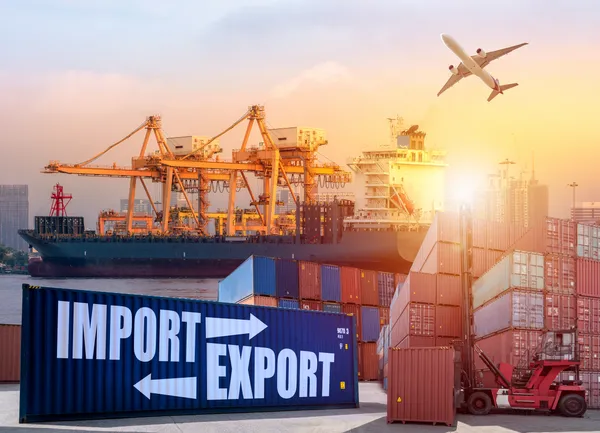
For decades, global trade has been understood as a sequence of transactions. Goods move from one point to another, payments are exchanged, and value is realized in margins. This transactional mindset shaped how companies were built, how performance was measured, and how success was defined.
But the world that supported this logic no longer exists.
In today’s global economy, volatility is no longer an exception — it is the baseline. Political instability, shifting regulations, supply chain fragmentation, climate disruption, and digital acceleration have fundamentally altered the nature of international commerce.
In this environment, the companies that survive are not simply those that move goods efficiently. They are the ones that design ecosystems of collaboration, trust, and adaptive capacity.
This article explores how import and export businesses can move beyond transactional thinking and intentionally build trade ecosystems that create long-term stability, influence, and resilience.
The End of Linear Trade Thinking

From Transactions to Trade Ecosystems How Leading Import and Export Companies Build Influence Stability and Long Term Power
Traditional trade thinking is linear:
supplier → manufacturer → distributor → buyer.
This model assumes predictability. It assumes that each actor operates independently and that value moves in a straight line.
In reality, modern trade behaves more like a network than a line.
Disruptions ripple across regions. Regulatory decisions in one country affect production in another. A logistics delay in one port can impact pricing thousands of miles away. In this context, linear thinking collapses under complexity.
Ecosystem thinking acknowledges interdependence.
Why Ecosystem Thinking Is Becoming a Strategic Necessity

From Transactions to Trade Ecosystems How Leading Import and Export Companies Build Influence Stability and Long Term Power
An ecosystem is not a vague metaphor. It is a structured network of organizations that co-evolve around shared value creation.
In an import–export context, an ecosystem may include:
Manufacturers and suppliers
Logistics providers and freight forwarders
Financial institutions and insurers
Regulatory and compliance partners
Technology providers
End customers
What differentiates an ecosystem from a loose network is coordination.
When coordination exists, participants can respond collectively to change rather than defensively reacting in isolation.
From Control to Coordination: A Fundamental Shift in Power
Traditional trade models are built on control: controlling suppliers, controlling information, controlling margins.
Modern ecosystems operate on coordination.
Coordination requires:
Shared visibility
Mutual incentives
Clear roles and expectations
Mechanisms for conflict resolution
Power shifts from ownership to orchestration. The most influential actors are not those who own the most assets, but those who enable others to perform better.
The Strategic Value of Being an Ecosystem Orchestrator
An ecosystem orchestrator is not necessarily the largest company. It is the one that:
Connects participants
Facilitates information flow
Establishes standards
Reduces friction
Orchestrators gain strategic leverage because others depend on the ecosystem’s stability.
Over time, this creates:
High switching costs
Deep relational capital
Network effects that strengthen competitive advantage
Trust as Infrastructure, Not Sentiment
In ecosystem-based trade, trust is not emotional; it is structural.
Trust emerges from:
Predictable behavior
Transparent processes
Consistent enforcement of rules
Reliable information exchange
When trust is institutionalized, relationships become resilient even under stress.
Transparency as a Coordinating Mechanism
Transparency aligns expectations across the ecosystem.
When participants have visibility into:
Demand forecasts
Capacity constraints
Regulatory risks
Delivery timelines
They can coordinate proactively rather than react defensively.
Transparency reduces friction not by eliminating conflict, but by making conflict manageable.
Information Flow as Competitive Advantage
In modern trade ecosystems, information flows faster than goods.
Companies that treat information as a strategic asset:
Detect disruption earlier
Adapt more quickly
Allocate resources more effectively
Data becomes the nervous system of the ecosystem, enabling real-time learning and response.
From Transaction Costs to Relationship Value
Traditional economics emphasizes minimizing transaction costs.
Ecosystem thinking emphasizes maximizing relationship value.
High-trust relationships:
Reduce negotiation time
Lower monitoring costs
Enable joint problem-solving
Support long-term investment
These benefits compound over time.
Designing for Resilience, Not Perfection
Resilient ecosystems are not optimized for ideal conditions. They are designed to absorb shocks.
This requires:
Redundancy without waste
Flexibility without chaos
Standards without rigidity
Resilience emerges when systems can bend without breaking.
Cultural Alignment Across Borders
Global ecosystems span cultures, legal systems, and business norms.
Cultural intelligence becomes a strategic capability, not a soft skill.
Successful ecosystem builders:
Recognize different risk tolerances
Adapt communication styles
Respect local decision-making rhythms
Cultural sensitivity reduces friction and accelerates trust.
Governance Without Overreach
Ecosystems require governance, but heavy-handed control destroys participation.
Effective governance:
Defines boundaries, not micromanagement
Encourages accountability without fear
Evolves with the ecosystem
The goal is alignment, not domination.
Learning as a Collective Capability
Ecosystems learn faster than individual firms.
They learn through:
Shared post-mortems
Collective experimentation
Open exchange of lessons learned
This shared learning accelerates adaptation across the entire network.
The Economics of Ecosystem Loyalty
Loyalty in ecosystems is not enforced—it is earned.
Participants stay because:
They gain value consistently
Switching costs increase naturally
Relationships compound in usefulness
This loyalty becomes a powerful economic moat.
When Ecosystems Fail
Ecosystems collapse when:
Power becomes centralized
Information is hoarded
Trust erodes
Participants feel exploited
Sustainable ecosystems require constant stewardship.
The Future of Global Trade Is Networked
As trade grows more complex, isolated excellence will not be enough.
The future belongs to:
Network thinkers
Ecosystem builders
Orchestrators of collaboration
These actors shape markets rather than react to them.
Final Reflection: Building What Others Rely On
The most influential trade businesses of the future will not be defined by what they sell, but by what they enable.
They will create environments where others can succeed, innovate, and grow.
In doing so, they will become indispensable.
Call to Action: Become an Architect of Trade Ecosystems
If you want to move beyond transactions and begin building a resilient, influence-driven presence in global trade, the time to act is now.
Register on our platform today to access expert insights, strategic frameworks, and practical guidance designed to help you build, manage, and scale powerful trade ecosystems.
The future of global trade will belong to those who design it intentionally.

