


المدونة
Dock-to-Stock Time: The High-ROI Metric GCC Warehouses Overlook
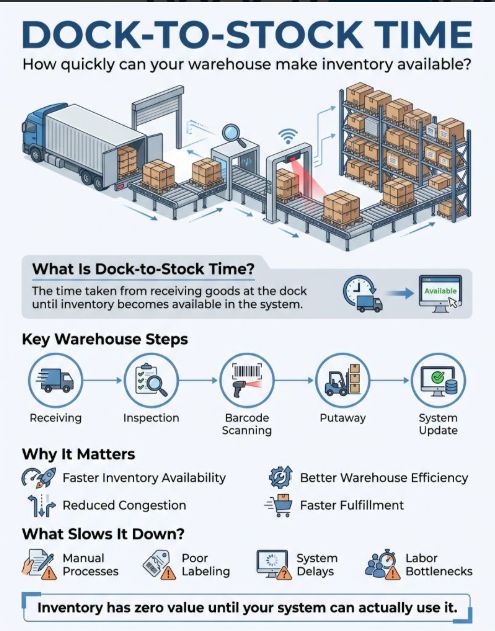
Inventory arriving at the warehouse does not automatically create value. It only creates value when the system can actually use it.
That simple truth explains why dock-to-stock time stands as one of the highest-leverage yet frequently overlooked metrics in modern supply chain operations. In cross-border B2B trade across GCC ports, Jebel Ali, and regional hubs handling bulk commodities, construction materials, and FMCG, every hour of delay at the receiving dock ripples through fulfillment, cash flow, and customer commitments.
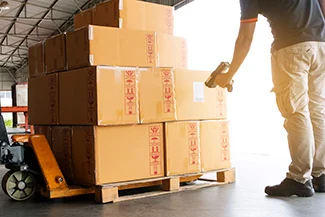
Dock-to-Stock Optimization
Leading operators in high-velocity trade corridors now target under 4–8 hours for standard receipts, with best-in-class facilities achieving 2–4 hours through targeted automation and process discipline. Many midsize and manual operations still average 24–48 hours, creating hidden bottlenecks that inflate costs and erode competitiveness.
This guide breaks down exactly how dock-to-stock time works, why it matters for regional traders, and the practical, step-by-step playbook to cut it dramatically while maintaining compliance and accuracy.
Free Ultimate Forex Technical Analysis Tool
What Is Dock-to-Stock Time and Why It Defines Warehouse Performance
Dock-to-stock time measures the elapsed duration from when goods physically arrive at the receiving dock until they become available in the inventory management system for picking, allocation, or sale.

Dock-to-Stock Time
The full cycle typically encompasses:
- Truck or container arrival and unloading
- Initial verification against purchase orders or ASNs
- Quality inspection and compliance checks
- Labeling, scanning, or RFID capture
- Putaway to the designated location
- System update confirming stock availability
Unlike broader metrics such as inventory turnover, dock-to-stock focuses sharply on inbound velocity—the critical handoff where physical goods transition into operational assets.
In GCC and MENA trade environments, this metric gains extra weight. Ports like Jebel Ali handle massive re-export volumes with tight vessel schedules. Delays here compound across multimodal legs involving sea, road, and bonded movements. A container of construction materials or foodstuffs sitting unprocessed ties up dock space, delays customs clearance downstream, and risks demurrage or detention fees that can reach thousands per day.
Key impacts of extended dock-to-stock times include:
- Delayed order fulfillment: Sales teams promise availability that the warehouse cannot yet deliver.
- Inventory visibility gaps: Planners make decisions on incomplete data, leading to overstocking or stockouts.
- Increased labor pressure: Congested docks force reactive overtime and inefficient resource allocation.
- Higher carrying costs: Goods in limbo still incur storage, insurance, and opportunity expenses.
- Customer and partner friction: In B2B relationships, missed SLAs erode trust, especially in time-sensitive sectors like perishables or project-based construction.
🌱
The ESG Dividend: Turning Inbound Velocity into Carbon Reductions
In 2026, sustainable supply chain operations are no longer optional—they are a core competitive metric. When cargo trucks and containers sit idly at congested receiving docks waiting for manual workflows, they continuously burn fuel and inflate a company’s Scope 3 emissions. Compressing the dock-to-stock cycle accelerates vehicle turnaround times, directly eliminating unnecessary engine idling. By treating inbound velocity as an environmental asset, modern logistics operators can significantly lower their carbon footprint while achieving peak operational efficiency.
Conversely, compressing this cycle unlocks faster cash conversion, higher throughput, and more agile response to market demand fluctuations common in regional trade.
Benchmarks and Industry Standards
Performance varies by operation type, but clear targets exist:
- Best-in-class (high-velocity 3PLs and e-commerce): 2-4 ساعات
- Standard distribution centers: Under 8–12 hours
- Midsize or manual operations: 12–24 hours (common target improvement zone)
- 3PLs with complex compliance: 4–8 hours
- Cold chain or high-inspection goods: Tighter windows due to perishability
APQC benchmarking data and operational reports consistently show top performers maintaining averages around 8–10 hours for supplier deliveries in efficient setups, with outliers pushing below 4 hours through technology.
In GCC warehousing, ambient facilities serving re-exports increasingly adopt WMS, AMRs, and put-to-light systems to improve these times while linking seamlessly to bonded and free-zone customs processes.
Segment your metrics by receipt type—ASN-enabled, blind, returns, or project cargo—to reveal true bottlenecks rather than averaging them away.
⚠️
Balancing Speed with Safety: The Velocity Dilemma
Accelerating dock-to-stock times should never come at the cost of warehouse safety. When teams rush to hit aggressive speed benchmarks, the risk of forklift collisions, unloading mishaps, and worker injuries surges. True best-in-class operations ensure that velocity is a byproduct of standardized, efficient routing and automation, rather than sheer human haste. Speed without safety is simply a liability waiting to happen.
Root Causes of Dock-to-Stock Delays in Global Trade Warehouses
Most extended cycles trace back to a handful of recurring issues amplified by cross-border complexity:
- Manual processes and paperwork bottlenecks: Handwritten checks, multiple system entries, and disconnected ERP/WMS instances create lag.
- Poor advance visibility: Lack of reliable ASNs forces reactive verification upon arrival.
- Labeling and identification failures: Inconsistent or damaged labels slow scanning and putaway.
- Inspection and compliance backlogs: Especially for regulated goods, foodstuffs, or construction materials requiring SABER, IQS, or phytosanitary validation.
- Labor and scheduling mismatches: Peak vessel arrivals overwhelm under-planned teams.
- System update delays: Batch processing instead of real-time integration keeps stock “invisible” longer.
- Layout and flow inefficiencies: Distant putaway locations or congested aisles.
In regional contexts, additional factors like varying customs workflows across UAE, Saudi, Oman, or Iraq corridors add layers that demand standardized yet flexible protocols.
🔄
The Reverse Logistics Trap: Separating Returns from Forward Flows
One of the most common hidden triggers of extended dock-to-stock times is mixing customer or vendor returns with standard forward inventory. Product returns are inherently unpredictable, requiring multi-layered quality grading and disposition steps. When processed on the same receiving lanes as fresh commercial receipts, they create immediate physical backlogs. Best-in-class operators avoid this trap by establishing a physically isolated “Returns Zone” with independent workflows, ensuring unpredictable reverse logistics never throttle primary inbound velocity.
Proven Strategies to Reduce Dock-to-Stock Time by 40–60%
Leading operations achieve dramatic gains by layering technology, process discipline, and data-driven coordination. Here is the practical playbook:
1. Implement Advanced Shipping Notifications (ASNs) and Pre-Arrival Planning
Require suppliers and forwarders to transmit detailed ASNs containing SKU counts, pallet configurations, and expected arrival times. This allows pre-allocation of dock doors, labor, and storage locations.
Advanced Shipping Notice (ASN)
Step-by-step implementation:
- Integrate ASN feeds directly into your WMS.
- Automate dock scheduling based on projected volumes.
- Perform preliminary compliance reviews before physical arrival.
- Result: Receiving teams shift from discovery to verification, often cutting initial processing by half.
2. Deploy Barcode, RFID, and Automated Identification
Move beyond manual scanning. RFID portals at dock doors can read entire pallets as they enter without line-of-sight or individual handling, updating inventory in real time.
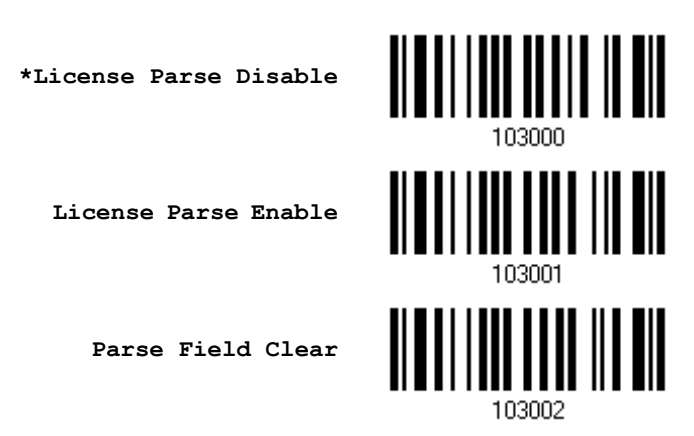
Deploy Barcode
Benefits observed in practice include 22%+ improvements in cycle times, near-elimination of transcription errors, and full traceability for compliance audits. For bulk or high-volume trade common in GCC, this scales efficiently.
Combine with mobile devices and directed putaway logic in the WMS to guide workers to optimal locations based on velocity, size, and slotting rules.
3. Standardize Receiving Protocols and Vendor Compliance
Create and enforce a vendor compliance manual covering labeling standards, packaging, documentation, and appointment scheduling.
- Segment receipts (e.g., fast-track high-velocity or pre-approved items).
- Use cross-docking for eligible goods to bypass storage entirely.
- Establish clear SLAs with carriers and forwarders tied to performance incentives.
⚡
Strategic Accelerator: Bypassing Storage via Advanced Cross-Docking
For high-velocity B2B trade in the GCC, the ultimate method to compress dock-to-stock time is to eliminate the “stock” phase entirely. Cross-docking allows incoming cargo—such as construction materials or consolidated FMCG goods—to transfer directly from the receiving dock to outbound trucks with zero intermediate warehouse storage. When synchronized with automated ASNs and real-time WMS routing, eligible shipments completely bypass putaway. By transforming your facility from a static storage space into a fluid transit hub, you reduce the dock-to-stock cycle to minutes rather than hours.
4. Integrate Real-Time WMS with Broader Systems
Ensure seamless data flow between WMS, TMS, ERP, and any trade compliance tools. Real-time updates eliminate batch delays that keep inventory hidden.
In multi-country operations, this integration supports unified visibility across free zones and mainland facilities.
5. Optimize Layout, Labor, and Continuous Improvement
- Design receiving areas for straight-through flow where possible.
- Use data to balance labor across shifts and peaks.
- Conduct regular process mapping and root-cause analysis (e.g., value stream mapping) to eliminate non-value steps.
- Leverage analytics dashboards to monitor cycle time by carrier, product type, or shift, then target outliers.
Expected outcomes from combined implementation: Many operations report 40–60% reductions, translating to faster fulfillment, lower labor costs per unit, and improved inventory accuracy.
Technology Stack Recommendations for 2026 Trade Warehouses
- WMS with directed putaway and real-time capabilities
- RFID or advanced barcode infrastructure for high-throughput sites
- IoT sensors and dock management systems for scheduling
- Analytics and AI-driven forecasting to predict inbound surges
- Integration layers connecting to regional customs platforms (e.g., FASAH in Saudi, UAE systems)
For operators in the GCC, solutions supporting bonded warehousing and multi-jurisdiction compliance deliver outsized returns.
📊
The Financial Blueprint: Quantifying the ROI of Inbound Velocity
Consider a mid-sized regional distributor in the GCC receiving an average of 50 containers per day (average cargo value: $80,000/container). By compressing the dock-to-stock cycle from 24 hours down to 8 hours, the hidden capital unlocked is substantial:
- Demurrage & Detention Savings: Eliminating port and carrier penalties saves approx. $150 per container. (Savings: $7,500 / day)
- Working Capital Efficiency: Unlocking stock 16 hours faster reduces daily holding and opportunity costs of capital by approx. $2,400 / day.
- Total Monthly Impact: Across 26 operational days, this optimization yields Over $250,000 in direct cost avoidance and cash flow acceleration.
🏢
Case Study: How Al-Mutawa Global Distribution Compressed Dock-to-Stock by 83%
To see these principles in action, look at Al-Mutawa Global Distribution, a major FMCG operator managing high-velocity trade corridors between Jebel Ali Port and their primary consolidation hub in Riyadh, Saudi Arabia.
Measuring, Monitoring, and Sustaining Gains
Track dock-to-stock as:
- Average cycle time (overall and segmented)
- Percentage of receipts meeting target thresholds
- Cost per receiving line
- Correlation with downstream metrics like order cycle time and inventory accuracy
Set up automated alerts for exceptions. Review weekly, adjusting staffing, supplier requirements, or technology as trade volumes evolve—especially with new corridors and infrastructure projects across the region.
Overcoming Implementation Challenges
👥
The Human Element: Overcoming Warehouse Floor Resistance to Automation
The ultimate barrier to slashing dock-to-stock times is rarely the software—it is user adoption. Moving from legacy paperwork to wearable RFID scanners or WMS interfaces often triggers immediate resistance from frontline staff. Overcoming this requires tactical change management: shifting to on-the-floor gamification, introducing team-based efficiency incentives, and leveraging peer “super-users” to anchor training. When operators view automation as a tool that simplifies their labor rather than a monitoring threat, cultural alignment follows, converting human capital into a core velocity engine.
Common hurdles include upfront technology investment, supplier resistance to new standards, and change management with warehouse teams. Address them by starting with pilot areas (e.g., one dock or product category), quantifying ROI through pilot data, and providing clear training tied to performance incentives. Phased rollouts with vendor onboarding programs accelerate adoption.
The Competitive Edge in Global Trade
In 2026, speed at the dock separates efficient operators from those struggling with congestion and complaints. Faster dock-to-stock directly supports tighter inventory turns, better cash flow, and more reliable service levels demanded by GCC buyers and international partners.
By treating receiving not as a cost center but as a strategic velocity engine, traders and 3PLs position themselves to capture more volume in competitive markets.
Inventory only creates value once the system recognizes and can deploy it. Shortening the gap between arrival and availability is one of the highest-ROI moves available to logistics leaders today.
For traders and warehouse operators looking to streamline receiving, optimize putaway, and integrate advanced tools into their operations, Platform.Tendify.Net offers practical engines that complement warehouse systems with trade intelligence and compliance support.
Ready to turn faster inbound flows into measurable business advantage? Register at https://tendify.net/my-account/ to access resources, calculators, and marketplace connections that accelerate your end-to-end supply chain performance.
Related reading: Lubricant Prices vs. Crude Oil: Navigating B2B Sourcing و The Role of Digital Freight Forwarders in Modern B2B Supply Chains.

