


وبلاگ
Cow Bones Export: Turning Slaughterhouse Waste into Millions
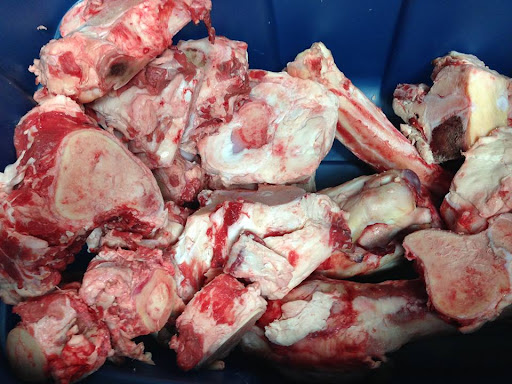
I’ve spent over two decades building trade businesses across borders, and one lesson hits harder than most: what one market throws away as waste, another turns into a multimillion-dollar industry. Cow bones are the perfect example. Walk through any major slaughterhouse and you’ll see piles of bones that locals often view as useless. Yet buyers in Asia, Europe, and beyond pay premium prices for them—processed into fertilizers, animal feed additives, gelatin for pharmaceuticals and food, or even industrial filters.
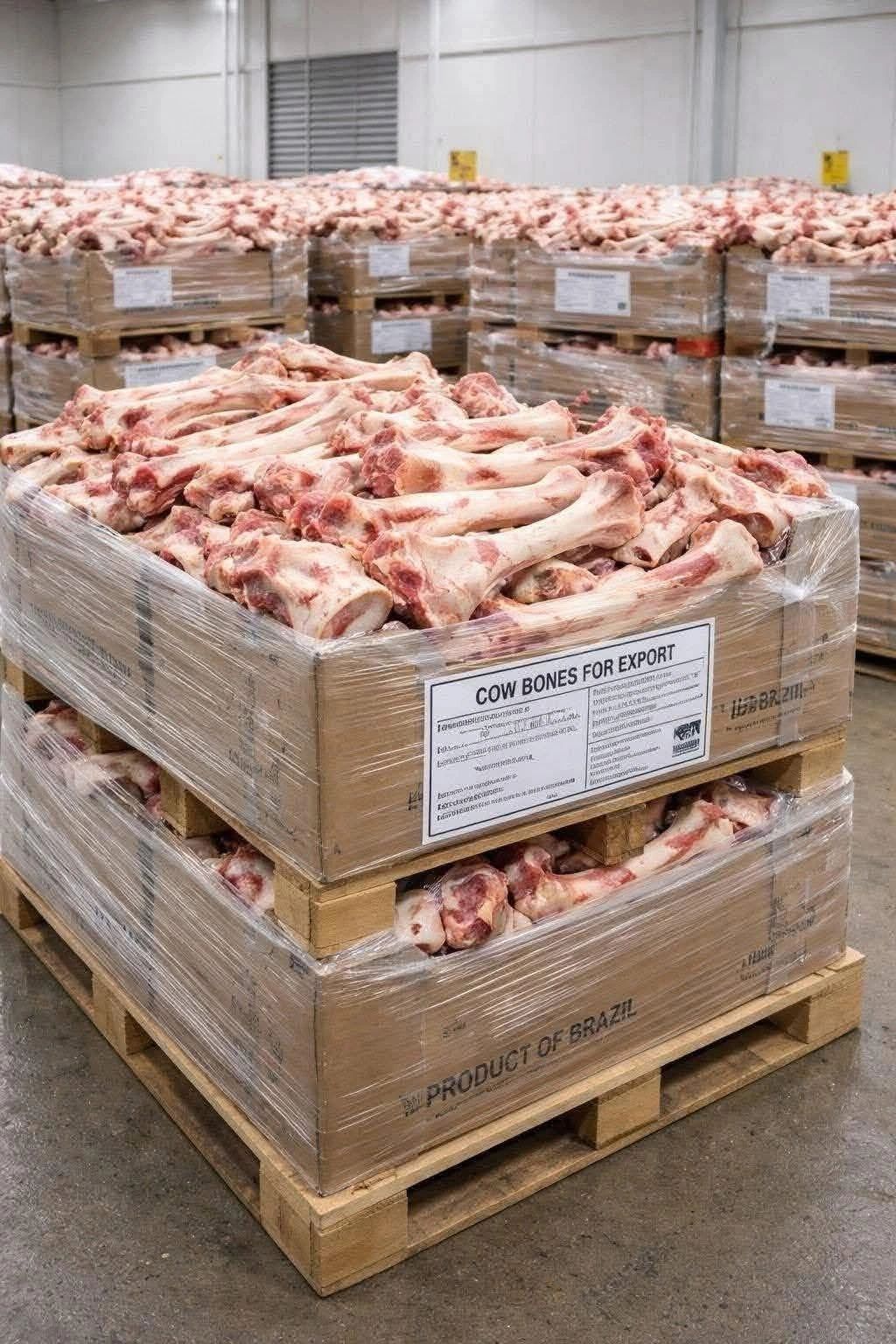
Cow Bones For export
This isn’t just about selling scraps. It’s about understanding value chains, compliance, and the economics that turn low-cost raw materials into consistent revenue streams. In this guide, I’ll walk you through everything I’ve learned from real deals: market demand, technical requirements, logistics pitfalls, pricing strategies, and how to build a scalable operation. If you’re serious about diversifying your export portfolio with something that has steady demand and relatively straightforward entry barriers, this is worth your time.
Yuan Transfer Secrets: Protect Your Capital When Sourcing From China
Why Cow Bones Represent a Smart Export Play Right Now
Global agriculture and manufacturing constantly seek natural, sustainable inputs. Animal by-products like bovine bones fit perfectly. Bone meal serves as a slow-release organic fertilizer rich in phosphorus and calcium—critical for soils depleted by intensive farming. Processed bones yield gelatin used in everything from gummy candies and yogurt to capsule shells and cosmetics. Bone char acts as a filtration medium in sugar refining and water treatment.
Demand remains strong because these applications deliver performance that synthetics often can’t match at scale. The animal by-products market is projected to grow steadily, driven by feed additives, organic fertilizers, and collagen/gelatin sectors. For exporters in regions with high livestock throughput—like parts of the Middle East, South Asia, or Africa—supply is abundant and acquisition costs low.
Cow Bones Export
I’ve seen operators turn this into a reliable side revenue or even core business. One contact moved 200+ tons monthly after setting up basic cleaning and bagging. The margins come from volume and consistent quality rather than flashy branding.
Key Market Drivers in 2026:
- Rising organic farming adoption needing natural phosphorus sources.
- Pharmaceutical and food industries preferring animal-derived gelatin for its gelling properties.
- Feed manufacturers supplementing livestock diets with mineral-rich bone meal.
- Industrial uses in filtration and bone char production.
Global Demand Hotspots for Cow Bones Export
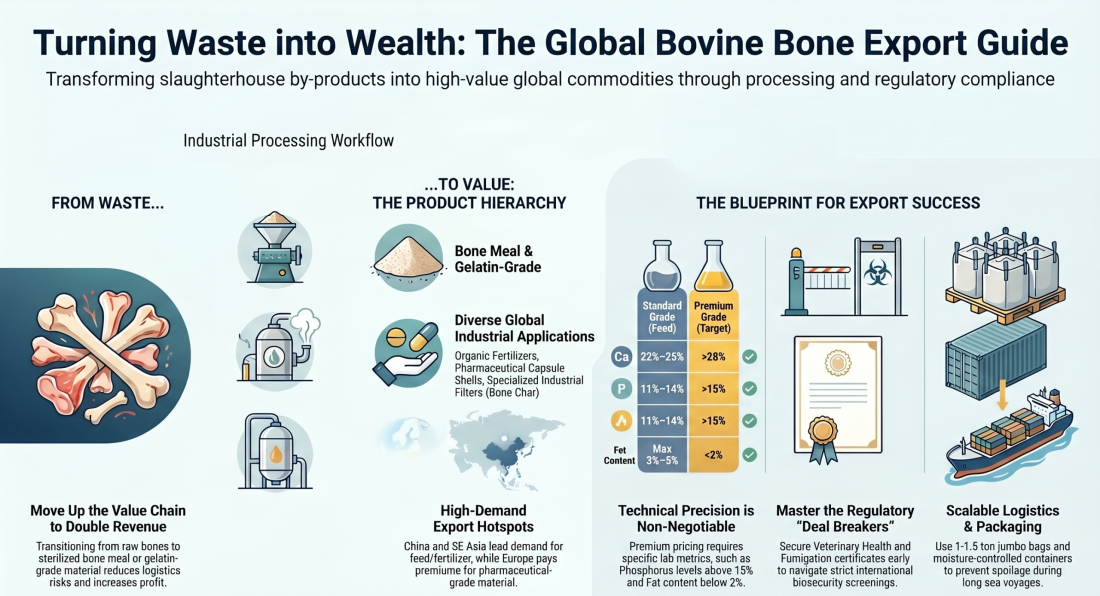
China and other Asian markets stand out for raw or semi-processed bones used in fertilizer and feed. African exporters have successfully targeted these for bone meal. India, Vietnam, and Indonesia also import significant volumes for various processing industries.
Europe maintains strict rules but offers premium prices for certified, high-quality material destined for gelatin or pet food. The Middle East imports for local industries and re-export hubs like the UAE. North America focuses more on domestic use but sources specialty grades.
نکته حرفهای از تجربه: Start with markets that match your compliance capabilities. If veterinary certifications are straightforward in your country, target regulated buyers who pay more reliably. Use tools like world trade tariff databases and HS code finders to validate duties and requirements quickly.
Understanding the Product: From Raw Bones to Value-Added Exports
Not all cow bones are the same. Buyers care about source, processing, and specs.

Raw Bones to Value-Added Exports
The Reality of Commodity Grading
In cross-border B2B trade, treating animal by-products as a uniform commodity is a critical mistake. Not all cow bones are the same. International buyers purchase strictly based on the biological source, the exact processing method, and certified technical specifications.
Your profit margins are directly tied to how much value you add to the raw material before it reaches the shipping port. Moving up the value chain from raw processing to specialized industrial grades drastically reduces your logistics risks while doubling your revenue per ton.
Main Product Types and Market Segments
1. Raw or Green Bones
Definition: Fresh material sourced directly from slaughterhouses, often roughly cleaned of meat residues but otherwise completely unprocessed.
Commercial Reality: This represents the lowest entry price point on the market. However, it carries the highest logistics challenges due to extreme perishability, odor control issues, and strict refrigeration or rapid transit requirements.
2. Dried or Boiled Bones
Definition: Bones that have undergone basic thermal processing or sun-drying to systematically strip away moisture, fats, and remaining soft tissues.
Commercial Reality: This step drastically reduces the shipping weight and extends the shelf life to months. It is the ideal baseline product for exporters looking for straightforward logistics without investing in heavy milling machinery.
3. Bone Meal (Crushed & Sterilized Powder)
Definition: Bones that are steamed under high pressure, thoroughly sterilized to eliminate pathogens, and then milled into a fine or granular powder.
Commercial Reality: This is a highly liquid global commodity with massive, steady demand. It serves as the backbone for the organic fertilizer sector and functions as a vital mineral supplement in poultry, livestock, and aquaculture feed formulations.
4. Bone Char and Activated Carbon
Definition: Crushed bones subjected to high-temperature calcination (pyrolysis) in an oxygen-depleted environment, turning the material into pure elemental carbon.
Commercial Reality: A high-value, highly specialized industrial product. It is heavily imported by major sugar refineries for decolorization and by water treatment plants as a premium filtration medium.
5. Gelatin and Ossein-Grade Bones
Definition: Premium-selected, thoroughly degreased, and demineralized bones optimized specifically for high collagen extraction.
Commercial Reality: This grade commands some of the highest premium prices on the market. It feeds the strict supply chains of the pharmaceutical sector (for capsule shells) and the high-end food and cosmetics manufacturing industries.
Aligning Production with Buyer Demand
Long-term export success relies entirely on matching your facility’s output to the precise, non-negotiable requirements of your buyer’s industry. A fertilizer blending plant evaluates your cargo based on maximizing phosphorus and calcium content, completely ignoring aesthetic factors.
Conversely, a European gelatin or pharmaceutical manufacturer will immediately reject a shipment if the fat content is too high or if the particle sizes do not fit their automated processing lines. Before signing a collection contract with local slaughterhouses, you must first define which industrial grade your processing setup can reliably deliver to the international market.
Container Markings Decoded: The Ultimate Shipper’s Guide
Technical Specifications That Make or Break Deals
Trade Insight: Industrial buyers don’t trade on vague descriptions like “high-grade.” They trade on exact harmonized codes and verified laboratory metrics. For global customs clearance and automated tariff mapping, the critical codes you must utilize are HS Code 0506 (Bones and horn-cores, unworked, defatted, or simply prepared) and HS Code 0506.90 (Bone meal and related crushing waste).
To command premium pricing, your batch analysis must hit precise industrial baselines depending on the target application:
| پارامتر | Standard Range (Feed/Fertilizer Grade) | Target for Premium Price |
| HS Code (Raw/Crushed) | 0506.90 (Bone Waste/Meal) | 0506.10 (Ossein/Gelatin Grade) |
| Calcium ($Ca$) | 22% – 26% | > 28% |
| Phosphorus ($P$) | 11% – 14% | > 15% |
| رطوبت | Max 10% | < 8% (Critical for long sea voyages) |
| Crude Protein | 20% – 25% | > 30% |
| Fat Content | Max 3% – 5% | < 2% (Prevents rancidity & odor) |
Test every batch. Provide third-party lab reports. This builds trust and justifies better pricing.
Packaging Matters More Than You Think: Use jumbo bags (1-1.5 ton) or bulk containers with liners. Proper sealing prevents moisture ingress and odor complaints. For raw bones, ensure ventilation or refrigeration depending on transit time.
Essential Certificates and Regulatory Compliance
This is where many deals die. Animal by-products face heavy scrutiny due to strict biosecurity risks. Beyond Mad Cow Disease (BSE), customs and veterinary authorities in major import hubs like China, the EU, and the GCC heavily screen for Foot-and-Mouth Disease (FMD) و Anthrax spores.
Must-Have Documents:
Veterinary/Sanitary Health Certificate: Confirms origin from healthy, virus-free animals, explicitly certifying the region is clear of FMD and Anthrax, and that the material was subjected to sufficient heat treatment to eliminate pathogens.
- Fumigation Certificate: Proves treatment against pests.
- Halal Certificate: Critical for Muslim-majority markets or gelatin production.
- Certificate of Analysis (CoA): Lab results for composition.
- Phytosanitary Certificate: If required by destination.
- Free Sale Certificate: For some markets.
- Export Health Certificate (EHC): Varies by target country.
Work closely with your national veterinary authority. Get facilities approved if needed. Non-compliance leads to rejected shipments, lost payments, and damaged reputation.
I’ve learned the hard way: invest upfront in certifications. It opens doors to higher-value buyers who pay on time and reorder.
Step-by-Step Guide to Starting Your Cow Bones Export Business
- Assess Local Supply: Map slaughterhouses, meat processors, and tanneries. Negotiate steady collection contracts. Volume is key—aim for container-load quantities (20-25 tons per 20ft).
- Set Up Processing: Basic cleaning, drying, grinding, and packing. Start simple and scale. Ensure hygiene standards to meet export rules.
- Compliance and Registration: Register for export, obtain necessary licenses, and align with international standards.
- Market Research and Buyers: Use trade platforms to identify importers. Attend industry events. Verify buyers carefully—start with smaller test orders.
- Pricing Strategy: Factor in raw material, processing, packaging, transport, duties, and margin. Monitor global bone meal prices. Offer FOB or CIF terms based on buyer preference.
- Logistics Planning: Choose reliable freight forwarders experienced with animal by-products. Calculate demurrage risks. Reefers may be needed for fresh material.
- Payment and Contracts: Use secure methods like letters of credit or escrow services. Include clear specs, tolerances, and dispute resolution.
- Quality Control: Implement consistent testing and traceability.
چالشهای رایج و چگونگی غلبه بر آنها
Spoilage and Shelf Life: Proper drying and low-moisture packaging are non-negotiable for sea freight.
Regulatory Changes: Stay updated on BSE rules and import restrictions. Diversify markets.
مسابقه: Differentiate with consistent quality, reliable supply, and strong documentation.
Currency and Payment Risks: Hedge where possible and use trusted intermediaries.
Logistics Costs: Optimize container loading. Tools for container optimization can save significant money on volume shipments.
From my experience, the biggest mistake is rushing into large shipments without proven processes. Start with 1-2 containers to a trusted buyer and refine.
Financials: What Realistic Profits Look Like
Acquisition costs vary but can be low if you control collection. Processing adds value. Export prices for bone meal often range in the hundreds per ton depending on grade and destination. Margins improve with scale and value addition (e.g., grinding vs. raw).
Factor in all costs: collection, processing, testing, certifications, freight, insurance, and duties. A well-run operation can deliver healthy returns, especially with repeat business.
Sustainability Angle: The Modern Buyer’s Priority
Today’s importers value circular economy stories. Positioning cow bones as upcycled waste that reduces landfill use and supports agriculture resonates. Highlight low environmental footprint compared to mining phosphorus. This can command premium pricing in ESG-conscious markets.
Integrating Technology into Your Operations
Modern trade demands efficiency. Platforms like Tendify streamline the complex regulatory and financial mapping required for niche commodities.
From the Field: Before quoting a buyer a CIF price, you need to know your exact container limits. Using a specialized [Container Load & Freight Optimizer] allows you to calculate how many 1.5-ton jumbo bags can safely fit into a 20ft FCL without risking moisture buildup or shifting cargo.
Similarly, changing tariff landscapes can instantly eliminate your margin. Utilizing automated [کد HS & Tariff Finders] ensures you can check real-time duty rates and verify whether your country of origin benefits from zero-tariff trade agreements with destinations like China or Vietnam before signing the contract.
Building Long-Term Success
Treat this like any serious business: focus on relationships, quality, and reliability. Document processes into an operations playbook. Train staff on standards. Network with other exporters for shared logistics or market intel.
Diversify products over time—perhaps into related by-products like horns, hooves, or blood meal.
Final Thoughts: Value Is Where You Create It
The difference between struggling traders and consistent winners often comes down to mindset. Seeing potential in what others discard opens doors. Cow bones export isn’t glamorous, but it is practical, scalable, and profitable when executed with discipline.
You’ve got the raw materials nearby and growing global demand. The rest is execution—getting the specs right, paperwork in order, and deliveries on time.
If you’re ready to explore these opportunities seriously and access a full suite of trade tools, calculators, document builders, and market intelligence designed specifically for global traders, head over to Platform.Tendify.net. It streamlines the complex parts so you can focus on closing deals and growing volume.
Start small, stay compliant, and scale methodically. The bones are there—the question is whether you’ll turn them into your next revenue stream.

