


وبلاگ
Container Color Guide: Identify Ocean Carriers at a Glance
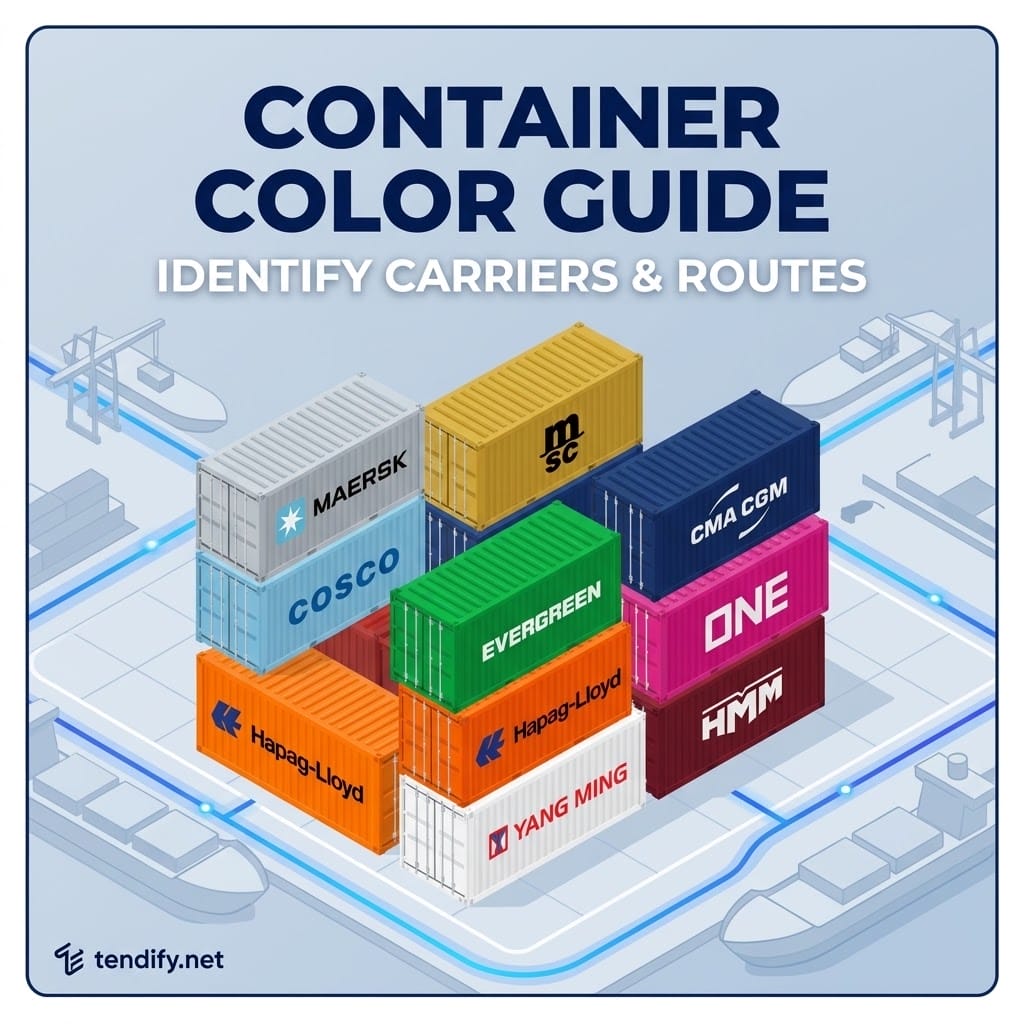
Walk any major terminal in Jebel Ali, Dammam, or Hamad Port and the first thing that hits you is the color. Stacks of yellow, orange, green, magenta, and deep blue boxes move under the cranes while planners, surveyors, and forwarders make split-second calls on space, availability, and routing reliability. Color is not decoration. It is operational shorthand.
In high-volume cross-border lanes serving the GCC and wider MENA region, the ability to read a container’s livery from a distance or from a photo saves time, reduces misrouting risk, and improves booking decisions. Carriers invest heavily in consistent branding precisely because terminals, trucking companies, and depot operators process thousands of units daily. Recognition speed matters.
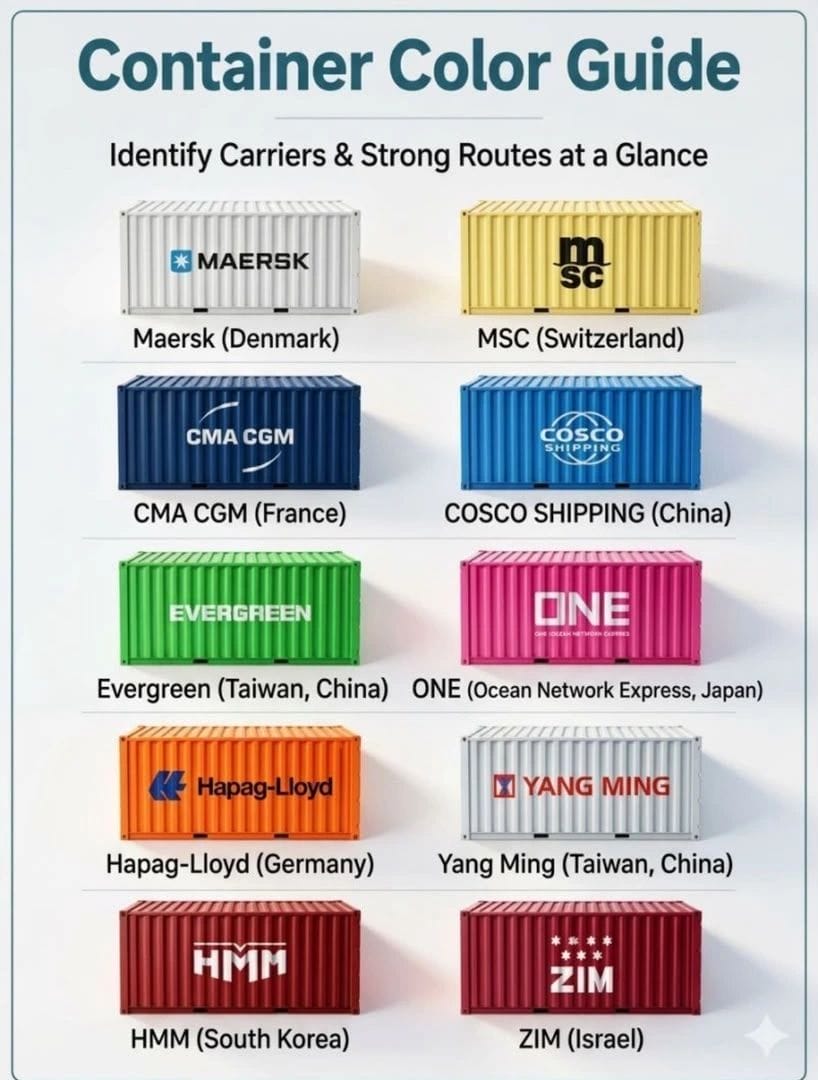
Container Color Guide
This guide breaks down the dominant container colors of the world’s largest lines, the practical cues that confirm ownership even when logos are faded or partially obscured, and the trade lanes where each carrier historically and currently holds strength. It is written for logistics managers, freight forwarders, procurement teams, and supply-chain operators who need usable field knowledge rather than marketing copy.
Why Container Color Still Matters in Digital Tracking Systems
Digital platforms and carrier APIs have improved visibility, yet physical identification remains essential. Containers move between vessels under vessel-sharing agreements, sit in mixed stacks, and appear in photos from truck drivers or warehouse teams. Color plus logo remains the fastest first filter.
Operational assessments across regional terminals show three consistent benefits:
- Faster yard planning and equipment control when distinguishing carrier-owned versus leased boxes.
- Quicker visual confirmation during vessel loading or discharge when multiple lines share a berth.
- Better preliminary risk assessment: certain carriers maintain denser networks and higher schedule reliability on specific Asia–GCC or Europe–Gulf corridors.
Color is not a substitute for the ISO 6346 identification number (owner code + serial + check digit), but it is the first signal most people use.
The Current Major Carrier Color Map
The following colors reflect the dominant dry-container liveries observed across global fleets in 2025–2026. Note that leasing companies often use darker practical shades (browns, dark greys) and that refrigerated containers frequently appear white regardless of carrier.
🟦Maersk (Denmark)
Traditional dry containers: light grey / off-white with black or dark lettering and the seven-pointed star.
New production (from 2025 onward): signature Maersk blue with white lettering. Reefers remain white.
Maersk is transitioning its dry fleet gradually; older grey units will remain in circulation for years. The blue matches the company’s vessels and terminals. Strong historical and current presence on Asia–Europe, Asia–Middle East, and India–Gulf services. The Gemini Cooperation with Hapag-Lloyd has further concentrated capacity on selected Asia–Europe and Asia–Mediterranean loops that often include Gulf or Red Sea calls.
🟨MSC – Mediterranean Shipping Company (Switzerland)
Bright yellow / mustard yellow.
One of the most distinctive and immediately recognizable colors in any terminal. MSC operates the world’s largest container fleet by capacity. Dense networks on Asia–Europe, Asia–Middle East, Mediterranean–Gulf, and intra-Asia feeders that connect into GCC ports. High sailing frequency often translates into more equipment availability in key Gulf hubs.
🔵CMA CGM (France)
Deep navy / dark blue.
Clean, high-contrast branding. Part of the Ocean Alliance (with COSCO and Evergreen). Strong on Asia–Europe, Asia–Mediterranean, and growing Middle East coverage. French and Mediterranean connections remain a natural strength, with solid Gulf feeder and mainline options.
🔷COSCO Shipping (China)
Medium to deep blue (variations exist across the fleet).
Large, well-recognized blue fleet. Ocean Alliance member. Excellent coverage out of Chinese and wider Asian ports into the Middle East and Europe. High capacity on China–GCC and China–Red Sea–Mediterranean corridors makes COSCO a frequent choice for volume exporters and importers moving between East Asia and the Gulf.
🟩Evergreen (Taiwan)
Vibrant green.
Highly distinctive. Ocean Alliance partner. Strong intra-Asia network and solid Asia–Europe / Asia–Middle East capacity. Green boxes are easy to spot even in dense stacks and often indicate reliable equipment pools on Asian export lanes that feed into GCC destinations.
🟪ONE – Ocean Network Express (Japan)
Magenta / bright pink / purple.
One of the most eye-catching colors currently in service. Formed from the container businesses of NYK, MOL, and K Line. Premier Alliance member (with HMM and Yang Ming). Solid Asian coverage and competitive presence on selected Asia–Europe and Asia–Middle East strings.
🟧Hapag-Lloyd (Germany)
Bright orange.
Extremely recognizable. Gemini Cooperation partner with Maersk. Strong European and Latin American heritage with growing Middle East and Asia–Europe capacity. Orange units stand out clearly against blue and grey backgrounds in mixed terminals.
⬜Yang Ming (Taiwan)
White / light grey with red logo and lettering.
Clean white appearance. Premier Alliance member. Competitive on selected Asia–Europe and Asia–US routes with usable Middle East connections via alliance partners.
🟥HMM – Hyundai Merchant Marine (South Korea)
Dark red / maroon.
Deep red fleet. Premier Alliance member. Growing presence on Asia–Europe and Asia–US trades with increasing relevance for Korean and wider Northeast Asian cargo moving toward the Middle East.
🟫ZIM (Israel)
Burgundy / dark red / maroon.
Similar dark red tones to HMM but distinct logo treatment. Niche but useful network with particular strength on certain Mediterranean, Red Sea, and selected Asia–Mediterranean / Middle East connections.
These ten carriers control the overwhelming majority of global container capacity. Recognizing their liveries provides an immediate operational advantage in any major port or inland depot serving cross-border trade.
🌐
At a Glance: Major Global Container Alliances (2026 Fleet Alignment)
Understanding which carriers share vessel space under alliance agreements explains why containers of different colors frequently appear on the same vessel or within the same terminal stack:
| Alliance Name | Member Carriers | Dominant Fleet Colors | Primary Network Focus |
|---|---|---|---|
| Gemini Cooperation | Maersk, Hapag-Lloyd | Blue Orange Light Grey | Hub-and-spoke model; strong East-West, Mediterranean, and main Asia–Europe / Gulf loops. |
| Ocean Alliance | CMA CGM, COSCO Shipping, OOCL, Evergreen | Navy Blue سبز | High-capacity Asia–Europe, Asia–Middle East, Transpacific, and Red Sea coverage. |
| Premier Alliance | ONE, HMM, Yang Ming (Slottage cooperation with MSC on Asia-Europe) | Magenta Maroon White | Transpacific, Asia–Europe, and Asian trade corridors connecting into Gulf feeders. |
| Standalone Global Networks | MSC (Independent strategy), ZIM (Niche / Slot agreements) | زرد Burgundy | Extensive global direct port calls (MSC); specialized regional & direct trade corridors (ZIM). |
📦
Operational Exception: Spotting Leased Containers (Leasing Fleet Identification)
A significant volume of boxes passing through regional hubs like Jebel Ali, Dammam, or Hamad Port do not belong directly to ocean carriers, but to global equipment leasing giants such as Triton, Textainer, Florens, Seaco, and CAI.
Containers painted in muted, neutral tones—such as solid dark brown, plain navy, or unbranded grey without prominent carrier logos—are typically leased units.
To determine which carrier is operating a leased box, ignore the paint shade and inspect the 4-letter BIC / ISO Owner Prefix preceding the serial number:
TEXU• Textainer FleetTRHU• Triton International FleetFSCU• Florens Asset Management
🚢
Regional Logistics Cues: Shipper-Owned Containers (SOC)
Across Middle East trade corridors and regional feeder routes, SOCs (Shipper-Owned Containers) play a critical operational role alongside standard Carrier-Owned Containers (COC). Spotting them on the yard requires a different visual logic:
Neutral Aesthetics & Painted-Over Logos: SOC units rarely display vibrant carrier livery. They typically feature neutral, understated colors (slate grey, tan, or muted blue) or appear with former carrier logos partially painted over or removed. While SOCs help traders avoid liner demurrage, visual confirmation must always rely on checking the ISO Owner Code to differentiate them from carrier assets.
Strong Routes and Practical Implications for GCC and MENA Trade
Color recognition becomes strategically useful when paired with knowledge of where each carrier is strongest.
Asia–GCC and China–Gulf corridors remain dominated by the large Asian and global operators (COSCO, MSC, CMA CGM, Evergreen, Maersk/Hapag-Lloyd). High frequency and equipment availability are typical. Europe–Gulf and Mediterranean–Gulf lanes see strong showings from MSC, CMA CGM, Maersk, and Hapag-Lloyd, especially on services that call Jeddah, Jebel Ali, or Dammam.
Intra-regional and feeder connections often mix carrier-owned equipment with leased boxes. In these cases color still helps, but the ISO owner code becomes more critical for accurate tracking and detention liability.
Schedule reliability and transit time performance vary by specific service string and by the evolving Red Sea / Suez situation. Carriers have been selectively restoring Suez transits through 2026, which shortens Asia–Europe and Asia–Mediterranean voyages and can improve equipment turns into Gulf ports. Color identification does not replace checking current schedules, but it accelerates the initial filter when multiple options appear in a booking system.
Beyond Color: Confirming Ownership Quickly
Color is the first filter. Confirmation requires the standard markings:
- Owner code (three letters) + equipment category identifier (usually U for freight containers) + six-digit serial number + check digit.
- Carrier logo and name painted on the sides and doors.
- CSC plate and other regulatory markings on the door end.
In practice, experienced operators use color + logo for immediate recognition and the full ISO number for system entry, claims, and tracking. When a container appears in a mixed stack or on a vessel under a sharing agreement, the painted number remains the legal identifier.
Operational Playbook: Using Color Intelligence Daily
- Yard and depot operations — Train gate and stacking teams on the dominant colors. Faster visual sorting reduces dwell and improves equipment matching.
- Booking and equipment release — When multiple carriers offer similar rates and transit times, color familiarity helps predict equipment availability in the origin or destination hub.
- Exception management — Photos from truck drivers or warehouse staff that include color and logo allow faster remote diagnosis of wrong-equipment or misrouted units.
- Risk and network design — Carriers with denser networks on your core lanes (visible through higher volumes of their colored boxes in key terminals) often deliver more recovery options when disruptions occur.
- Training new staff — A simple color + logo chart accelerates onboarding for junior planners and operations coordinators working Gulf and regional trades.
For deeper operational cost control once containers are moving, see the practical analysis of demurrage and detention charges across major GCC ports. For broader multimodal cost structures serving the region, the 2026 Gulf logistics overview provides complementary numbers and routing logic.
Limitations and Exceptions Worth Knowing
Not every blue container belongs to COSCO or CMA CGM, and not every red box is HMM or ZIM. Leasing companies operate large fleets in practical dark colors, and some carriers run mixed or older equipment. White containers are common for reefers across almost all lines. One-trip or special-purpose boxes may appear in non-standard colors.
Always verify with the ISO number for contractual, tracking, and claims purposes. Color is a powerful visual cue, not a legal identifier.
Reefers remain white across almost all fleets—a technical design choice to maximize solar reflectance, minimize thermal absorption in harsh Middle Eastern sunlight, and reduce fuel load on cooling compressors.
Turning Recognition into Competitive Advantage
In competitive cross-border trade, small speed advantages compound. The ability to glance at a stack, a vessel bay plan photo, or a roadside unit and immediately know the likely owner and typical network strength is a practical skill. It shortens communication loops between commercial, operations, and customer-service teams. It improves the quality of equipment forecasts. And it reduces the friction that appears when containers move between carriers under alliance or slot-sharing arrangements.
The global fleet continues to evolve. Maersk’s shift toward blue, the stability of MSC’s yellow, and the distinctive magenta of ONE are visible expressions of brand strategy. For operators on the ground in the Gulf and across international lanes, those colors remain one of the fastest ways to orient themselves in a complex, high-volume environment.
Walk any major terminal in Jebel Ali, Dammam, or Hamad Port and the first thing that hits you is the color. Stacks of yellow, orange, green, magenta, and deep blue boxes move under the cranes while planners, surveyors, and forwarders make split-second calls on space, availability, and routing reliability. Color is not decoration. It is operational shorthand.
In high-volume cross-border lanes serving the GCC and wider MENA region, the ability to read a container’s livery from a distance or from a photo saves time, reduces misrouting risk, and improves booking decisions. Carriers invest heavily in consistent branding precisely because terminals, trucking companies, and depot operators process thousands of units daily. Recognition speed matters.
This guide breaks down the dominant container colors of the world’s largest lines, the practical cues that confirm ownership even when logos are faded or partially obscured, and the trade lanes where each carrier historically and currently holds strength. It is written for logistics managers, freight forwarders, procurement teams, and supply-chain operators who need usable field knowledge rather than marketing copy.
Why Container Color Still Matters in Digital Tracking Systems
Digital platforms and carrier APIs have improved visibility, yet physical identification remains essential. Containers move between vessels under vessel-sharing agreements, sit in mixed stacks, and appear in photos from truck drivers or warehouse teams. Color plus logo remains the fastest first filter.
Operational assessments across regional terminals show three consistent benefits:
- Faster yard planning and equipment control when distinguishing carrier-owned versus leased boxes.
- Quicker visual confirmation during vessel loading or discharge when multiple lines share a berth.
- Better preliminary risk assessment: certain carriers maintain denser networks and higher schedule reliability on specific Asia–GCC or Europe–Gulf corridors.
Color is not a substitute for the ISO 6346 identification number (owner code + serial + check digit), but it is the first signal most people use.
The Current Major Carrier Color Map
The following colors reflect the dominant dry-container liveries observed across global fleets. Note that leasing companies often use darker practical shades (browns, dark greys) and that refrigerated containers frequently appear white regardless of carrier.
- Maersk (Denmark): Traditional dry containers feature light grey / off-white with dark lettering and the seven-pointed star. New production uses signature Maersk blue with white lettering. Strong historical and current presence on Asia–Europe, Asia–Middle East, and India–Gulf services.
- MSC – Mediterranean Shipping Company (Switzerland): Bright yellow / mustard yellow. Highly distinctive fleet with dense networks on Asia–Europe, Asia–Middle East, and Mediterranean–Gulf corridors.
- CMA CGM (France): Deep navy / dark blue. Clean branding, strong French and Mediterranean connections with solid Gulf feeder and mainline options.
- COSCO Shipping (China): Medium to deep blue. Excellent coverage out of Chinese and Asian ports into the Middle East and Europe.
- Evergreen (Taiwan): Vibrant green. Highly distinctive with strong intra-Asia network and solid Asia–Middle East capacity.
- ONE – Ocean Network Express (Japan): Magenta / bright pink. Premier Alliance member with strong Asian coverage and competitive Middle East connections.
- Hapag-Lloyd (Germany): Bright orange. Gemini Cooperation partner with Maersk; strong European heritage and growing Middle East capacity.
- Yang Ming (Taiwan): White / light grey with red logo and lettering. Competitive on selected Asia–Europe and US routes.
- HMM – Hyundai Merchant Marine (South Korea): Dark red / maroon fleet with growing relevance for Northeast Asian cargo moving toward the Middle East.
- ZIM (Israel): Burgundy / dark red. Niche network with particular strength on Mediterranean, Red Sea, and Middle East connections.
Operational Exception: Spotting Leased Containers
A significant volume of boxes passing through Jebel Ali, Dammam, or Hamad Port belong to global leasing giants like Triton, Textainer, Florens, Seaco, and CAI.
Muted tones (dark brown, plain navy, unbranded grey) usually indicate leased units. Check the 4-letter ISO Owner Prefix:
TEXU• Textainer FleetTRHU• Triton International FleetFSCU• Florens Asset Management
Technical Insight: Why Refrigerated Containers (Reefers) Are Always White
Thermal Absorption Control: White paint maximizes solar reflectance, significantly reducing thermal absorption in sun-exposed Gulf yards. Minimizing heat gain directly reduces stress on cooling compressors and Gensets, lowering fuel consumption and protecting sensitive cargo.
Regional Logistics Cues: Shipper-Owned Containers (SOC)
Neutral Aesthetics: Across GCC trade corridors, SOCs help traders avoid demurrage. They feature neutral shades (slate grey, tan, beige) or have legacy logos painted over. Visual confirmation must always rely on the ISO Owner Code.
🌐 Major Global Container Alliances Fleet Alignment
| Alliance | Member Carriers | Dominant Colors | Network Focus |
|---|---|---|---|
| Gemini Cooperation | Maersk, Hapag-Lloyd | Blue Orange | Hub-and-spoke; East-West & Gulf loops. |
| Ocean Alliance | CMA CGM, COSCO, OOCL, Evergreen | Navy سبز | High-capacity Asia–Europe & Asia–Middle East. |
| Premier Alliance | ONE, HMM, Yang Ming | Magenta Maroon | Transpacific & Asia–Europe feeding into Gulf. |
Strong Routes and Practical Implications for GCC and MENA Trade
Color recognition becomes strategically useful when paired with knowledge of where each carrier is strongest. Asia–GCC and China–Gulf corridors remain dominated by large Asian and global operators (COSCO, MSC, CMA CGM, Evergreen, Maersk/Hapag-Lloyd). Europe–Gulf and Mediterranean–Gulf lanes see strong showings from MSC, CMA CGM, Maersk, and Hapag-Lloyd, especially on services that call Jeddah, Jebel Ali, or Dammam.
Beyond Color: Confirming Ownership Quickly
- ISO Owner Code: Three letters + category identifier (U) + serial number + check digit.
- Carrier logo and name: Painted on sides and end doors.
- CSC Plate: Structural and safety data on the door end.
📚 Recommended Guides & Interactive Tools
3D Container Optimization Tool
Max out 20ft & 40ft container space in 3D.
Container Markings Decoded
Understand ISO codes and door plates.
Pallet Strategy in Global Trade
Stop losing 20% of container space.
Global Container Shipping
Carrier alliances & ocean fleet shares.
⚡
The Operational Rule of Thumb
Master the colors.
Confirm with the numbers.
Move cargo with zero surprises.
Color gives you immediate field orientation in crowded yards and bay plans. The ISO owner number secures your legal tracking, detention liabilities, and system entries. Combining both speeds up decision-making across your entire supply chain network.
Ready to Streamline Your Global Logistics Operations?
Gain full control over your shipping bookings, trade documentation, compliance checks, and multi-carrier coordination with our suite of structured B2B trade tools.
✓ Automated Trade Documentation
✓ Cross-Border Cost Calculators

