


Blog
Global Trade Under Pressure: How Smart Import and Export Businesses Redesign
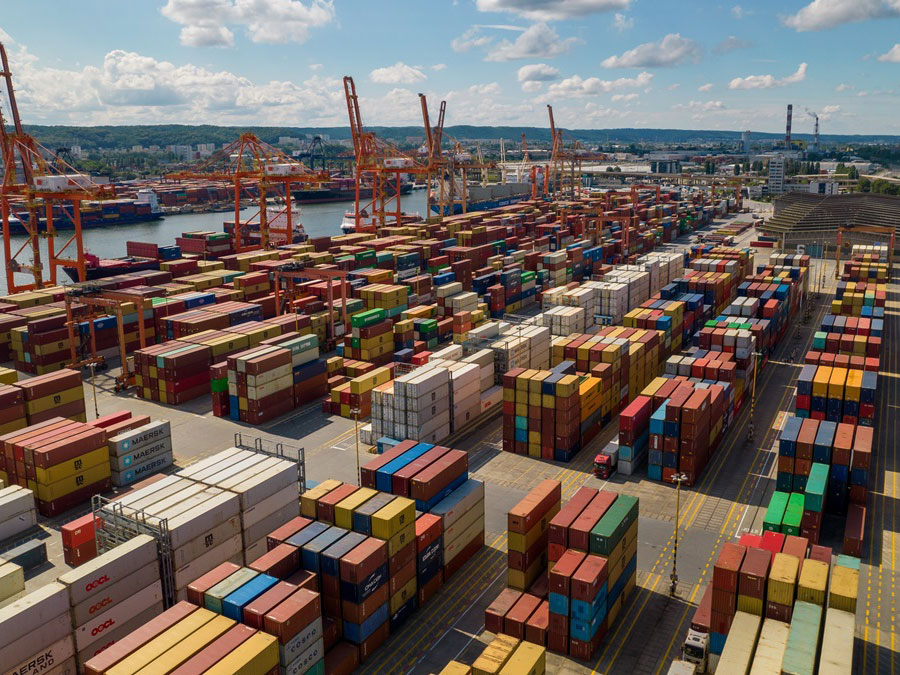
International trade has never been simple, but in recent years, it has become significantly more demanding. Import and export businesses now operate in an environment shaped by geopolitical uncertainty, volatile logistics networks, tightening regulations, and increasingly cautious buyers.
In this climate, success is no longer defined by who has the lowest price or the fastest shipment. It is defined by who makes better decisions, faster, and with less risk.
This article delivers high-level import and export advice by examining how successful trade businesses are redesigning the way decisions are made—strategically, operationally, and financially—to achieve sustainable growth in 2025 and beyond.
Rather than focusing on tools or trends alone, we explore how decision architecture, data discipline, and organizational clarity separate resilient global traders from those constantly reacting to crises.
The Real Challenge in Import and Export Is Not Execution — It Is Decision Quality

Global Trade Under Pressure How Smart Import and Export Businesses Redesign
Most import and export businesses are capable of executing transactions. They can source products, arrange shipping, manage paperwork, and complete deals. Yet many struggle to grow consistently or protect margins.
The root cause is rarely operational incompetence. It is poor decision quality.
Examples include:
Entering new markets without reliable data
Accepting high-risk buyers due to short-term cash pressure
Over-reliance on single suppliers
Inadequate visibility into logistics and financial exposure
Each individual decision may appear reasonable. Over time, however, these decisions compound into structural weakness.
Why Traditional Decision-Making Models No Longer Work in Global Trade
Historically, import and export decisions were made based on:
Experience
Personal relationships
Intuition
Historical patterns
While experience remains valuable, it is no longer sufficient. Today’s trade environment changes too quickly, and risks are too interconnected.
A delayed shipment can trigger:
Contract penalties
Inventory shortages
Cash flow gaps
Damaged customer trust
Modern trade decisions require real-time awareness and scenario-based thinking, not just intuition.
Decision-Making as a System, Not an Individual Skill
High-performing import and export businesses treat decision-making as a system, not a talent possessed by a few senior managers.
This system includes:
Clear decision ownership
Defined risk thresholds
Reliable data inputs
Feedback loops for continuous learning
When decisions are systemized, businesses reduce dependency on individuals and increase organizational resilience.
User Experience Example:
A regional exporter relied heavily on its founder for all major trade decisions. As deal volume increased, bottlenecks formed. After formalizing decision criteria for pricing, credit terms, and supplier selection, the company reduced approval delays and improved deal consistency across teams.
Redefining Risk in Import and Export Operations
Many businesses misunderstand risk as isolated events: a late shipment, a non-paying buyer, a customs issue. In reality, risk in global trade is cumulative and systemic.
Key risk categories include:
Supplier concentration risk
Buyer credit risk
Logistics dependency risk
Regulatory and compliance risk
Currency and cash flow risk
Digitally mature businesses assess these risks collectively, not individually.
The Shift from Reactive to Predictive Trade Management
Reactive businesses respond to problems after they occur. Predictive businesses anticipate them.
Predictive trade management relies on:
Historical performance data
Pattern recognition
Early warning indicators
Scenario planning
This approach allows businesses to adjust before disruptions escalate.
User Experience Example:
An importer identified that delays consistently occurred during specific seasonal peaks. By analyzing historical logistics data, the company adjusted order timing and avoided repeated penalties and lost sales.
Market Entry Decisions: Why Most Import and Export Expansions Fail
Entering new markets is one of the riskiest decisions in global trade. Many expansions fail not because demand does not exist, but because decision-makers rely on incomplete information.
Common mistakes include:
Overestimating demand
Underestimating regulatory complexity
Ignoring payment culture differences
Selecting partners based on convenience rather than reliability
Successful businesses approach market entry as a phased decision process, validating assumptions at each stage.
Structuring Supplier Decisions for Long-Term Stability
Suppliers are not interchangeable. Yet many import and export businesses treat them as such.
Smart supplier decision frameworks evaluate:
Consistency, not just price
Production scalability
Communication reliability
Compliance readiness
User Experience Example:
A trading company replaced its lowest-cost supplier after repeated quality issues caused customer complaints. Although unit costs increased slightly, overall profitability improved due to fewer returns and stronger buyer trust.
Logistics Decisions as Strategic Levers
Logistics decisions are often delegated to operational teams. However, in volatile markets, logistics is a strategic lever.
Advanced businesses analyze:
Carrier reliability over time
Route performance under stress
Cost versus reliability trade-offs
This enables leadership to align logistics decisions with broader business objectives rather than short-term cost savings.
Financial Decision-Making Beyond Revenue Growth

Global Trade Under Pressure How Smart Import and Export Businesses Redesign
Revenue growth alone does not indicate success in import and export. Poor financial decisions can undermine even fast-growing businesses.
Critical financial decision areas include:
Credit terms and buyer exposure
Currency risk management
Timing of payments and receivables
Inventory financing strategies
User Experience Example:
An exporter increased sales rapidly but faced constant cash shortages. By reassessing credit terms and aligning them with buyer risk profiles, the company stabilized cash flow without sacrificing growth.
Aligning Teams Around Consistent Trade Decisions
Decision inconsistency across departments creates internal friction and external confusion.
Digitally mature businesses ensure that:
Sales, finance, and operations share the same data
Decision criteria are transparent
Exceptions are documented and reviewed
This alignment reduces internal conflict and improves execution speed.
Searching HS Code Tool
Leadership’s Role in Building Decision Discipline
Technology and data do not replace leadership. Leaders set the tone for disciplined decision-making.
Effective leaders:
Encourage evidence-based discussions
Resist purely emotional decisions
Invest in long-term stability over short-term gains
This mindset cascades throughout the organization.
Measuring the Impact of Better Decisions
Businesses that redesign decision-making track outcomes such as:
Reduced operational surprises
Improved margin stability
Faster response to disruptions
Higher partner confidence
These outcomes compound over time, creating durable competitive advantage.
Sustainable Growth Comes from Fewer, Better Decisions
In global trade, growth does not come from doing more deals at any cost. It comes from making fewer bad decisions and more consistently good ones.
Import and export businesses that thrive in 2025 are not necessarily the largest or most aggressive. They are the most deliberate.
Advanced Loan & Financial Calculator
Final Thoughts: The Competitive Edge No One Talks About
While competitors focus on tools, pricing, or speed, the most successful global traders quietly invest in decision quality.
They design systems that:
Reduce uncertainty
Clarify trade-offs
Support long-term thinking
This invisible advantage is difficult to replicate—and incredibly powerful.
Call to Action: Register to Improve the Quality of Your Trade Decisions
If you are involved in import or export and want to strengthen your decision-making framework, reduce risk, and grow with confidence, the next step is simple.
Register on our platform today to gain access to expert import and export advice, structured insights, and digital resources designed to support smarter, more resilient global trade decisions.
Registration is fast, free, and gives you ongoing access to knowledge that helps you navigate complexity with clarity.

