Blog
Export SOPs: Why Top Trading Firms Document Everything (And Average Exporters Don’t)
After more than twenty years in international trade, I can tell you one hard truth:
Top trading firms don’t succeed because they are smarter — they succeed because they document everything.
I’ve worked with exporters who moved millions of dollars annually and still lost money on simple mistakes: wrong documents, missed deadlines, unclear responsibilities. On the other side, I’ve seen mid-sized trading firms outperform giants — not with better prices, but with clear Export SOPs (Standard Operating Procedures).
Export SOPs
This article explains why export SOPs are the invisible backbone of successful trading firms, how they eliminate chaos, and how you can build them step by step. If you’re serious about scaling exports without stress, disputes, or constant firefighting, this guide is for you — and platforms like Tendify are built to support exactly this mindset.
Problem Definition: Why Most Exporters Operate in Controlled Chaos
Most exporters believe SOPs are “corporate paperwork.”
That belief is expensive.

Why Most Exporters Operate in Controlled Chaos
How to Build an Internal Export Operations Playbook: Step-by-Step Guide for 2026
The Real Problem
In many export businesses:
Knowledge lives in people’s heads
Processes change depending on who’s working
Mistakes are fixed, not prevented
Every shipment feels “urgent”
I once consulted for a trading company exporting to three countries. Same product. Same buyers. Same team. Yet every shipment followed a different process. Why? Because nothing was documented.
When one experienced staff member resigned, the company lost:
Buyer communication history
Document preparation logic
Payment follow-up discipline
Within six months, disputes increased and profit dropped by 18%.
That’s not bad management — that’s missing SOPs.
What Are Export SOPs (And What They Are NOT)
Export SOPs Defined
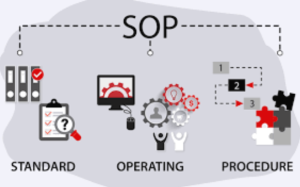
Export SOPs are written, repeatable, and enforceable instructions that explain:
What to do
When to do it
Who is responsible
How success is measured
They cover the full export lifecycle — from first inquiry to final payment.
What SOPs Are NOT
❌ Not theoretical manuals
❌ Not “nice-to-have” documents
❌ Not generic templates copied from Google
Real SOPs reflect how your trade actually works, not how it should work in theory.
Why Top Trading Firms Document Everything
This is where the difference is made.

Step-by-Step Export Procedures
1. SOPs Turn Experience Into Assets
Experience locked in one person is a risk.
Experience documented becomes a company asset.
Top trading firms:
Document negotiations
Standardize buyer verification
Record pricing logic
Store lessons learned
That’s why they survive staff turnover — and grow.
Export Documentation Checklist Generator
2. SOPs Reduce Export Risk Dramatically
Every export shipment carries risk:
Payment risk
Compliance risk
Logistics risk
Reputation risk
SOPs don’t eliminate risk — they control it.
When every shipment follows the same documented process:
Errors drop
Delays shrink
Disputes become rare
3. SOPs Create Predictable Cash Flow
Unclear processes delay payments.
Top exporters document:
Payment terms approval
LC handling steps
Advance payment verification
Follow-up timelines
Predictability = cash flow stability.
Strategic Business Networking 2026: How to Build a Wealthy Export Circle in the Gulf with Tendify
Step-by-Step Solution: Building Export SOPs That Actually Work
Let’s get practical.
Building Export SOPs
Step 1: Break Export Operations Into SOP Categories
Every trading firm should document SOPs in these core areas:
Buyer onboarding & verification
Quotation & pricing
Contract & payment terms
Production or sourcing
Quality control
Export documentation
Logistics & shipping
Customs clearance
Payment collection
Post-shipment review
If one category is missing, problems will show up there first.
Step 2: Write SOPs for Reality, Not Perfection
A good SOP answers four questions clearly:
Who does this?
When does it happen?
How is it done?
What happens if it fails?
Example (simplified):
SOP: Buyer Verification
Collect trade license and company registration
Verify address and business activity
Check previous trade references
Approve or reject buyer in CRM
Simple. Clear. Enforceable.
Step 3: Assign Ownership (This Is Critical)
SOPs without ownership are useless.
| SOP Area | Owner | Backup |
|---|---|---|
| Buyer Verification | Sales Manager | Trade Manager |
| Documentation | Export Officer | Operations Lead |
| Logistics | Shipping Coordinator | Procurement |
| Payment Follow-Up | Finance | Director |
If ownership is unclear, SOPs will be ignored.
Strategic Business Growth 2026: Why Export-Driven Models Are the Ultimate Investment Hedge
Step 4: Build Checklists Into Every SOP
Checklists prevent human error.
Example: Pre-Shipment SOP Checklist
✅ Buyer approved
✅ Contract signed
✅ Payment terms confirmed
✅ Packaging compliant
✅ Documents reviewed
✅ Freight booked
✅ Insurance issued
✅ Customs pre-check done
Top firms don’t rely on memory.
Step 5: Standardize Documents and Templates
Export SOPs must include:
Invoice templates
Packing list format
BL/AWB instructions
Email templates
Dispute escalation steps
Consistency builds trust with buyers and authorities.
Step 6: Use Tables to Visualize SOP Flow (SEO + Clarity)
| SOP Stage | Input | Action | Output |
|---|---|---|---|
| Inquiry | Buyer request | Qualification | Approved lead |
| Quotation | Specs | Pricing | Proforma invoice |
| Shipment | Goods ready | Logistics | BL / AWB |
| Payment | Documents | Follow-up | Funds received |
This clarity is why top firms scale faster.
Step 7: Connect SOPs to Tools (Not Paper)
Paper SOPs fail at scale.
Top exporters integrate SOPs into:
Trade CRM systems
Document management platforms
Verified marketplaces
👉 Tendify Free CRM allows exporters to embed SOPs directly into deal stages — making compliance automatic, not optional.
Common Mistakes When Implementing Export SOPs
I’ve seen these mistakes repeatedly:
❌ Writing SOPs once and never updating
❌ Making SOPs too complex
❌ Ignoring payment processes
❌ Letting staff bypass SOPs “just this time”
❌ No monitoring or enforcement
⚠️ Warning: The first time you allow an SOP exception, you teach your team SOPs don’t matter.
Tools & Solutions That Support Export SOPs
1. Trade-Focused CRM (Essential)
You need a system that understands:
Buyers
Deals
Incoterms
Documents
Payments
Generic CRMs fail exporters.
2. Verified Marketplaces
Random B2B platforms create SOP violations.
Look for:
Verified companies
Transaction records
Dispute prevention
Process-driven trade beats volume-driven trade.
FAQ: Export SOPs
❓ Are export SOPs only for large firms?
No. Small exporters benefit more because one mistake can be fatal.
❓ How detailed should SOPs be?
Detailed enough that a new employee can follow them without guessing.
❓ Do SOPs slow down exports?
Initially, yes. Long-term, they dramatically speed everything up.
❓ Who should maintain SOPs?
Operations or trade managers — not interns.
❓ How often should SOPs be reviewed?
Quarterly, or after any major shipment issue.
Final CTA: Document Today, Survive Tomorrow
Exporting without SOPs is relying on luck.
Top trading firms don’t gamble — they document.
They build systems that work even when people change.
They trade calmly while others panic.
If you want exports that scale without chaos, start documenting — and use tools built for real trade operations.
👉 Start Using Tendify Free Tools to Trade Safely
I’ve traded with SOPs — and without them.
One builds businesses. The other burns them.