


Blog
The Poland Corridor: A Strategic Guide to Import-Export Opportunities
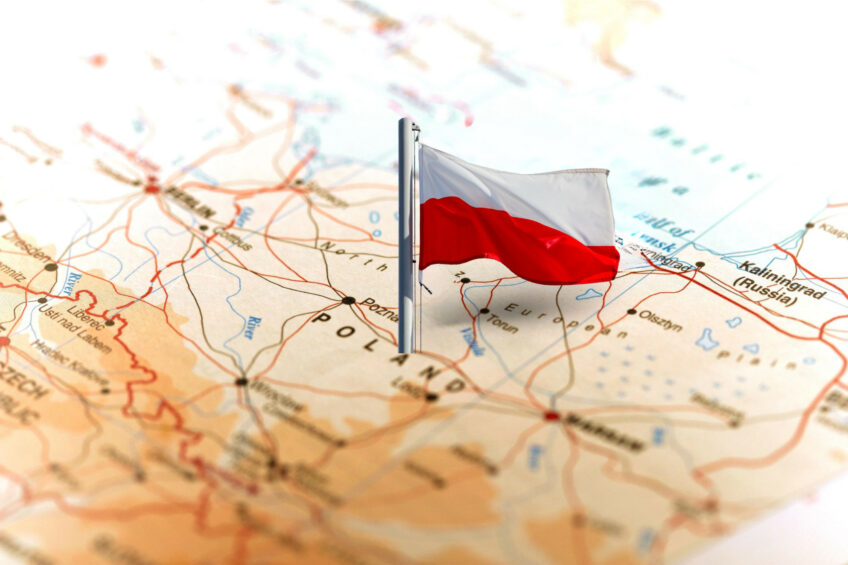
Over two decades building and scaling export businesses across volatile corridors, I’ve learned that the smartest moves often hide in plain sight. While everyone chases the usual suspects—Germany, China, or the Gulf—Poland has quietly become one of Europe’s most powerful manufacturing and logistics engines. For traders from the GCC and beyond, it’s not just another market. It’s a high-efficiency gateway into the entire European Union, with lower entry barriers, competitive costs, and real demand for products from energy-rich regions.
In 2025, Poland’s economy grew by around 3.6%, outpacing much of the EU, driven by strong private consumption, investment, and exports nearing $350-380 billion. Its strategic location, deep integration into EU supply chains, and expanding infrastructure make 2026 a prime window for action. Whether you’re exporting petrochemicals, energy products, or looking to source high-quality manufactured goods for re-export, the Poland Corridor deserves a central spot in your playbook.
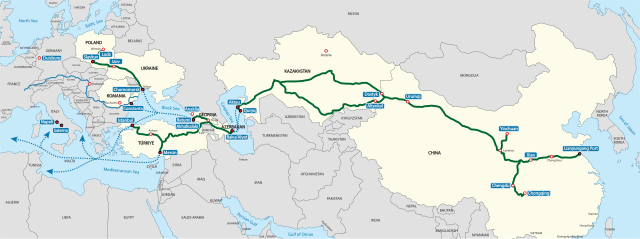
The Poland trade Corridor
This guide cuts through the noise. I’ll walk you through what Poland exports (and why GCC buyers should care), what it desperately needs to import, and exactly how to use its ports and rails as your low-friction entry to Central and Western Europe. No fluff—just actionable insights drawn from real trade flows and hard-won experience.
The Australia Hub: How to Access Markets with 0% Tariffs
Why Poland Matters More Than Ever in 2026 (The Big Picture)
Poland sits at the crossroads of East and West. With a population of about 36-37 million and robust industrial capacity, it has evolved from a post-Soviet economy into Europe’s manufacturing powerhouse. Its GDP growth consistently beats the EU average, supported by EU funds, rising wages, and nearshoring trends as companies diversify away from riskier supply chains.
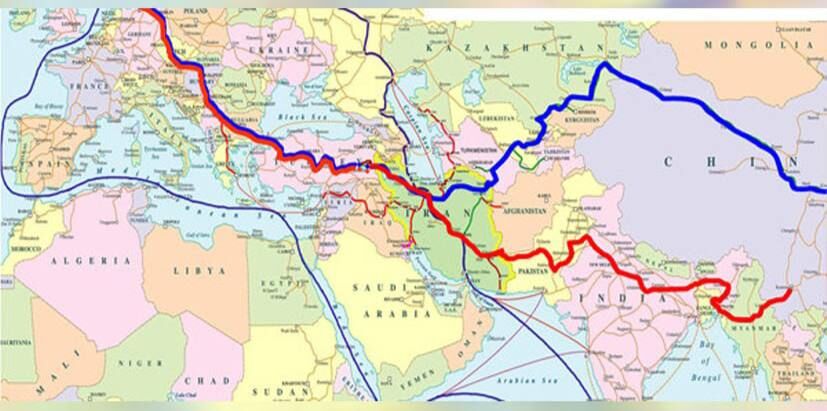
The Poland Corridor
Key advantages for international traders:
- EU Single Market access: Once goods clear Polish borders or ports, they move freely across 27 countries with minimal additional paperwork.
- Competitive costs: Lower labor and operational expenses than Western Europe, yet high technical standards.
- Logistics momentum: Ports and rail hubs handling surging volumes while avoiding chronic congestion plaguing Rotterdam or Hamburg.
- Diversification drive: Post-geopolitical shifts have Poland actively seeking non-Russian energy and raw materials—perfect alignment for GCC suppliers.
- The Nearshoring Epicenter: As Western European firms move production closer to home to avoid global supply chain shocks, Poland has become the primary beneficiary. This “Nearshoring” trend creates a secondary market for raw materials and chemical intermediates—areas where GCC suppliers hold a significant competitive advantage.
In short, Poland isn’t just a destination. It’s your efficient backdoor to 450+ million EU consumers.
Poland’s Export Powerhouse: What They Make and Where It Goes
Forget the old stereotype of Poland as mainly an apple exporter. Today, it’s a top-tier industrial player. In recent data, machinery (including computers) leads at around $56.6 billion, followed by electrical machinery ($46.6B), vehicles ($43.2B), plastics, and—crucially for many readers—furniture at nearly $18.7 billion.
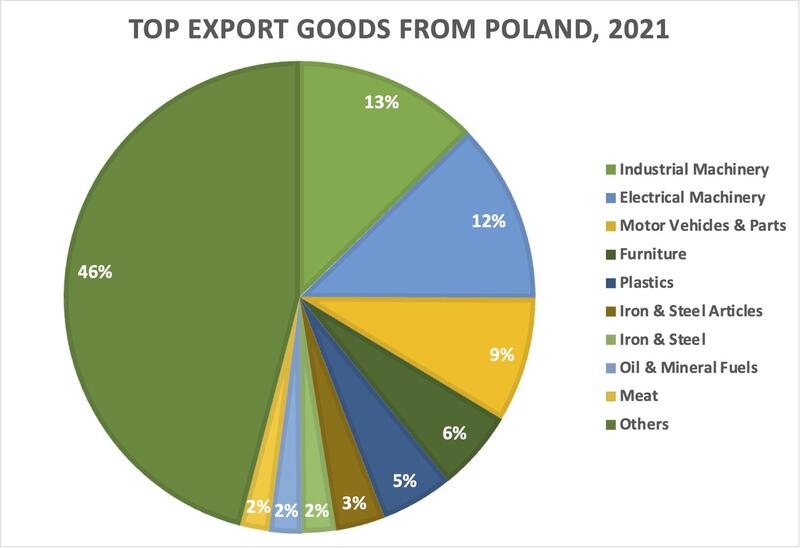
Poland’s Export Powerhouse
Automotive and Machinery Dominance Poland ranks among Europe’s largest suppliers of auto parts and vehicles. Think engines, components, wiring harnesses, and finished vehicles. Major OEMs and Tier 1 suppliers have deep roots here, feeding assembly plants across Germany and beyond. For GCC importers or re-exporters, this means reliable access to quality European-certified parts at prices more competitive than sourcing directly from Germany.
Furniture and Home Goods: A Hidden GCC Goldmine Poland is the second-largest furniture exporter in the world and a European leader. High-quality wooden furniture, upholstery, and prefabricated solutions ship globally. GCC markets—booming in real estate, hospitality, and residential projects—present massive opportunity. Polish craftsmanship meets FSC standards and modern design trends, often at better margins than Italian or Scandinavian alternatives. Pair this with Tendify’s tools for cost calculators and contract builders to structure deals efficiently.
Appliances and Electronics Strong output in white goods (refrigerators, washing machines) and electronics assembly. These are scalable B2B products for distributors in the Middle East looking for reliable mid-tier brands.
Pro Tip from Experience: When sourcing from Poland, focus on clusters. Automotive suppliers cluster around key regions with excellent road/rail links. Use Poland’s technical workforce—detail-oriented and English-proficient—to your advantage in quality negotiations.
Major destinations include Germany (still ~27% of exports), Czechia, France, UK, and growing non-EU markets. For GCC traders, reverse flows (importing Polish goods for local sale or re-export) can hedge currency risks and tap premium “European-made” positioning.
CARICOM Trade Guide: How to Profit in the Caribbean Single Market
What Poland Imports: High-Demand Opportunities for GCC and Global Suppliers
Poland runs a trade deficit in certain categories, creating openings. Energy security remains a priority after diversifying away from previous dependencies. Petroleum products, chemicals, and intermediates top import lists.

What Poland Imports
Energy and Petrochemicals Poland continues heavy imports of crude oil and related products while expanding LNG and renewables. GCC suppliers of bitumen, petrochemical derivatives, and specialized fuels can find receptive buyers. With refinery modernization and demand from industry/transport, stable, high-quality supplies command premiums. Monitor Vision 2030-style diversification—Poland wants reliable partners.
Food and Agri-Products Growing demand for exotic/tropical fruits, nuts, spices, and out-of-season produce. Urban consumers and processors seek quality imports. If you handle dates, dried fruits, or specialty items from the Gulf, Poland’s market is expanding. Link this to broader EU distribution.
Electronics, Components, and Machinery Inputs Semi-conductors, parts for assembly lines, and tech intermediates. For traders with Asian or other sources, Poland acts as a nearshoring hub.
Other Hot Categories: Plastics/raw materials, chemicals, and vehicles/hybrids.
Real talk: Polish buyers are technical and compliance-focused. They value long-term reliability over one-off lowball deals. Use Incoterms advisors and HS code tools on Platform.Tendify.Net to ensure smooth classification and avoid costly delays.
The Gateway Strategy: Logistics That Give You the Edge
This is where Poland shines brightest. Its infrastructure turns it into a true corridor.

Port of Gdansk: Your Baltic Superhighway Gdansk has surged in rankings, handling ~80 million tonnes in 2025 and strong container growth (around 2.8 million TEU, up significantly). It offers lower congestion than Rotterdam or Hamburg—often 24-48 hour turnaround vs. multi-day waits elsewhere. Deep-water capabilities handle large vessels, with excellent rail/road connections to Central Europe.
For GCC bulk or container shipments (bitumen, petrochemicals, construction materials), Gdansk provides faster, cheaper access to Poland, Germany, and beyond compared to routing via Western ports. Reduced demurrage/detention risks translate to real savings—potentially thousands per container.
Rail and New Silk Road Connections Poland remains a key node for China-Europe rail, with terminals like Małaszewicze. While routes evolve, the infrastructure supports multimodal efficiency. For time-sensitive goods, rail can slash ocean transit times dramatically.
Road and Inland Networks: Excellent trucking and intermodal options minimize last-mile costs.
Practical Comparison (Actionable Table):
| Aspect | Gdansk (Poland) | Rotterdam/Hamburg | Advantage for GCC Traders |
|---|---|---|---|
| Congestion/Delays | Low (24-48 hrs) | High (48-72+ hrs) | Faster turnaround, lower costs |
| Container Growth | Strong double-digit | Moderate | Scalable capacity |
| Access to EU Interior | Direct rail/road | Longer inland hauls | Lower total logistics cost |
| Bulk Energy Cargo | Excellent (oil/liquids) | Strong but busier | Ideal for petrochemicals |
Strategic Trade Hubs in Poland
| Region | Key Industry Cluster | Major Logistics Link |
| Silesia (Katowice) | Automotive & Heavy Machinery | A1 Motorway / Rail to South Europe |
| Greater Poland (Poznań) | Food Processing & Furniture | E20 Rail (East-West Corridor) |
| Pomerania (Gdańsk) | Maritime & Petrochemicals | Port of Gdańsk (Deep-water Terminal) |
| Mazovia (Warsaw) | Electronics & High-Tech | Chopin Cargo Hub / Central Rail |
Step-by-Step: How to Enter the Poland Corridor Successfully
Entering a high-standard market like Poland requires more than just a good product; it requires a systematic approach to “Trade Engineering.” Here is the proven sequence to move from initial interest to a secured trade flow:
Phase 1: Intelligence & Technical Mapping
Market Validation: Don’t guess the demand. Use Tendify’s Trade Explorer to analyze real-time trade flows and import volumes specifically for the Polish market.
Tariff Engineering: Map your HS Codes early. Use our automated tariff tools to calculate exact duties and VAT implications. Validating these figures with local Polish chambers or customs brokers prevents “border-shock” costs later.
Phase 2: The Compliance Shield
Regulatory Alignment: EU standards are the “Gatekeepers.” Ensure your products meet CE marking requirements for machinery or REACH protocols for chemicals.
Local Expertise: Leverage experienced Polish logistics firms. They don’t just move boxes; they act as your “Regulatory Consultants” on the ground. Compliance is your strongest competitive advantage against fly-by-night competitors.
Phase 3: Strategic Partner Acquisition
High-Intent Networking: Check the 2026 Exhibition Calendar on Tendify. Whether it’s the Warsaw Industry Week or Poznań International Fair, face-to-face trust is paramount.
Vetting: Use our B2B directory to focus on Verified Distributors in key industrial clusters (like the Aviation Valley in Rzeszów or the furniture hubs in Wielkopolska).
Phase 4: Logistics Engineering & Route Modeling
The Gdansk Advantage: Model your primary routes via the Port of Gdańsk.
Multimodal Comparison: Use our Cost Calculators to run side-by-side comparisons: Sea (for bulk/economy), Rail (for speed), or Multimodal (for flexibility). Optimizing your container load factors here can save up to 15% on total landed costs.
Phase 5: Financial & Contractual Security
The ProTrade Shield: Never rely on “Gentlemen’s Agreements.” Draft robust, cross-border contracts using the Tendify ProTrade Builder, covering specific Incoterms, quality benchmarks, and dispute resolution.
Payment Safety: For the first 3-5 deals, utilize Escrow services or structured LCs to build a “Trust Capital” with your Polish counterparts.
Phase 6: The “Test & Scale” Loop
Pilot Shipments: Start with a “Trial Run” to stress-test your logistics and documentation.
Data-Driven Scaling: Use CRM tools to track partner performance and Pulse AI to monitor shifts in Polish market sentiment or currency fluctuations.
A Warning from the Field: “The most common failure point I’ve seen is underestimating documentation rigor. A missing certificate or a typo in a Bill of Lading can lead to weeks of port storage fees. In 2026, Polish customs are efficient but uncompromising. Plan for a 4–6 week lead time for your first entry to allow for paperwork ‘burn-in’ time.
Challenges and Risk Mitigation (The Real Talk)
In high-stakes international trade, optimism is a strategy, but realism is a shield. Navigating the Poland-GCC corridor requires an honest assessment of the friction points and a proactive approach to neutralizing them. Here is how we mitigate the core risks:
1. Navigating EU Regulatory Nuance (REACH & Carbon Borders)
EU regulations are not static. By 2026, compliance isn’t just about CE marking; it’s about CBAM (Carbon Border Adjustment Mechanism) and REACH for chemicals.
Mitigation: Do not treat compliance as a one-time event. Use live compliance checklists and ensure your Polish partner has a dedicated ‘In-house Authorized Representative’ to handle EU-specific environmental and safety filings.
2. Currency Volatility and Inflationary Hedging
With global markets in flux, relying on fixed-price long-term contracts can be dangerous for margins.
Mitigation: Move beyond simple FOB/CIF terms. Utilize Incoterms 2020 strategically (like DAP or DDP for trusted partners) and incorporate Currency Adjustment Clauses (CAC) or “Price Escalation Formulas” tied to independent commodity indices. This ensures that a sudden spike in fuel or raw material costs doesn’t turn a profitable deal into a loss.
3. Market Saturation and High Competition
Poland is a transparent market, which means competition is fierce. Competing on price alone is a “race to the bottom.”
Mitigation: Differentiate through Value-Added Services (VAS). Instead of just shipping goods, offer integrated solutions: local warehousing in Polish SEZs, “buffer stock” management, or final-stage labeling. When you solve a logistics headache for your buyer, price becomes secondary to reliability.
4. Geopolitical Resilience (The Diversification Mandate)
Relying on a single transport route or a single origin is the biggest risk in 2026.
Mitigation: Practice “Corridor Diversification.” While Gdańsk is your primary gateway, always have a secondary routing plan via Southern European ports (like Koper or Trieste) or rail links. Diversified sourcing—mixing GCC products with other regional origins—ensures that your supply chain remains “Anti-fragile” against localized disruptions.
5. Cultural Alignment: Professionalism as Currency
Polish business culture is deeply rooted in professionalism, punctuality, and long-term relationship building—values that mirror the most successful trade houses in the GCC.
Mitigation: Treat the first three deals as “Trust-Building Milestones.” Avoid “hit-and-run” trading. Invest in face-to-face meetings at trade fairs in Poznań or Dubai. In Poland, a firm handshake and a transparent contract are the foundations of a decade-long partnership.
Case for GCC Traders Specifically
For exporters and trade houses operating out of the UAE, Saudi Arabia, or Iran, Poland is more than just a destination; it is a strategic lever to optimize tax efficiency and market access. In 2026, as trade corridors shift, the “Poland-GCC” axis offers three specific structural advantages:
1. Preferential Frameworks and Duty Optimization
While direct EU tariffs can be complex, Poland’s integration into the EU Single Market allows GCC-based exporters to utilize specific customs procedures (like Procedure 42) to clear goods in Poland while paying VAT only in the final destination country. This significantly improves cash flow for distributors moving high-value commodities. For energy products and petrochemicals, Poland’s aggressive move to diversify away from legacy suppliers has created a “Premium Demand” window for GCC-origin bitumen, polymers, and specialty chemicals.
2. The “Profitable Loop”: Re-exporting Value
A unique opportunity exists in the machinery and furniture sectors. Poland’s position as a global leader in high-end furniture and industrial machinery allows GCC traders to:
Source in Poland: Procure European-standard furniture and machinery at lower production costs than in Germany or Italy.
Re-export to the Gulf: Supply the massive hospitality and real-estate projects in NEOM (KSA) or Dubai (UAE) with premium European goods at better margins.
Reverse Flow: Use the same logistics channels to export Gulf-produced energy derivatives back to Poland’s industrial clusters, creating a high-efficiency cargo loop that minimizes empty container legs.
3. Synergizing with Free Zone Strategies
By combining Poland’s Special Economic Zones (SEZs) with GCC free zones (like JAFZA or KAFD), traders can achieve a “Tax-Neutral” corridor. Storing goods in Polish bonded warehouses allows you to defer duties until the exact moment of sale, providing a buffer against market volatility.
Strategic Insight: “For Iranian-origin exporters or those navigating complex compliance landscapes, Poland’s professional logistics firms offer robust ‘Know Your Customer’ (KYC) and compliance frameworks that facilitate legitimate trade into the EU heartland. It is about building a bridge of trust that the banking system respects.”
The Digital Trade Bridge: Tech-Enabled Compliance
In 2026, the barrier to entry isn’t distance; it’s data. Modern trade between Poland and the GCC is increasingly powered by AI-driven compliance and digital documentation. At Tendify, we’ve observed that companies utilizing automated HS code classification and real-time logistics tracking reduce their administrative overhead by up to 22%. By digitizing the ‘Paper Trail’ from a warehouse in Poznań to a distributor in Dubai, traders can mitigate the risks of customs delays and ensure seamless cross-border settlement.
Future Outlook: 2026 and Beyond
Poland’s trajectory is no longer about “catching up” with Western Europe; it is about defining the new standards of industrial resilience and logistics speed. With projected GDP growth stabilizing around 3.2% to 3.5%—consistently outperforming the Eurozone average—the next five years will see Poland transition from a regional player to a global nexus.
Here is what the landscape looks like for 2026 and beyond:
1. The Nearshoring Super-Cycle
The shift from “Just-in-Time” to “Just-in-Case” supply chains is permanent. As Western firms continue to shorten their supply lines to mitigate geopolitical shocks, Poland is the primary beneficiary. We expect a massive influx of investment in high-tech manufacturing (semiconductors, EV batteries, and aerospace components), creating a secondary demand for specialized chemical intermediates and raw materials from global partners.
2. The Green Transition & Energy Arbitrage
Poland is undergoing its most significant energy overhaul in history. The expansion of offshore wind in the Baltic and the development of the first nuclear power plants are creating a new “Green Corridor.” For GCC energy exporters, the opportunity is shifting from crude oil to hydrogen technology, LNG, and bitumen for massive infrastructure projects. Poland will be a key buyer of the “energy mix” required to fuel its industrial engines.
3. Infrastructure 2.0: The Central Communication Hub (CPK)
Beyond 2026, the focus will be on mega-projects like the Centralny Port Komunikacyjny (CPK). This integrated air, rail, and road hub is designed to be one of the largest in Europe, potentially handling millions of tonnes of cargo annually. This will solidify Poland’s position as the undisputed multimodal gateway for goods moving between the Atlantic, the Baltic, and the Silk Road corridors.
4. The Digital Trade Revolution
The “Digital Poland” initiative is merging with EU-wide blockchain and AI trade mandates. In 2026, we anticipate that e-Invoicing and real-time customs integration will become the norm. Traders who leverage platforms like Tendify—utilizing AI for predictive logistics and automated compliance—will hold a decisive “Information Advantage” over those relying on legacy systems.
5. Strategic Niches for GCC Traders
Agri-Tech & Food Security: Poland will export processed, high-shelf-life food products to the Gulf while importing premium organic and tropical inputs.
Industrial Re-export Loops: Sourcing high-quality Polish machinery for GCC construction projects, then leveraging those same channels to export energy-dense derivatives back to Poland.
The “First-Mover” Mandate
The “sharpest edges of risk” mentioned earlier are being smoothed out by transparency and technology. Smart movers who position themselves in the Poland-GCC corridor now aren’t just chasing a trend—they are securing their spot in the most efficient trade route of the late 2020s.
“The window for asset-light entry into the Polish market is peaking. By 2027, the infrastructure will be mature, competition will be saturated, and the early-entry premiums will be gone. The time to build your digital and physical footprint is now.”
Frequently Asked Questions: Trading via the Poland Corridor
1. Why should I choose the Port of Gdańsk over traditional hubs like Rotterdam or Hamburg?
While Rotterdam and Hamburg are massive, they often suffer from significant congestion and higher port fees. The Port of Gdańsk offers a strategic “Cost-Efficiency Corridor” with faster vessel turnaround times (often 24-48 hours) and direct, deep-water access to the Baltic. For GCC traders, this means lower demurrage risks and faster inland distribution to Central and Eastern Europe.
2. What are the primary compliance requirements for exporting from the GCC to Poland?
Since Poland is an EU member, all imports must comply with EU Single Market regulations. This includes CE marking for industrial goods, REACH certification for chemical products (crucial for petrochemical exporters), and strict phytosanitary standards for agricultural goods. Using digital tools like Tendify’s HS code finder can help you identify specific duty rates and compliance checklists before you ship.
3. Can I use Poland as a hub for re-exporting goods to Western Europe?
Absolutely. Poland’s position as a Nearshoring hub makes it ideal for re-exporting. You can land bulk materials or components in Polish special economic zones, perform final assembly or packaging, and then move the finished products duty-free to Germany, France, or Scandinavia under the EU’s freedom of movement for goods.
4. How does the current geopolitical situation in Eastern Europe affect trade stability in Poland?
Despite regional shifts, Poland remains one of the most stable and resilient economies in Europe. Its heavy investment in energy diversification (LNG terminals and Baltic Pipe) and infrastructure has actually accelerated its role as a key logistics node. For traders, this has opened new niches in energy, raw materials, and construction inputs as Poland seeks to secure its supply chains.
5. How can Tendify assist in establishing a trade flow between the Middle East and Poland?
Tendify acts as your Digital Operating System for the Poland-GCC corridor. We provide:
Verified Supplier Network: To help you find reliable Polish manufacturers or Middle Eastern distributors.
Trade Tools: Real-time tariff calculators, automated ProTrade contract builders, and HS code classification.
Market Intelligence: AI-driven insights to help you benchmark prices and optimize routing via Polish ports.
Ready to Unlock the Poland Corridor?
The data is clear, the infrastructure is ready, and demand exists. The question is whether you’ll treat Poland as a side market or a strategic pillar.
Head over to Platform.Tendify.Net right now. Test our free CRM, duty calculators, HS code finder, contract builders, and AI market pulse tools. Many traders have slashed costs and closed deals faster by integrating these into their workflows. Whether planning your first Gdansk shipment or scaling existing flows, the platform gives you the operating system to execute confidently.
Don’t let 2026 opportunities pass by. Build your Poland strategy today—the corridor is open.
Special Note for Polish Exporters:
Are you looking to diversify beyond the EU? Our platform features a specialized ‘Middle East Entry Kit’ designed to help Polish manufacturers navigate GCC standards, find verified distributors in Saudi Arabia and the UAE, and calculate total landed costs in real-time. Don’t just export—dominate new markets with data.

