Blog
Shadow Trade and Alternative Routes: Risk Management in Strategic Cargo Transport from Far East to West

The 2026 operator’s playbook for moving high-value strategic cargo while staying off the global maritime surveillance grid.
After more than two decades structuring multi-million-dollar shipments across Asia, the Middle East, and Europe, I have learned one hard truth: in today’s world, visibility is the biggest risk. Automatic Identification System (AIS) tracking, satellite surveillance, insurance databases, and real-time port intelligence have turned the traditional high seas into a transparent theater. For operators handling strategic cargo — dual-use industrial components, specialized machinery, high-tech electronics, or any goods that attract regulatory scrutiny — the standard maritime routes have become a liability.

Shadow Trade and Alternative Routes
This is where shadow trade and alternative routes become not just useful, but essential. The term “shadow trade” does not imply illegality; it describes the disciplined, highly structured movement of cargo along paths that deliberately minimize digital and physical visibility. These are legitimate commercial corridors that operate outside the primary AIS-monitored sea lanes, using overland rail, small-port transshipment, air freight hybrids, and multimodal combinations that keep shipments off the global radar until they reach their final destination.
In 2026, the pressure on traditional East-to-West routes has never been higher. Geopolitical friction, enhanced sanctions screening, and real-time vessel tracking mean that even routine industrial shipments can trigger delays, inspections, or insurance complications. Sophisticated operators have responded by engineering parallel logistics architectures — the same way financial markets developed dark pools when public exchanges became too transparent.
This article is the complete strategic playbook I wish I had fifteen years ago. It details the exact routes, risk-management frameworks, documentation disciplines, and digital tools that allow large-scale cargo to move from the Far East to Western markets with controlled visibility and maximum resilience.
Understanding the Modern Maritime Surveillance Grid
The global maritime domain is now one of the most monitored environments on Earth. AIS transponders, mandatory on vessels over 300 gross tons, broadcast position, speed, and identity every few seconds. Satellite AIS, coastal radars, and commercial intelligence platforms aggregate this data into real-time dashboards used by insurers, navies, customs authorities, and even private security firms.
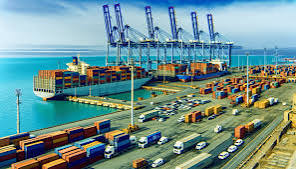
Strategic Cargo Transport
Additional layers include:
- Long-Range Identification and Tracking (LRIT)
- Port State Control databases
- Insurance blacklists and vessel history repositories
- AI-powered anomaly detection algorithms
- Space-based synthetic aperture radar (SAR) imaging
For strategic cargo, this transparency creates three immediate risks: regulatory interception, competitor intelligence gathering, and opportunistic insurance or security threats. The solution is not to disappear entirely — which is impossible for legitimate commerce — but to operate along corridors where visibility is naturally lower and can be managed through deliberate routing, documentation discipline, and digital layering.
The Shadow Trade Playbook: Core Principles for 2026

The Shadow Trade Playbook
1. Route Diversification – Moving Beyond the Malacca-Suez Axis
The traditional East-to-West maritime highway — Strait of Malacca, Indian Ocean, Red Sea, Suez Canal — is now the most surveilled corridor on the planet. Alternative routes include:
- Overland Rail Corridors (China–Central Asia–Middle East–Europe): The upgraded International North-South Transport Corridor (INSTC) and China-Europe Railway Express variants that bypass maritime chokepoints entirely.
- Small-Port Transshipment Networks: Lesser-known ports in Oman (Duqm), Iran (Chabahar under controlled conditions), Pakistan (Gwadar), and East African hubs that handle break-bulk and project cargo with lighter monitoring.
- Multimodal Air-Sea Hybrids: High-value components flown to intermediate hubs then transferred to feeder vessels or trucks.
- Arctic and Northern Routes: Emerging options for specific seasonal windows, though still limited for heavy industrial cargo.
2. Cargo Camouflage and Documentation Discipline
Strategic goods travel most safely when embedded inside larger, legitimate industrial shipments. A high-tech component travels as “industrial machinery spare parts” under a broad HS code. Dual-use items are listed with precise but commercially defensible descriptions supported by end-user certificates and third-party inspections.
3. Digital Layering and Visibility Management
Modern shadow trade is not about going dark; it is about selective visibility. Operators use platforms that maintain internal audit trails while limiting external exposure.
Key Alternative Corridors in Detail
The INSTC and Eurasian Land Bridge
The revived International North-South Transport Corridor now offers a 40% faster alternative to Suez for cargo moving from East Asia through Iran and the Caucasus to Europe. Rail segments avoid AIS entirely. Ports like Bandar Abbas and Chabahar serve as controlled entry points where cargo can be re-documented under local free-zone rules before continuing north or west.
Oman–UAE–Qatar Triangle as a Shadow Transshipment Hub
Duqm, Jebel Ali, and Hamad Port form a resilient triangle where vessels can switch flags, change manifests, or break bulk with minimal international scrutiny. These free zones allow storage, repackaging, and re-export under simplified procedures.
East Africa and Red Sea Feeder Networks
Smaller ports in Djibouti, Somaliland, and Kenya offer discreet transshipment options for cargo destined for the Mediterranean or Europe via overland links.
Risk Management Frameworks That Actually Work
Successful operators follow a layered approach:
- Pre-voyage modeling: Full cost and visibility risk simulation before any commitment.
- Smart escrow and performance guarantees: Funds and title documents released only upon verified milestones.
- Third-party verification: Independent surveys, SGS-type inspections, and notarized documentation at every handoff.
- Insurance structuring: Specialized policies that cover shadow-route specifics rather than standard marine cargo clauses.
How Platform.Tendify.Net Powers Shadow Route Execution
Platform.Tendify.Net — The Command Center for Off-Radar Strategic Cargo
In an era where every standard maritime movement is tracked, the difference between success and costly delays is operational infrastructure that was built for exactly these conditions.
Platform.Tendify.Net is the operating system purpose-built for shadow trade and alternative-route execution. It compresses the complexity of documentation, cost modeling, compliance, and secure performance into one resilient dashboard.
Operators rely on these tools daily:
- Real-time route risk and visibility calculators for alternative corridors
- Export Documentation Checklist Generator that auto-aligns with free-zone and shadow-route requirements
- HS Code intelligence and flexible invoicing tools that maintain commercial defensibility
- Smart escrow infrastructure for milestone-based title and payment release
- AI-powered market pulse that flags emerging low-visibility opportunities
- 3D container optimization and multimodal logistics planning for hybrid routes
Whether rerouting a high-value industrial shipment via INSTC rail, transshipping through Duqm, or using Jebel Ali as a discreet hub, the platform ensures every leg is documented, cost-optimized, and performance-secured — all while keeping external visibility to the absolute minimum required for legitimate commerce.
The age of transparent oceans has arrived. The operators who thrive are those who have engineered parallel architectures that keep their cargo off the primary grid until it reaches its destination.
Looking Forward: The 2026–2030 Shadow Trade Landscape
As satellite coverage, AI anomaly detection, and international data-sharing agreements expand, the premium on well-engineered alternative routes will only increase. The Golden Triangle of Oman–UAE–Qatar, the Eurasian land bridges, and carefully selected small-port networks will become the standard infrastructure for strategic industrial cargo.
We at Tendify have built the tools that turn theoretical alternative routes into repeatable, profitable, and low-visibility supply chains. Our calculators, document engines, and secure infrastructure allow operators to move with confidence even when the visible maritime world grows more hostile.
If you are actively managing strategic cargo flows from the Far East to Western markets and need infrastructure that was designed for exactly these conditions, the complete operational toolkit is ready inside your dashboard at Platform.Tendify.Net.
The main sea lanes are watched. The shadow corridors are yours to command.
Further Strategic Reading on Tendify.net
- The Hidden Arbitrage of Risk: How Trade-Based Settlement Exploits Regulatory Blind Spots in 2026
- Cross-Border Logistics for B2B Trade in the Gulf Region
- Regional Logistics Integration and Trade Opportunities Across the GCC
- Rebuilding Iran After the 2026 Conflict: The Global Investment Playbook