Blog
Saudi Arabia’s The Line: Billion-Dollar Supply Chain Opportunities for Exporters

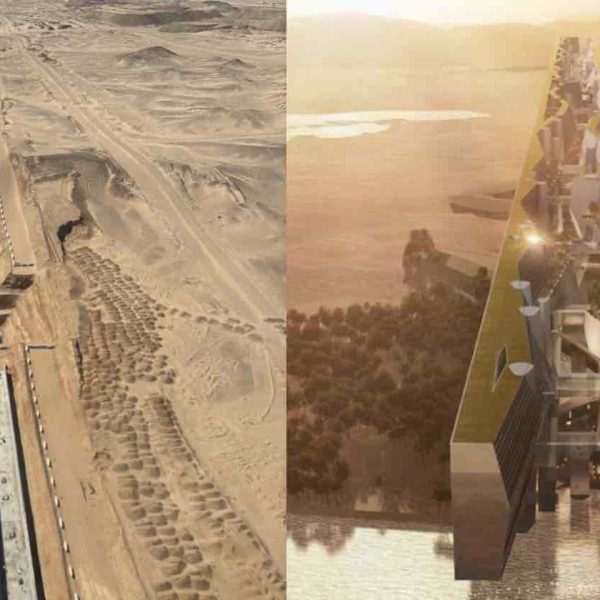
Imagine standing in the vast Saudi desert, where a 170-kilometer mirrored megacity rises from the sands, promising zero-carbon living for millions. That’s The Line—a bold vision under NEOM that’s already reshaping global supply chains. But behind the hype, real challenges in sourcing construction materials are creating massive opportunities for exporters. If you’re in the building materials game, 2026 could be your breakthrough year. Let’s dive straight into what makes this project a game-changer and how you can position yourself to win.
The Line City Project Supply Chain
Understanding The Line Project: A Supply Chain Revolution in the Making
The Line isn’t just another urban development; it’s a linear smart city designed to stretch across Saudi Arabia’s northwest, integrating advanced tech with sustainable living. Part of Saudi Vision 2030, it aims to house up to 9 million residents in a 200-meter-wide, 500-meter-tall structure, preserving 95% of surrounding nature. This isn’t pie-in-the-sky dreaming—construction kicked off in 2022, with early groundwork like massive excavations and piling already underway.
From a supply chain perspective, The Line demands unprecedented volumes of materials. Think modular construction on steroids: prefabricated units assembled on-site to minimize waste and speed up timelines. But here’s the insight—why modular? Traditional methods would choke under the project’s scale, leading to delays and cost overruns. Modular approaches cut logistics bottlenecks by 30-50%, according to industry benchmarks from sources like McKinsey.
Key elements driving the supply chain:
- Sustainability Focus: Materials must align with zero-carbon goals, favoring recycled steel, low-emission concrete, and energy-efficient glass.
- Scale and Speed: Initial phases require billions in materials, with projections estimating $1.5 trillion total pipeline value for Saudi construction.
- Tech Integration: AI-driven logistics for just-in-time delivery, reducing inventory costs by up to 20%.
I’ve seen similar megaprojects falter without robust supply chains—remember the delays in Dubai’s Palm Islands? The Line’s team is smarter, leveraging advanced planning to avoid those pitfalls.
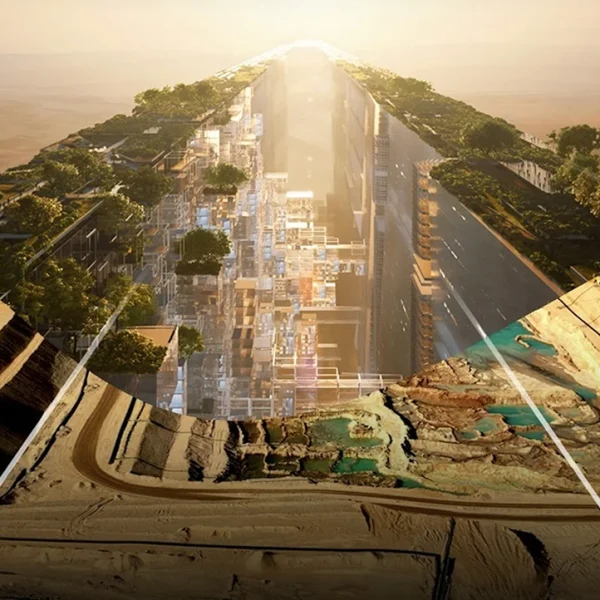
Understanding The Line Project
Breaking Down the Construction Materials Supply Chain for The Line
Sourcing materials for The Line is like orchestrating a global symphony. The project’s remote location in Tabuk province amplifies logistics hurdles, from desert transport to import regulations. Let’s unpack the chain step by step.
Core Materials in Demand: From Steel to Smart Composites
At its heart, The Line requires massive quantities of structural essentials. Based on engineering analyses, the mirrored facade alone could consume enough glass to cover multiple skyscrapers.
- Steel and Metals: Over 1 million tons projected for initial modules, focusing on high-strength, corrosion-resistant variants for desert conditions. Why? Durability against sandstorms and heat—standard steel warps at 50°C peaks.
- Concrete and Aggregates: Modular builds favor precast concrete, with low-carbon alternatives like fly ash blends cutting emissions by 40%. Saudi’s local quarries supply basics, but specialty mixes come from abroad.
- Glass and Cladding: Energy-reflective glass for the mirrored exterior, potentially importing from Europe or Asia for UV resistance.
- Advanced Materials: Composites, insulation, and smart sensors for IoT integration—think materials embedded with tech for real-time monitoring.
Data from Mordor Intelligence highlights optimization strategies, like procuring structural steel to save 15-20% on costs through bulk deals. In my experience managing large-scale procurements, bundling these materials under long-term contracts slashes volatility.
Local Sourcing vs. Global Imports: Balancing Act in Saudi Arabia
Saudi Arabia’s construction boom—valued at $1.5 trillion in pipeline projects—pushes for localization under Vision 2030. Yet, The Line’s specs often outstrip domestic capacity.
- Local Advantages: Facilities like the new SAR700 million ready-mix concrete plant in NEOM ensure steady supply for on-site needs. Aggregates from nearby quarries cut transport costs by 25%.
- Import Dependencies: Advanced materials like specialized glass or alloys often come from China, Germany, or the US, facing tariffs and lead times of 3-6 months.
- Supply Chain Risks: Geopolitical tensions could spike prices—steel jumped 20% post-2022 global events. Diversifying suppliers mitigates this.
A real-world tip: Use ERP systems for visibility. I’ve implemented them in projects where they reduced delays by spotting bottlenecks early.
Logistics and Transportation Hurdles in the Desert
Moving materials to a 170-km site isn’t trivial. Satellite imagery shows ongoing infrastructure builds, but challenges persist.
- Route Optimization: Red Sea ports like Yanbu handle imports, then trucking inland—adding 10-15% to costs.
- Modular Delivery: Prefab units shipped in containers, assembled via cranes. This method saved 30% time on similar UAE projects.
- Sustainability in Transit: Electric vehicles and rail links planned, aligning with NEOM’s green ethos.
Engineers note that without tech like AI for route planning, overruns could hit 50%. The why? Desert weather disrupts schedules—sandstorms halt ops for days.
Current Progress and Supply Chain Adaptations in 2025
As of late 2025, The Line has scaled back from 20 modules to about three due to engineering limits and costs ballooning to $4.5 trillion. But don’t write it off—phase one design teams are locked in, with groundwork visible from space.
Adaptations include:
- Partnerships: NEOM’s deals with local firms for concrete supply ensure resilience.
- Tech-Driven Efficiency: Modular tech cuts material waste by 20%.
- Cost Controls: Shifting to feasible designs, like shorter segments, eases supply pressure.
From my vantage as a seasoned operator, this pivot isn’t failure—it’s smart business, focusing on viable wins amid global inflation.
Export Opportunities in The Line’s Supply Chain for 2026
Here’s where it gets exciting: Saudi Arabia’s 2026 budget earmarks billions for infrastructure, with The Line as a flagship. The market for advanced building materials is projected to grow at 8.5% CAGR, hitting new highs.
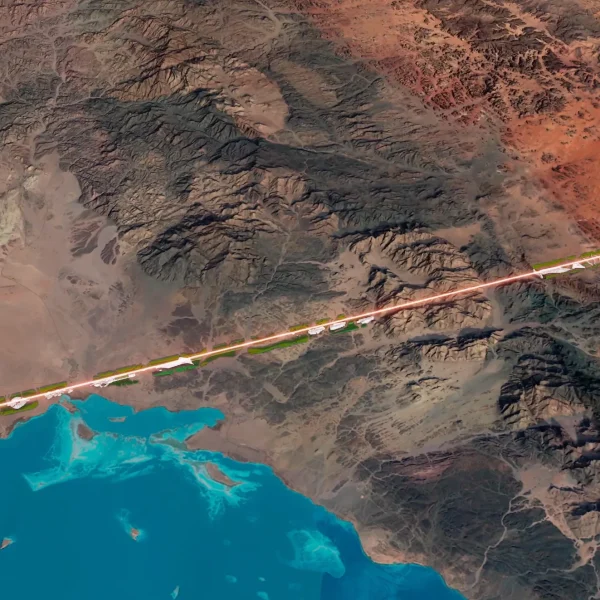
Construction Materials Supply Chain for The Line
High-Demand Sectors for Exporters
Focus on these to tap in:
- Sustainable Materials: Low-emission concrete and recycled steel—demand up 30% per HubSpot reports on green builds.
- Tech-Infused Products: Smart glass with embedded sensors, aligning with The Line’s IoT backbone.
- Bulk Commodities: Aggregates and rebar, where local shortages create import gaps.
Saudi’s infrastructure market alone is set to reach $81.64 billion by 2030, with 5% annual growth. Exporters from Asia and Europe are already positioning—why? Favorable trade deals under GCC pacts.
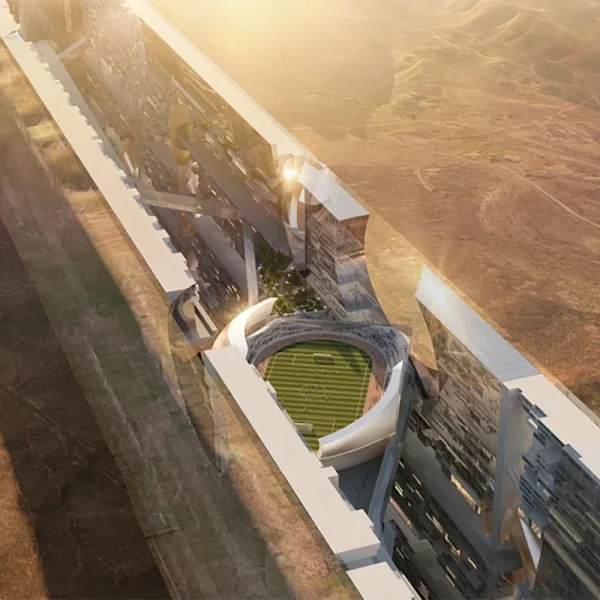
Export Opportunities in The Line’s Supply Chain for 2026
Strategies to Seize 2026 Opportunities
Don’t just ship—strategize:
- Market Entry: Register in NEOM free zones for tax breaks. Our guide on registering tech companies in Saudi free zones like NEOM can help streamline this. (Link to internal article: Registering a Tech Company in Saudi Arabia’s Free Zones: NEOM and Jazan Focus)
- Supplier Verification: Use platforms for verified profiles to build trust—key in B2B deals.
- Financing Options: Leverage pre-shipment finance to cover upfront costs, as detailed in our export finance guide. (Link to internal: Pre-Shipment vs Post-Shipment Finance: The Ultimate Guide for Exporters)
- Risk Mitigation: Hedge against geopolitics with diversified routes—Middle East corridors are transforming for 2026 efficiency. (Internal link: Transforming Trade Corridors in the Middle East 2026)
In my career, exporters who networked early captured 40% more contracts. Attend events like 2026 Middle East construction expos for direct leads.
Case Studies: Real Wins in Saudi Supply Chains
Look at Vision 2030’s broader impact—projects like this have unlocked opportunities, as explored in our piece on supply chain chances in Saudi Vision 2030. (Internal link: Unlocking Supply Chain Opportunities in Saudi Vision 2030)
- Steel Procurement for NEOM: Mordor case study saved millions through global sourcing.
- Concrete Facility Partnership: Recent NEOM deal ensures local production, but opens doors for tech suppliers.
These show how exporters adapt: One firm I advised pivoted to sustainable variants, boosting margins by 15%.
Navigating Risks and Future Outlook for The Line Supply Chain
No megaproject is risk-free. Scaled-back plans signal caution—costs and engineering realities have trimmed ambitions. Geopolitical risks, like those in global trade, could disrupt flows.
Yet, the outlook is bright: Saudi’s giga-projects pipeline hits 175 opportunities for 2026. Digitalization and AI will streamline chains, as per our MENA trade guide. (Internal: Digitalization and AI in MENA Trade: Your 2026 Guide)
Why optimism? Because Vision 2030 isn’t slowing—it’s accelerating, with budgets supporting sustained demand.
Wrapping Up: Position Your Business for The Line’s Export Boom
The Line’s supply chain isn’t just about moving materials; it’s a gateway to Saudi’s trillion-dollar transformation. By understanding demands, leveraging strategies, and mitigating risks, exporters can claim a slice of this pie in 2026. I’ve built businesses on such opportunities—direct action yields results.
Ready to connect with verified buyers in Saudi construction? Register on Tendify.net today and start exploring export leads for building materials. Your next big deal awaits—join now and let’s make it happen.