Blog
Top 5 Open-Source Tools to Detect Deepfakes in Your KYC Pipeline

As deepfake technology becomes more accessible and sophisticated, organizations conducting high-stakes identity verification — especially in KYC, onboarding, and corporate due diligence processes — face a growing threat. A single convincing real-time deepfake can enable fraudsters to impersonate executives, bypass security controls, and authorize significant financial transactions. For fintech platforms, banks, and regulated entities, relying solely on proprietary or commercial liveness solutions is no longer sufficient. Open-source tools have matured into powerful, transparent, and cost-effective components of a robust deepfake detection strategy.
Tools to Detect Deepfakes
This practical guide reviews the top five open-source tools and frameworks capable of detecting real-time deepfakes in KYC pipelines as of 2026. It provides compliance officers, security engineers, and product teams with clear evaluation criteria, implementation guidance, strengths, limitations, and integration strategies. All recommendations focus on building transparent, auditable, and regulator-friendly verification systems.
Key Principle: The most effective deepfake defense combines multiple open-source tools in a layered, explainable architecture rather than depending on any single solution. Transparency and auditability are as important as detection accuracy.
Why Open-Source Tools Matter for Deepfake Detection in KYC
Commercial deepfake detection solutions often operate as black boxes, making it difficult for regulated entities to explain decisions to auditors or supervisors. Open-source tools offer several critical advantages:
- Full transparency and auditability of detection logic
- Ability to customize and fine-tune models for specific use cases
- Lower long-term costs and reduced vendor lock-in
- Community-driven rapid response to new deepfake techniques
- Easier integration into existing compliance and monitoring stacks
When properly implemented, open-source solutions can form the foundation of a multi-layered liveness and forgery detection system that meets the highest regulatory standards for explainability and accountability. For a deeper understanding of real-time deepfake threats in corporate verification, see our guide on Deepfake KYC: Real-Time Deepfake Identity Fraud and Audit-Ready Detection Strategies for AML/CFT Compliance.
Evaluation Criteria for Open-Source Deepfake Detection Tools
Before reviewing specific tools, it is important to establish clear evaluation criteria relevant to KYC pipelines:
- Detection accuracy against latest real-time deepfake generation methods
- Explainability and audit trail quality
- Computational efficiency and scalability for high-volume environments
- Ease of integration with existing identity verification stacks
- Active community support and frequency of updates
- License compatibility with enterprise deployment

Open-Source Deepfake Detection Tools
The tools below were selected and ranked based on these criteria as of early 2026.
1. DeepFaceLab – The Gold Standard for Deepfake Research and Detection
DeepFaceLab remains one of the most powerful and widely used open-source deepfake frameworks. While originally designed for creating deepfakes, its sophisticated face-swapping and detection modules make it invaluable for defensive research and building custom detection models.

DeepFaceLab
Strengths include high-fidelity face modeling, support for multiple architectures (DF, LIA, SAEHD), and extensive training options. Security teams use it to generate synthetic test datasets and train specialized detectors tailored to their user demographics. When combined with temporal consistency checks, DeepFaceLab-based models achieve excellent results against many current real-time deepfake attacks.
For production KYC pipelines, DeepFaceLab is typically used as a research and model-training backend rather than a real-time inference engine. Its insights and trained models feed into lighter, faster detection layers. For related biometric verification challenges, refer to Binance vs. Deepfakes: Why Standard Liveness Detection Is Failing for High-Volume Traders.
2. FaceForensics++ – Benchmarking and Detection Framework
FaceForensics++ is a comprehensive open-source benchmark and detection suite specifically designed for face forgery detection. It includes a large dataset of manipulated videos and several state-of-the-art detection models (Xception, MesoNet, Capsule Networks, etc.).

FaceForensics++
The framework excels at providing standardized evaluation metrics and allows researchers to compare different detection approaches under consistent conditions. Many enterprise detection pipelines use FaceForensics++ models as baseline components, fine-tuning them with organization-specific data for improved performance against targeted attack vectors.
Its modular architecture makes it relatively easy to integrate into existing KYC workflows. For organizations concerned with supplier and third-party verification risks, the principles discussed in Deepfake Due Diligence: Why You Must Verify Your Suppliers Beyond a Zoom Call are highly relevant when extending detection beyond customer onboarding.
3. DeepFake-o-Meter – Real-Time Detection Pipeline
DeepFake-o-Meter is a practical, production-oriented open-source pipeline focused on real-time deepfake detection. It combines multiple detection signals — including biological signals (eye blink, heartbeat estimation), temporal inconsistencies, and frequency-domain analysis — into a unified scoring system.
DeepFake-o-Meter
The tool is designed for integration into live video verification flows and provides explainable confidence scores that compliance teams can use for audit purposes. Its lightweight architecture makes it suitable for deployment at scale without excessive computational overhead.
When combined with behavioral analysis and device fingerprinting, DeepFake-o-Meter forms a strong middle layer in a defense-in-depth KYC architecture.
4. MesoNet and MesoGraph – Efficient Neural Architectures
MesoNet and its graph-based evolution (MesoGraph) are lightweight convolutional neural networks specifically optimized for detecting facial forgeries. They focus on mesoscopic properties of images and videos — features that lie between microscopic pixel-level details and macroscopic semantic content.
These models offer an excellent balance between detection accuracy and computational efficiency, making them ideal for real-time KYC applications where low latency is critical. MesoGraph further improves performance by modeling relationships between different facial regions over time.
Many organizations use MesoNet variants as the first line of defense in their verification pipeline due to their speed and relatively low false-positive rates when properly tuned.
5. Temporal Consistency Networks & LipForensics
Temporal Consistency Networks analyze inconsistencies across video frames that are difficult for current deepfake generators to perfectly replicate. LipForensics focuses specifically on lip-sync and mouth movement analysis — a common weakness in many real-time deepfake systems.
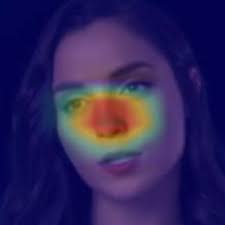
LipForensics
These tools are particularly effective when used in combination with spatial analysis models. Their strength lies in detecting subtle temporal artifacts that static image-based detectors often miss.
When integrated into a multi-stage pipeline, temporal consistency models significantly improve overall detection robustness against sophisticated real-time attacks.
Building a Layered, Audit-Ready Deepfake Detection Pipeline
The most effective approach is not to rely on any single tool but to build a layered detection architecture:
- Stage 1: Fast, lightweight filters (MesoNet-style models)
- Stage 2: Temporal and biological signal analysis
- Stage 3: Contextual and behavioral scoring
- Stage 4: Human-in-the-loop review for high-risk or low-confidence cases
This layered strategy maximizes detection coverage while keeping false-positive rates manageable and maintaining full explainability for regulatory audits.
Implementation Best Practices for Regulated Environments
When deploying open-source deepfake detection tools in regulated KYC pipelines, organizations should follow these practices:
- Maintain detailed documentation of model versions, training data characteristics, and performance metrics
- Implement version control and change management for all detection components
- Establish regular independent testing and red-teaming exercises
- Ensure all detection decisions generate human-readable explanations for audit purposes
- Integrate detection outputs with broader transaction monitoring and sanctions screening systems
These practices help satisfy regulatory expectations for model governance, explainability, and risk management while protecting the organization from both external attacks and internal compliance failures.
Conclusion: Building Future-Proof KYC Systems with Open-Source Tools
As deepfake technology continues to advance, relying on closed, proprietary liveness solutions is no longer sufficient for high-stakes KYC environments. Open-source tools provide the transparency, flexibility, and community-driven innovation needed to stay ahead of evolving threats.
By combining multiple specialized open-source frameworks into a layered, explainable detection architecture, organizations can achieve robust protection against real-time deepfakes while maintaining audit readiness and regulatory compliance. The most successful implementations treat deepfake detection as a continuous, adaptive process rather than a static security control.
The future of secure identity verification lies in transparent, well-governed, and constantly evolving systems. Open-source deepfake detection tools are essential building blocks in that future. Organizations that invest in understanding, customizing, and responsibly deploying these tools will be best positioned to protect their platforms, customers, and reputation in an increasingly synthetic media landscape.
Request a Confidential Deepfake Detection Architecture Review