


Blog
Sharjah Ports : Multi-Port Strategy & GCC Logistics
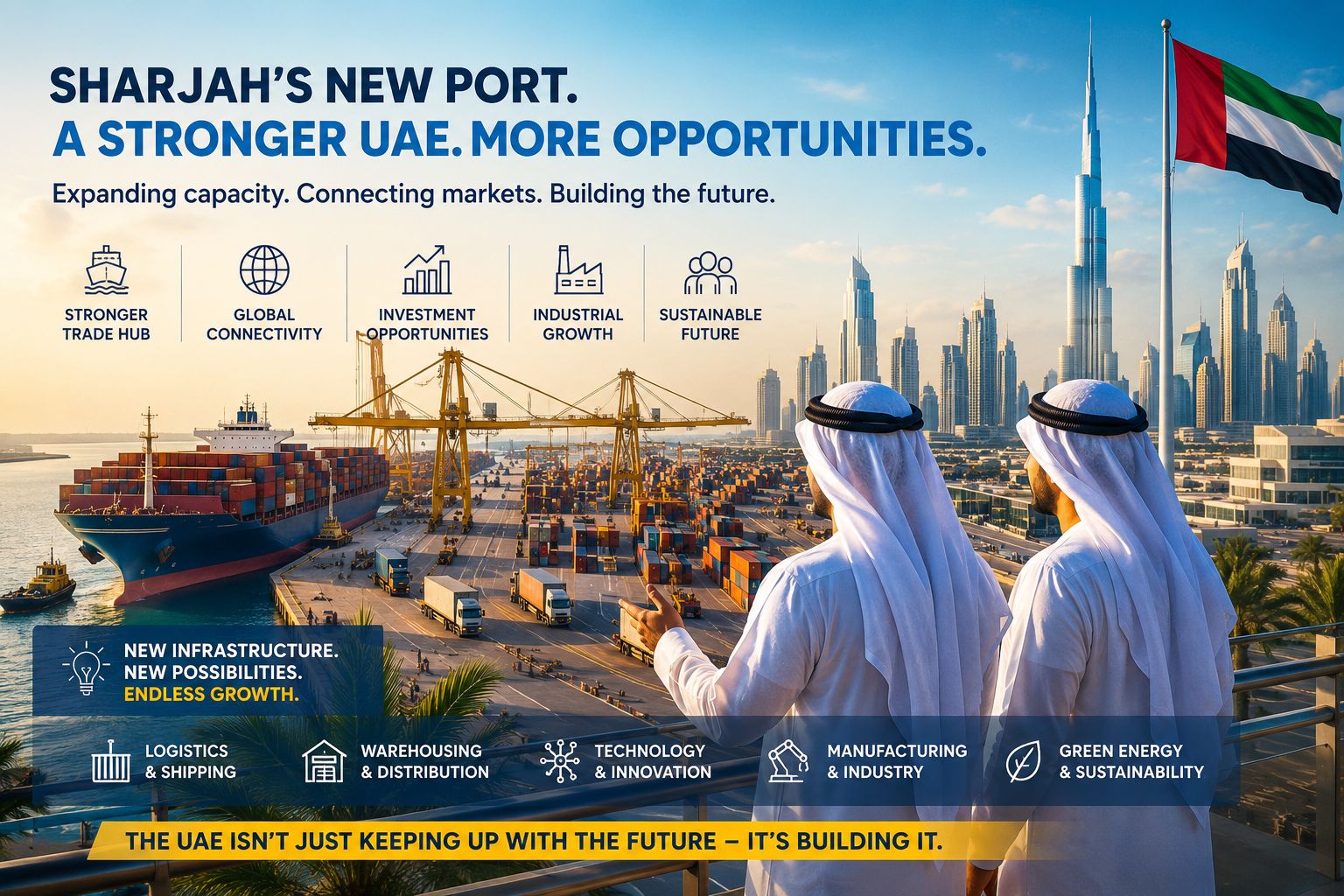
Global supply chains face constant pressure from capacity constraints, geopolitical shifts, and rising demand for resilient logistics. In this environment, the UAE is not merely expanding infrastructure — it is engineering a diversified, multi-port trade system that positions the country as one of the most adaptable logistics powerhouses in the world.

Sharjah’s New Port Expansion
Sharjah’s latest port and logistics developments exemplify this strategic approach. By enhancing capacity at Khor Fakkan, Port Khalid, and supporting inland connections, Sharjah is complementing Dubai’s Jebel Ali, Fujairah’s energy-focused facilities, and Abu Dhabi’s industrial zones. The result is a robust network capable of handling greater volumes, mitigating risks, and unlocking new opportunities for B2B traders across the GCC and beyond.
Free Professional Email Generator
Why a Multi-Port Strategy Matters in Cross-Border Trade
Single-port reliance creates vulnerabilities. Congestion, weather disruptions, or targeted geopolitical pressures can halt flows. A multi-port ecosystem delivers measurable advantages for importers, exporters, and investors:
- Resilience and Risk Mitigation: Additional gateways ensure continuity. Eastern ports like Khor Fakkan reduce dependency on the Strait of Hormuz for certain routes and cargoes.
- Capacity for Growth: Projections for increased container throughput and bulk commodities require parallel infrastructure. Gulftainer’s plans for a 1.5 million TEU logistics corridor in Sharjah demonstrate forward-thinking scale.
- Specialized Capabilities: Different ports excel in specific operations — containers, bulk, energy, or breakbulk — allowing traders to optimize costs and transit times.
- Inland Connectivity: Road, rail (Etihad Rail), and industrial park linkages turn ports into true supply chain hubs rather than isolated terminals.
- Investment Magnet: Reliable, diversified infrastructure signals long-term stability to global manufacturers and funds.
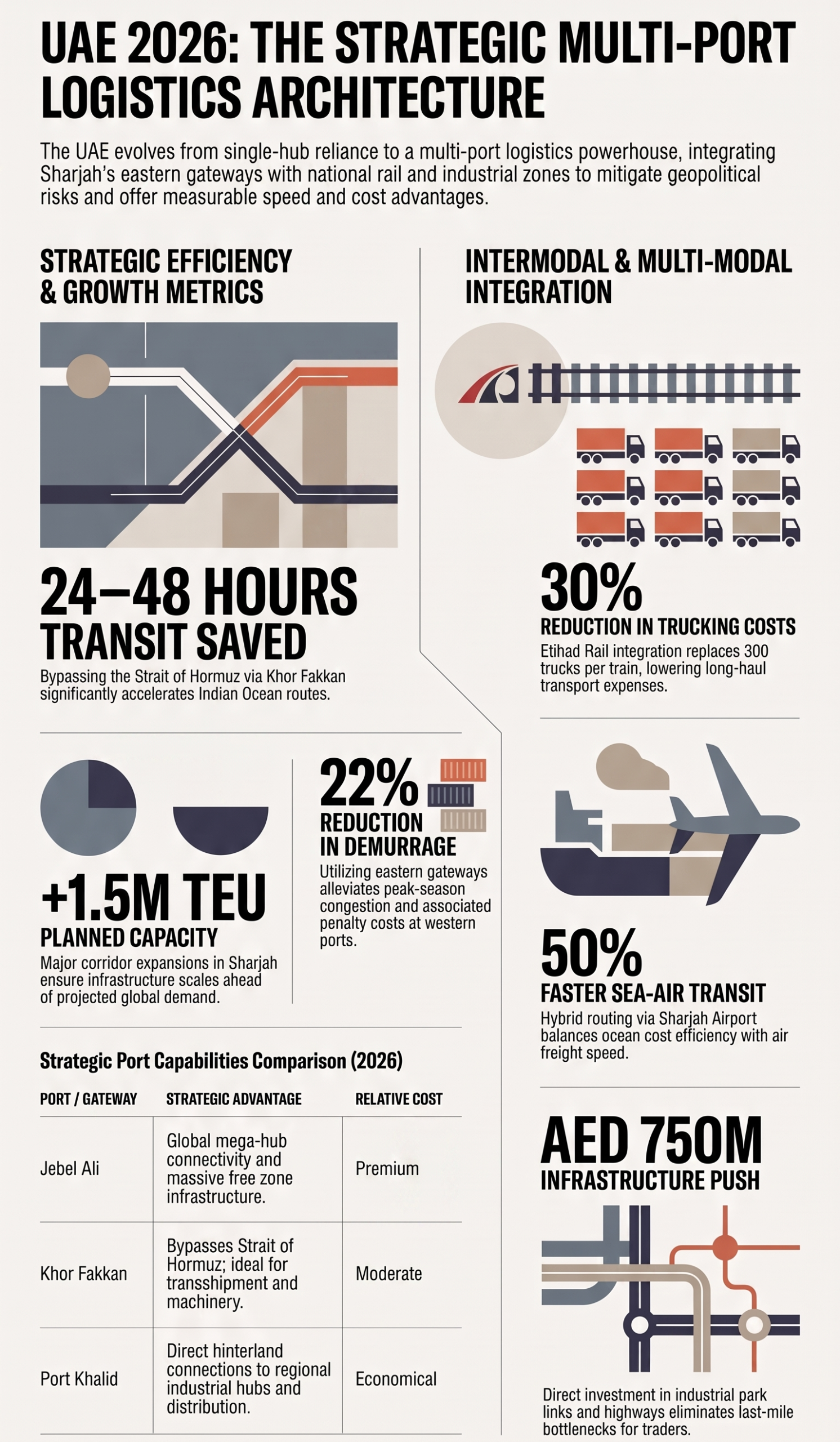
UAE_2026_Strategic_Logistics_Architecture
Businesses operating in high-volume sectors such as construction materials, FMCG, machinery, and energy-related commodities benefit most from these layered options.
UAE Key Ports Matrix: Quick Strategic Comparison
Updated 2026
| Port / Gateway | Ideal Cargo Type | Relative Cost | Customs Clearance Speed | Strategic Advantage |
|---|---|---|---|---|
| Jebel Ali (Dubai) | High-volume FCL containers, Electronics, Luxury FMCG | Premium ($$$) | High (Automated) | Global mega-hub connectivity & massive JAFZA free zone infrastructure. |
| Khor Fakkan (Sharjah) | Transshipment containers, Indian Ocean routes, Heavy machinery | Moderate ($$) | Fast (Low Congestion) | Bypasses Strait of Hormuz, saving 24–48h in transit time. |
| Port Khalid (Sharjah) | Breakbulk, Agricultural goods, Regional GCC distribution, Dhow cargo | Economical ($) | Fast (Direct Clearance) | Direct hinterland connections to Sharjah industrial hubs & low demurrage rates. |
| Port of Fujairah | Crude oil, Refined petroleum products, Bunkering, Dry bulk | Competitive ($$) | Moderate | World’s 3rd largest bunkering hub; dominant energy & liquid bulk facility. |
Sharjah’s Key Developments Driving 2026 Trade Efficiency
Sharjah Ports Authority and partners like Gulftainer continue targeted investments that enhance operational performance:
Khor Fakkan and Eastern Corridor Initiatives Plans for expanded capacity and integration with national rail and road networks position the east coast as a strategic alternative for transshipment and direct calls. This supports faster access to Indian Ocean routes while easing pressure on western ports.
Critical Minerals Trade: 2026 Supply Chains & GCC Logistics
Sharjah Ports 2026: Key Operational Metrics & Hard Data
Gulftainer expansion dedicated to regional trade efficiency.
By bypassing the Strait of Hormuz via Khor Fakkan direct feeder lines.
Allocated for Sajaa Industrial Park & Dubai-Sharjah highway linkages.
Logistics Takeaway: Diverting cargo to eastern gateways reduces demurrage penalties by up to 22% during peak season congestion in western ports.
Port Khalid Enhancements Ongoing modernization, including new berths, dhow facilities, and improved hinterland links, strengthens Sharjah’s role in regional distribution and lighter industrial cargo.
Road and Industrial Connectivity Major infrastructure spending, such as the 750 million AED project improving Dubai-Sharjah links and connections from Sajaa Industrial Park to seaports, reduces last-mile bottlenecks and supports just-in-time operations.
Unlocking Value via HFZA & SAIF Zone Integration
Port capacity is only as strong as its hinterland integration. Beyond industrial parks like Sajaa, Sharjah’s ecosystem is anchored by two world-class free zones—Hamriyah Free Zone (HFZA) and Sharjah Airport International Free Zone (SAIF Zone). These zones act as primary trade multipliers, connecting deepwater port access directly with tax-efficient warehousing, re-export hubs, and light manufacturing facilities for B2B enterprises.
🏗️ Hamriyah Free Zone (HFZA)
Directly connected to Hamriyah Port and major maritime routes. Ideal for heavy industry, steel, petrochemicals, and large-scale bonded warehousing with deepwater berth access.
✈️ SAIF Zone
Positioned adjacent to Sharjah International Airport. Optimized for high-value FMCG, electronics, e-commerce fulfillment, and seamless sea-air transshipment models.
- 100% Foreign Ownership & Profit Repatriation: Full capital control with zero corporate or personal income tax friction for re-export operations.
- Zero Custom Duties on Re-Exports: Bonded connectivity between HFZA, SAIF Zone, and Sharjah seaports eliminates import duties for goods routed across the GCC.
Logistics Advantage: Combining HFZA maritime warehousing with SAIF Zone air connectivity allows B2B traders to run highly resilient multi-modal distribution hubs.
Navigating Customs & Compliance in Sharjah Gateway Ports
While multi-port routing offers immense operational flexibility, navigating regional customs nuances remains a critical priority for B2B importers. Sharjah Customs has addressed potential cross-border bottlenecks by deploying fully digitized pre-clearance protocols and streamlined inspection regimes across Khor Fakkan and Port Khalid. These measures ensure seamless alignment with federal UAE customs mandates while catering to high-volume commercial shipments.
- Perishable & Hazmat Priority Lanes: Khor Fakkan’s integrated monitoring system utilizes automated temperature-controlled inspection zones and real-time tracking for dangerous goods (DG) and cold-chain cargo, cutting inspection queues by up to 40%.
- Harmonized Inter-Emirate Transit: Pre-bonded customs corridors allow seamless cargo transfers between Sharjah ports, JAFZA, and Abu Dhabi industrial zones without double-duty assessments or redundant administrative delays.
Pro Tip: Utilize Tendify’s Tariff & HS Code Finder to pre-validate duty rates and document checklists before vessel berthing.
Etihad Rail: The 2026 Game-Changer for Sharjah & GCC Logistics
While sea freight infrastructure expands, the full integration of the Etihad Rail network into Sharjah’s ports and industrial nodes represents the single most transformative supply chain shift across the GCC in 2026. The 1,200 km national rail network transforms isolated port terminals into a unified, high-speed regional logistics Web.
Direct rail linkages connecting Khor Fakkan Container Terminal to inland dry ports and Sajaa Industrial Park eliminate last-mile road bottlenecks.
A single freight train replaces up to 300 heavy trucks, dramatically lowering long-haul transport costs across UAE and cross-border GCC routes.
Seamless customs-bonded rail corridors link Sharjah’s ports directly to industrial centers in Saudi Arabia and Oman without multiple border transfers.
Strategic Advantage for B2B Importers: Shipping raw materials or heavy goods via Khor Fakkan directly onto Etihad Rail bypasses both the Strait of Hormuz and congested metropolitan highways—cutting cross-border GCC transit times by up to 60% compared to traditional trucking.
Sharjah Sea-Air Connectivity: The Express Bridge to Europe & Africa
One of Sharjah’s most formidable competitive advantages in the GCC is its seamless Sea-Air cargo hub integration. By linking ocean terminals at Khor Fakkan and Port Khalid with Sharjah International Airport (SHJ)—a leading regional air freight gateway—traders leverage a hybrid logistics model that balances transit speed with ocean freight cost efficiencies.
Cuts Asia-to-Europe and Africa delivery times by up to 50% compared to pure sea freight, avoiding congested maritime chokepoints.
Delivers substantial freight cost reductions compared to direct full air-freight options for time-sensitive commercial cargo.
- Bonded Transfer Corridors: Streamlined sea-to-air customs clearance enables rapid container-to-aircraft transfers within hours under a single transport document.
- Ideal Cargo Categories: Optimized for high-value FMCG, electronics, fashion, pharmaceutical cold-chains, and urgent spare parts requiring hybrid routing.
Strategic Value: Utilizing Khor Fakkan for Eastern ocean arrival and Sharjah Airport for onward air-lift bypasses Strait congestion while keeping supply chains agile.
Sustainability and Technology Integration Modern terminals increasingly incorporate digital tracking, greener handling practices, and compliance tools essential for ESG-focused supply chains.
These moves create practical benefits: lower demurrage risks, more flexible routing, and better alignment with free zone operations in Sharjah and neighboring emirates.
Operational Advantages for B2B Traders Using the UAE Network
Savvy exporters and importers treat the UAE as a unified logistics platform rather than individual ports. Here is how to leverage it effectively:
- Route Optimization Evaluate total landed cost across ports. For certain Asian or African origins, Khor Fakkan or Fujairah may offer faster turnaround or lower fees than traditional western gateways.
- Capacity Planning Book across multiple facilities during peak seasons to avoid delays. Tools like container optimization calculators and tariff checkers help model scenarios.
- Value-Added Services Utilize free zones for re-export, light assembly, or warehousing. Sharjah’s industrial parks complement storage and distribution needs.
- Compliance and Documentation Align shipments with port-specific requirements early. Digital platforms streamline HS code classification, duty calculations, and checklists.
- Risk Management Build contingency plans with alternative ports. Monitor real-time market pulse data for congestion signals.
Traders who map their flows against this ecosystem consistently report reduced transit times and more predictable costs.
Internal Link: For deeper insights into port selection and cost modeling, explore our guide on GCC Ports 2026: Master Customs Valuation and Dodge Crushing Penalties.
Real-World B2B Use Cases: Multi-Port Routing in Action
Result: 35% Demurrage Cost Cut
Avoiding Strait Congestion for Time-Critical Plant Equipment
A regional industrial equipment supplier routinely faced costly demurrage fees during peak Q4 import waves at western ports. By rerouting direct Far-East shipments to Khor Fakkan Container Terminal and taking advantage of direct highway links to Sajaa Industrial Park, the company cut container clearance turnaround times from 6 days to 2.5 days—slashing overall demurrage expenses by 35%.
Result: 48-Hour Transit Reduction
Unlocking Fast-Track Regional Distribution via Port Khalid
A GCC food distributor serving both UAE and Northern Emirates markets shifted bulk grain imports to Port Khalid. Utilizing specialized breakbulk facilities and streamlined customs inspection protocols, the importer bypassed major highway bottle-necks, delivering fresh inventory to retail distribution centers 48 hours faster than their previous supply chain model.
Result: 18% Savings on Total Landed Cost
Optimizing Inland Distribution via Etihad Rail Integration
An international steel supplier leveraged Sharjah’s inland logistics hubs integrated with Etihad Rail freight terminals to move raw materials directly into GCC cross-border routes. The seamless intermodal transfer reduced heavy trucking dependency and reduced total landed logistics cost by 18% per metric ton.
Broader Economic Impact on Regional Supply Chains
Sharjah’s growth contributes to the UAE’s overall ambition of becoming a global trade hub less vulnerable to external shocks. This benefits:
- GCC Importers: More reliable access to diverse sourcing origins.
- Re-Exporters: Expanded capacity supports the UAE’s traditional strength in transshipment.
- Investors: Stronger infrastructure underpins FDI in manufacturing, logistics tech, and industrial clusters.
- Sustainability Goals: Diversified ports enable greener routing options and support carbon-efficient practices.
The strategy aligns with Vision 2030-style initiatives across the region, emphasizing infrastructure as a foundation for diversified, knowledge-based economies.
Practical Steps to Integrate UAE Ports into Your 2026 Strategy
Successful operators follow a structured approach:
- Assess Current Flows: Map existing routes and identify single points of failure.
- Model Alternatives: Use cost calculators and trade explorers to compare port combinations.
- Build Partnerships: Engage forwarders experienced across multiple UAE facilities.
- Leverage Digital Tools: Adopt platforms for real-time visibility, automated documentation, and compliance.
- Monitor and Adapt: Regularly review performance metrics and adjust based on new capacity additions.
Internal Link: Discover how digital freight solutions are transforming operations in The Role of Digital Freight Forwarders in Modern B2B Supply Chains.
Future Outlook: A Resilient Trade Platform
The UAE’s continued investment in ports like those in Sharjah signals confidence in sustained trade growth. As global patterns evolve — with nearshoring, friendshoring, and new corridors — flexible multi-port systems provide a decisive edge.
Businesses that proactively integrate these developments into their planning will capture opportunities in efficiency, market access, and risk reduction that slower-moving competitors will miss.
The platform at Platform.Tendify.Net offers integrated tools — from tariff calculators and HS code finders to logistics connectors — that help traders navigate and optimize within this expanding ecosystem.
Sharjah’s port expansion is more than additional berths. It represents another layer in the UAE’s sophisticated trade architecture — designed for resilience, scalability, and long-term competitive advantage in global B2B commerce.
Ready to streamline your cross-border operations, secure better routing options, and accelerate growth in 2026? Register today at https://tendify.net/my-account/ and access the full suite of trade intelligence and execution tools built for professionals operating in dynamic markets like the GCC. Your next shipment — and the ones after it — will thank you.

