


المدونة
Investment as Power Architecture: How Capital, Influence, and Strategy Shape the Future of Global Trade
Introduction: Investment Is No Longer About Money
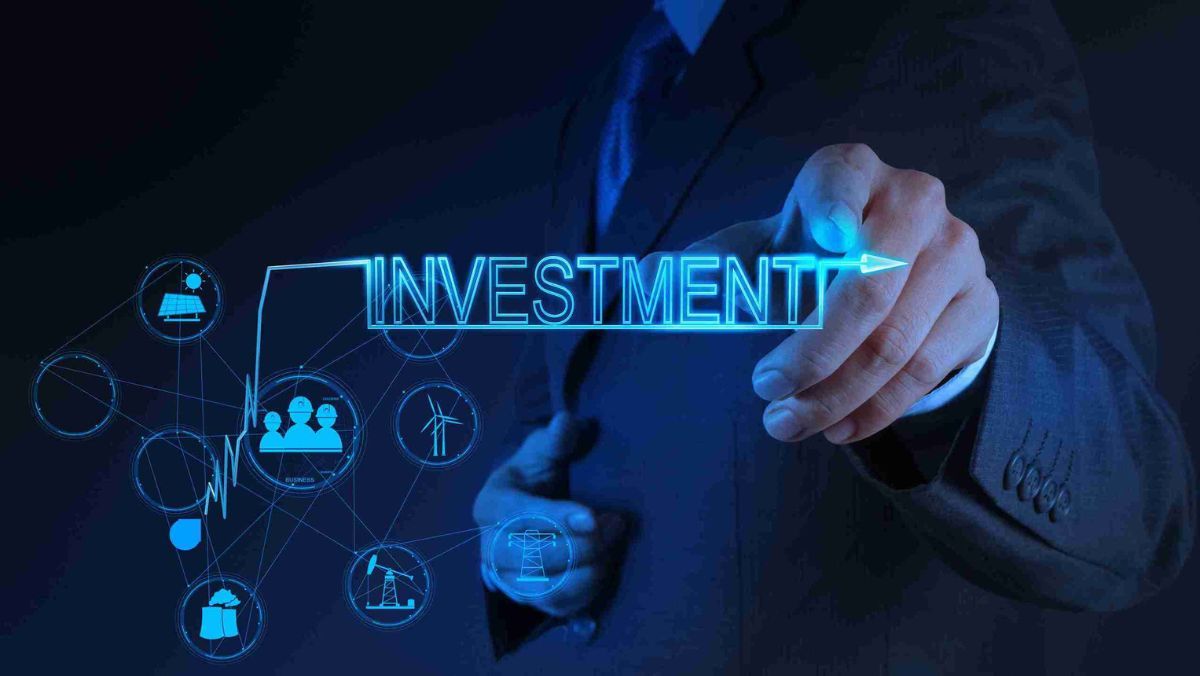
In the modern global economy, investment has transcended its traditional role as a financial transaction. It is no longer merely about allocating capital in pursuit of profit. Investment has become a mechanism of power, a tool through which economic systems are shaped, behaviors are influenced, and futures are engineered.
Those who understand this reality do not ask, “Where should we invest?”
They ask, “What kind of world are we building through our investments?”
This shift marks a fundamental transformation in how global trade operates. Capital is no longer neutral. It encodes values, priorities, and power structures into the fabric of markets.
From Capital Markets to Power Systems
Investment as Power Architecture How Capital Influence and Strategy Shape the Future of Global Trade
Historically, markets were perceived as neutral arenas where rational actors exchanged value. Today, it is clear that markets are not neutral at all—they are constructed systems shaped by rules, incentives, and asymmetries of influence.
Investment decisions determine:
Which regions develop and which stagnate
Which technologies dominate
Which business models survive
Which voices are amplified or marginalized
In this sense, capital functions as a form of governance.
Investment as Institutional Design
Every significant investment creates or reinforces institutions—formal or informal.
These include:
Contractual norms
Regulatory expectations
Behavioral standards
Technological dependencies
Once established, institutions are remarkably persistent. They guide decision-making long after the original investment has been made.
This is why early investment choices often have disproportionate long-term impact.
The Architecture of Economic Power
Power in global trade no longer flows solely from ownership of resources. It emerges from control over:
Standards
Platforms
Networks
Information flows
Access points
Investors who shape these layers exercise influence far beyond their capital contribution.
A logistics platform, a trade-finance protocol, or a digital compliance infrastructure can redefine entire industries.
Capital as a Coordination Mechanism
One of the most underappreciated functions of investment is coordination.
When capital is deployed, it aligns expectations across actors:
Suppliers adjust capacity
Partners commit resources
Governments respond with policy
Labor markets adapt
In this way, investment synchronizes behavior across complex systems.
The Strategic Role of Friction
Conventional wisdom treats friction as inefficiency to be eliminated. However, not all friction is bad.
Strategic friction:
Prevents reckless expansion
Forces deliberation
Filters out low-commitment participants
In global trade, selective friction can enhance system resilience.
Wise investors know when to reduce friction—and when to preserve it.
The Illusion of Control in Global Markets
Many investment failures stem from the illusion of control.
Global trade systems are nonlinear. Small changes can trigger disproportionate effects. Feedback loops amplify minor decisions into major outcomes.
Recognizing this, sophisticated investors shift from control-oriented strategies to influence-oriented ones.
They focus on shaping conditions rather than dictating outcomes.
Investment as Narrative Engineering
Markets run on stories.
Investments signal confidence, legitimacy, and future direction. They tell stories about what matters and what is possible.
Narratives influence:
Consumer trust
Regulatory posture
Talent attraction
Partner alignment
Successful investors actively manage these narratives rather than leaving them to chance.
Learning Systems vs. Static Structures
In volatile environments, static structures decay.
Investment must therefore prioritize learning systems—organizations capable of sensing change, interpreting signals, and adapting behavior.
This requires:
Distributed decision-making
Feedback-rich processes
Psychological safety for experimentation
Learning capacity becomes a strategic asset.
The Hidden Economics of Trust
Investment as Power Architecture How Capital Influence and Strategy Shape the Future of Global Trade
Trust reduces transaction costs, accelerates cooperation, and expands opportunity.
Yet trust cannot be purchased directly.
It emerges from:
Consistent behavior
Transparent incentives
Fair risk distribution
Long-term investors understand that trust is both fragile and compounding.
Investment and Temporal Responsibility
Every investment decision privileges certain futures over others.
Short-term profit often trades against long-term stability. Long-term value requires patience, restraint, and foresight.
Responsible investors consider:
Intergenerational effects
Environmental sustainability
Systemic resilience
Time becomes an ethical dimension of investment.
Strategic Optionality in Uncertain Worlds
In unpredictable environments, flexibility is a form of strength.
Strategic optionality allows organizations to pivot without collapse.
This includes:
Modular supply chains
Diverse partnerships
Scalable technologies
Optionality is not indecision—it is preparedness.
When Efficiency Becomes Fragility
Hyper-optimized systems perform well under ideal conditions but fail catastrophically under stress.
Recent global disruptions have revealed that:
Redundancy is resilience
Slack is strategic
Diversity is protective
Investment strategies must balance efficiency with robustness.
The Human Core of Investment Systems
At its core, investment is a human activity.
It depends on judgment, values, and trust.
Organizations that neglect the human dimension—ethics, culture, leadership—eventually undermine their own performance.
Human capital is not a cost center; it is the engine of adaptability.
Governance as an Investment Multiplier
Strong governance aligns incentives and clarifies accountability.
It enables:
Faster decisions
Better risk management
Sustainable growth
Without governance, even well-funded initiatives collapse under their own complexity.
Reframing Return on Investment
ROI is evolving.
Beyond financial returns, advanced investors evaluate:
Strategic optionality
Ecosystem health
Learning velocity
Social legitimacy
These returns compound in ways spreadsheets cannot capture.
Designing for Continuity, Not Just Growth
Growth is episodic. Continuity is strategic.
Enduring organizations invest in:
Institutional memory
Leadership development
Adaptive capacity
They are designed to outlast market cycles.
Investment as a Moral Choice
Every investment allocates not just capital, but consequence.
It shapes labor conditions, environmental outcomes, and societal norms.
Responsible investors recognize that neutrality is an illusion—every choice has impact.
The Future of Global Trade Investment
The next era of global trade will be defined not by scale, but by intelligence.
Those who succeed will be those who:
Understand systems
Design for resilience
Invest with intention
Capital alone will not confer advantage. Wisdom will.
Final Reflection: Building the Invisible Infrastructure of Tomorrow
The most powerful investments are often invisible.
They reside in trust, systems, capabilities, and shared purpose.
Those who master this level of investment will not merely participate in global trade — they will shape its evolution.
Call to Action: Invest With Intention, Not Just Capital
If you are ready to move beyond transactional investing and begin shaping systems that endure, now is the moment to act.
Register on our platform today to access advanced insights, strategic frameworks, and decision-making tools designed for leaders who invest with purpose, clarity, and long-term vision.
The future will belong to those who invest not only in assets, but in understanding.

