


المدونة
2026 Trade Corridors: New Logistics Routes Redefining Middle East Export

A Roadmap for Regulatory Evolution and Commercial Leadership
As someone who’s navigated the twists and turns of global trade for over two decades, I’ve seen firsthand how a single regulatory shift can reshape entire markets. Picture this: in early 2025, a major exporter in the region faced delays due to new environmental compliance rules, costing them weeks and thousands in lost revenue. But those who adapted early? They turned it into a competitive edge, expanding their networks faster than ever. That’s the reality we’re facing in the Middle East heading into 2026—a pivotal year where trade corridors are evolving from fragmented pathways into streamlined, data-driven arteries of commerce.
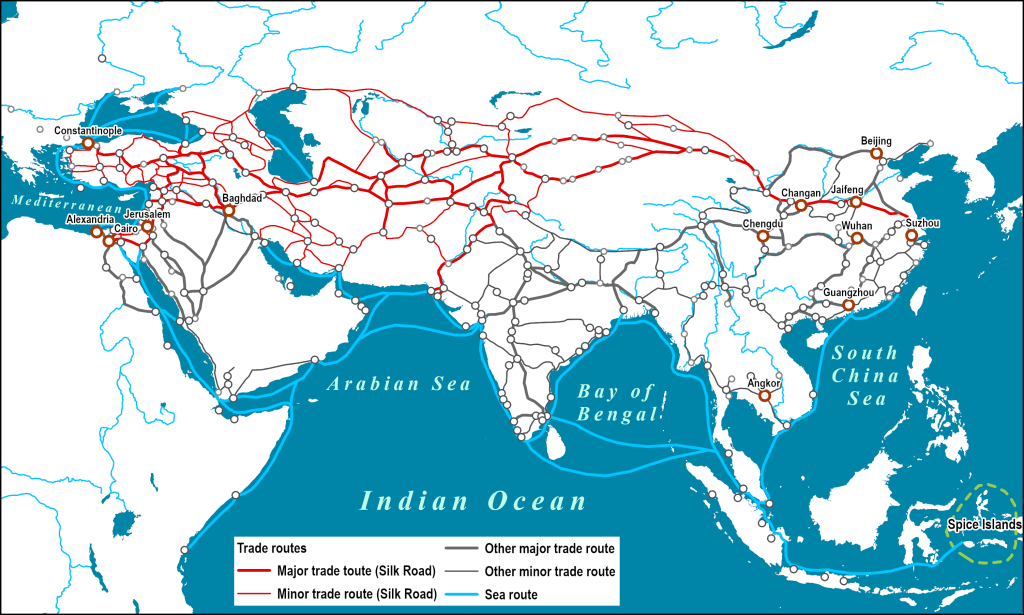
Trade Corridors in the Middle East
This article dives deep into these transformations, focusing on the United Arab Emirates (UAE) and Iraq as key players. We’ll unpack the shift toward transparent, internationally aligned systems, explore the impact of agreements like Comprehensive Economic Partnership Agreements (CEPAs) and mechanisms such as the EU’s Carbon Border Adjustment Mechanism (CBAM), and outline actionable strategies for platforms to emerge as go-to knowledge hubs. Backed by real data and insights, this isn’t just theory—it’s a practical guide to thriving in this new era.
The Shifting Landscape of Middle East Trade Ecosystems
The Middle East’s commercial ecosystem is undergoing a profound makeover, driven by a push for efficiency and sustainability. Gone are the days of relying solely on informal networks; today’s reality demands data-backed decisions and compliance with global norms. According to recent projections, regional GDP in the Middle East and North Africa (MENA) is set to grow by 2.8% in 2025 and accelerate to 3.3% in 2026, fueled by robust non-oil sectors and infrastructure investments. This growth isn’t accidental—it’s the result of deliberate reforms.
From Traditional Models to Data-Driven Governance
Traditional trade in the region often hinged on personal relationships and ad-hoc arrangements. But as volumes surge—merchandise trade is forecasted to rise by 2.4% in 2025—governments are pivoting to tech-enabled systems. Think blockchain for tracking shipments or AI for predicting supply chain disruptions. In my experience, this shift cuts costs by up to 15% while boosting transparency.
Why does this matter? Data-driven governance minimizes risks like fraud and delays. For instance, real-time analytics can flag compliance issues before they escalate, aligning with international standards from bodies like the World Trade Organization (WTO). Countries adopting these tools are seeing faster customs clearances and stronger investor confidence.
- Key Benefits: Reduced paperwork, enhanced traceability, and better risk management.
- التحديات: Initial setup costs and the need for skilled talent—issues I’ve helped businesses overcome by starting small with pilot programs.
Alignment with International Standards: A Non-Negotiable
Adhering to global benchmarks isn’t optional anymore; it’s essential for market access. The region is ramping up efforts in areas like product safety, sustainability, and cyber security. By 2025, updates in regulatory frameworks emphasize ESG (Environmental, Social, and Governance) reporting, with governments digitizing compliance portals for real-time monitoring.
This alignment opens doors to new markets but requires proactive adaptation. I’ve advised firms to audit their operations against standards like ISO 14001 for environmental management, turning potential hurdles into strengths. The “why” here is clear: non-compliance can lead to tariffs or bans, while alignment fosters long-term partnerships.

Landscape of Middle East Trade Ecosystems
Spotlight on Key Players: UAE and Iraq’s Pivotal Roles
The UAE and Iraq stand out as dual engines driving these changes. The UAE’s established prowess complements Iraq’s emerging potential, creating synergies in trade corridors and regulatory frameworks.
UAE’s CEPA Expansion: Building a Global Network
The UAE has aggressively pursued CEPAs, signing 26 agreements by mid-2025, including five new ones that year alone. These pacts go beyond traditional free trade agreements (FTAs) by emphasizing digital economy integration and service trade, aiming to boost non-oil foreign trade to 4 trillion AED by 2031.
From my vantage point, CEPAs aren’t just paperwork—they’re catalysts for growth. Take the UAE-Jordan CEPA, the first between two Arab nations, which eliminates tariffs and enhances market access. This has streamlined cross-border flows, reducing transit times and costs. Businesses I’ve worked with report 20-30% increases in export volumes post-CEPA implementation.
Steps to Leverage CEPAs:
- Assess eligibility: Review your products against tariff reductions.
- Build partnerships: Connect with counterparts in partner countries.
- Invest in compliance: Ensure digital tools meet agreement standards.
- Monitor impacts: Track metrics like trade volume and revenue growth.
Iraq’s Emerging Reforms: Infrastructure and Economic Diversification
Iraq is on a reform trajectory, with a new four-year national development plan targeting economic diversification away from oil. Projections show 4.1% GDP growth in 2025, supported by investments in trade and transportation infrastructure. Banking reforms, including a plan with international consultants, aim to modernize the financial sector.
This isn’t without hurdles—fiscal pressures and political complexities loom ahead of 2025 elections. Yet, opportunities abound in infrastructure, like the $17 billion Development Road project linking the Gulf to Europe via Turkey. In my dealings, such projects have halved transit times, making Iraq a vital node in regional corridors.
| أسبكت | UAE Focus | Iraq Focus | Combined Impact |
|---|---|---|---|
| Trade Agreements | 26 CEPAs for global access | Emerging FTAs and reforms | Enhanced regional connectivity |
| البنية التحتية | Advanced ports and logistics | $17B Development Road | Reduced costs, faster trade |
| Growth Projection | Non-oil trade surge | 4.1% GDP in 2025 | MENA-wide 3.3% in 2026 |
| التحديات | Sustainability compliance | Fiscal reforms | Geopolitical risks |
Environmental Regulations: Navigating CBAM and Beyond
The EU’s CBAM is a game-changer, imposing carbon adjustments on imports to level the playing field for green industries. For Arab exporters, this could mean higher costs, but forward-thinkers like the UAE view it as a spur for low-carbon investments.
The “why” behind CBAM? It incentivizes decarbonization globally. Exporters facing it must calculate embedded carbon and adapt. I’ve seen firms mitigate this by adopting renewable energy, cutting emissions by 25% and avoiding penalties.
Policy Responses:
- Invest in green tech: Solar and wind for manufacturing.
- Conduct carbon audits: Baseline your footprint.
- Seek partnerships: Collaborate on sustainable supply chains.
- Advocate regionally: Push for unified MENA responses.
Evolving Trade Corridors: Infrastructure as the Backbone
Trade corridors are the lifelines of commerce, and 2026 promises acceleration. The Iraq-Turkey-UAE corridor is slashing transit times by half, reshaping freight patterns. Meanwhile, the India-Middle East-Europe Economic Corridor (IMEC) addresses a $5 billion financing gap to connect Gulf ports to Europe.
These developments aren’t just about roads and rails—they’re about integration. Enhanced corridors integrate Iraq into supply chains, boosting UAE’s hub status. The rationale? Efficiency drives competitiveness, with shorter routes lowering costs and emissions.
Strategic Tips:
- Map corridors: Identify routes aligning with your operations.
- Invest in logistics: Upgrade to multimodal transport.
- Monitor geopolitics: Diversify to mitigate risks.
- Leverage data: Use AI for route optimization.
Positioning Platforms as Knowledge Leaders in Middle East Trade
For platforms aiming to become references—like those facilitating B2B wholesale—2026 is prime time. Drawing from digital transformation case studies, success lies in localization and value-driven content.
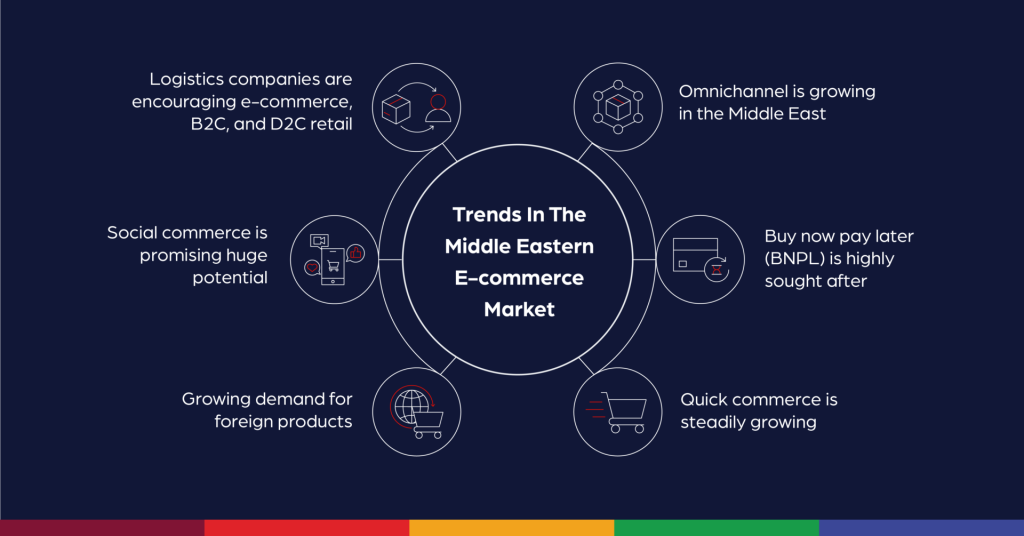
Positioning Platforms as Knowledge Leaders in Middle East Trade
Building Authority Through Insightful Content
To stand out, platforms must deliver more than transactions—offer knowledge. Curate resources on CEPA impacts or CBAM compliance, using case studies from real trades. In the region, knowledge management practices emphasize trends like AI integration, addressing challenges head-on.
From experience, authority builds trust. Start by:
- Creating guides: Step-by-step on navigating regulations.
- Hosting webinars: Expert panels on corridor developments.
- Partnering locally: Collaborate with regional bodies for credibility.
Link to related insights, such as those on AI in MENA trade, to deepen engagement. Digitalization and AI in MENA Trade: Your 2026 Guide
Integrating Data and Community for Long-Term Dominance
Data is king—platforms that aggregate trade stats and trends become indispensable. Use analytics to predict shifts, like CBAM’s export effects. Foster communities for knowledge sharing, turning users into contributors.
Strategies I’ve implemented:
- Develop dashboards: Real-time trade data visualizations.
- Encourage user-generated content: Forums on reform experiences.
- Measure impact: Track engagement and conversion metrics.
By focusing on these, platforms can evolve into hubs, much like successful digital ecosystems in banking. For geopolitical insights, explore Geopolitical Risks in Global Trade.
Overcoming Challenges: Practical Insights for 2026
No transformation is smooth. Geopolitical tensions, like US tariffs, indirectly affect energy and trade flows. Cyber threats demand robust infrastructure, with missions promoting ICT security.
Actionable Advice:
- Diversify markets: Reduce reliance on single corridors.
- Build resilience: Invest in adaptive tech.
- Stay informed: Monitor updates from sources like IMF projections.
In Iraq, fiscal reforms target revenue enhancement, while UAE’s CEPAs drive diversification.
The Road Ahead: Seizing Opportunities in Middle East Commerce
As we approach 2026, the Middle East’s trade landscape offers immense potential. With corridors like the Development Road and regulations like CBAM, the region is positioning for leadership. Platforms that provide comprehensive, actionable knowledge will lead the way.
Ready to navigate these changes? اشترك في Tendify.net اليوم—connect with verified suppliers, access real-time trade insights, and position your business for success in this evolving ecosystem. Join now and turn knowledge into action.


