المدونة
Iraq Zero-Tariff Exemptions 2026: Unlock Duty-Free Imports for Reconstruction Projects
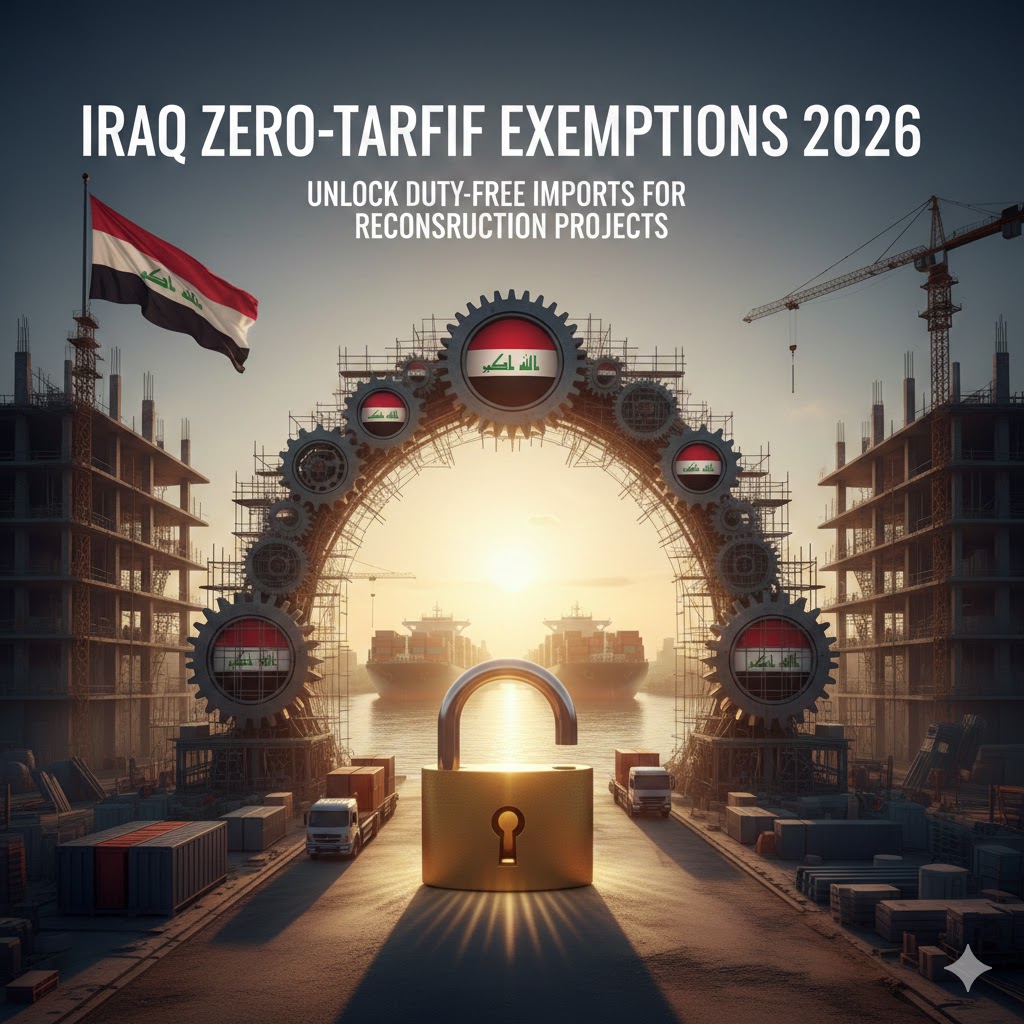
Over four decades in global trade, I’ve moved massive volumes of construction materials, heavy machinery, and industrial equipment into emerging markets. One truth stands out: in post-conflict rebuilding zones like Iraq, customs tariff exemptions can slash project costs by 20-30%, turning marginal bids into winners. Miss them, and you’re bleeding margins on duties that could hit 5-30% on standard imports.
Iraq Zero-Tariff Exemptions 2026
In 2026, Iraq’s reconstruction boom—fueled by billions in infrastructure needs for roads, power plants, housing, and water systems—makes zero-tariff exemptions a must-know edge. Under the National Investment Law and related regulations, qualified projects get duty-free imports on essential goods. Reports from the U.S. Department of Commerce and World Bank highlight how these incentives have drawn foreign investment, cutting clearance costs and speeding timelines.
This guide dives deep into Iraq’s customs duty exemptions for rebuilding efforts: eligibility, application steps, real-world pitfalls, and strategies that have saved my operations thousands per container. Master this, and you’ll navigate Iraq’s ports like Umm Qasr or Basra with confidence.
Why Tariff Exemptions Are Critical for Iraq’s Infrastructure Boom in 2026
Iraq’s economy is rebounding, with massive investments in reconstruction post-conflict. The government prioritizes infrastructure to diversify beyond oil, estimating needs in the tens of billions for energy, transport, and urban development.
Standard customs duties range from 0-30%, often landing at a flat 5% reconstruction levy on many goods. But for approved projects:
- Zero tariffs on equipment, materials, and machinery.
- Additional tax holidays up to 10-15 years.
- Duty waivers on raw materials for production.
Why does this matter? Duties compound delays and costs in a market with logistical challenges. One project I consulted on saved over 25% on imports by leveraging exemptions—funds reinvested in faster completion.
Data from investment reports shows exempted projects clear faster, with lower demurrage and stronger cash flow.
For insights on related valuation risks in the region, see our guide GCC Ports 2026: Master Customs Valuation and Dodge Crushing Penalties.
Understanding Iraq’s Customs Framework and Exemption Roots
Iraq’s customs operate under the Customs Law No. 23 of 1984 and Tariff Law No. 22 of 2010, with a 5% reconstruction surcharge on most imports (exempting basics like food and medicine).
The game-changer is the National Investment Law (amended), administered by the National Investment Commission (NIC). It targets foreign and domestic investors in strategic sectors.
Unlock Duty-Free Imports for Reconstruction Projects
Core Exemption Categories for Reconstruction
- Investment-licensed projects: Duty-free imports of equipment and materials during setup and operations.
- Government contracts: Exemptions for humanitarian or state-led rebuilding.
- Sector-specific incentives: Extra waivers for energy (renewables up to 10 years), manufacturing, and infrastructure.
- Free Zones: Lifetime exemptions on imports for zone-based activities.
In 2026, these remain active, with digital reforms via ASYCUDA streamlining claims.
Eligibility Criteria for Zero-Tariff Exemptions
Not every import qualifies—targeted at genuine reconstruction contributors.
Who Qualifies?
- Projects with NIC investment license (minimum thresholds vary by sector, often $1-2 million+).
- Infrastructure focus: Roads, bridges, power grids, water treatment, housing developments.
- Government-tendered contracts in rebuilding programs.
- Renewable energy or industrial setups supporting national goals.
Pro Insight: Even subcontractors can claim if tied to a licensed prime project. I’ve structured deals this way to extend benefits downstream.
Foreign investors get equal treatment, with full repatriation of profits.
Step-by-Step: Applying for Customs Duty Exemptions
Securing exemptions requires precision—errors lead to denials and back-duties.
Registration and Licensing Process
- Submit to NIC: Online or in-person application with project feasibility study, business plan, and financial proofs.
- Obtain Investment License: Approval typically 30-60 days; includes exemption endorsement.
- Prepare Import Lists: Detail HS codes, quantities, values for equipment/materials.
- Customs Declaration: At ports (e.g., Umm Qasr), submit via ASYCUDA with license reference.
- Verification and Clearance: Authorities cross-check; low-risk gets green channel release.
- Post-Clearance Audit: Maintain records for potential reviews.
Required Documents:
- Commercial invoice and bill of lading.
- Certificate of origin.
- NIC approval letter specifying exemptions.
- Proof of project tie-in (contract excerpts).
Digital submissions in 2026 speed this—aim for pre-arrival filings.
Common Mistake: Vague descriptions. Use precise HS classifications to avoid rejections.
Types of Goods Eligible for Zero Tariffs
Exemptions cover essentials, not luxuries.
High-Impact Categories
- Heavy machinery (cranes, excavators, generators).
- Construction materials (steel, cement raw inputs, pipes).
- Electrical equipment (transformers, cables for power projects).
- Renewable tech (solar panels, wind turbines).
- Vehicles and tools for project use.
Furniture/hotels get periodic renewal exemptions; primary raw materials often duty-free for production.
Table: Exemption Scope Comparison
| الفئة | Standard Duty | With Exemption | Duration/Terms |
|---|---|---|---|
| Construction Machinery | 5-15% | 0% | Project implementation phase |
| Raw Materials | 5-30% | 0% | For licensed production |
| Renewable Energy Equipment | Up to 30% | 0% | Up to 10 years |
| General Imports | 5% surcharge | Full waiver | NIC-approved only |
Challenges and How to Overcome Them in Practice
Exemptions aren’t automatic—bureaucracy persists.
- Delays in Approval: Fix: Engage local consultants early for NIC navigation.
- Documentation Rejections: Double-check alignments with license scope.
- Audits and Clawbacks: Keep meticulous records; misclassified goods trigger duties plus fines.
- Regional Variations: Kurdistan has separate perks—coordinate if multi-site.
Actionable Tip: Partner with verified clearing agents experienced in NIC exemptions. They’ve rescued shipments stuck in red channels for me.
Best Practices for Maximizing Exemptions in 2026
From hands-on deals:
- Start with NIC license—it’s the gateway.
- Bundle imports under one project phase for bulk approvals.
- Leverage digital tools like ASYCUDA for tracking.
- Audit suppliers for compliant origins/certificates.
- Plan for extensions if projects scale (up to 15 years with high local share).
Traders following this consistently cut import costs 15-40%.
For compliance in high-risk trade finance, check Understanding FATF Regulations: Practical Guide for MENA Businesses in 2026.
The Outlook: Iraq’s Exemptions Driving Growth
With ongoing reforms and WTO aspirations, 2026 exemptions remain robust, potentially expanding for green infrastructure. They’re key to attracting FDI amid rebuilding priorities.
This isn’t just policy—it’s your competitive advantage in a market hungry for reliable partners.
Ready to tap Iraq’s reconstruction opportunities and source duty-free materials from verified global suppliers? Join Tendify.net today for free—create your wholesale platform, post RFQs, and connect securely with traders worldwide. Sign up now and build your edge in emerging markets.