


المدونة
Defying the Desert – The UAE’s Agricultural Ambition
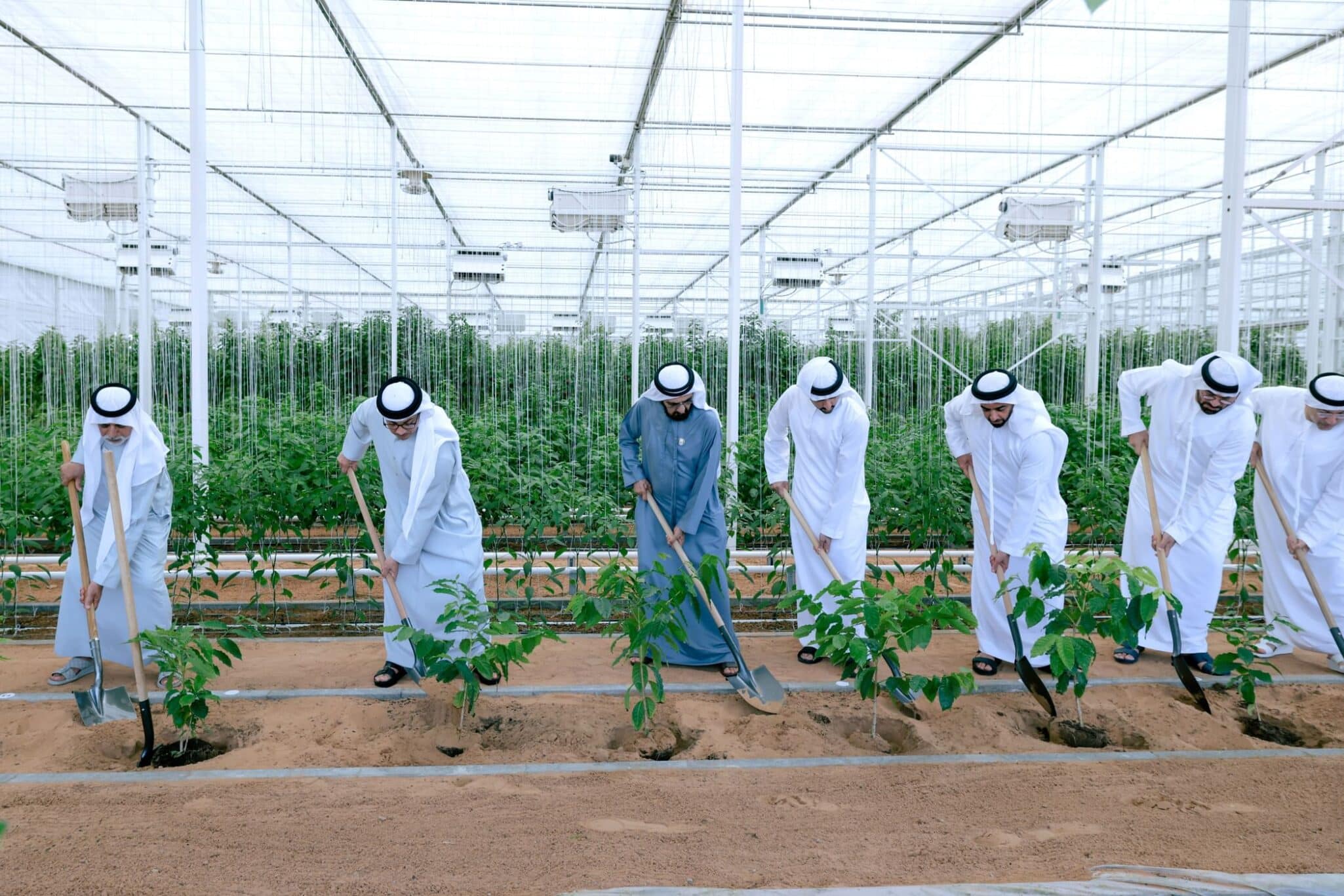
The United Arab Emirates, characterized by its arid climate, limited freshwater resources, and vast desert landscapes, presents one of the world’s most challenging environments for agriculture. Historically dependent on imports for over 80% of its food needs, the UAE has embarked on a transformative journey to enhance its food security and agricultural sustainability. Spearheaded by emirates like Dubai and Abu Dhabi, this revolution leverages cutting-edge technology, strategic policy, and bold research to turn barren land into productive green zones. This article explores the key advancements and future programs shaping the UAE’s agricultural sector, with a detailed examination of pistachio cultivation as a symbol of this remarkable progress.

Defying the Desert
Part 1: The Pillars of Agricultural Progress in the UAE & Dubai
1. Technological Innovation & Controlled-Environment Agriculture (CEA):
The backbone of the UAE’s agricultural success lies in its adoption of advanced technologies.
Vertical Farming: Companies like Bustanica (the world’s largest vertical farm, a joint venture with Crop One) and Madar Farms utilize stacked, indoor systems with LED lighting and precise climate control to produce leafy greens with 95% less water than conventional farming.
Hydroponics & Aquaponics: These soilless cultivation methods are widespread in facilities such as Emirates Hydroponics Farms و The Sustainable City’s farms. They recirculate water and nutrients, dramatically reducing water usage.
Greenhouse Technology: High-tech, climate-controlled greenhouses, often integrated with solar power for energy, enable year-round production of tomatoes, bell peppers, cucumbers, and berries across the Al Ain and Abu Dhabi regions.
Agricultural Progress in the UAE & Dubai
2. Strategic Government Initiatives & Programs:
National and emirate-level strategies provide the framework for growth.
National Food Security Strategy 2051: Aims to make the UAE the world’s top-ranked country in the Global Food Security Index by 2051. Key targets include increasing local production by 30-40% in key sectors.
Dubai Food Technology Valley: An ambitious mega-project announced in 2021, designed to be a global hub for AgTech, R&D, and smart food production, attracting startups and investments.
Abu Dhabi’s “Agriculture Innovation Mission for Climate (AIM for Climate): Co-led with the USA, this global initiative accelerates investment in climate-smart agriculture.
3. Biotechnology & Crop Research:
إن International Center for Biosaline Agriculture (ICBA) in Dubai and Khalifa University’s research teams are pioneers in developing and testing salt- and heat-tolerant crop varieties. Their work on quinoa, Salicornia, and even certain fruit trees is groundbreaking for arid regions.
Part 2: Case Study – The Pioneering Cultivation of Pistachios in the UAE
Pistachios, a high-value nut traditionally associated with climates like Iran and California, are a surprising but telling focus of the UAE’s agricultural research, symbolizing the push towards perennial, drought-tolerant crops.
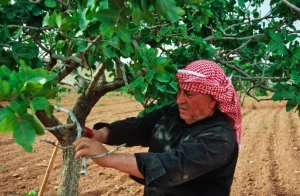
Cultivation of Pistachios in the UAE
1. The Challenge:
Pistachio trees require specific “chilling hours” (prolonged cold periods) for proper bud break and nut development—a condition seemingly absent in the hot UAE winters. They are also deep-rooted and sensitive to saline water and waterlogging.
2. The Research & Advancements:
Variety Selection & Acclimatization: Researchers at institutions like UAE University و ICBA are trialing pistachio varieties from hotter regions (e.g., Tunisia) that have lower chilling requirements.
Advanced Agro-Techniques: Using modified microclimates within specialized net houses or using evaporative cooling systems can help mimic necessary temperature ranges. Precision irrigation (drip systems with moisture sensors) delivers exact water amounts directly to roots, conserving water and preventing salinity buildup.
Soil Management & Grafting: Growing trees on raised beds with perfect drainage and using salt-tolerant rootstock are critical strategies being refined.
3. Current Status & Future Potential:
While not yet a commercial-scale industry, experimental plots in Al Ain, Ras Al Khaimah, and the Hajar Mountain foothills have shown promising results. Successful flowering and nut setting have been reported in select trials. The future program involves scaling these pilot projects, potentially using AI-driven climate prediction to optimize orchard conditions, and developing fully integrated “smart pistachio orchards.” Success would not only provide a local luxury crop but also offer a model for cultivating other challenging perennial nuts in arid zones.
Part 3: The Road Ahead – Future Programs & Sustainability Goals
The UAE’s agricultural vision is forward-looking and integrated:
Expansion of AI & Robotics: Increased use of drones for monitoring crop health, AI for predicting yields, and robotics for automated harvesting.
Water Security Synergy: Linking agriculture with massive investments in cloud seeding و water desalination using renewable energy.
Circular Economy Models: Integrating agriculture with waste management—using treated sewage water for irrigation (already practiced) and converting organic waste into biofertilizers.
Global Leadership in AgTech Export: The aim is not just self-sufficiency but to become a net exporter of knowledge, technology, and systems for desert agriculture worldwide.
Conclusion: A Blueprint for Arid Agriculture
The UAE and Dubai have redefined what is possible in agriculture under extreme conditions. By embracing a philosophy of innovation over imitation, they have built a sector that is high-tech, sustainable, and resilient. The pioneering work on crops like pistachios underscores the depth of this commitment, proving that even the most challenging crops can be reimagined for the desert. As their strategic programs unfold, the UAE is poised to become a global beacon for food security and agricultural ingenuity in the 21st century.
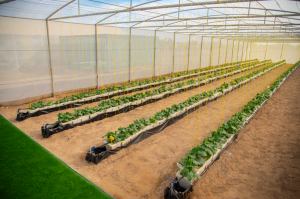
Blueprint for Arid Agriculture
FAQ Section
Q1: Can pistachios really grow in the UAE’s desert climate?
A1: Yes, through controlled research. While challenging, selected low-chill varieties grown with precise microclimate management, advanced irrigation, and suitable rootstocks have shown viability in experimental plots.
Q2: What is the most common crop grown using technology in Dubai?
A2: Leafy greens (lettuce, arugula, kale) are the most common in vertical farms. Tomatoes, cucumbers, and strawberries are also widely produced in high-tech greenhouses.
Q3: How does the UAE address its water scarcity for farming?
A3: Primarily through soilless, recirculating systems (hydroponics) that use up to 90% less water, using treated wastewater for irrigation, and investing in renewable-energy-powered desalination.
Q4: What is the main goal of Dubai Food Technology Valley?
A4: To create a holistic ecosystem for food security innovation, encompassing R&D, advanced production facilities, and a hub for startups and major AgTech companies to develop and export sustainable farming solutions.


