المدونة
The Green Logistics Revolution on the New Silk Road

China’s Strategies for Decarbonizing Trade Routes and Smart Ports
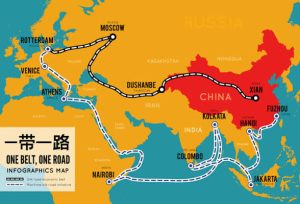
The New Silk Road — the modern embodiment of the ancient trade arteries connecting Asia, Europe, and Africa — is undergoing a profound transformation. What began as a network of physical infrastructure is rapidly evolving into a digitally enabled, low-carbon logistics ecosystem. China’s strategic pivot toward decarbonizing its Belt and Road Initiative (BRI) corridors represents one of the most significant shifts in global supply-chain architecture. This transition is driven by environmental imperatives, technological innovation, and the growing demand from international partners for sustainable trade solutions.
New Silk Road
This comprehensive operational guide examines China’s decarbonization strategies for the New Silk Road, with a particular focus on smart ports, green shipping corridors, renewable-powered logistics hubs, and carbon-neutral supply-chain frameworks. Written from a compliance and business-strategy perspective, the document provides regulated entities, technical contractors, logistics operators, and multinational corporations with audit-ready frameworks for compliant participation. Every recommendation prioritizes regulatory soundness, ESG alignment, and the facilitation of legitimate, sustainable cross-border trade.
New Silk Road green logistics
Strategic Insight: The green logistics revolution is not merely an environmental initiative — it is a competitive differentiator. Organizations that integrate with China’s decarbonized New Silk Road infrastructure today will secure long-term supply-chain resilience, regulatory goodwill, and access to premium green-finance instruments.
The Imperative for Green Logistics on the New Silk Road
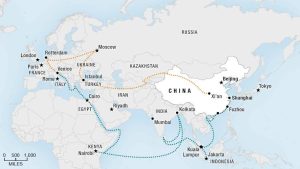
Global trade accounts for approximately 30 percent of anthropogenic CO₂ emissions, with maritime shipping and port operations representing a substantial share. As the world’s largest trading nation and a major emitter, China has recognized that continued expansion of traditional logistics infrastructure is incompatible with its carbon-neutrality commitments. The New Silk Road, spanning overland rail corridors, maritime routes, and digital trade platforms, has therefore become the testing ground for large-scale decarbonization.

Imperative for Green Logistics on the New Silk Road
Key drivers include international pressure for Scope 3 emissions reporting, customer demand for verifiable green supply chains, and the economic advantages of early adoption of low-carbon technologies. By embedding sustainability into the physical and digital layers of the New Silk Road, China aims to create resilient, future-proof trade arteries that meet both domestic environmental targets and international partner expectations.
For a broader view of compliant route diversification strategies that complement green logistics, see our operational guide on Compliant Trade Route Reengineering: Audit-Ready Alternatives to the Strait of Hormuz Crisis.
Smart Ports: The Digital and Green Backbone of the New Silk Road
Smart ports represent the convergence of automation, renewable energy, and data-driven operations. Major Chinese ports along the New Silk Road — including Shanghai, Ningbo-Zhoushan, Guangzhou, and the emerging hubs in the Guangdong-Hong Kong-Macao Greater Bay Area — are deploying 5G-enabled digital twins, AI-optimized cargo handling, and shore-side power systems that allow vessels to switch off auxiliary engines while at berth.
These ports are transitioning from fossil-fuel-dependent operations to hybrid and fully renewable-powered models. Solar and wind installations on port rooftops and adjacent land, combined with battery storage and green hydrogen pilots, are reducing Scope 1 and Scope 2 emissions. Automated guided vehicles (AGVs) and electrified rubber-tired gantry cranes further lower the carbon footprint of yard operations.
From a compliance perspective, smart ports generate rich, verifiable data streams that support ESG reporting, carbon accounting, and sanctions-screening requirements. International partners can integrate these data feeds into their own ERP and compliance systems, creating end-to-end visibility from origin to destination. For manufacturers and contractors seeking regional opportunities, smart-port modernization creates demand for precision instrumentation, automation hardware, and green energy solutions. Detailed strategies for participating in such projects are outlined in Rebuilding Energy Infrastructure: Strategic Opportunities for Technical Contractors in Post-Ceasefire Reconstruction.
Decarbonization Strategies Across New Silk Road Corridors
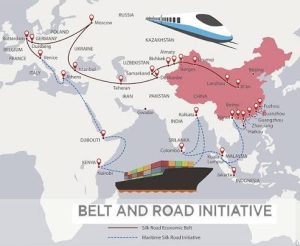
China’s decarbonization playbook for the New Silk Road operates on three parallel tracks: maritime, overland rail, and digital-enabling infrastructure.
Decarbonization Strategies Across New Silk Road
Maritime Green Corridors
Key initiatives include the establishment of green shipping corridors with dedicated low-emission fuel bunkering, shore-side electricity mandates, and incentives for vessels using alternative fuels such as LNG, methanol, and ammonia. Major ports are piloting carbon capture and storage integration and exploring hydrogen-based propulsion for short-sea feeder services.
Overland Rail Decarbonization
The China-Europe Railway Express is being electrified where possible and supplemented with green hydrogen and battery-electric locomotives on key segments. Digital optimization of train scheduling and cargo consolidation reduces empty runs and improves energy efficiency.
Digital and Data-Driven Sustainability
Blockchain-enabled digital product passports, AI-optimized routing algorithms, and unified Single-Window platforms allow real-time carbon-footprint tracking across the entire New Silk Road network. These tools enable participating companies to generate verifiable ESG data for international reporting standards.
Businesses seeking to align with these corridors benefit from lower long-term compliance costs and enhanced market access. For guidance on compliant nearshoring and friendshoring that complements green logistics, refer to Friendshoring 2.0: Compliant Nearshoring Strategies for Manufacturers Targeting GCC and Emerging Markets.
Practical Business Integration: How Companies Can Participate
International contractors, equipment suppliers, and logistics operators can capture value by aligning with China’s green New Silk Road through the following levers:
- Supply of certified green technologies (electrified cranes, shore-power systems, hydrogen infrastructure)
- Integration of ESG data platforms with Chinese smart-port systems
- Development of carbon-neutral multimodal services using New Silk Road corridors
- Compliance-ready digital documentation and traceability solutions
Successful integration requires audit-ready processes, third-party verification of green claims, and transparent supply-chain mapping. Companies that embed these capabilities gain preferred-partner status in tenders and financing programs linked to the green BRI.
For insight into post-traditional sanctions payment mechanisms that support green trade finance, see Post-Traditional Sanctions Financial Mechanisms: Strategic Integration with CBDCs and Single-Window Platforms for Compliant Regional Settlements.
Compliance and Risk-Management Frameworks for Green Logistics Projects
Participation in the green New Silk Road must occur within robust compliance boundaries. Recommended practices include:
- Enhanced due diligence on counterparties and end-use verification for dual-use equipment
- Real-time carbon accounting and Scope 3 emissions reporting aligned with international standards
- Performance-based contracting with verifiable sustainability milestones
- Integration of sanctions screening and Travel Rule obligations into digital trade platforms
These measures ensure that green logistics initiatives enhance rather than complicate regulatory adherence. Organizations can further strengthen resilience by adopting the contractual safeguards discussed in Snapback Risk in the Iran-US-Israel Ceasefire: A Strategic Contract Management Guide for CEOs and Investors.
90-Day Integration Playbook for Green New Silk Road Participation
Days 1–15: Strategic Assessment
- Map internal capabilities against New Silk Road green logistics requirements
- Identify priority corridors and smart-port projects
- Conduct ESG and sanctions compliance gap analysis
Days 16–45: Technology and Partnership Build
- Develop integration roadmaps for smart-port data platforms
- Form compliant joint ventures or agency partnerships
- Secure certifications for green technologies and carbon-accounting tools
Days 46–75: Pilot and Validation
- Execute controlled pilot shipments using green corridors
- Validate end-to-end ESG data capture and audit trails
- Refine compliance workflows based on live performance
Days 76–90: Scale and Governance
- Migrate targeted volumes to green New Silk Road routes
- Establish ongoing ESG monitoring and reporting cadence
- Prepare for third-party verification and tender submissions
This playbook enables organizations to enter the green logistics market with speed, scale, and full regulatory confidence.
Conclusion: The New Silk Road as a Catalyst for Sustainable Global Trade
China’s decarbonization of the New Silk Road marks a defining moment in global logistics. By combining smart-port infrastructure, renewable energy integration, and digital traceability, the initiative creates a scalable model for low-carbon trade that aligns environmental objectives with commercial imperatives. For international businesses and technical contractors, the green New Silk Road offers substantial opportunities — provided participation is grounded in audit-ready compliance, transparent ESG practices, and strategic contractual safeguards.
The organizations that move first to integrate with these evolving corridors will secure long-term competitive advantage, access to green-finance instruments, and stronger partnerships across Asia, Europe, and Africa. The green logistics revolution is not a distant aspiration; it is an operational reality already underway along the New Silk Road.
Platforms purpose-built for regulated, sustainable trade provide the infrastructure required to operationalize these strategies efficiently. Entities seeking to strengthen their position in the green New Silk Road are encouraged to evaluate integrated solutions that combine compliance excellence with commercial agility.
Request a Confidential Green New Silk Road Integration Assessment