


المدونة
The Sulfur Shock: Why a 2026 Shortage Could Tank the AI Revolution
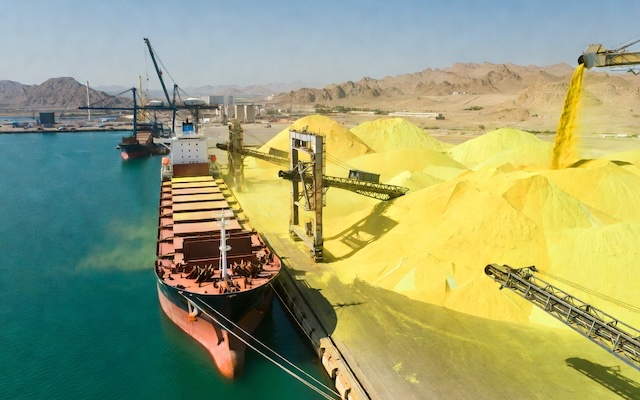
I’ve spent over two decades navigating the rough waters of international trade, from volatile commodity markets to complex cross-border logistics. I’ve seen oil spikes, container shortages, and sudden regulatory shifts that wiped out unprepared players overnight. But the current sulfur crisis hitting in 2026 feels different. It’s not just another commodity blip—it’s a strategic chokepoint exposing how deeply interconnected our global supply chains truly are.
The Sulfur Shock
One seemingly mundane industrial chemical, derived largely as a byproduct of oil and gas refining, has suddenly become a make-or-break input for semiconductors powering AI, critical mineral extraction for batteries and defense systems, and the fertilizers that feed billions. Prices have jumped dramatically from around $500 per ton to as high as $900 or more in stressed markets. Disruptions tied to instability in the Strait of Hormuz—through which a massive share of seaborne sulfur trade historically flows—are amplifying shortages and sending ripples across industries.
As someone who’s built and scaled export operations through multiple market cycles, I can tell you this: crises like this separate survivors from casualties. The winners won’t just react—they’ll anticipate, diversify, and use every tool at their disposal to protect margins and seize opportunities. That’s exactly why platforms like Platform.Tendify.Net exist: to give traders a centralized command center for real-time intelligence, compliance tools, calculators, and direct B2B connections that turn volatility into competitive advantage.
In this comprehensive guide, we’ll break down the reality behind the sulfur price surge, its cascading impacts on AI, defense, agriculture, and manufacturing, why the Southwest Asia supply dynamics matter so much, and—most importantly—actionable strategies you can implement today to safeguard your business in 2026 and beyond.
Premium Agricultural-Grade Mineral Sulfur & Soil Amendment Products – Direct from Producer
Understanding the Sulfur Market in 2026: From Byproduct to Strategic Bottleneck
Sulfur isn’t glamorous. Most of it (around 92% globally) comes as a byproduct from desulfurizing sour crude oil and natural gas during refining. The Gulf region, particularly producers in Saudi Arabia, UAE, Qatar, and associated operations, has long been a powerhouse, accounting for roughly 24% of world supply in recent estimates, with nearly 50% of seaborne trade traditionally transiting key maritime routes like the Strait of Hormuz.
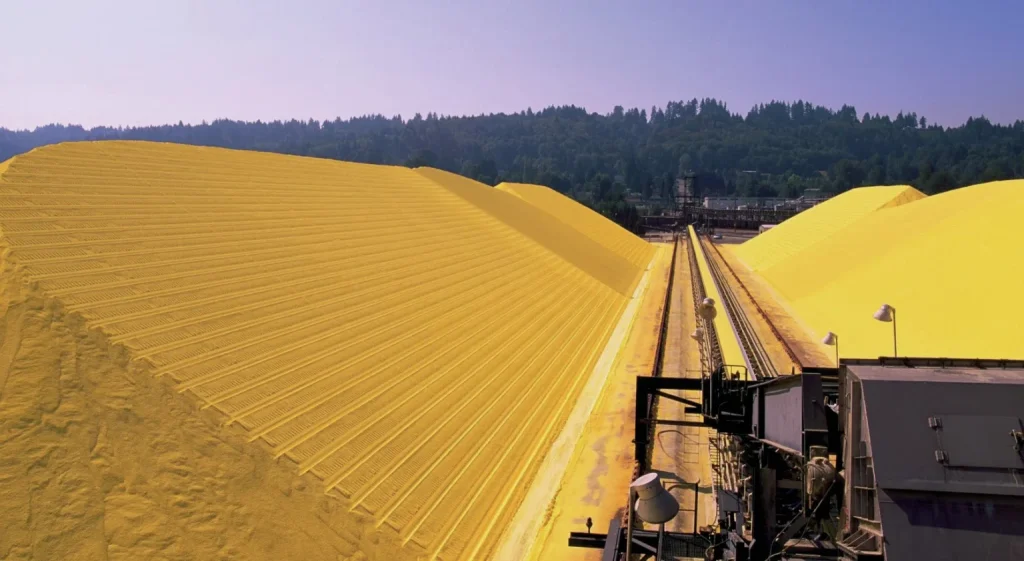
Understanding the Sulfur Market in 2026
Why does this matter now?
- Pre-existing tightness: Demand was already surging from fertilizer production (phosphate fertilizers rely heavily on sulfuric acid), battery metals processing (copper, nickel, lithium via high-pressure acid leaching or HPAL), and semiconductor manufacturing before recent escalations.
- The 2026 shock: Regional disruptions, including reduced refining throughput and blocked shipping lanes, have created a significant supply-demand gap. Some analyses point to a potential multi-million-ton deficit. Prices that hovered near $500/ton have spiked sharply, with delivered costs in import-dependent regions like parts of Africa or Asia climbing toward $900–$1,000 per ton in extreme cases.
- Secondary effects: China has moved toward export restrictions on sulfuric acid, further tightening availability. Other nations are considering similar protective measures.
The “king of chemicals”—sulfuric acid, produced by burning sulfur—is used in volumes that dwarf most other industrial chemicals. It’s essential for:
- Extracting and processing metals critical for everything from EV batteries to data center infrastructure.
- Phosphate fertilizer production, which underpins global food security.
- High-purity applications in chip etching and wafer cleaning.
When sulfur gets expensive or scarce, the pain doesn’t stay isolated. It cascades.
Broken Ceasefires, Billion-Dollar Losses: The True Economic Cost of Iran-Arab Tensions
Technical Insight: Understanding Sulfur Forms and Quality Standards
Not all sulfur is tradeable for all industries. In 2026, the spread between different forms has widened significantly:
Granular Sulfur: The gold standard for international seaborne trade due to ease of handling and lower dust explosion risks. Essential for large-scale fertilizer plants.
Molten Sulfur: Primarily used in regional “over-the-fence” deliveries from refineries to nearby acid plants. It eliminates the energy cost of re-melting but has a very limited logistical radius.
Crushed Lump: Often cheaper but increasingly restricted in modern ports due to environmental and safety concerns (dust and acidity).
Purity Requirements: For the AI and semiconductor grade sulfuric acid mentioned earlier, traders must secure 99.9% ultra-low ash sulfur. Even trace amounts of selenium or tellurium can render a shipment useless for high-purity chemical manufacturing.
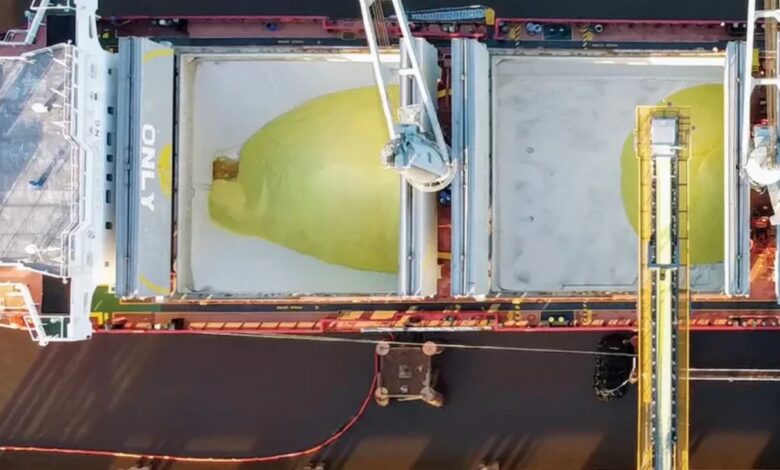
Understanding Sulfur Forms and Quality Standards
Table: Key Sulfur Market Dynamics in 2026
| أسبكت | Pre-Crisis Baseline | 2026 Crisis Impact | Primary Drivers |
|---|---|---|---|
| Price Range | ~$400–$550/ton | $500–$900+ /ton (delivered higher) | Supply route disruptions, export curbs |
| Seaborne Trade Share (Hormuz-related) | ~45–50% | Severely constrained | Maritime chokepoint instability |
| Major Uses | Fertilizers (60%+), Metals, Chemicals | Same, but with acute cost pressure | AI/semicon, batteries, defense |
| Vulnerable Regions | India, China, Morocco, Indonesia, Africa | Amplified shortages and inflation | Heavy import reliance |
Why Sulfur Matters for AI Chips and the Semiconductor Industry
Many people are surprised to learn how deeply sulfur-derived sulfuric acid penetrates high-tech manufacturing. In semiconductor production, ultra-pure sulfuric acid is indispensable for:
- Wafer etching and cleaning: Removing impurities and preparing silicon surfaces during photolithography and other precision steps. No easy substitutes exist at scale for the highest-purity grades required for advanced nodes (3nm, 2nm, and below).
- Supporting infrastructure: Sulfuric acid aids in extracting rare earth elements and base metals like copper and cobalt, which go into the electronics, wiring, and cooling systems of data centers powering AI training and inference.
Reports from the ongoing supply stress highlight risks to facilities like those operated by TSMC, which produces the majority of the world’s most advanced chips. A sustained crunch doesn’t just raise costs—it can slow production ramps for GPUs, AI accelerators, and the specialized processors driving everything from autonomous systems to modern defense electronics.
The defense angle is equally critical. Modern munitions, radar systems, stealth coatings, jet engines, and guidance technologies rely on advanced materials whose production depends on the same mineral processing chains. Sulfuric acid shortages translate into higher costs and potential delays in replenishing stockpiles or scaling next-gen hardware. In a world of great-power competition, this becomes a national security issue, not just an industrial one.
For B2B traders, the implication is clear: anyone supplying inputs to electronics manufacturers, battery makers, or their upstream suppliers needs to monitor sulfur and sulfuric acid pricing closely. Volatility here can reshape contract negotiations, force inventory builds, or shift sourcing geographies overnight.
Broader Economic Ripples: Fertilizers, Food Security, and Manufacturing Costs
The fertilizer link is perhaps the most visible downstream effect. Sulfuric acid is the primary reactant in turning phosphate rock into DAP, MAP, and other high-volume fertilizers. Disruptions raise input costs for farmers worldwide, potentially feeding into higher food prices at a time when global stocks are already under pressure from other factors.
Metals processing for EVs, renewables, and infrastructure also feels the heat. Nickel laterite projects in Indonesia and copper operations in various regions depend on acid leaching. Higher costs here can delay green energy transitions or inflate prices for everything from electric vehicles to grid upgrades.
Real-world trader impact examples I’ve seen in similar cycles:
- Exporters of bulk commodities suddenly facing higher logistics bids as carriers pass on fuel and input cost increases.
- Importers of machinery or chemicals watching margins erode due to upstream raw material inflation.
- Compliance teams scrambling as new export restrictions or valuation changes emerge in response to shortages.
The second- and third-order effects—currency pressures, shifting trade routes, and opportunistic arbitrage—create both risks and openings for agile players.
The Geopolitical and Logistical Reality Behind the Crisis
The Strait of Hormuz has long been a recognized vulnerability, handling a huge percentage of global energy and related commodity flows. With roughly half of seaborne sulfur trade historically linked to Gulf origins and routes, any sustained disruption creates immediate global repercussions. Refining slowdowns reduce sulfur output directly, while shipping constraints strand cargoes and force costly rerouting (e.g., via alternative ports like Duqm in Oman where feasible).
Additional factors compounding the issue include:
- Export policy responses from major players (restrictions or bans to protect domestic supply).
- Inventory drawdowns: Many plants operate with thin buffers (1–2 months in some HPAL operations).
- Interconnectedness with other commodities: Oil/gas refining issues affect sulfur, helium, and more simultaneously.
For traders focused on GCC, Middle East, or Asia-Europe corridors, this means reevaluating logistics partners, Incoterms, and contingency clauses in contracts. Tools for real-time tariff and cost calculation become lifesavers here.
Actionable Strategies: How to Navigate and Profit from Volatility in 2026
Don’t just read about the crisis—position your business to withstand and capitalize on it. Here’s a practical playbook drawn from years of steering operations through turbulent markets:
1. Strengthen Supply Chain Intelligence and Diversification
- Map your direct and indirect exposure to sulfur-derived inputs. Audit suppliers for their dependency on Gulf sources.
- Explore alternative origins: Expanded capacity in the US, Trinidad and Tobago, or other non-traditional producers may help offset gaps, though quality, logistics, and pricing will vary.
- Build multi-sourcing relationships. Even if primary volumes stay with trusted partners, having vetted backups reduces single-point failure risks.
2. Leverage Technology and Digital Tools for Agility
Modern trade demands more than spreadsheets. Centralized platforms that integrate market data, compliance checks, and direct buyer-seller matching cut through noise.
I strongly recommend exploring Platform.Tendify.Net. Whether you’re tracking real-time market pulses, running advanced cost calculators (including trade cost analysis or duty estimators), generating compliant documentation like proforma invoices or contracts, or optimizing container loads with 3D tools, having a unified command center dramatically improves decision speed. In a crisis environment, the ability to simulate scenarios, compare routes, or connect directly with verified suppliers without layers of intermediaries can preserve—or even expand—your margins. Many traders I’ve advised have found it invaluable for stress-testing deals under volatile input costs.
3. Master Risk Management in Contracts and Finance
- Incorporate robust force majeure, price escalation, and material adverse change clauses specific to commodity inputs like sulfur or sulfuric acid.
- Evaluate payment instruments carefully: Escrow services or modern alternatives to traditional LCs can offer better security and speed in uncertain times.
- Hedge where possible—monitor futures or related indices, and build buffers into pricing models.
4. Focus on Compliance and Documentation Excellence
Customs valuation, HS code accuracy, and origin rules matter more when authorities tighten scrutiny amid shortages. Use checklist generators and Incoterms advisors to avoid costly delays or penalties. Platforms offering export documentation support can save weeks of headaches.
5. Financial Modeling: Calculating Your True Landed Cost
In a $900/ton market, a 2% error in duty calculation or a missed port surcharge can wipe out your entire profit margin. Traders must move beyond “estimated pricing” to Landed Cost Modeling. This includes:
Origin-Based Tariffs: Checking if your sulfur origin (e.g., UAE or Qatar) falls under a Free Trade Agreement (FTA) with your destination (e.g., India or ASEAN).
Demurrage Buffers: In 2026, port congestion is a constant. Always build a 5-day demurrage buffer into your Proforma Invoice.
Currency Volatility: For sulfur deals priced in USD but settled in local currencies, use Tendify’s Exchange Rate Risk tool to protect against sudden devaluations during the 30-60 day transit period.
6. Identify Emerging Opportunities Amid the Chaos
- Arbitrage plays: Price disparities across regions create windows for traders who can move quickly with reliable logistics.
- New route development: Shifts away from traditional chokepoints may open doors in alternative corridors.
- Value-added services: Helping buyers secure stable supply through bundled offerings (logistics + financing + compliance) builds stickier, higher-margin relationships.
7. Invest in Operational Resilience
- Digitize workflows: From CRM for lead management to AI-powered market sentiment tools, automation reduces human error when things get chaotic.
- Scenario planning: Regularly run “what if” exercises for 3–6 month disruptions.
- Sustainability angle: As ESG pressures grow, optimizing for lower-carbon logistics or more efficient resource use can differentiate your offerings.
Pro Tip from Experience: The businesses that thrive in these environments treat information as their sharpest competitive edge. They don’t wait for news to hit mainstream—they monitor specialized indicators, engage directly with counterparts on platforms designed for trade, and act decisively.
Long-Term Outlook: Building Antifragile Trade Operations
The sulfur crisis of 2026 is a stark reminder that global trade rests on fragile foundations. A single chokepoint or byproduct dependency can amplify into systemic stress affecting AI progress, food prices, and defense readiness.
Yet history shows that periods of disruption accelerate innovation. Expect accelerated investment in alternative production methods, recycling of sulfuric acid, diversified mining and refining geographies, and smarter digital supply chain platforms.
For individual traders and companies, the mandate is clear: Move from reactive firefighting to proactive, data-driven operations. Those who integrate tools for real-time visibility, seamless compliance, and direct market access will not only survive but emerge stronger.
At Tendify, we’ve designed the ecosystem precisely for this reality—connecting verified players, equipping them with practical utilities (from HS code finders و tariff calculators إلى contract builders و exhibition calendars), and fostering the trust needed for high-stakes deals.
Conclusion: Turn the Sulfur Shock into Strategic Advantage
The jump in global sulfur prices from $500 toward $900 territory isn’t a temporary headline—it’s a signal of deeper vulnerabilities in our interconnected world. From slowing AI chip development and raising defense production costs to pressuring food systems and inflating manufacturing across sectors, the effects are broad and persistent.
The good news? You don’t have to face it alone or with outdated methods. By understanding the “why” behind the crisis—supply concentration, chokepoint risks, and multi-industry dependencies—and implementing the “how” of resilient operations, you can protect your business and uncover new growth paths.
Take the next step today: Visit Platform.Tendify.Net and explore the full suite of trade engines, from AI market pulse tools and logistics optimizers to essential calculators and document builders. In a market this dynamic, having an integrated Global Trade Operating System at your fingertips isn’t a luxury—it’s how seasoned operators stay ahead and turn volatility into consistent profitability.
The traders who will dominate 2026 and the years ahead aren’t the ones hoping the crisis fades quickly. They’re the ones who adapt fastest, using every available insight and tool to build antifragile supply chains.
Ready to strengthen your position? Sign up or log in at Platform.Tendify.Net now and start accessing the command center tools that turn market intelligence into actionable wins. Your next high-margin deal—or protected margin—might depend on it.

