


المدونة
Mediterranean Trade Corridor: Reviving the Iraq-Syria Route
In an era where global supply chains face mounting pressure from chokepoint vulnerabilities, regional players are accelerating efforts to diversify energy and commodity export corridors. One initiative gaining traction involves restoring a historic overland connection from northern Iraq to Syria’s Mediterranean coast. This development promises shorter transit times to European and broader international markets, reduced exposure to maritime risks, and fresh opportunities for traders, logistics providers, and investors across the GCC and wider MENA landscape.
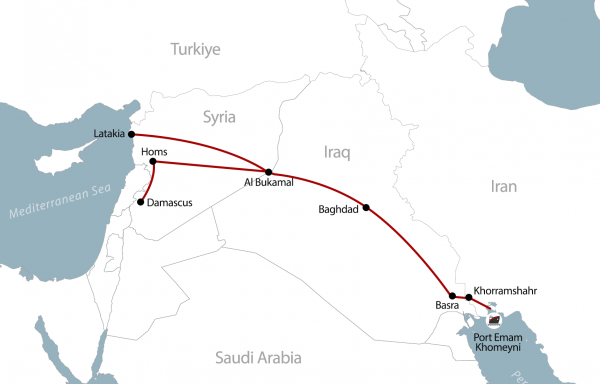
Mediterranean Trade Corridor
Businesses operating in bulk commodities, energy-intensive manufacturing, and cross-border distribution now stand at a potential inflection point. Understanding the operational mechanics, cost structures, and strategic ripple effects of this Mediterranean route will separate proactive operators from those caught off guard by shifting freight economics and compliance landscapes.
Iraq’s Oil Surge: Shifting Logistics and Arbitrage Windows
The Historical Context and Current Momentum Behind Pipeline Rehabilitation
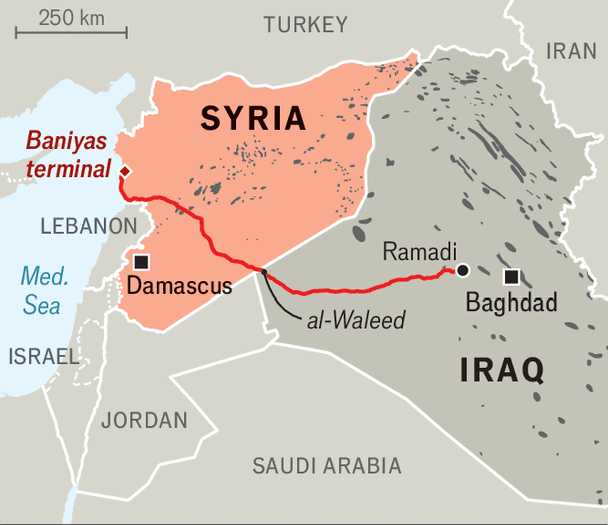
The Kirkuk-Baniyas route traces back to the early 1950s, when it was engineered as a vital artery linking Iraq’s northern oil fields to export terminals on the Mediterranean. At peak operations, it handled hundreds of thousands of barrels per day, offering a direct, non-Gulf pathway that trimmed distances and streamlined access to key demand centers.
Decades of inactivity followed due to geopolitical shifts, infrastructure degradation, and regional conflicts. Recent assessments, however, signal serious revival momentum. Joint technical committees from Iraq and Syria are evaluating rehabilitation options, including modern dual-line configurations capable of 1.5 million barrels per day (bpd) or more, new pumping stations, and rerouting segments for efficiency and security.
Preliminary cost estimates hover around $4.5 billion, with a projected 36-month timeline for full operational capacity if parallel construction proceeds. International consultants and potential investment from development banks are under discussion, reflecting broader interest in fortifying regional energy corridors.
For GCC-based importers and exporters, this is more than an energy story. It represents a tangible step toward multimodal supply chain redundancy that can stabilize pricing for downstream industries reliant on reliable feedstock and transit.
Why Diversification Matters: Operational Realities of Chokepoint Dependence
Maritime routes through narrow passages remain efficient for high-volume bulk movements but carry inherent volatility. Disruptions—whether from geopolitical tensions, weather events, or capacity constraints—can cascade into delayed shipments, elevated insurance premiums, and inventory shortages.

Iraq-Syria Route
Alternative pipelines and overland options in the region already demonstrate value. Saudi Arabia’s East-West pipeline and the UAE’s Habshan-Fujairah route provide proven bypass capacity, handling millions of barrels daily to Red Sea and Gulf of Oman terminals. These infrastructures have helped maintain flows during past stress periods.
A revived Kirkuk-Baniyas line would extend this logic northward, offering Iraq—and by extension, connected supply networks—a Mediterranean gateway. Key projected benefits include:
- Shorter transit to Europe: Reduced sea miles compared to southern Gulf routing, potentially lowering fuel and time costs for certain cargoes.
- Lower exposure to certain maritime risks: Overland segments supplemented by modern monitoring can provide predictability in volatile periods.
- Transit revenue for intermediate economies: Syria stands to gain from fees, which could fund port upgrades and ancillary logistics services beneficial to regional traders.
Practical impact on traders: For GCC distributors sourcing or moving petroleum derivatives, chemicals, or related bulk goods, access to diversified northern routes could moderate freight rate spikes and improve just-in-time planning.
Iraq Development Road vs Suez Canal: Cost and Time Comparison
Step-by-Step: How the Pipeline Could Integrate into Existing Trade Workflows
Successful adoption requires more than infrastructure. Here is a grounded operational framework for businesses preparing to leverage such corridors:
- Route Assessment and Feasibility Mapping Map origin points (e.g., northern Iraqi production or storage hubs) against destination markets. Factor in connection points to existing rail, road, or port networks in Syria and onward Mediterranean shipping. Use tools like HS code classifiers and trade cost calculators to model total landed costs versus traditional Gulf paths.
- Compliance and Documentation Alignment Update export documentation for new transit jurisdictions. This includes updated certificates of origin, quality assays aligned with ASTM or equivalent standards, and insurance tailored to pipeline-specific risks. Regional checklists for customs valuation and phytosanitary (where applicable for related agri-commodities) remain essential.
- Logistics Partner Vetting Engage forwarders experienced in multimodal GCC-Mediterranean movements. Prioritize those with established Syrian port relationships (Baniyas upgrades anticipated) and digital tracking capabilities. Test small volumes via current truck-based “pipeline on wheels” arrangements to validate reliability before full pipeline flows scale.
- Risk Mitigation Protocols Incorporate force majeure and war-risk clauses attuned to regional dynamics. Diversify across multiple corridors—pairing any new Mediterranean option with existing Red Sea, Oman, or overland GCC networks. Monitor currency exposure, particularly for transit fees and port handling.
⚠️
Critical Compliance & Sanctions Note
In the B2B landscape, risk mitigation and cross-border compliance dictate structural feasibility. While the rehabilitation of the Kirkuk-Baniyas pipeline offers undeniable logistical efficiency, it directly intersects with stringent international trade barriers—most notably the U.S. Caesar Syria Civilian Protection Act.
For GCC-based enterprises, particularly operators in Saudi Arabia and the UAE, navigating secondary sanctions risks remains paramount. Moving into 2026, proactive compliance teams must continuously audit potential infrastructure engagements against active trade restrictions, ensuring clear visibility into mandatory OFAC criteria, evolving regional diplomatic developments, and specialized sanction waivers before integrating this corridor into active supply networks.
- 5.Financial and Contract Structuring Leverage escrow or structured payment mechanisms for initial test shipments. Model scenarios using advanced loan and tariff calculators to quantify savings on demurrage, detention, and overall end-to-end costs.
Businesses already using platforms for contract generation and compliance checklists report smoother transitions when integrating new routes.
Broader Economic and Supply Chain Implications for GCC and MENA Markets
For Importers and Distributors: More options for sourcing energy products and feedstocks could ease pressure on local inventories, particularly for construction materials, petrochemicals, and industrial inputs tied to Vision 2030-style projects in Saudi Arabia or diversification drives elsewhere in the Gulf.
For Exporters: Enhanced connectivity may open reverse flows—opportunities to position GCC value-added goods (refined products, manufactured items) into new Mediterranean markets via efficient backhauls.
Logistics Sector Opportunities: Expect growth in warehousing near connection nodes, 3D container optimization needs for multimodal legs, and demand for AI-driven route intelligence. Incoterms selection (e.g., CFR vs. FOB adaptations) will require recalibration for pipeline handovers.
Investment Angle: Beyond energy, the project could catalyze ancillary infrastructure—rail links, port expansions, and digital customs integration—that benefits broader B2B trade. GCC investors exploring regional manufacturing or distribution hubs may find improved viability.
Data from similar corridor developments shows measurable reductions in average transit times and cost volatility when redundancy reaches critical mass.
Challenges and Risk Management Realities
No major infrastructure revival is without hurdles. Technical rehabilitation of aging segments demands significant capital and engineering precision. Security along transit corridors requires sustained coordination. Regulatory alignment across borders, including sanctions compliance frameworks and environmental standards, adds layers of due diligence.
Capacity ramp-up will likely be phased, starting with hundreds of thousands of bpd before scaling. Early movers should build buffers into timelines and budgets. Over-reliance on any single new route repeats the chokepoint vulnerability problem in different form.
Forward-thinking operators mitigate by maintaining parallel options: southern Gulf ports, Red Sea pipelines, Omani gateways, and digital tools for real-time market pulse monitoring.
Comparative Analysis: Pipeline Routes vs. Traditional Maritime Options
| Logistical Metric | Traditional Southern Gulf Routing | Revived Mediterranean Corridor (Projected) | Operational Advantage |
|---|---|---|---|
| Transit Time (to Southern Europe) | 14 – 21 Days (Via Strait of Hormuz & Bab-el-Mandeb) | 7 – 10 Days (Direct Overland to Levant Coast) | ↓ 50% faster cash-to-cash cycles |
| Freight Rate Volatility | High ($3,500 – $6,000+ per FEU during chokepoint crises) | Stable ($2,200 – $2,800 baseline pipeline tariff equivalent) | Predictable fixed-cost budgeting |
| Insurance & War Risk Premiums | 0.5% – 1.0% of hull/cargo value during regional surges | Standard overland transit cover + localized risk margins | Eliminates maritime chokepoint surcharges |
| Capacity Scalability | Unlimited (VLCC and high-volume container vessels) | Phased infrastructure expansion (300k to 1.5M bpd capacity) | Requires hybrid maritime-pipeline planning |
| Compliance & ESG Footprint | Standard maritime emissions tracking | Complex cross-border compliance + Potential green premiums | Requires strict secondary sanctions vetting |
This table underscores why hybrid strategies—blending maritime scale with pipeline reliability—often yield the strongest outcomes.
Preparing Your Operations: Actionable Recommendations for 2026
- Audit Current Flows: Identify volumes exposed to primary chokepoints and model 10-20% diversion scenarios.
- Build Digital Resilience: Integrate tools for tariff calculation, HS classification, container optimization, and contract automation to reduce manual friction.
- Strengthen Networks: Engage local partners in key nodes (UAE, Saudi, emerging Syrian ports) for on-ground intelligence.
- Scenario Planning: Run stress tests for delays, price swings, and alternative Incoterms using data-driven platforms.
- Sustainability Angle: Pipeline corridors may align with lower-emission goals compared to prolonged sea routes, opening doors to ESG-focused contracts in European markets.
In parallel, explore complementary utilities such as world trade tariff explorers and advanced cost analysis models to keep decisions grounded in real numbers.
The Strategic Imperative for Regional Trade Leaders
Diversifying away from single-point dependencies is no longer optional—it is table stakes for resilient operations. The potential revival of this Mediterranean corridor adds another layer to the evolving MENA logistics map, offering GCC and international businesses a practical tool for cost control, speed, and market access.
Operators who map these changes into their 2026 playbooks—updating workflows, vetting partners, and leveraging enabling digital infrastructure—will capture disproportionate value as flows rebalance.
For teams seeking to facilitate, secure, and accelerate these cross-border processes with practical tools and market intelligence, registering on the platform provides streamlined access to resources designed precisely for these dynamics. Visit https://tendify.net/my-account/ to establish your command center for smarter regional trade execution.
Internal resources for deeper dives:
Streamlining Cross-Border Logistics for Efficient B2B Trade in the Gulf Region,
GCC Ports 2026: Master Customs Valuation,
The Role of Digital Freight Forwarders.
This evolving landscape rewards preparation. The operators positioned today with flexible networks and precise execution tools will lead the next phase of efficient, resilient MENA trade.

