Blog
Iraq’s Oil Surge: Shifting Logistics and Arbitrage Windows

I’ve spent years navigating the high-stakes world of cross-border energy deals, watching how one decision in a Gulf port can ripple across supply chains from Asia to Europe. When Iraq ramps up oil loading at its southern terminals and pushes more barrels through the Strait of Hormuz, it’s not just another headline—it’s a clear signal of shifting priorities that every trader, importer, and logistics operator needs to understand.

Iraq Oil Exports
This move highlights Iraq’s focus on volume and immediate revenue over strict production quotas. For businesses in oil, petrochemicals, shipping, and related sectors, it creates both risks and opportunities. In this comprehensive guide, I’ll break down the “why” behind these developments, the practical implications for your operations, and actionable steps to position your business ahead of the curve—drawing from real-world trade challenges I’ve encountered.
How to Completely Avoid Demurrage in UAE & Iraq Ports (2026 Guide)
Why Iraq Is Accelerating Oil Exports Now
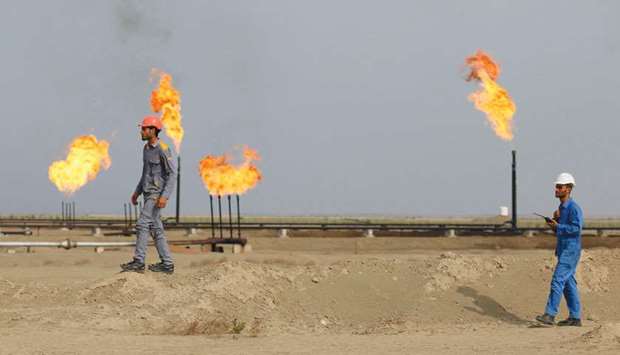
Iraq, as OPEC’s second-largest producer, has long balanced alliance commitments with domestic economic pressures. Recent accelerations in loading at key southern ports like Basra underscore a strategic pivot: prioritizing market share and hard currency inflows.

Key Drivers Behind the Surge:
- Revenue Imperatives: Iraq relies heavily on oil for government budgets. Increasing export volumes directly addresses fiscal needs, especially amid infrastructure investments and reconstruction efforts.
- Geopolitical Positioning: By emphasizing flows through the Strait of Hormuz, Iraq reinforces the waterway’s enduring centrality despite diversification attempts by neighbors via pipelines and alternative routes.
- OPEC+ Dynamics: Engagement with the cartel aims at higher production ceilings, targeting ambitious capacities like 5 million barrels per day long-term. This reflects confidence in rising Asian demand while countering non-OPEC supply growth.
This isn’t isolated. It aligns with broader Gulf producer strategies, where volume competes with price discipline. For traders, this means potential price volatility but steadier availability in certain grades.
The Asia-Pacific Pivot: Capturing the Thirsty Markets of China and India
Let’s be realistic: Iraqi southern crude isn’t destined to balance European boutique markets—the real battleground for these additional barrels lies in the massive public and private refineries of China and India. While generic market commentary often lumps this under a vague “Asian demand” umbrella, smart operators need to look at the exact destination of these flows.
This aggressive volume surge directly intensifies the competition to lock in market share within these two economic engines. For B2B traders, intermediaries, and logistics operators managing relationships in the Asia-Pacific region, this influx means one critical thing: expect immediate shifts in pricing differentials and term contract structures as major state-backed and independent buyers leverage this oversupply to renegotiate long-term agreements.
“This volume surge directly intensifies the competition for the thirsty Indian and Chinese markets. Traders operating within these corridors must brace for structural changes in term contracts and spot pricing allocations.”
The Enduring Role of the Strait of Hormuz in Global Energy Flows
The Strait of Hormuz remains the world’s most critical energy chokepoint, handling roughly a fifth of global seaborne oil. Iraq’s reliance on southern terminals makes it particularly exposed, yet also influential.
What This Means for Supply Chains:
Recent disruptions (from regional tensions) have already forced rerouting and alternative export paths like Ceyhan in Turkey. Iraq’s push to boost both Hormuz and northern routes shows adaptive resilience.
Traders monitoring this should track:
- Vessel traffic and loading rates at Basra and Al Faw.
- Pipeline capacities from Kirkuk and Kurdistan fields.
- Insurance premiums for Gulf transits, which spike with perceived risks.
Understanding these flows helps anticipate freight rates and contract terms.
The 2026 Game-Changer: The Iraq-Europe Development Road
While the Kirkuk-Ceyhan pipeline remains a critical fallback for northern flows, the real strategic headline of 2026 is the rapid acceleration of the Iraq-Europe Development Road (historically known as the ‘Dry Canal’). This $17 billion multimodal mega-corridor isn’t just a local transit network; it is designed to alter global logistics maps completely. Connecting the Grand Faw Port in Basra directly to the Turkish border via a 1,200-kilometer high-speed rail and multi-lane highway system, this corridor aims to cut transit times between Asia and Europe by up to 11 days compared to traditional maritime routes like the Suez Canal.
For forward-thinking trade professionals, this infrastructure push changes everything. It transitions Iraq from a country bottlenecked by its narrow Persian Gulf coastline into a highly agile, continental land-bridge. This means that infrastructure investments in the south, like the expansion of Al Faw, are directly linked to overland freight capacity moving north into Turkey and Southern Europe.
“Supply Chain Insight: The Development Road represents a permanent structural shift. As the corridor moves through its phased onboarding, smart logistics operators are already calculating the 30% to 40% reduction in transit times to secure early-mover advantages for Asia-to-Europe freight.”
Which Incoterm is Best for Bulk Liquids? (CFR vs. FOB for Oil & Chemicals)
The Tanker Crunch: Freight Rates and VLCC Availability
When a heavyweight producer like Iraq abruptly accelerates loadings at its southern terminals, the ripple effect on maritime logistics is instantaneous. This sudden operational sprint triggers an immediate demand spike for Very Large Crude Carriers (VLCCs) within the Gulf corridor. For logistics providers, shipbrokers, and supply chain managers, this translates into two critical market shifts:
- Skyrocketing Freight Rates: The sudden rush to secure available tonnage drives spot chartering costs up rapidly. If you are negotiating spot fixtures, expect immediate upward pressure on Worldscale (WS) rates.
- Short-Term Tanker Scarcity: As Iraq rapidly absorbs regional vessel capacity, competing exporters and independent traders will face localized vessel shortages, potentially delaying tight delivery windows.
This is pure gold for the logistics networks utilizing the Tendify ecosystem. In the high-stakes maritime trade of 2026, failing to factor this localized vessel crunch into your freight cost modeling means risking severe margin erosion before your cargo even leaves the port.
“Logistics Alert: Iraq’s export acceleration doesn’t just move oil—it locks up regional fleet capacity. Forward planning for vessel chartering is no longer optional; it’s a baseline necessity for protecting your margins.”
Impact on Global Oil Markets and Prices
Focusing on volume over cuts typically exerts downward pressure on prices, benefiting global importers while squeezing margins for production-heavy exporters. However, in a highly synchronized market characterized by structural demand growth from developing Asia, the net impact remains tightly coupled with broader OPEC+ coordination and macro-environmental triggers.
Historical Parallels and Data Insights
Historical trend lines from Reuters, Bloomberg, and energy intelligence agencies show that similar structural pivots by major Gulf producers invariably lead to immediate, short-term price softening. This initial dip is traditionally followed by localized stabilization as merchant refiners adjust their configurations to absorb the new supply.

Iraq’s Oil Surge
For 2026, market participants should anticipate several critical developments:
Opportunities in Spot Markets for Refiners: The influx of uncommitted volume increases market liquidity, giving commercial refiners immense leverage to optimize their short-term feedstock buying.
Ripple Effects on Downstream Commodities: This supply surge directly impacts the valuation of related heavy products. Traders should closely monitor pricing volatility in bitumen, petrochemical feedstocks, vacuum gas oil (VGO), and regional marine bunker fuels.
Strategic Scenario Modeling: Asset managers and businesses tied to energy-intensive sectors must stress-test their operational budgets against three distinct baselines: a base-case scenario (moderate volume growth), a high-supply scenario (aggressive regional market-share wars), and a geopolitical disruption scenario (abrupt chokepoint closures).
Refined Product Differentiation: Basrah Medium and Heavy Take Center Stage
To accurately trade this surge and protect commercial margins, market participants must look beyond outdated trading labels. The modern reality of Iraq’s southern export ecosystem is no longer driven by the generic “Basrah Light” stream. Following the structural marketing split executed by SOMO (State Oil Marketing Organization), southern offshore terminals now pump two distinct, segregated streams that dictate regional pricing baselines:
Basrah Heavy (The Asian Sweet Spot | ~23.5° API): This specific grade is highly coveted by the complex, high-conversion refineries operating across India and China. These sophisticated private and state-owned facilities are custom-engineered to process heavy, sour, high-sulfur crudes. By running Basrah Heavy, these plants can capture deep baseline discount margins and efficiently crack the heavy feedstock into high-value clean distillates like diesel and gasoline.
Basrah Medium (The Volumetric Backbone | ~27.9° API, ~3% Sulfur): Now ranking as the largest volumetric grade leaving the Basra terminal network, this stream offers a highly stable, predictable, and reliable feedstock option. It is increasingly utilized by merchant refiners across both Asian and Mediterranean manufacturing hubs who need to balance their cracking yields without the quality fluctuations that plagued historical blends.
For 2026, sophisticated traders shouldn’t just look for generic macro indicators of “more oil.” Success requires tracking the widening or narrowing of specific pricing differentials between these medium and heavy baselines, as these micro-spreads directly signal where the most profitable arbitrage windows will open.
The OSP Battle: Deep Discounts and the Asian Market Share War
In the global energy trade, volume increases never happen in a vacuum—they require aggressive pricing to move the cargo. To ensure these additional barrels clear the market, Iraq’s State Oil Marketing Organization (SOMO) is forced to recalibrate its Official Selling Price (OSP) differentials, often offering wider discounts against regional benchmarks like Oman/Dubai crude.
This pricing strategy sparks a fierce, multi-layered competition in the Asia-Pacific region, which every physical trader must navigate:
- The Battle with Traditional Giants: Iraq’s discounted OSPs put direct pressure on Saudi Arabia’s Aramco and Kuwait’s KPC to defend their own market shares, leading to a highly volatile corporate pricing environment.
- The Sanctioned Barrel Clash: Perhaps the most critical dynamic of 2026 is how Iraqi Basrah Heavy competes directly with heavily discounted, sanctioned flows from Russia (Urals/ESPO) and Iran. Independent refineries (often referred to as ‘teapots’ in China) are constantly calculating the netback margins between these grades, shifting their buying patterns based on a single dollar’s difference in OSP discounts.
For B2B procurement professionals utilizing Tendify, this means that tracking OSP announcements at the beginning of each month is no longer just a routine check—it is the ultimate leading indicator for predicting arbitrage windows and maximizing procurement margins.
“Commercial Takeaway: When volume goes up, OSPs come down. Iraq’s push forces a competitive discounting environment across the entire Gulf corridor, creating prime spot-market opportunities for buyers who can move quickly with flexible financing tools.”
Climate Realities vs. Infrastructure Capacity: Can Iraq’s Ports Handle the Surge?
As a seasoned market participant, I always ask the hard question that spreadsheet analysts overlook: Does the physical infrastructure actually support the paper volume? While Iraq’s ambition to pump more barrels through the south is clear, the execution faces an unyielding combination of volatile Middle Eastern weather and legacy port limitations.
Any trader relying on these flows must factor in two major operational bottlenecks:
- The Scorching Climate Constraints: During peak summer months, southern Iraq routinely experiences extreme heatwaves exceeding 50°C (122°F), frequently coupled with severe, blinding dust storms. These aren’t just uncomfortable; they are operationally hazardous. Dust storms drastically reduce visibility in the channels, halting vessel movements and forcing the suspension of loading operations at offshore Single Point Moorings (SPMs) to protect technical equipment and crew safety.
- The Infrastructure Savior – Grand Al-Faw Port: To overcome the historic congestion of the older Basra oil terminals, all eyes in 2026 are on the phased execution of the Grand Al-Faw Port project. The steady operational onboarding of its newer berths is the exact structural engine making this sudden export acceleration possible. It is no longer just a blueprint—Al-Faw is actively shifting from a construction project into the crown jewel of Iraq’s logistics resilience.
“Operational Takeaway: Do not mistake theoretical production capacity for actual export capability. When modeling your Q2 and Q3 supply chains, build a ‘weather cushion’ into your demurrage calculations to account for predictable summer climate shutdowns in the northern Gulf.”
Practical Implications for Traders and Importers
Whether you are sourcing downstream petrochemicals, bidding on large-scale infrastructure projects tied to state revenues, or managing international freight, Iraq’s shifting energy strategy directly affects your operational bottom line. Navigating this environment requires moving beyond generic risk management into highly targeted execution across three core operational pillars.
1. Procurement and Sourcing Strategies
The surge in Iraqi oil exports directly translates to increased hard currency inflows for the state, which are immediately channeled into funding national reconstruction, public tenders, and industrial modernization. This creates an expansive, high-volume market demand for foreign construction materials (such as structural steel and cement), specialized machinery, and technical consumer goods.
To capitalize on these import pipelines, B2B procurement professionals must optimize their regulatory strategies early. Utilizing integrated digital tools like HS Code finders and automated tariff calculators is no longer just about compliance—it is an essential practice for calculating accurate landed costs, identifying preferential trade agreements, and avoiding unexpected duties at the port of entry.
2. Logistics and Risk Management
Precision Port Scheduling: While accelerated loading rates at major southern Iraqi terminals are designed to streamline operations, they also compress window times. Reducing turnaround times can significantly lower demurrage expenses, but only if your vessel scheduling, customs clearing agents, and port documentation are perfectly synchronized. A single breakdown in paperwork will result in heavy fines in a high-traffic port.
Strategic Route Diversification: Reliance on a single maritime corridor is a major vulnerability. Traders must actively diversify their transit risk by utilizing alternative northern pathways like the Kirkuk-Ceyhan pipeline or mapping multimodal overland options that connect into emerging cross-border transit corridors.
Rigorous Sanctions and Compliance Screening: As the volume of cross-border transactions expands, regulatory scrutiny intensifies. Bulletproof sanctions screening, clear proof of origin documentation, and meticulous compliance audits remain critical to protecting your supply chain from localized enforcement disruptions and trade-based money laundering (TBML) risks.
3. Financial and Payment Considerations
Operating in volatile energy corridors demands high financial agility. Relying exclusively on traditional, slow-moving Letters of Credit (LCs) often results in missed spot-market opportunities and delayed shipments due to rigid bureaucratic verification.
To maintain a competitive edge, forward-thinking importers and exporters are transitioning toward next-generation digital escrow services and flexible, smart-contract-backed payment mechanisms. These secure digital tools mitigate counterparty risks in real-time, streamline funds release upon verified milestone completion, and safeguard capital margins against abrupt market or currency fluctuations.
How to Navigate These Shifts: Actionable Steps
Successfully maneuvering through major structural shifts in regional energy markets requires a systematic, proactive approach rather than reactive firefighting. Based on my years of experience scaling international trade operations and deploying technical workflows, I have developed a proven, four-step execution framework designed to turn market volatility into a distinct commercial advantage.
Step 1: Establish Real-Time Market Intelligence
You cannot trade effectively on yesterday’s data. To outmaneuver the competition, you must transition from passive news observation to active, data-driven monitoring.
Deploy Live Tracking: Actively monitor real-time vessel movements, automated loading rates at southern Gulf terminals, and fluctuating OSP differentials directly from reliable trade intelligence sources.
Leverage Predictive Analytics: Move beyond historical charts. Utilize advanced predictive analytics models to forecast short-term price adjustments, identify emerging arbitrage opportunities, and anticipate freight rate surges before they impact your balance sheet.
Step 2: Ruthlessly Optimize Your Supply Chain
Physical bottlenecks require digital solutions. Relying on single-threaded supply chains in high-stakes trade corridors is a recipe for margin erosion.
Dynamic Supplier and Route Diversification: Cultivate redundant sourcing options across different geographical nodes and secure pre-vetted backup logistics corridors, including alternative northern pipelines and overland multimodal routes.
Utilize Advanced Technical Utilities: Eliminate guesswork at the loading bay. Leverage automated cost calculators to evaluate real-time freight margins and integrate 3D container loading simulation tools to maximize volumetric efficiency, ensure safe weight distribution, and lower per-unit transport costs.
Step 3: Harden Your Compliance and Documentation Workflows
Cross-border trade in complex jurisdictions leaves zero room for administrative errors. Your legal and paperwork framework must be bulletproof.
Master Gulf-Specific Trade Frameworks: Ensure your operational teams are thoroughly trained on specialized export checklists, customs valuation rules, and the exact nuances of Incoterms tailored explicitly for Middle Eastern maritime and overland trade.
Draft Resilient Commercial Contracts: Never sign a generic template. Ensure every single international contract contains ironclad, highly specific force majeure definitions and comprehensive war-risk and maritime delay clauses to safeguard your capital in the event of sudden chokepoint closures.
Step 4: Build High-Trust Digital Partnerships
In modern international trade, the speed of your network dictates the speed of your growth. Traditional, opaque intermediary networks are being replaced by transparent digital ecosystems.
Connect with Verified Counterparties: Bypass unverified brokers by establishing direct communication channels with pre-vetted suppliers, buyers, and tier-one logistics providers through digital platforms purpose-built for global B2B trade.
Adopt Integrated Execution Ecosystems: To scale seamlessly, move away from fragmented workflows. Explore and integrate unified digital trade environments that allow you to manage compliance documentation, run instant trade simulations, and utilize secure, flexible transaction tools all under a single command center.
Sector-Specific Opportunities in 2026
The structural recalibration of Iraq’s energy output does not merely impact crude traders—it sends powerful capital waves across a multitude of secondary and tertiary industries. As state coffers swell from optimized export volumes, distinct high-margin windows are opening across four key sectors.
1. Construction and Infrastructure (The Reconstruction Boom)
Iraq’s surging oil income is being aggressively deployed into national master plans, major urban regeneration projects, and strategic transport corridors like the historic Development Road. This immense allocation of public capital translates into an unprecedented demand for foreign raw materials and heavy industrial assets.
Target Commodities: High-grade structural steel, cement additives, advanced piping networks, and heavy earthmoving equipment.
Strategic Play: Global exporters should position themselves not merely as product vendors, but as integrated logistics partners. Utilizing automated duty calculators and preparing pre-vetted compliance packages will allow you to clear customs rapidly, giving you a massive competitive edge when bidding on high-value public and private tenders.
2. Petrochemicals and Downstream Derivatives
Increased and highly stabilized crude production directly ensures a consistent, uninterrupted supply of localized refinery feedstocks. This domestic availability is laying the groundwork for a major expansion in regional downstream chemical manufacturing.
Market Window: Increased availability of primary feedstocks like naphtha, ethane, and liquefied petroleum gas (LPG) will drive the production of essential secondary derivatives, including polymers, synthetic rubber, and basic industrial solvents.
Strategic Play: Procurement managers for manufacturing hubs across Europe and Asia should lock in medium-term supply agreements now to capitalize on this localized feedstock surplus, hedging against price spikes in other volatile chemical corridors.
3. Advanced Logistics and Multimodal Providers
As physical trade volumes expand, the demand for specialized, high-efficiency transport architecture is outstripping traditional capacity. The market is urgently calling for operators who can safely bridge the gap between maritime hubs and overland corridors.
Core Demands: Secure, real-time-monitored maritime freight, specialized cold-chain or hazardous material handling, and integrated multimodal solutions that connect Gulf ports seamlessly into overland transit networks.
Strategic Play: Logistics providers who deploy advanced technical utilities—such as 3D container loading simulators to maximize volumetric capacity, automated tracking links, and optimized customs documentation workflows—will capture premium market share by dramatically lowering demurrage and transit risks for international shippers.
4. The Strategic Investment Angle
The influx of energy revenues is triggering a powerful economic multiplier effect, creating fertile ground for secondary B2B services that support the broader trade ecosystem.
Ecosystem Needs: Industrial maintenance, specialized engineering consulting, advanced security infrastructure, and digital financial technologies.
Strategic Play: Tech-driven enterprises can find immense value in introducing secure cross-border payment platforms, digital escrow systems, and automated compliance verification tools tailored for high-volume commodity corridors. Investing early in these digital trade infrastructures offers a high-yield entry point into the region’s accelerating modernization wave.
Tools and Resources Every Trader Needs
In today’s environment, manual tracking doesn’t cut it. Platforms offering AI market pulse, sanctions monitoring, document builders, and calculators give a decisive edge.
Check out the full suite at Platform.Tendify.Net — whether it’s real-time analytics, compliance generators, or trade simulators, these resources help turn market shifts into advantages. Many traders I’ve advised have cut costs and risks significantly by integrating such capabilities early.
Common Pitfalls to Avoid
In high-stakes commodity and regional trade, what you don’t do is often more critical than what you do. When navigating volatile corridors, even minor oversights can rapidly compound into catastrophic financial and operational losses. International trade executives must actively insulate their operations from three widespread, systemic blind spots:
1. Ignoring Route Diversification Until Disruptions Hit
Waiting for a critical maritime chokepoint to experience a geopolitical closure or a major logistical bottleneck before seeking alternative paths is a fatal strategy. By the time a crisis hits the headlines, spot freight rates on alternative routes skyrocket, pipeline capacities become instantly oversaturated, and insurance premiums surge exponentially.
The Fix: You must build and legally vet operational redundancies during peacetime. Actively allocate a small but consistent percentage of your baseline cargo volume through alternative northern pipelines or emerging overland multimodal networks to keep those logistics channels warm and active.
2. Underestimating Documentation Requirements for Energy-Related Cargo
Treating compliance paperwork as a secondary administrative task rather than a core risk-mitigation strategy is a recipe for severe operational gridlock. Border customs and international maritime authorities exercise extreme scrutiny over cargo originating from complex geopolitical zones. Ambiguous certificates of origin, minor classification errors on HS codes, or incomplete vessel logs can trigger immediate cargo impoundment, severe regulatory fines, and compounding port demurrage fees.
The Fix: Establish a zero-tolerance policy for administrative discrepancies. Implement digital, standardized export checklists tailored specifically to Gulf compliance frameworks and leverage automated documentation tools to verify that every invoice, bill of lading, and sanitary certificate is perfectly aligned before the vessel ever leaves the berth.
3. Overcommitting to High-Volume Deals Without Financial Stress-Testing
Entering into long-term procurement or supply contracts based solely on static, best-case market projections is an incredibly dangerous gamble. Energy markets are inherently cyclical, and sudden shifts in Official Selling Price (OSP) differentials, unexpected currency devaluations, or sharp fluctuations in global fuel surcharges can instantly evaporate your calculated profit margins.
The Fix: Never sign a contract without putting the numbers through a stress test. Utilize advanced financial and logistics simulation tools to model how your deal performs under worst-case parameters—such as a 20% spike in freight costs, a dramatic narrowing of the Basrah Medium-Heavy spread, or extensive transit delays. If your margins cannot survive the simulation, restructure the pricing mechanisms in your contract before committing capital.
Case Studies from Similar Market Moves
Analyzing how proactive global enterprises leverage workflow adaptations to lock in alpha and insulate supply chains during major regional volume expansions.
Scenario A: The Multimodal Corridor Activation
The Challenge: During a historical surge in Middle Eastern heavy crude allocations, a European refining group faced catastrophic port delays and exponential spikes in localized war-risk premiums at traditional southern Gulf berths.
The Strategy: Rather than absorbing compounding demurrage fees, the group executed a pre-vetted multimodal routing pivot. They redirected 35% of their baseline volume away from jammed maritime channels into alternative northern land-bridges and connecting pipeline networks.
The Outcome: The proactive diversion allowed the enterprise to maintain full downstream capacity, completely bypassing the localized tanker crunch and freight volatility.
Scenario B: Capturing the Grading Differential
The Challenge: An independent petrochemical manufacturer in East Asia saw its manufacturing margins collapse due to extreme pricing volatility in over-indexed light crude grades.
The Strategy: Anticipating a structural split in regional export streams (mirroring the Basrah Medium and Heavy segregation), the procurement team re-engineered their processing configurations to exclusively handle heavy, sour feedstocks, locking in long-term supply terms during the initial volume surge.
The Outcome: The factory captured deep baseline discounts, transforming lower-cost heavy feedstocks into high-value clean distillates at record margins.
Scenario C: Overcoming Payment Corridor Gridlock
The Challenge: A tier-one industrial machinery exporter bidding on energy-funded infrastructure projects experienced extreme working capital lockups due to manual screening delays inside legacy banking networks.
The Strategy: The enterprise completely insulated its transaction engine. They embedded automated HS-code compliance verifiers to eliminate documentation errors and transitioned contract settlements to secure digital escrow channels triggered automatically by verified customs data.
The Outcome: Capital friction evaporated overnight, accelerating settlement speeds and eliminating manual trade compliance bottlenecks entirely.
Performance Metrics Summary (2026 Operational Impact)
| Scenario / Core Focus | Immediate Operational Strategy | Key Metric 1 | Key Metric 2 |
| Scenario A: Logistics Optimization | Activated pre-vetted multimodal corridors & northern pipelines | $1.25M Demurrage Costs Avoided | -18 Days Transit Delay Reduction |
| Scenario B: Sourcing & Arbitrage | Re-engineered plants for segregated heavy & sour baselines | +14.2% Net Refining Margin Gain | 100% Feedstock Supply Continuity |
| Scenario C: Financial Risk Management | Deployed automated HS checkers & digital escrow settlements | 48 Hours Avg. Capital Release Time | 0% Compliance Document Errors |
“The macroeconomic data is unyielding: in high-stakes trade, market participants who treat logistics, compliance, and grading spreads as dynamic variables rather than fixed overhead are the ones who consistently extract alpha during regional supply realignments.”
Future Outlook: Beyond 2026
Iraq’s ambitions signal a more assertive Gulf energy posture. Expect continued infrastructure upgrades, potential OPEC negotiations, and evolving trade corridors.
Sustainability angles, like lower-carbon operations, may gain traction as global standards tighten.
Preparing Your Business for Energy-Driven Trade Volatility
Success comes from systems, not reactions. Build resilient processes:
- Regular scenario planning.
- Strong partner networks.
- Adoption of digital trade platforms.
By staying informed and agile, you turn geopolitical currents into tailwinds.
Tendify’s ecosystem supports exactly this—connecting you with opportunities in energy, logistics, and beyond. Head to Platform.Tendify.Net to explore tools that match your specific needs, from market insights to secure deal-making.
The Gulf energy landscape is dynamic, but prepared traders thrive. Focus on volume signals like Iraq’s, optimize your operations, and build the right connections. Your next profitable deal could start with understanding these shifts today.
Ready to strengthen your position in global trade? Sign up at Tendify.net and access the command center tools designed for professionals like you. Don’t just watch the market—navigate it confidently.