


المدونة
Morocco High-Speed Rail: €205M Boost for Europe-Africa Trade
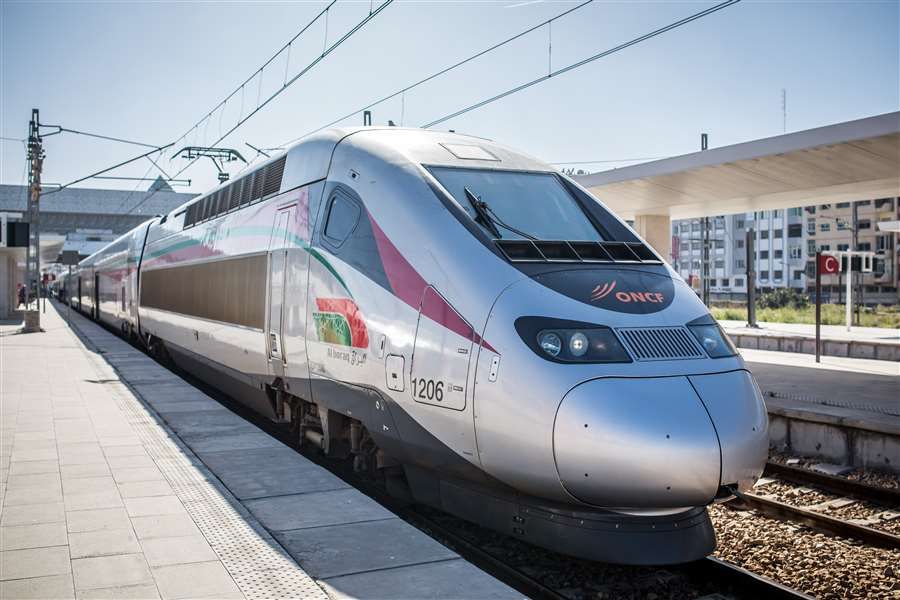
A single financing decision can shift the economics of an entire trade corridor. On 8 July 2026 the African Development Bank Group approved €205 million for Morocco’s Rail Infrastructure Development Support Project (PADIF). The funds target the Kenitra–Marrakech railway corridor and the Casablanca rail hub—two of the busiest arteries carrying passenger and freight traffic in the kingdom. The timing is deliberate. Morocco is co-hosting the 2030 FIFA World Cup with Spain and Portugal, and the rail expansion forms a core piece of the logistics backbone required to move people, goods and capital efficiently across the Atlantic coast and inland industrial zones.
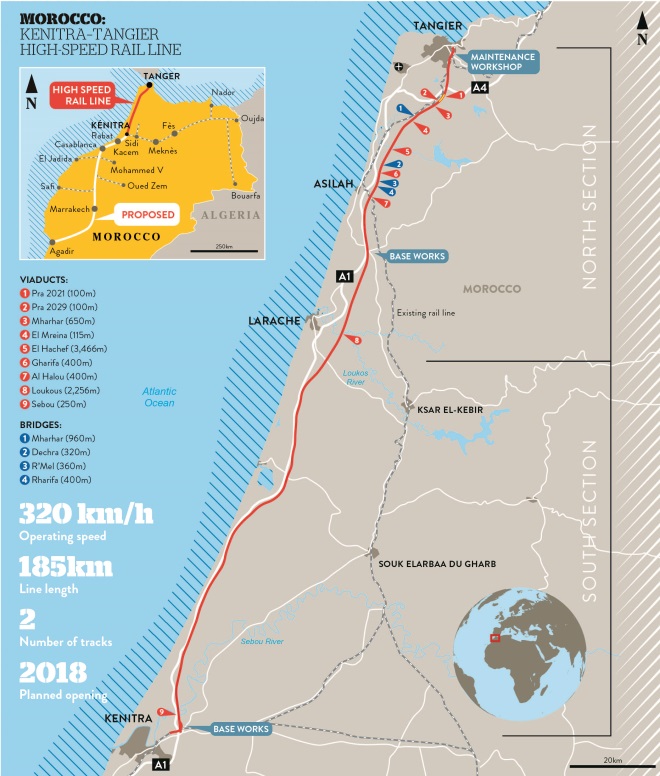
Morocco High-Speed Rail
This is not a tourist-line upgrade. It is a calculated reinforcement of Morocco’s position as a physical and commercial bridge between Europe and Africa. For B2B operators, the implications run deeper than faster trains. Shorter transit times, higher corridor capacity and modernized hubs directly affect inventory cycles, port-to-factory lead times, and the cost of moving components and finished goods through North Africa’s most active logistics gateway.
Blue Economy Alliances : Navigating Shipping Regulations & Risk
“By combining the extension of the high-speed rail line with the modernization of existing infrastructure, this project will strengthen Morocco’s logistics competitiveness and reinforce its role as a strategic hub linking Europe and Africa.”
Project Scope: What the €205 Million Actually Buys
The PADIF financing concentrates on the physical track layer and the systems that keep it running. Key components include:
- Supply of new rails and track components for both the high-speed network and conventional lines along the Kenitra–Marrakech corridor.
- Switches and related equipment to raise capacity and operational reliability.
- Project management support covering engineering supervision, quality control, and monitoring of results and impacts.
Strategic Node Upgrade
Complete Revamping of the Casablanca Rail Hub
Far beyond routine maintenance, the project delivers a comprehensive operational revamping of the Casablanca rail hub—the single highest-density junction in Morocco’s network. This overhaul removes a critical structural bottleneck for both freight and high-speed passenger traffic.
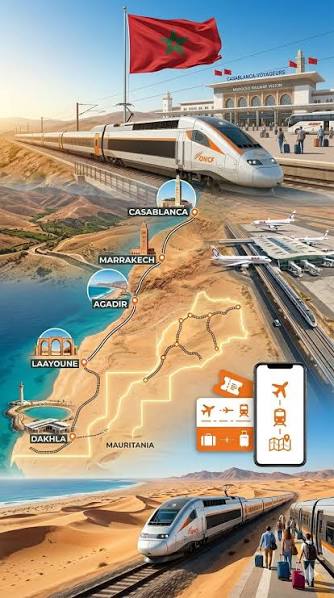
Casablanca Rail Hub
B2B Operational Impact:
Directly stabilizes dwell times, guarantees tighter intermodal synchronization between rail lines and maritime operations at nearby ports, and minimizes delay cascades across the entire Atlantic logistics corridor.
These elements sit inside a much larger national programme. The high-speed extension itself runs approximately 430 km from Kenitra south through Rabat and Casablanca to Marrakech. Operating speed is designed for 320 km/h. Construction was launched in April 2025; by mid-2026 roughly 30 percent of works were reported complete, with land acquisition finished, substantial earthworks executed, and multiple viaducts and bridges under construction. The broader ONCF investment cycle associated with this phase is valued at around MAD 96 billion (approximately $9.6–10 billion). Parallel financing from other multilateral and bilateral partners—including the World Bank, European Investment Bank, and institutions from France, Spain and South Korea—covers complementary packages for rolling stock, additional civil works and mobility hubs.
Travel-time reductions illustrate the operational payoff. Tangier–Marrakech journeys that once required five to six and a half hours are projected to fall to roughly two hours forty minutes to three and a half hours depending on service pattern. Rabat to Mohammed V International Airport is expected to drop to about 35 minutes. These are not abstract statistics. They translate into measurable compression of the logistics window between northern ports such as Tangier Med and the industrial and commercial centers further south.
Logistics Efficiency: Compressing the Supply Chain Clock
Cross-border and intra-regional traders have long treated Moroccan rail as a secondary option relative to road for many mid-haul movements. Capacity constraints and mixed passenger–freight operations limited reliability. The PADIF upgrades and the high-speed extension change that calculus.
Faster, higher-capacity links between Tangier Med and the Casablanca–Marrakech industrial belt reduce the number of days inventory spends in transit or in buffer warehouses. For manufacturers sourcing components through the Mediterranean or exporting finished goods northward into Europe, even a one- or two-day saving compounds across high-volume lanes. Lower dwell times also ease pressure on road networks that currently absorb overflow freight, cutting fuel, driver and maintenance costs while improving on-time performance metrics that buyers increasingly write into contracts.
Operational assessments of similar corridor upgrades show that reliable rail capacity often shifts modal share for bulk and containerized cargo once frequency and predictability reach commercial thresholds. Morocco’s corridor already carries a significant share of national passenger and freight traffic; the modernization is designed precisely to absorb growth without proportional increases in unit cost. For firms managing just-in-time or lean inventory models, the difference between a predictable three-hour rail hop and a variable six-hour road run is the difference between holding safety stock and releasing working capital.
The Casablanca hub upgrades matter equally. Congestion at major junctions multiplies delay across the network. Strengthening that node improves throughput for both passenger services linked to the World Cup and freight services that keep factories supplied. In practical terms, this means fewer missed vessel connections at ports and tighter coordination between rail schedules and warehouse receiving windows.
Procurement and Contracting Opportunities Along the Corridor
A programme of this scale generates sustained demand for specialized inputs. Suppliers and contractors should map the requirement layers carefully:
- Track and permanent way: rails, sleepers, fasteners, ballast and switches form the core of the AfDB-supported package. Quality and delivery reliability under tight World Cup-related schedules will differentiate suppliers.
- Signalling, electrification and intelligent transport systems: modern high-speed and mixed-traffic corridors require advanced train control, power supply and real-time monitoring. These packages often sit in parallel financing streams but must integrate with the track works.
- Civil and structural works: viaducts, bridges, tunnels and station interfaces continue to progress. Earthworks volumes already executed indicate the intensity of the civil package.
- Rolling stock and maintenance: separate orders for high-speed and conventional trains create secondary demand for spare parts, workshop equipment and long-term maintenance contracts.
- Engineering, supervision and environmental services: the PADIF project management component itself creates openings for firms experienced in large-scale railway delivery, quality assurance and impact monitoring.
Procurement cycles in such programmes typically move through design-finalization, tendering, and multi-year execution. Firms that maintain current registration with relevant Moroccan authorities, understand local content expectations, and can demonstrate track records on comparable African or Mediterranean projects stand in stronger positions. Early engagement with the national operator and the technical consortia already awarded major lots improves visibility into upcoming packages.
How Suppliers & Contractors Can Access Procurement Pipelines
B2B vendors, equipment manufacturers, and engineering consultants looking to participate in the €205M PADIF project and broader corridor packages should monitor two primary procurement streams:
1. ONCF Official Procurement Portal (National Contracts & Packages)
As the national railway operator executing the works, ONCF publishes civil works, track supply, and system integrations on its central vendor portal. Pre-qualification and local entity registration are typically required.
2. African Development Bank (AfDB) Project Notices (International Competitive Bidding)
Because AfDB funds the €205M tranche, international competitive bidding (ICB) guidelines apply to major lots. General Procurement Notices (GPN) and Specific Procurement Notices (SPN) are listed under Morocco project disclosures.
نصيحة محترف: Foreign vendors often enter the corridor through joint ventures (JVs) or tier-1 subcontracting arrangements with lead consortiums already active on the Tangier–Marrakech high-speed expansion.
For B2B platforms serving industrial suppliers, the visibility of these tenders and the ability to match certified vendors to specific lots becomes a practical competitive advantage. Tools that surface active infrastructure demand across North Africa and the broader MENA region help exporters and engineering firms allocate business-development resources more precisely.
SFDA Approval Guide: Saudi Market Access & Customs Clearance
Tourism, Hospitality and the Secondary Trade Multiplier
World Cup 2030 is the near-term catalyst, not the sole justification. High-speed connectivity between major cities and airports will support a sustained rise in visitor numbers and business travel long after the tournament. Morocco already ranks among Africa’s leading tourism destinations; the government has publicly targeted further growth in arrivals and hotel capacity. Rail that moves large numbers of passengers reliably between Tangier, Rabat, Casablanca, the airport and Marrakech reduces pressure on roads and airports while creating new demand for hotels, ground handling, catering and event services along the corridor.
That demand cascade reaches industrial suppliers. Construction materials for stadiums, hotels and urban upgrades; furniture and fit-out for hospitality projects; food and beverage inputs for expanded catering operations—all move through the same logistics network that the rail programme is strengthening. Traders who already service hospitality and construction verticals in the GCC and wider MENA region will recognize familiar demand patterns. The difference is the combination of hard deadline pressure and multi-year residual capacity once the tournament ends.
Positioning Morocco as the Europe–Africa Logistics Hinge
Morocco’s geographic position has always been an advantage. The rail programme converts that geography into measurable competitiveness. A high-capacity, high-speed spine linking the northern ports to the commercial heartland and onward toward southern destinations shortens the effective distance between European markets and West and North African production and consumption centres. For companies routing goods through Tangier Med or Casablanca, the internal land leg becomes less of a bottleneck and more of a predictable, lower-cost link.
In regional supply-chain analysis, corridors that combine deep-water port capacity, efficient hinterland rail and clear regulatory frameworks consistently outperform those that rely predominantly on road. Morocco’s parallel investments in free zones, industrial parks and digital trade facilitation reinforce the rail assets. The result is a more coherent value proposition for manufacturers considering nearshoring or dual-sourcing strategies that include North African capacity.
Decarbonizing the Europe–Africa Supply Chain
A primary driver behind AfDB’s financing is the alignment with global green transition mandates. By shifting high-density passenger and freight traffic from diesel-reliant road transport to an electrified rail network, the PADIF project accelerates the decarbonization of North Africa’s primary trade corridor.
Value for European & Global Traders:
Multinational corporations sourcing or manufacturing in Morocco can directly leverage low-emission electrified rail to lower their Scope 3 carbon footprint, ensuring full compliance with stringent European sustainability directives (such as CBAM and CSRD) while reducing total logistics emissions.
The same logic applies to re-export and value-added logistics. Goods arriving by sea can move inland more quickly for light processing, packaging or quality control before continuing by rail or road to final markets. Reduced inland transit times improve the economics of such intermediate steps.
Strategic Takeaways for Cross-Border Operators
The €205 million AfDB package is one financing tranche inside a multi-billion-dirham programme. Its real significance lies in the signal it sends: the physical track and systems layer is being funded and supervised to a standard that supports both passenger growth and freight reliability. For traders and industrial buyers the practical questions are operational:
- How will reduced transit times on the Kenitra–Marrakech axis affect inventory policy and safety-stock calculations for goods moving between northern ports and central/southern demand centers?
- Which suppliers of rails, signaling, construction materials and engineering services are already positioned on the corridor, and where do gaps remain that create entry opportunities?
- How should logistics contracts and Incoterms choices evolve once rail frequency and reliability reach new thresholds?
- What secondary demand will hospitality and construction projects generate for inputs that can be sourced and moved more efficiently once the rail spine is fully operational?
These are not theoretical considerations. They are the day-to-day variables that determine margin and on-time performance in cross-border trade. Operators who treat the rail programme as a living input into their network design—rather than a background infrastructure story—will capture the efficiency gains earlier.
Morocco is systematically converting its location into a logistics platform capable of supporting higher volumes of Europe–Africa trade. The high-speed extension and corridor modernization form the physical core of that conversion. For firms already active in MENA and Mediterranean trade lanes, or those evaluating new sourcing and distribution options, the corridor is now a concrete variable rather than a future aspiration.
Infrastructure programmes of this scale reward early and continuous attention to tender pipelines, modal-shift economics and the secondary markets that grow around improved connectivity. The firms that map those opportunities with the same discipline they apply to ocean freight rates and customs procedures will be best placed when the new capacity comes online.
To keep pace with evolving corridor economics, procurement windows and logistics options across key African and Middle Eastern trade routes, operators can use specialized platforms that consolidate market intelligence, supplier matching and compliance tools. One such resource is available at Platform.Tendify.Net for teams seeking structured visibility into cross-border opportunities.
Related reading on the Tendify blog includes practical analyses of Mexico Nearshoring Suppliers: Scaling North American Supply Chains و Types of Re-Export Setup in the UAE: Free Zone vs Mainland vs Bonded – Full 2026 Breakdown.
When the next phase of capacity comes online, the traders who have already stress-tested their supply chains against the new transit times and procurement pipelines will move first. Secure the operational clarity required to act on these shifts by establishing a presence where verified partners, documentation tools and market data converge: https://tendify.net/my-account/.

