


المدونة
B2B Cross-Border Payments: Modular Infrastructure & FX Rails
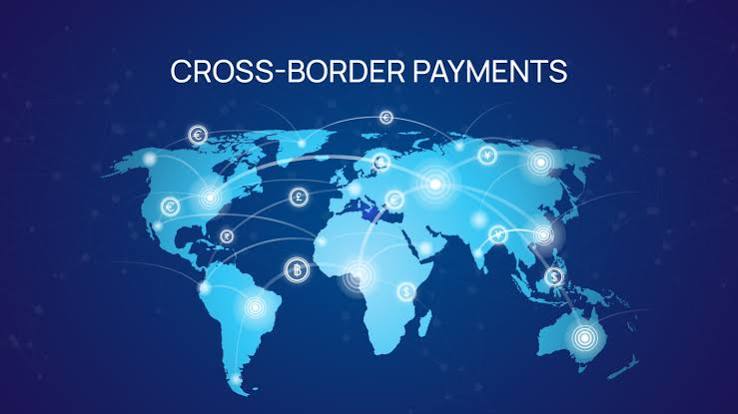
Cross-border B2B payments still move far too slowly for the speed of modern supply chains. A mid-sized manufacturer ships goods from the Gulf to Southeast Asia, waits for documents, then watches settlement crawl through correspondent banks for three to five days while FX spreads and intermediary fees quietly erode margins. Working capital sits locked. Relationships strain. Opportunities slip.
The infrastructure layer underneath these frictions is changing. Instead of building proprietary banking stacks or relying solely on traditional rails, companies now assemble financial capabilities the same way they assemble software: through modular, API-delivered services. Fintech as a Service and the broader family of XaaS models turn payments, credit, identity, compliance, and data into consumable building blocks. For traders, logistics providers, marketplace operators, and procurement teams operating across regions, this shift is practical, not theoretical.

B2B Cross-Border Payments
This guide maps the core models, payment methods, banking infrastructure, and regulatory tools that matter most in international B2B commerce. It focuses on how these pieces actually work in operational settings, what trade-offs they create, and how teams can evaluate and deploy them without over-engineering.
The 5% Secure Payment Fee: Cheaper Than Fraud, Insurance, or Exchange Risks?
Understanding the XaaS Shift in Financial Services
“As a Service” models invert the old ownership approach. Rather than licensing software, buying hardware, or securing a banking charter, organizations subscribe to ready capabilities delivered through cloud APIs. The provider handles infrastructure, compliance overhead in many cases, and ongoing updates. The customer focuses on product experience and customer relationships.
Understanding the XaaS Shift in Financial Services
Several variants now shape B2B finance:
- Banking as a Service (BaaS) supplies core banking infrastructure—accounts, ledgers, payments rails, and often licensing partnerships—via APIs. Non-banks or platforms can offer deposit accounts, virtual IBANs, or card programs without becoming a bank themselves.
- Credit as a Service (CaaS) delivers underwriting engines, credit decisioning, installment structures, and risk models. Businesses embed working-capital lines or supplier financing inside their own workflows.
- Software as a Service (SaaS) remains the foundational delivery model for financial applications—accounting, treasury, reconciliation—accessed via browser or API with subscription pricing.
- Payment as a Service (PaaS) provides unified processing for cards, account-to-account transfers, wallets, and local methods across corridors.
- Fintech as a Service (FaaS) acts as the broader umbrella, packaging multiple modules (payments, KYC, lending, compliance) so product teams can assemble tailored financial experiences quickly.
- Infrastructure as a Service (IaaS) supplies the underlying compute, storage, and networking. Most modern fintech stacks run on public or hybrid cloud IaaS.
- Data as a Service (DaaS) offers cleaned financial, transactional, or market datasets and analytics layers that improve credit models, cash-flow forecasting, and fraud detection.
Market data underscores the scale. Multiple analyses place the global Fintech as a Service market in the high hundreds of billions in the mid-2020s, with projections reaching well above one trillion dollars by the early-to-mid 2030s at compound growth rates typically cited between 14% and 18%. Payments modules frequently represent the largest revenue slice, followed by compliance and lending capabilities. Cloud-based deployment dominates because it reduces capital intensity and accelerates iteration.
For cross-border operators, the value is concrete. A marketplace can embed escrow and payout logic without building a payments company. A logistics platform can offer invoice financing at the moment of booking. A procurement system can trigger multi-currency settlements with built-in compliance checks. Time-to-market drops from years to months or weeks when the heavy regulatory and technical lifting sits with specialized providers.
Core Payment Methods Reshaping B2B Flows
Traditional wire transfers and letters of credit remain relevant for large or complex trades, yet a set of complementary methods now handles speed, flexibility, and working-capital needs more effectively.
Buy Now, Pay Later (BNPL)
in the B2B context extends payment terms at the point of purchase or invoice. Instead of requiring immediate settlement, the buyer receives goods or services while the seller receives funds sooner through a financing partner. Volumes in B2B BNPL are projected to capture a meaningful share of digital commerce payments by the end of the decade, driven by liquidity pressures and the desire to accelerate order cycles. Success depends on accurate credit assessment of the buyer and clear recourse terms between merchant, provider, and financier.
Supply Chain Finance (SCF) & Reverse Factoring: Unlocking Liquidity for Heavy B2B Trade
While B2B BNPL caters to transactional or mid-market purchases, high-value enterprise commerce relies heavily on Supply Chain Finance (SCF)—most notably Reverse Factoring. In this buyer-led arrangement, a corporate enterprise leverages its superior credit rating to enable suppliers to receive early payment on approved invoices through a third-party financial provider.
Instead of assessing a SME supplier’s balance sheet, financiers underwrite the credit risk of the creditworthy corporate buyer, drastically lowering interest rates and financing costs for the supplier.
Suppliers gain immediate cash flow by discounting invoices at favorable rates, while corporate buyers extend their Days Payable Outstanding (DPO) without destabilizing their upstream supply chain.
Stabilizes cross-border supply chains and mitigates supplier insolvency during macroeconomic volatility.
Escrow accounts
hold funds in a neutral intermediary until predefined conditions—document presentation, quality inspection, or delivery confirmation—are met. In high-value or trust-scarce cross-border deals, escrow reduces counterparty risk without forcing full prepayment. Digital escrow platforms integrate with trade-document workflows and can release partial payments as milestones clear.
Peer-to-Peer (P2P) payments
enable direct transfers between parties. In B2B settings these often surface inside closed ecosystems or supplier networks rather than pure consumer apps. The operational advantage appears when platforms want to keep settlement inside their user base and minimize external banking hops.
Account-to-Account (A2A) payments
move money directly between bank accounts, bypassing card networks. Real-time or near-real-time A2A rails reduce fees and improve finality compared with card-based or multi-hop correspondent routes. Adoption accelerates where domestic instant-payment systems interconnect regionally.
Recurring payments
automate scheduled transfers—subscription fees, retainer arrangements, or staged project disbursements. For ongoing service relationships or multi-shipment contracts, automation cuts administrative load and improves predictability of cash inflows.
Cross-border payments
remain the largest and most complex category. Global flows run into the hundreds of trillions annually when wholesale and retail segments are combined; B2B constitutes a major share. Friction persists through FX spreads, intermediary banks, compliance screening, and settlement windows that still stretch across time zones. Newer corridors, local clearing partnerships, and specialized platforms compress timelines and improve transparency, yet corridor-specific expertise and regulatory mapping remain essential.
Teams evaluating these methods should map them against three operational variables: average transaction size, required settlement speed, and tolerance for counterparty risk. High-value capital equipment deals may still favor structured instruments plus escrow. High-frequency component replenishment benefits from A2A or embedded BNPL. Hybrid approaches—escrow for the first few trades, then A2A once trust is established—are common in practice.
FX as a Service & Multi-Currency Hedging: Controlling Invisible Trade Margins
In high-volume cross-border trade, foreign exchange (FX) spreads and currency volatility represent a silent killer of profit margins. Traditional bank FX markups often range from 1.5% to 4% per conversion. Modern FX as a Service (FXaaS) architectures integrate real-time wholesale interbank FX rates directly into B2B transaction flows while offering automated currency risk management tools.
Allows buyers and sellers to hold, pay, and receive funds in local currencies via virtual IBANs, locking in guaranteed FX conversion windows to eliminate hidden banking markups during settlement.
Embeds automated FX forward contracts and programmatic hedging rules directly into ERP and marketplace checkout engines, protecting razor-thin supplier margins from adverse currency swings between invoice and payment date.
Banking Infrastructure, Open Banking, and Regulatory Technology
Several interlocking concepts determine how safely and efficiently financial services can be embedded.
Open Banking
frameworks require or encourage banks to share customer-permissioned data and payment initiation capabilities with authorized third parties through standardized APIs. In regions with mature rules, this has lowered barriers for account verification, balance checks, and initiated payments. Adoption varies by jurisdiction; progress is visible across parts of the Middle East and North Africa and GCC markets through both regulatory pushes and market-driven initiatives. The practical outcome for B2B platforms is faster onboarding and reduced reliance on manual statements or screen scraping.
Embedded Finance
places financial products—payments, credit, insurance, accounts—inside non-financial workflows. A freight-forwarding application can offer cargo financing at booking. A procurement portal can surface supplier early-payment options. The user never leaves the primary application. BaaS often supplies the regulated backbone that makes embedding possible.
Credit Bureaus
aggregate payment history and risk indicators. Access to reliable bureau data (or alternative data when traditional files are thin) improves underwriting accuracy for CaaS offerings and reduces default rates in supplier financing programs.
Neobanks
operate fully digital models without physical branches. Some specialize in business accounts, multi-currency wallets, or sector-specific features. For cross-border traders they can provide faster account opening and more transparent FX pricing than legacy institutions, though product depth and local licensing still matter.
Know Your Customer (KYC)
processes verify identity and beneficial ownership. Digital KYC combines document capture, biometric checks, database screening, and ongoing monitoring. In B2B settings this extends to corporate structures, directors, and ultimate beneficial owners. Friction at onboarding remains a conversion killer; modular KYC services allow platforms to tune the depth of checks to risk tier.
Anti-Money Laundering (AML)
systems screen transactions and customers against sanctions lists, politically exposed person databases, and behavioral patterns. Modern tools use machine learning to reduce false positives while maintaining audit trails required by regulators. Cross-border flows attract heightened scrutiny; providers that maintain robust, regularly updated screening engines reduce operational and regulatory risk for their customers.
Mitigating B2B Fraud: Defending Against Invoice Spoofing & Account Takeover (ATO)
While standard KYC verifies entity identity at onboarding, high-value cross-border flows remain highly vulnerable to operational fraud during execution. Business Email Compromise (BEC), invoice spoofing, and fraudulent bank details manipulation represent multi-billion-dollar risks for international supply chains.
API-driven verification engines cross-check bank account beneficiary names against corporate registration data in real time before wire execution, neutralizing altered IBAN fraud.
Machine learning models analyze transactional patterns, ERP invoice metadata, and communication channels to flag suspicious payment destination updates or unauthorized account access attempts.
Automated account verification prevents costly wire redirection scams and safeguards working capital.
Regulatory Technology (RegTech)
applies software to compliance obligations—reporting, monitoring, policy management, and audit readiness. As rules proliferate and become more granular, RegTech reduces the manual burden that would otherwise slow product launches.
RegTech in Cross-Border B2B: Automating Customs, Tax, and Cross-Border Compliance
While BaaS و CaaS solve the financial and lending rails, cross-border physical and digital trades frequently hit roadblocks at custom borders and tax regimes. Regulatory Technology (RegTech) serves as the automated compliance layer, transforming complex, jurisdiction-specific trade laws, cross-border VAT/GST calculations, and tariff documentation into automated API workflows.
RegTech engines automatically validate Harmonized System (HS) codes, verify import/export licenses, and cross-check real-time trade restrictions across corridors (e.g., GCC to Southeast Asia) before shipments dispatch.
Embeds dynamic cross-border VAT/GST calculation, withholding tax compliance, and automated electronic invoicing (e-invoicing) directly into the payment checkout or ERP settlement process.
Taken together, these elements form a compliance and data layer that sits beneath most FaaS offerings. Ignoring it creates downstream exposure. Treating it as a first-class design constraint produces cleaner integrations and fewer post-launch surprises.
The Critical Bottleneck: Automated KYC & AML Screening in Cross-Border Trade
While credit and liquidity risks often dominate trade conversations, identity verification and compliance remain the single largest operational bottleneck in international commerce—particularly across high-growth corridors in the Middle East and Asia. Traditional, paper-heavy onboarding can stall multi-million-dollar transactions for weeks. Modern Fintech as a Service (FaaS) architecture solves this by embedding automated compliance layers directly into transaction workflows.
Automates corporate structure verification, Ultimate Beneficial Owner (UBO) discovery, and biometric Director validation, reducing onboarding friction from weeks to minutes.
Leverages machine-learning algorithms for real-time screening against global sanctions lists, Politically Exposed Person (PEP) databases, and adverse media without slowing down cash flows.
Automated Financial Reconciliation: Bridging Cross-Border Payments to Enterprise ERPs
Moving money across borders is only half the battle for enterprise finance teams. The true administrative bottleneck lies in reconciliation—matching incoming multi-currency settlements and fragmented banking references to open invoices within core Enterprise Resource Planning (ERP) engines like SAP, Oracle, NetSuite, or QuickBooks.
Embedded banking APIs automatically inject dynamic payment references (Virtual IBANs) into transaction payloads, instantly pairing bulk cross-border transfers with specific line-item invoices without human intervention.
Programmatic ledgers continuously calculate and log currency exchange rate variances (gain/loss) between invoice creation dates and actual payout settlements, maintaining real-time audit readiness.
Reduces manual accounting overhead by up to 80% and eliminates unallocated cash drag.
Practical Application in B2B Commerce and Supply Chains
Several use cases illustrate how the pieces fit.
Merchant Acquiring & Payment Gateways: The Front Line of B2B Card Acceptance
While wire transfers and account-to-account rails dominate heavy industrial volumes, digital B2B marketplaces, SaaS platforms, and procurement portals increasingly rely on card-based transactions and digital wallets. Bridging the buyer’s payment method and the seller’s bank account requires two tightly coupled layers: Payment Gateways و Merchant Acquiring Services.
Securely captures and encrypts buyer card details or corporate wallet credentials at checkout, routing transaction authorization requests directly to processor networks with automated tokenization and 3D Secure fraud prevention.
The licensed financial institution that assumes risk, clears funds with issuing banks, manages multi-currency conversions, and executes gross or net settlements directly into the merchant’s corporate bank account.
B2B payments platforms
specialize in invoice-based, high-value, or multi-party flows. Features often include approval workflows, virtual cards for controlled spend, early-payment discounts, and integration with ERP systems. These platforms increasingly sit on top of PaaS or BaaS infrastructure rather than rebuilding rails.
Cash-flow management tools
combine bank feeds, invoice data, and predictive models to forecast liquidity gaps or surpluses. When paired with CaaS, the same system can trigger a working-capital drawdown automatically when projected cash dips below a threshold.
Operational evaluation follows a repeatable sequence:
- Map the current payment and financing pain points by corridor, counterparties, and document requirements.
- Identify which capabilities must remain under direct control (for example, final credit decisioning or customer relationship) versus those that can be outsourced.
- Assess providers on licensing coverage, corridor reach, API maturity, uptime history, and data ownership terms.
- Pilot with a limited set of counterparties or a single product line before full rollout.
- Measure end-to-end metrics: days sales outstanding, cost per transaction, onboarding conversion, and exception rates.
- Build internal processes for ongoing monitoring of provider compliance posture and regulatory changes in key markets.
A useful internal reference for teams designing these flows is a structured comparison of settlement options against operational priorities (see related guidance on Mastering Cross-Border E-Commerce Logistics for B2B Success in the Gulf Region و Critical Minerals Trade: 2026 Supply Chains & GCC Logistics).
Platforms that already handle discovery, contracting, and logistics can layer financial modules to capture more of the value chain. One practical path is to begin with payment initiation and escrow, then add credit or early-payment options once transaction data accumulates. Tools available through marketplaces such as Platform.Tendify.Net can help surface compatible service providers without requiring every buyer or seller to negotiate separate banking relationships.
Risk Considerations and Implementation Guardrails
No model eliminates risk; it redistributes it. Key areas demand attention:
- Concentration risk
arises when a single BaaS or PaaS provider becomes a single point of failure. Dual-provider strategies or clear exit clauses mitigate this. - Data and privacy obligations
intensify with open banking and embedded models. Contracts must specify ownership, retention, and cross-border transfer rules. - Credit risk
in CaaS and BNPL programs requires continuous model validation. Alternative data helps, but economic downturns still surface losses. - Regulatory arbitrage
looks attractive until a jurisdiction changes rules or an enforcement action hits a provider. Prefer partners with transparent licensing and strong audit history. - Operational resilience
matters more than feature lists. Ask for historical incident reports, recovery time objectives, and dependency maps.
Teams that treat financial infrastructure as a product surface—measuring conversion, retention, and unit economics—outperform those that treat it as pure back-office plumbing.
Looking Ahead: Interoperability and Regional Rails
The next phase of development centers on interoperability. Domestic instant-payment systems are linking across borders. Open finance frameworks expand beyond banking data into insurance, pensions, and commercial data. Stablecoin and tokenized deposit experiments continue in controlled environments, particularly for treasury and high-frequency B2B settlement. Meanwhile, regional initiatives in the GCC and broader MENA markets are expanding open banking and real-time rails, creating denser local ecosystems that global platforms must integrate rather than route around.
Regional Deep-Dive: Overcoming B2B Frictions in MENA & the GCC
While global XaaS models provide the foundational architecture, localizing for the Middle East and North Africa (MENA) requires solving specific regional legacy frictions. Despite rapid digital transformation, B2B trade in the Gulf has historically grappled with fragmented clearing networks and a heavy cultural reliance on physical trust instruments.
Historically, routing intra-GCC payments required US Dollar clearing through Western correspondent banks, causing multi-day delays and double FX fees. New regional payment systems like AFAQ و Buna are now bypassing this, enabling direct, instant cross-border settlement in local Arab currencies (e.g., SAR to AED).
For decades, SME supplier credit in MENA relied on physical Post-Dated Checks—a system prone to bounce risks and manual reconciliation nightmares. Embedded B2B BNPL APIs and Digital Escrow smart contracts are rapidly replacing PDCs, digitizing merchant trust and injecting instant liquidity into supply chains.
Success will belong to organizations that treat financial capabilities as modular, measurable components of their customer value proposition rather than as fixed infrastructure. The companies that master selection, integration, and ongoing governance of these services will convert payment friction into a competitive advantage—faster cycles, stronger counterparties, and more predictable cash.
Ready to Streamline Your Cross-Border Settlement & Risk Management?
Eliminate settlement friction, verify international suppliers in real time, and access dynamic multi-currency liquidity rails tailored for global supply chains. Explore how Tendify’s modular ecosystem simplifies enterprise commerce from discovery to payout.

