وبلاگ
Crypto Money Laundering: Myths vs. Reality (2026)

I’ve been knee-deep in global trade for over four decades, shipping everything from bulk commodities to high-tech gear across borders that shift faster than market trends. Early in my career, I watched a deal crumble when a partner’s payment trail vanished into what seemed like digital thin air—turns out, it was an early crypto experiment gone wrong. Back then, cryptocurrencies were niche, but today in 2026, they’re mainstream, powering everything from remittances to supply chain finance. Yet, the biggest hurdle isn’t volatility or adoption; it’s the persistent myths about their role in money laundering.

Crypto Money Laundering Advices
Let’s cut through the noise. Headlines scream about billions laundered through crypto, painting it as a criminal’s playground. But dig deeper, and you’ll see a different picture—one where blockchain’s inherent transparency turns the tables on illicit actors. This guide dismantles those myths head-on, backed by hard data and real-world mechanics. We’ll explore why blockchain isn’t the anonymity cloak many imagine, how advanced monitoring tools expose suspicious activity, and what it all means for legitimate businesses navigating this space. By the end, you’ll have the insights to separate fact from fiction and protect your operations in an increasingly digital world.
The Persistent Myths Surrounding Crypto and Illicit Finance
Myths die hard, especially when fueled by sensational media and outdated assumptions. In the early days of Bitcoin, it was easy to buy into the hype of untraceable digital cash. But as we’ve hit 2026, those narratives don’t hold water. Let’s break down the most common ones, explaining their origins and why they mislead.
Myth 1: Cryptocurrencies Offer Complete Anonymity
This one’s rooted in crypto’s pseudonymous design. Wallets use alphanumeric addresses instead of names, leading many to believe transactions are invisible. Think of it like sending mail with a PO box—no ID required upfront. Criminals latched onto this in the 2010s, using platforms like the Silk Road for dark web deals.
But here’s the flaw: Anonymity isn’t built-in; it’s an illusion. Every transaction records on a public ledger, visible to anyone with a blockchain explorer. If I send you Bitcoin, the world sees the amount, timestamps, and addresses involved. Link one address to a real identity—through an exchange KYC or a simple purchase—and the chain unravels.
Data backs this up. In 2025, only a fraction of crypto activity was illicit, with estimates showing less than 0.5% of total volume tied to crime. That’s down from higher figures a decade ago, thanks to better tracking. The myth persists because people confuse pseudonymity with true anonymity, ignoring how data points connect.
Myth 2: Laundering Money Through Crypto Is Easy and Undetectable
Picture the classic movie scene: A briefcase of cash swapped in a shadowy alley. Crypto supposedly digitizes that, with mixers and tumblers blending funds like a high-tech blender. Tools like these pool transactions to obscure origins, and privacy coins (e.g., Monero) add encryption layers.

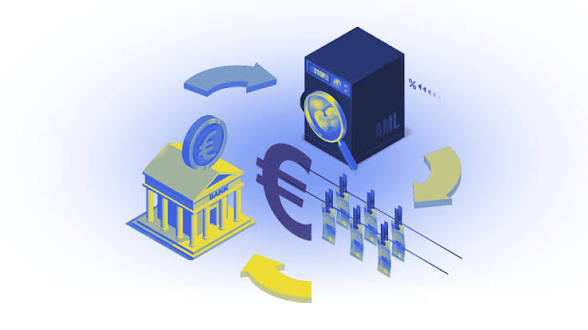
Laundering Money Through Crypto
Reality check: Ease is relative, and undetectability is a fantasy. Mixers work short-term but leave patterns that experts spot. For instance, sudden spikes in mixer inflows often signal laundering attempts. In 2025, regulators cracked down, sanctioning several services and forcing exchanges to flag related addresses.
Moreover, laundering requires converting back to fiat—hitting regulated off-ramps where AML checks kick in. It’s not a seamless escape; it’s a bottleneck that exposes risks. Studies show most laundered funds still flow through traditional banking, dwarfing crypto’s share.
Myth 3: Blockchain’s Decentralization Makes Regulation Impossible
Decentralization means no single authority controls the network, so how can anyone police it? This myth fuels fears of a “wild west” where rules don’t apply.

Blockchain’s Decentralization Makes Regulation Impossible
But decentralization doesn’t mean lawlessness. Nodes worldwide validate transactions, creating a tamper-proof record that’s a regulator’s dream. Governments leverage this for enforcement, with international bodies setting standards that exchanges must follow. By 2026, over 80% of jurisdictions have crypto-specific AML frameworks, up from 60% in 2020.
These myths aren’t harmless—they deter legitimate adoption while emboldening risks. Understanding the reality starts with blockchain’s core strength: transparency.
The Reality: Blockchain’s Transparency as a Powerful Deterrent
Contrary to popular belief, blockchain isn’t a veil; it’s a spotlight. Its design forces openness, making it harder for bad actors to hide in plain sight. Let’s unpack how this works and why it’s a game-changer for combating illicit finance.
How Blockchain’s Public Ledger Exposes Illicit Activity
At its heart, blockchain is an immutable database. Once a transaction confirms, it’s etched forever—no deletions, no alterations. This creates a verifiable trail: From wallet A to B, with exact amounts and times.
Transparency shines in forensics. Analysts cluster addresses by behavior—e.g., if multiple wallets fund the same exchange account, they’re likely owned by one entity. This “clustering” demystifies pseudonymity. In practice, it’s like following breadcrumbs; each hop reveals patterns.
For example, high-volume transfers between unrelated addresses might indicate layering (breaking funds into smaller chunks). Or, rapid movements across chains could signal evasion. Data from 2025 shows $21.8 billion in cross-chain laundering, but much was traced back to sources like state-sponsored hacks.
The Role of On-Chain Analytics in Unmasking Patterns
On-chain data isn’t just raw; it’s insightful. Metrics like transaction velocity (how fast funds move) or depth (how many hops from origin) flag anomalies. Normal users hold assets; launderers churn them.
Privacy features? They complicate but don’t eliminate tracing. Even Monero’s ring signatures (mixing real spends with decoys) yield to statistical analysis over time. Tools correlate off-chain data—like IP logs from exchanges—with on-chain activity for fuller pictures.
In 2026, this transparency has recovered billions. Law enforcement traced stolen funds from 2025 hacks worth $3.4 billion, leading to arrests and asset freezes. It’s proof: Blockchain’s openness turns defense into offense.
Why Transparency Outweighs Privacy Concerns in Illicit Finance Prevention
Balance is key. While privacy protects users, unchecked anonymity enables crime. Blockchain’s model—transparent yet pseudonymous—strikes a middle ground. Regulators push for “privacy-enhancing technologies” that shield legit users without aiding launderers.
Think zero-knowledge proofs: Prove a transaction’s validity without revealing details. Adopted in protocols like Zcash, they maintain compliance. The result? A ecosystem where transparency deters more than it invades.
Advanced Monitoring Tools: The Frontline Against Crypto Laundering
Tools bridge theory and action. In 2026, sophisticated platforms dissect blockchain data, turning transparency into actionable intelligence. Here’s how they work, with real examples.
Key Players in Crypto Monitoring: An Overview
Several firms lead the pack, each with specialized strengths.
| Tool/Provider | تمرکز اصلی | ویژگیهای کلیدی | 2025 Impact Example |
|---|---|---|---|
| Chainalysis | Investigations & Compliance | Address clustering, risk scoring, visualization | Traced $3.4B in hacks, aiding recoveries |
| Elliptic | Risk Management | Cross-chain tracking, AI anomaly detection | Mapped $21.8B cross-chain crime |
| CipherTrace (Mastercard) | AML & Forensics | Travel Rule compliance, attribution | Integrated with exchanges for real-time flags |
| TRM Labs | Enterprise Solutions | Sanctions screening, behavioral analytics | Disrupted AUD 30M laundering ring |
How These Tools Detect Suspicious Transactions Step by Step
Detection isn’t magic—it’s methodical.
- Data Ingestion: Pull real-time on-chain data from multiple blockchains (Bitcoin, Ethereum, etc.).
- Clustering & Attribution: Group addresses by ownership using heuristics like common spend patterns.
- Risk Scoring: Assign scores based on history—e.g., links to known illicit wallets score high.
- Pattern Recognition: AI spots anomalies, like unusual volume spikes or mixer use.
- Alert Generation: Flag for review, with visualizations showing fund flows.
- Integration: Feed into compliance systems for automated blocks.
For instance, if funds from a sanctioned entity hit an exchange, tools alert instantly. In 2025, this prevented millions in illicit inflows.
Real-World Applications: From Hacks to Sanctions Evasion
Case in point: North Korean hacks. Groups like Lazarus stole billions in 2025, laundering via DeFi bridges. Tools like Elliptic traced paths across chains, leading to wallet blacklists and recoveries.
Another: Ransomware. Attackers demand crypto, but monitoring reveals payout patterns, aiding victim support and perpetrator tracking. Data shows ransomware inflows dropped 20% in 2025 due to better detection.
These tools evolve with threats—AI now predicts patterns, staying ahead.
2026 Trends and Statistics: Where Crypto Crime Stands Today
Numbers tell the story. Illicit activity hit new highs in volume but shrank as a percentage.
- Theft & Hacks: $3.4B stolen in 2025, concentrated in fewer breaches.
- Laundering Volumes: Over $20B cross-chain alone, but overall illicit share <1%.
- Penalties: $1.1B in AML fines, mostly on exchanges.
Trends: AI-driven crimes rise, but so do defenses. Stablecoins emerge as laundering vehicles, prompting FATF updates.
In MENA and beyond, diversification pushes crypto adoption, but with stricter Travel Rules.
Regulatory Landscape: Global Efforts to Harness Transparency
FATF leads with Recommendation 15, mandating VASP oversight. 2025 updates emphasize recovery guidance, highlighting blockchain’s traceability.
US: SEC and FinCEN tighten; EU: MiCA enforces. 2026 sees unified standards, reducing jurisdictional arbitrage.
For businesses: Compliance isn’t optional—it’s essential for trust.
Best Practices for Businesses: Leveraging Transparency for Protection
Don’t be passive. Implement these:
- Adopt KYC/AML: Verify users rigorously.
- Use Monitoring Tools: Integrate for real-time alerts.
- Educate Teams: Train on red flags like unusual patterns.
- Audit Regularly: Review transactions quarterly.
- Partner Wisely: Choose compliant platforms.
This shields you while unlocking crypto’s benefits.
For more on compliance in trade, see our guide on navigating global financial regulations.
Money Laundering Tactics in MENA 2026
Future Outlook: Crypto’s Path to Cleaner Ecosystems in 2026 and Beyond
By 2027, expect AI integration to cut illicit activity further. Privacy tools will balance with transparency, and global cooperation will close gaps.
Crypto isn’t the problem—misuse is. Embrace its strengths, and it becomes an ally.
If you’re trading digitally and need secure, compliant connections, Tendify.net offers verified partners and tools to safeguard your deals. ثبت نام کنید today for real-time insights and start building resilient trade networks.