وبلاگ
How Free Ports Enable Non-Banking Capital Transit in 2026

A practical, operator-focused playbook for converting liquid capital into tradable goods and routing value across borders through the world’s most efficient commodity clearing triangle.
In twenty-plus years of structuring large-scale cross-border deals, I have watched traditional banking rails become slower, more expensive, and more visible. Correspondent banking relationships continue to shrink in certain corridors, compliance costs have exploded, and regulatory oversight now touches nearly every wire. For operators moving meaningful capital, the old financial plumbing increasingly feels like a constraint rather than an enabler.
Enter the Golden Triangle — the free ports and special economic zones of Oman, the UAE, and Qatar. These jurisdictions have quietly evolved into the most sophisticated non-banking settlement hubs on the planet. They function as modern clearing houses where cash is converted into physical commodities, value is transferred through legitimate trade documentation, and goods are re-exported or transshipped to final destinations with minimal friction and maximal privacy.
Non-Banking Capital Transit
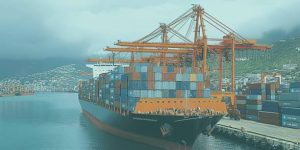
This is not theory. It is the daily operational reality for thousands of serious traders who have replaced parts of their financial settlement stack with commodity-based flows. In 2026, the Golden Triangle offers the cleanest, fastest, and most resilient path for converting liquid positions into fixed or semi-fixed assets while maintaining full commercial legitimacy.
The Anatomy of the Golden Triangle
The three vertices of this triangle — Oman’s Duqm and Salalah, the UAE’s Jebel Ali and DMCC, and Qatar’s Hamad Port and Ras Bufontas — create a near-perfect logistical and regulatory ecosystem. Each brings unique strengths, but together they form a self-reinforcing network that no single jurisdiction can match.
The Anatomy of the Golden Triangle

Oman: The Strategic Western Anchor
Oman’s free zones, particularly Duqm Special Economic Zone and Salalah Free Zone, sit at the mouth of the Arabian Sea with direct access to the Indian Ocean. Duqm has become the preferred gateway for larger bulk and project cargo, while Salalah excels in containerized re-export. Oman’s political neutrality, stable regulatory environment, and rapidly expanding port infrastructure make it the ideal entry and exit point for flows originating from or destined for South Asia, East Africa, and the broader Indian Ocean rim.
UAE: The Operational Heartbeat
Jebel Ali Free Zone remains the largest and most mature re-export hub in the world. With over 7,000 companies, world-class logistics, and seamless integration between sea, air, and land transport, the UAE handles the highest volume of transshipment in the triangle. The Dubai Multi Commodities Centre (DMCC) adds specialized commodity trading infrastructure for gold, diamonds, and industrial raw materials — perfect for high-value, low-volume settlement plays.
Qatar: The High-Value Precision Node
Qatar’s Hamad Port and Ras Bufontas Free Zone focus on efficiency and premium cargo. With state-of-the-art facilities and a strategic location that complements rather than competes with the UAE, Qatar has positioned itself as the go-to hub for specialized chemicals, pharmaceuticals, and high-tech components. Its regulatory framework emphasizes speed and discretion, making it ideal for time-sensitive or high-compliance settlement transactions.
How the Triangle Functions as a Modern Clearing House for Trade-Based Settlement
The magic happens when liquid capital is transformed into physical goods within one of these free zones. A trader deposits funds (or arranges credit) in a local entity, purchases or produces commodities, documents the transaction with full commercial paperwork, and then re-exports or transships the goods to the final buyer. The economic value moves through the physical flow while the financial leg remains secondary and largely invisible to traditional monitoring systems.
This is classic trade-based settlement executed at industrial scale. The free zones provide:
- Zero or minimal customs duties on re-export
- 100% foreign ownership and full profit repatriation
- State-of-the-art warehousing and value-added processing
- Integrated banking and non-banking financing options
- High-speed clearance and documentation systems
Because the primary movement is commercial — goods crossing borders under standard Incoterms — the associated value transfer inherits the natural opacity of complex supply chains. Regulators focused on SWIFT-style financial messages encounter structural blind spots when trying to reconstruct intent across thousands of daily shipments differentiated by HS codes, packaging, routing, and counterparties.
Practical Mechanics: Converting Cash to Goods and Routing Value
Converting Cash to Goods and Routing Value
Step 1: Entry into the Triangle
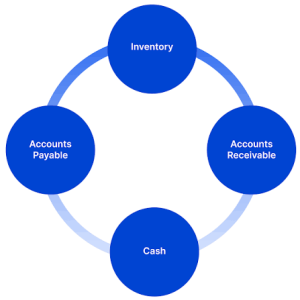
Capital enters through local corporate entities or joint ventures established inside the free zones. Funds are used to purchase raw materials, intermediate goods, or finished products already warehoused in the zone or sourced regionally.
Step 2: Value Transformation
The goods are held, processed, repackaged, or simply documented for re-export. Flexible invoicing allows pricing to reflect the underlying economic settlement while maintaining commercial defensibility.
Step 3: Transit and Settlement
The shipment is cleared for re-export under the zone’s simplified procedures. Title documents are released upon confirmation of acceptance at the destination, completing the economic exchange without a direct cross-border wire.
Step 4: Recycling or Final Delivery
Proceeds (or new goods acquired in the destination market) can be routed back into the triangle for the next cycle or directed to final end-users.
The entire loop can be executed in days or weeks, depending on cargo type and routing. Smart escrow mechanisms further reduce counterparty risk by holding title documents until delivery milestones are verified.
Comparative Advantages of Each Vertex in 2026
| Zone / Port | Strength | بهترین برای | Typical Transit Time | Key Regulatory Feature |
|---|---|---|---|---|
| Duqm / Salalah (Oman) | Bulk & project cargo, Indian Ocean access | Commodities, heavy machinery, reconstruction materials | 7–14 days to South Asia / East Africa | Long-term land leases, 100% ownership |
| Jebel Ali / DMCC (UAE) | Volume, speed, commodity trading infrastructure | Consumer goods, metals, chemicals, re-export hubs | 3–8 days to most global destinations | World’s largest free zone ecosystem |
| Hamad / Ras Bufontas (Qatar) | High-value, specialized cargo, precision logistics | Pharma, specialty chemicals, high-tech components | 4–10 days to Europe / Asia | Fast-track clearance for strategic goods |
Risk Management and Operational Best Practices
Successful operators treat the Golden Triangle as a disciplined system rather than an opportunistic loophole. Key practices include:
- Full documentary alignment across every leg of the journey
- Independent third-party inspection and certification
- Use of smart escrow to secure performance without premature capital movement
- Real-time cost modeling that accounts for duties, insurance, and currency implications
- Distributed data architecture that avoids single-point regulatory exposure
The Role of Digital Infrastructure in Scaling the Triangle
Platform.Tendify.Net — The Operating System for Golden Triangle Settlement
In 2026, executing sophisticated non-banking capital transit at scale requires more than physical ports. It requires precision tools that compress documentation, cost modeling, compliance, and performance security into a single resilient platform.
Platform.Tendify.Net was purpose-built as that operating system. It turns the theoretical advantages of the Golden Triangle into repeatable, auditable, and highly efficient processes.
Core capabilities operators rely on daily:
- Real-time landed-cost calculators and tariff optimizers across Oman–UAE–Qatar routes
- Export Documentation Checklist Generator and flexible proforma/contract builders
- HS Code intelligence, duty modeling, and Incoterms advisory
- Smart escrow infrastructure for secure, milestone-based settlement
- AI-powered market pulse that flags emerging opportunities and regulatory signals
- 3D container optimization and multimodal logistics planning
Whether you are converting a large cash position into petrochemicals in Duqm, routing metals through Jebel Ali, or handling specialty chemicals via Hamad Port, the platform ensures every step is documented, cost-optimized, and performance-secured.
The operators who master the Golden Triangle today will dominate commodity-based settlement flows for the next decade. The infrastructure required to do so at scale now exists in one integrated platform.
Looking Ahead: The Golden Triangle in the 2026–2030 Landscape
As global supply chains continue to diversify away from single-point dependencies, the strategic importance of the Oman–UAE–Qatar triangle will only increase. New rail connections, expanded port capacities, and deepening digital integration will further compress transit times and lower friction.
For intermediaries and capital allocators seeking to move large value without relying on increasingly constrained traditional banking channels, the Golden Triangle offers the most mature, liquid, and regulation-friendly ecosystem available. It is not a workaround — it is the new standard for efficient, legitimate, commodity-driven capital transit.
We at Tendify have engineered the tools that simplify the most complex equations of physical logistics, regulatory compliance, and embedded financial settlement inside this triangle. Our calculators, document engines, and smart escrow systems allow operators to execute with precision and confidence.
If you are actively structuring or scaling non-banking capital transit through the Golden Triangle, the complete operational toolkit is ready inside your dashboard at Platform.Tendify.Net.
The ports are open. The systems are built. The time to engineer your flows is now.
Strategic playbook for B2B traders and capital intermediaries • March 2026
Further Strategic Reading on Tendify.net
- The Hidden Arbitrage of Risk: How Trade-Based Settlement Exploits Regulatory Blind Spots in 2026
- Cross-Border Logistics for B2B Trade in the Gulf Region
- Regional Logistics Integration and Trade Opportunities Across the GCC
- Rebuilding Iran After the 2026 Conflict: The Global Investment Playbook