


وبلاگ
Indian Maize Market : Supply, Demand Trends & MENA Trade Channels
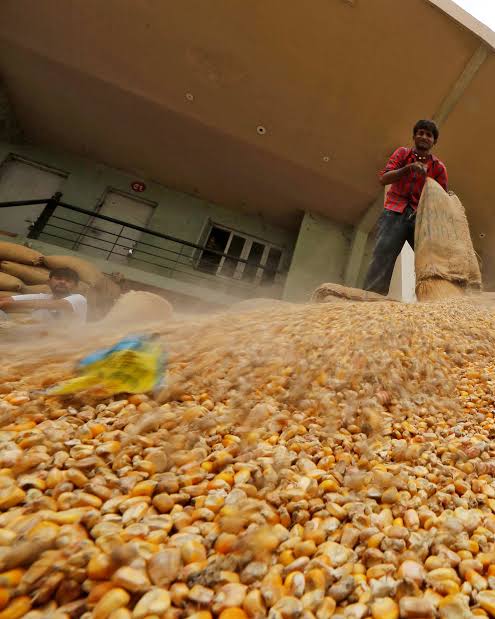
India’s maize sector is undergoing a structural shift that is reshaping regional and global supply chains. Record production levels, driven by expanded acreage and favorable conditions, are colliding with robust domestic demand from poultry feed, ethanol blending programs, and starch industries. For B2B traders and importers in the GCC and broader MENA region, this creates actionable windows for cost-effective sourcing, diversified supply, and long-term contracting—especially as Gulf nations scale up poultry self-sufficiency and livestock programs amid limited local arable land.

India’s corn
Market participants who track the right signals—monsoon patterns, mandi arrivals, ethanol policy updates, and global price correlations—consistently secure better procurement outcomes than those relying solely on spot prices. This guide breaks down the 2026 landscape with operational insights, risk factors, and practical steps for cross-border buyers.
War Food Economics: Protecting B2B Margins Amid Geopolitical Friction
Record Production and Supply Dynamics in 2025–2026
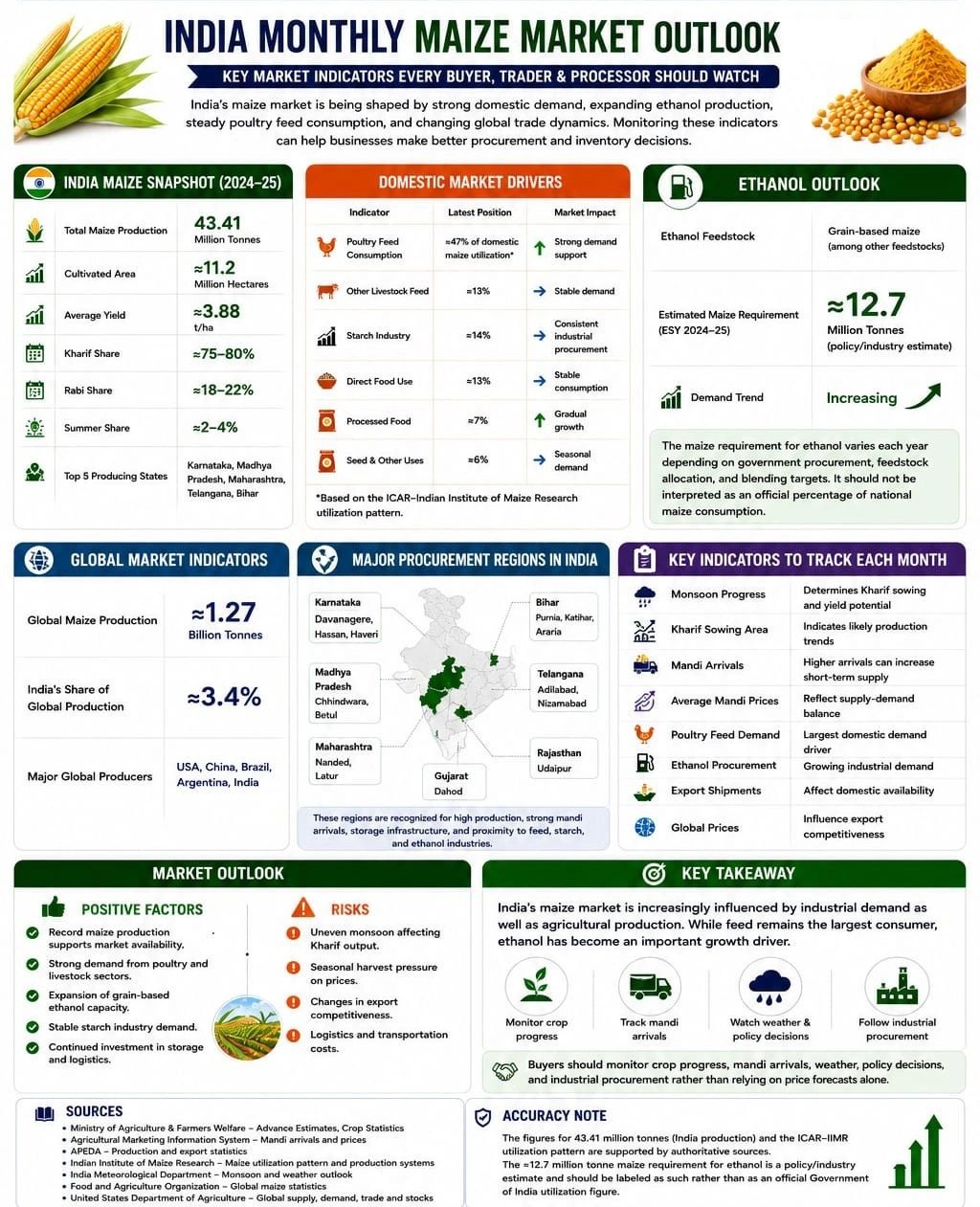
India’s maize output reached approximately 43.41 million tonnes in 2024–25, with projections for further growth into 2025–26 supported by a 15–27% increase in key seasons. Kharif planting has expanded significantly, with acreage gains of 7–16% reported in major states.
Indian Maize Market
Key production highlights:
- Kharif dominance: Accounts for 75–80% of output, heavily influenced by monsoon performance.
- Rabi and summer crops: Provide additional stability and quality variations suitable for specific industrial uses.
📍 Top 5 Maize Producing States in India
India’s national maize volumes and trade advantages are primarily driven by yield improvements and extensive cultivation across five critical production hubs:
*Note: These key regions are highly recognized for robust infrastructure, market arrivals (mandis), and operational proximity to feed, starch, and ethanol processing units.
This supply surge positions India as a competitive exporter or alternative supplier for MENA buyers seeking to hedge against volatility from traditional sources like the Americas or Ukraine. Global maize trade volumes are rising, but regional surpluses in India can translate into competitive FOB pricing for bulk shipments to GCC ports.
The 12.5% Secret: How to Keep Grain Bone-Dry After 90 Days at Sea
Evolving Demand Drivers Reshaping the Market
Maize demand in India is no longer harvest-dependent alone. Multiple high-growth sectors create sustained pull:
📊 Domestic Maize Utilization Pattern in India
Official breakdown based on the ICAR-Indian Institute of Maize Research data
| Sector / Indicator | Latest Position | Market Impact & Trend |
|---|---|---|
| 🐔 Poultry Feed Consumption | ≈ 47% | Strong demand support; primary driver of domestic utilization. |
| 🏭 Starch Industry | ≈ 14% | Consistent industrial procurement with steady multi-year growth. |
| 🐄 Other Livestock Feed | ≈ 13% | Stable and predictable demand from dairy and secondary livestock sectors. |
| 🍽️ Direct Food Use | ≈ 13% | Stable baseline consumption aligned with traditional regional diets. |
| 🍕 Processed Food | ≈ 7% | Gradual expansion driven by consumer shift toward packaged goods. |
| 🌱 Seed & Other Uses | ≈ 6% | Seasonal demand covering local agronomic needs and minor industries. |
⚠️ Strategic Sourcing Alert for MENA Buyers
While global databases point to an exportable surplus, cross-border buyers must note that India’s domestic maize market is facing heavy structural competition. With the local ethanol industry alone absorbing an estimated 12.7 million tonnes and poultry feed taking up 47% of total supply, India inherently prioritizes its domestic industrial demand over raw grain exports.
Consequently, India’s export windows are highly seasonal and strictly dependent on peak Mandi arrivals (local market inflows). GCC importers should not rely on consistent year-round spot availability; procurement operations must be strategically timed during post-harvest gluts to capture competitive FOB pricing before domestic processing units lock in local supply.
For GCC importers, this means Indian maize offers a reliable feed-grade supply that aligns with Vision 2030-style livestock expansion in Saudi Arabia and UAE poultry programs. Duty structures and logistics corridors via UAE or direct ports enhance viability.
🚢 Strategic Procurement Hubs & Logistics Corridors
For GCC trade delegations and cross-border buyers, identifying the exact origin of market arrivals (Mandis) is critical to calculating internal freight costs and transit times to Indian exit ports. The primary regional accumulation clusters include:
Davanagere, Hassan, Haveri
Chhindwara, Betul
Purnia, Katihar, Araria
*Operational Insight: Sourcing directly from these major accumulation hubs ensures optimized internal logistics via Indian Railways or dedicated road corridors before containerization and shipping to GCC hubs like Jebel Ali or King Abdulaziz Port.
Critical Market Signals to Monitor Monthly
Successful procurement requires moving beyond daily quotes to systemic indicators:
- Monsoon and weather data: Directly impacts Kharif output and next-season pricing.
- Mandi arrivals: High volumes during harvest typically pressure short-term prices, creating buying opportunities.
- Ethanol policy and quotas: Government support levels dictate diversion volumes and price floors.
- Global benchmarks: Correlation with international maize futures, freight rates, and competing origins (e.g., US, Brazil, Argentina).
- Currency and logistics: INR movements, container availability, and Red Sea/Suez alternatives via Gulf hubs.
Buyers integrating these into dashboards or partner networks reduce exposure to seasonal spikes.
Opportunities and Risks for Cross-Border Trade
فرصتها:
- Competitive pricing for bulk feed: Ideal for GCC poultry and livestock operations facing import dependency.
- Diversification: Supplements traditional suppliers with shorter lead times via established India-GCC corridors.
- Value-added potential: Grades suitable for starch, ethanol precursors, or processed feed.
- Policy tailwinds: Trade agreements and logistics improvements between India and UAE/Saudi Arabia facilitate smoother flows.
Risks and mitigation:
- Domestic competition: Ethanol and poultry demand can tighten supplies—lock in forward contracts during post-harvest gluts.
- Quality variability: Specify HS codes, moisture, and aflatoxin standards clearly; use third-party inspection.
- Logistics bottlenecks: Factor demurrage risks at Indian ports; prefer 3D-optimized container loading or bulk options where feasible.
- Price volatility: Hedge with indexed contracts or tools for cost analysis.
Practical steps include leveraging digital platforms for real-time visibility, compliance checklists, and optimized routing.
Step-by-Step Guide for GCC/MENA Importers Sourcing Indian Maize
- Market Assessment: Analyze current Indian surplus via trade data and production reports. Identify target grades (e.g., for feed vs. industrial).
- Supplier Vetting: Focus on reliable exporters with export history. Request samples and certificates.
- Contracting Best Practices: Use Incoterms suited to bulk (FOB, CFR). Include force majeure, quality specs, and payment terms like escrow for security.
- Logistics Planning: Route via major Indian ports to Jebel Ali or other GCC hubs. Optimize with container tools for 20ft/40ft loads.
- Compliance and Documentation: Master HS classification, phytosanitary requirements, and GCC import rules (e.g., SABER where relevant). Prepare proforma invoices and checklists.
- Payment and Finance: Explore trade finance options or platform-based tools to manage currency and settlement risks.
- Ongoing Monitoring: Track arrivals, policy changes, and global trends quarterly.
Tools like tariff calculators, HS code finders, and contract builders streamline these processes for efficiency.
Landed Cost Reduction
Offtake Security
Strategic Harvest Timing & Route Optimization in GCC Poultry Sector
Large-scale agricultural importers in the UAE and Saudi Arabia have successfully stabilized their supply chains by aligning their procurement cycles with India’s peak Kharif harvests. By negotiating multi-year offtake agreements, these players effectively hedged against the supply tightening caused by India’s domestic ethanol blending programs.
In a recent operational deployment, a major regional poultry producer integrated strict quality pre-inspections (moisture & aflatoxin controls) directly at the Indian cluster level and optimized ocean freight routing to GCC hub ports. This systematic approach resulted in an immediate 8% to 12% reduction in overall landed costs, proving highly repeatable for MENA markets looking to bridge domestic production gaps with dependable Indian grain inflows.
Comparison: Indian Maize vs. Alternative Origins for GCC Buyers
| عامل | Indian Maize | US/Brazilian Maize | Black Sea Origins |
|---|---|---|---|
| Availability | High seasonal surplus | Consistent large volumes | Geopolitically variable |
| Lead Time to GCC | Shorter via Indian Ocean | Longer trans-Pacific/Atlantic | Variable via Suez risks |
| Price Competitiveness | Strong during harvest gluts | Benchmark global | Often discounted but risky |
| Feed Quality | Suitable for poultry/dairy | High standard | Variable |
| Policy Support | Ethanol diversion adds floor | Biofuel synergies | Export-focused |
Indian origins often win on proximity, cost during peaks, and growing trade facilitation with GCC partners.
$57 Million Lost: The Anatomy of a Grain Spoilage Disaster & How to Avoid It
Future Outlook Through 2030
Global maize demand continues upward, propelled by feed and industrial uses. India is poised to play a larger role in Asian and MENA supply chains, with production potentially stabilizing at higher baselines. Sustainability pressures, climate resilience in farming, and digital trade platforms will further professionalize the sector. For GCC buyers, early positioning through reliable Indian partnerships offers a hedge against broader volatility.
Actionable Next Steps for Your Operations
Assess your 2026 feed or industrial requirements against projected Indian surpluses. Map logistics corridors, review compliance for target ports, and model cost scenarios using end-to-end trade budgeting tools. Building relationships with verified suppliers now positions your business to capture value from this evolving market.
To facilitate safer, faster, and more transparent cross-border transactions—from sourcing and documentation to secure payments—register an account at https://tendify.net/my-account/. Explore integrated utilities that support efficient Gulf-India trade flows.
This market demands operational agility. Those who treat maize procurement as a strategic supply chain function—rather than a transactional buy—will secure consistent margins and resilience in 2026 and beyond.

