


وبلاگ
Global Vegetable Oil Shock: Why Black Sea Disruptions Could Push Prices Higher Into 2027
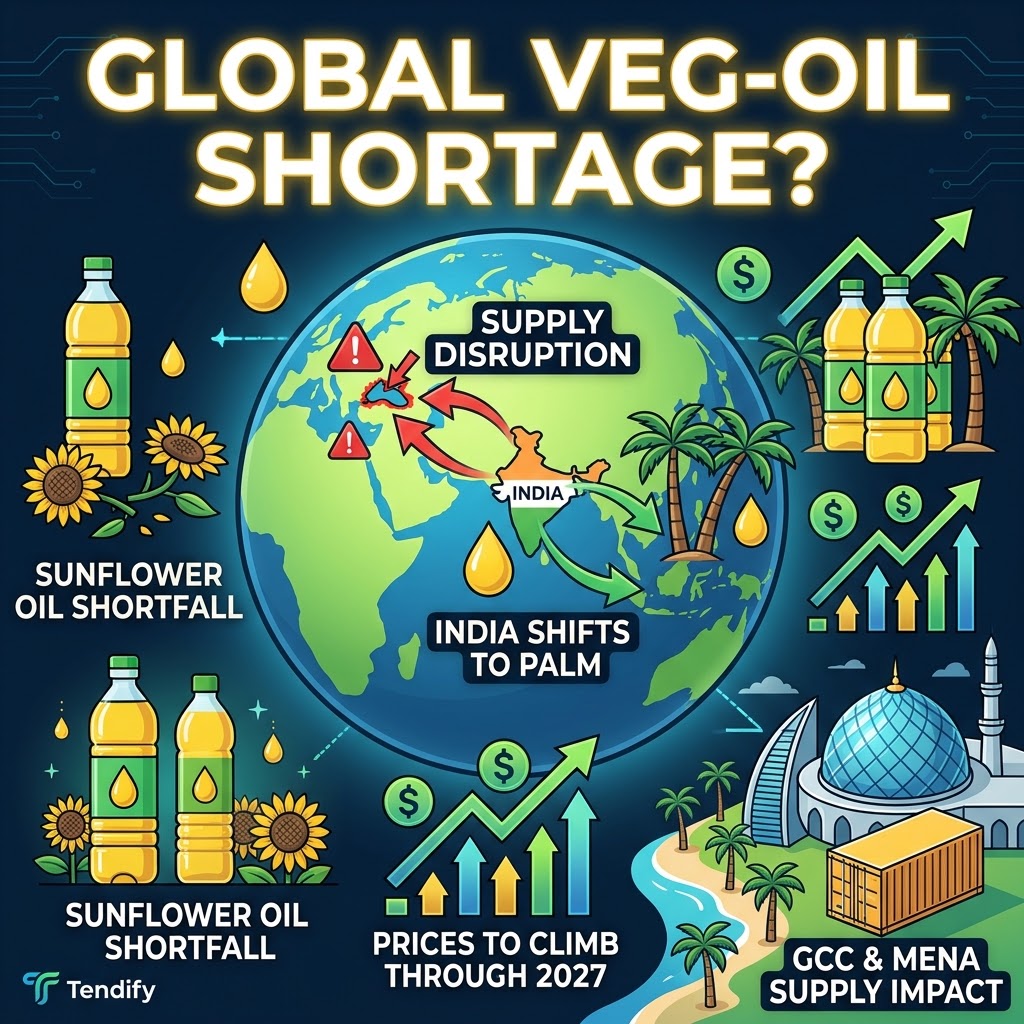
Global Vegetable Oil Prices Set to Climb Through 2027: Black Sea Disruptions, India Demand Shift & Palm Oil Rebound
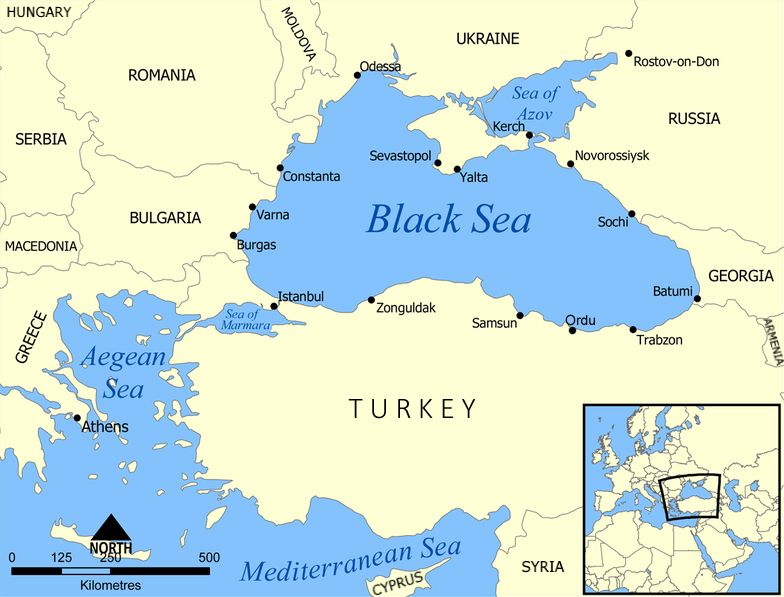
A single corridor can move markets. When Black Sea sunflower-oil loadings slow by 300,000–350,000 tonnes a month, the ripple reaches refiners in Mumbai, crushers in Argentina, and biodiesel blenders from Jakarta to Rotterdam. That is the situation facing the global vegetable oil complex as of early October 2026.
According to Oil World’s Thomas Mielke, the combination of disrupted Black Sea shipments, the seasonal decline in South American soyoil exports, and production growth that is still lagging biodiesel demand is setting the stage for firmer prices into 2027. India—the world’s largest edible-oil importer—has already cut its basic import duty on crude sunflower oil to zero. The logical next step for many buyers is heavier palm-oil purchases, which in turn supports a recovery in palm prices after their recent correction.
Global Veg-Oil Shock: Why Black Sea Disruptions Could Push Prices Higher Into 2027
For B2B traders, procurement managers and logistics operators across the GCC and wider MENA region, the question is no longer whether prices will move higher. The question is how to position supply chains, contracts and financing before the next leg of the rally arrives.
Global Vegetable Oils Matrix: Q4 2026 – 2027 Outlook
Updated: October 2026
Quick comparison of major edible oil complexes for B2B procurement, supply chain risk management, and substitution planning.
| Commodity | Primary Origins | Price Trend (2026–27) | Key Supply / Logistics Risk | Recommended Action |
|---|---|---|---|---|
| 🌻 Sunflower Oil | Russia, Ukraine | Bullish / High Premium | Corridor disruption, port attacks, war-risk insurance, 60-day transit delays. | Insert flexible origin clauses; hedge with Palm / Canola. |
| 🌴 Palm Oil | Indonesia, Malaysia | Rebounding / Competitive | Indonesian B40 biodiesel mandate absorption & local export levy adjustments. | Increase allocation to cover Indian & MENA demand shift. |
| 🌱 Soybean Oil | Argentina, Brazil, USA | Firm / Supply Tightening | Post-peak seasonal export decline; US biofuel mandate competition. | Lock forward cover for core food-grade volumes early. |
| 🌾 Canola / Rapeseed | Canada, Australia, EU | Moderate / Spread Narrowing | EU industrial biofuel demand absorbing local crush volume. | Utilize as direct functional soft-oil substitute for Sunflower. |
Access B2B Trade Tools on Tendify →
The Supply Squeeze: Three Simultaneous Pressure Points
Markets rarely tighten for a single reason. In the current cycle three independent constraints are reinforcing one another.
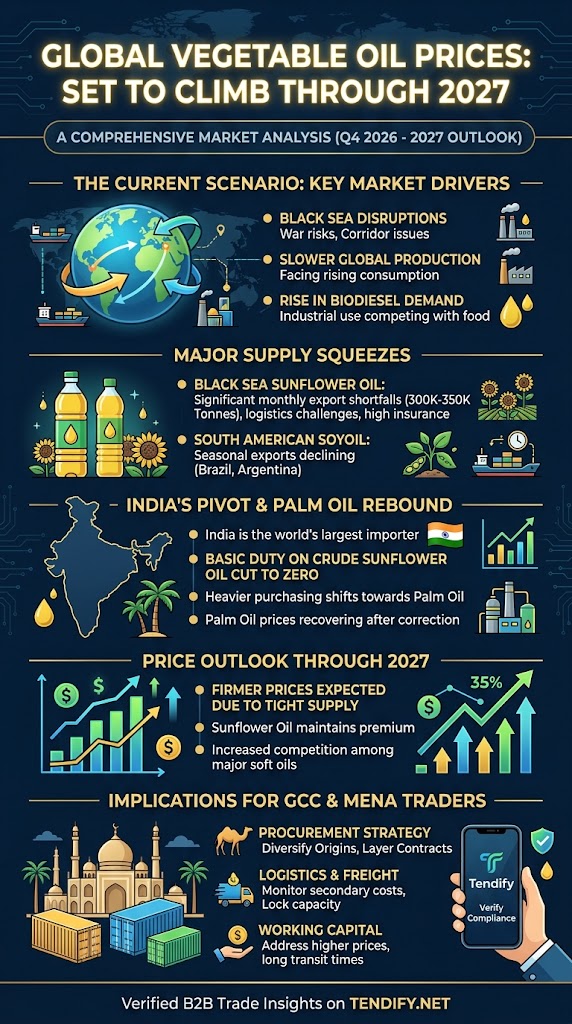
Global Veg-Oil Shock
1. Black Sea Sunflower Oil: The Missing 300–350 kt per Month
Russia and Ukraine together still account for roughly 60 percent of global sunflower-oil exports. When a safe shipping corridor fails to materialize, loadings fall well below potential. Oil World estimates the shortfall at 300,000–350,000 tonnes every month from October onward. Ukrainian exports for the October–March window are projected at around 300,000 tonnes per month—roughly half the normal pace—while Russian monthly shipments are expected in the 250–300,000-tonne range versus 400,000 tonnes a year earlier.
Attacks on port infrastructure, higher insurance premiums, and the need to reroute via Danube barge or longer sea lanes have stretched transit times. Indian importers report delays of up to 60 days. Freight differentials have widened, and some cargoes that previously moved through the Red Sea are now forced around the Cape, adding more than ten days and $20-plus per tonne in extra cost.
Trade Compliance & Regulatory Friction
The Hidden Bottleneck: Sanctions, Banking Friction & Secondary Exposure
While physical corridor logistics dominate headlines, Middle East and GCC buyers face a parallel challenge: regulatory and sanctions compliance. With Russia and Ukraine controlling nearly 60% of global sunflower oil exports, navigating origin restrictions has become as critical as securing vessel space.
- Payment & FX Blockades: International correspondent banks routinely flag, delay, or reject transactions linked to Black Sea ports, even for agricultural goods exempt from primary sanctions.
- P&I Insurance Restrictions: Western maritime insurers continue to scale back coverage or demand steep war-risk premiums for vessels calling at regional terminals, leaving charterers exposed to unhedged liabilities.
- Secondary Sanctions Scrutiny: Re-exporters in the GCC must maintain rigorous end-use and origin documentation to prevent compliance breaches when selling into secondary Asian or African markets.
Verify Compliance on Tendify →
2. South American Soyoil: Seasonal Peak Behind Us
Argentina and Brazil supply the bulk of the world’s soybean oil. Their export programs reach a seasonal high in the northern-hemisphere summer and early autumn. From October the volumes available for prompt shipment decline. With Black Sea sunflower oil already constrained, the usual substitution window narrows. Traders who delayed purchases in anticipation of cheaper soyoil now face tighter availability just as Indian festival demand peaks.
Soft Oil Alternatives & Origin Diversification
The Rapeseed & Canola Buffer: Can Western Supplies Bridge the Sunflower Gap?
While palm and soybean oils capture the primary volume shift, rapeseed and canola oil serve as the closest direct functional alternatives to sunflower oil for high-end food processing and European/Asian refiners. As Black Sea volumes drop, buyers are increasingly evaluating Canadian, Australian, and EU crushing capacity.
- EU & Chinese Demand Pivot: European refiners face strict quality and sustainability requirements that limit immediate palm substitution. Consequently, domestic EU rapeseed crush and Canadian canola imports are absorbing the primary shock of reduced Ukrainian sunflower oil.
- Australian Export Surplus: Strong harvest projections across Western Australia provide a critical secondary origin for Asia-Pacific and Middle Eastern buyers seeking stable soft oil shipments without Black Sea transit exposure.
- Price Spread Compression: As sunflower oil maintains a premium CIF Mumbai structure, the historically wide spread between canola and sunflower oil is narrowing, making blended soft oil formulations economically attractive for GCC refiners.
Explore Commodity Specs on Tendify →
3. Structural Production Lag Versus Biodiesel Demand
Global oils-and-fats production continues to grow, but the pace is slower than the increase in demand driven by biodiesel and renewable diesel mandates. Indonesia’s planned rise in biodiesel blending, U.S. Renewable Fuel Standard volumes for 2026–27, and European advanced-biofuel targets all compete for the same pool of feedstocks. When food and fuel demand rise together while one major export origin under-performs, price discovery becomes one-sided.
India’s Policy Response and the Palm-Oil Pivot
India imports roughly 60 percent of the vegetable oil it consumes. In late September 2026 the government cut the basic customs duty on crude sunflower oil to zero (from 10 percent) and reduced duties on crude palm and soybean oils to 5 percent. The move was designed to moderate domestic retail prices ahead of the festival season, when demand for frying oils and packaged foods surges.
The policy has two immediate market effects. First, it lowers the landed cost of sunflower oil, encouraging refiners to keep buying from the Black Sea when cargoes are available. Second—and more important for the medium-term balance—it improves the relative competitiveness of palm oil after its recent price correction. Traders on the ground report that more than 200,000 tonnes of crude palm oil were booked in a single week following the duty cut, with monthly Indian palm imports potentially rising toward 700,000–750,000 tonnes during peak restocking periods.
This substitution is already visible in price relationships. Sunflower oil has been trading at a clear premium to both palm and soybean oil on a CIF Mumbai basis. When logistics risk remains elevated, refiners rationally shift volume toward the more reliable origin even if the absolute price is not the lowest. That shift supports palm-oil prices into 2027 and reduces the surplus that Malaysian and Indonesian inventories had begun to accumulate.
Price Outlook: What the Numbers Signal for 2026–27
Recent weekly price action has been mixed because seasonal supply of palm, rapeseed and new-crop sunflower oil temporarily increased availability. Chicago soybean-oil futures, Malaysian palm-oil contracts and Indian sunflower-oil bids all eased in late September. Yet the structural factors identified by Oil World and other analysts remain intact.
Key reference points as of early October 2026:
- Sunflower oil CIF Mumbai has traded in a wide $1,380–1,490/t band depending on promptness and origin risk.
- Malaysian palm-oil futures retreated from an August peak near 5,018 ringgit to levels around 4,500–4,800 ringgit, improving competitiveness versus soft oils.
- Global vegetable-oil prices overall remain 10–15 percent above year-ago levels despite record oilseed production forecasts for 2026/27.
USDA projects global vegetable-oil exports at a record 141 million tonnes in 2026/27, with stronger trade in rapeseed and sunflower oil. Palm-oil exports, however, are expected to decline modestly while soybean-oil growth stays muted. When export growth is concentrated in origins that face logistics risk, the headline production number understates the true tightness of freely available supply.
Implications for GCC and MENA Traders
The Gulf region sits at the intersection of consumption growth, re-export logistics and biodiesel feedstock demand. Several practical consequences follow from the current market structure.
Procurement Strategy: Diversify Origins and Tenors
Relying on a single Black Sea origin for sunflower oil exposes importers to both price spikes and delivery defaults. Operational experience shows that a blended program—combining contracted Black Sea volumes with flexible palm and South American soyoil options—reduces the cost of disruption. Forward cover of 60–90 days for core volumes, layered with spot flexibility for the balance, has proven more resilient than pure spot or pure long-term contracting in previous volatility episodes.
Logistics and Freight: Watch the Secondary Costs
Demurrage, detention, war-risk insurance and longer routing via the Cape of Good Hope can erase margin on an otherwise profitable trade. When Black Sea loadings slow, vessels may idle or divert, pushing freight rates higher on the remaining open tonnage. Traders who lock freight early or use contracts of affreightment with volume flexibility protect themselves against this secondary cost inflation. For a deeper operational checklist on controlling demurrage and detention in GCC ports, see the practical guidance available on the Tendify knowledge base.
Working Capital and Payment Structures
Higher prices and longer transit times increase the capital tied up in inventory and receivables. Letters of credit remain the default for many first-time counterparties, yet the cost and documentation burden can be material for smaller deals. Escrow arrangements and structured trade-finance products have gained traction in the region precisely because they reduce the cash-cycle risk without the full rigidity of traditional LCs. Evaluating the total cost of capital—including opportunity cost of delayed cargoes—often changes the ranking of payment options.
FX Volatility & Landed Cost Inflation
Currency Mismatch: Managing FX Exposure in USD-Denominated Trades
While international benchmark prices for vegetable oils are quoted in US Dollars, ultimate buyers operate in local currencies. Fluctuations in key currencies—such as the Indian Rupee (INR), Indonesian Rupiah (IDR), or non-pegged regional currencies across MENA—can quietly erase trading margins even when commodity prices remain stable.
- Import Cost Squeeze: A weakening local currency instantly boosts the local-currency landed cost of USD-invoiced palm or soft oils, forcing refiners to either absorb margin compression or risk demand destruction.
- Origin Currency Dynamics: Shifts in export tax structures tied to local origin currencies (e.g., Indonesia’s palm oil export levies) can create unpredictable price dislocations between FOB loadings and destination CIF markets.
- B2B FX Hedging Imperative: Leading procurement desks across the GCC now integrate cross-currency forward contracts and structured FX options into their commodity purchase agreements to lock in total landed cost prior to vessel discharge.
Calculate Landed Costs on Tendify →
Biodiesel and Industrial Demand Overlap
Several GCC industrial users and blenders compete for the same vegetable-oil molecules that food processors require. When biodiesel mandates tighten or renewable-diesel margins improve, industrial demand can absorb volumes that would otherwise flow into the edible-oil channel. Monitoring both food and fuel policy developments is therefore no longer optional for pure food-oil traders.
Practical Playbook: Five Actions for the Next 90 Days
Based on operational assessments across multiple import programs, the following sequence has delivered measurable risk reduction:
- Map exposure. Quantify the percentage of annual volume that depends on Black Sea sunflower oil and the residual that can be substituted with palm or soyoil without quality or labeling constraints.
- Reprice landed cost. Rebuild CIF models using current freight, insurance and expected demurrage under both corridor-open and corridor-closed scenarios. The differential often exceeds the pure commodity price move.
- Secure flexible origin clauses. Where contracts allow, insert origin-substitution language that permits palm or alternative soft oils if Black Sea loadings fall below a defined threshold.
- Lock logistics capacity. Book vessel space or COA tonnage for the next two to three months before the market fully prices the risk of further diversions.
- Stress-test payment and inventory cycles. Model a 30- and 60-day extension in transit time and confirm that working-capital facilities and customer payment terms can absorb the stretch.
How Digital Trade Tools Change the Equation
Price volatility is only half the problem. The other half is information lag and fragmented documentation. Platforms that consolidate real-time freight visibility, HS-code validation, duty calculators and contract templates compress decision cycles from days to hours. For traders already managing multi-origin programs, the ability to model landed cost under alternative routes and instantly generate compliant proforma invoices or export checklists removes a measurable layer of operational friction.
Operators who integrate these tools into daily workflows report fewer demurrage claims and faster customs clearance—advantages that compound when every day of delay carries a higher commodity-price risk. Resources such as the free duty and cost-analysis utilities available through Platform.Tendify.Net illustrate how even modest digitization can protect margin in a rising-price environment.
Risk Matrix: What Could Still Go Wrong
No outlook is complete without the reverse cases. Three scenarios would alter the current trajectory:
- Rapid restoration of a fully functional Black Sea corridor. A durable safe-passage agreement would release the pent-up sunflower-oil volume and compress the premium that currently supports palm prices.
- Sharply higher Malaysian or Indonesian palm production. If Southeast Asian output exceeds current forecasts and inventories rebuild faster than Indian demand absorbs them, palm’s competitive edge could erode.
- A sudden retreat in biodiesel demand. Lower crude-oil prices or policy roll-backs in major blending markets would free feedstock for the food channel and ease overall tightness.
Each of these outcomes is possible; none is the base case under current logistics and policy conditions.
Connecting the Dots for Supply-Chain Resilience
Vegetable-oil markets have always been sensitive to weather and policy. What distinguishes the present cycle is the simultaneous compression of two major export origins and the structural pull from energy markets. Traders who treat the situation as a temporary freight problem will find themselves repeatedly caught short. Those who redesign procurement, logistics and financing around multi-origin flexibility and real-time cost visibility will convert volatility into a competitive edge.
For GCC importers and re-exporters the opportunity is dual: secure reliable supply for domestic consumption while positioning to capture arbitrage when price relationships between sunflower, palm and soyoil realign. The tools and market intelligence required to execute that dual strategy are already available; the constraint is usually the speed of decision-making rather than the availability of information.
Further Reading on Tendify
Deepen your operational strategy with related guides on GCC logistics, customs compliance, and trade finance:

