وبلاگ
Tornado Cash: From Blacklisted Code to Business Security

In my years of building and scaling international trade operations across volatile markets, I’ve learned one hard truth: transparency is a double-edged sword. Every deal, every payment trail, and every supplier relationship leaves a digital footprint that competitors, regulators, or bad actors can exploit. When I first encountered blockchain for cross-border settlements, I was excited about the speed and finality. But the permanent, public ledger? That’s where things get complicated for serious traders protecting competitive edges, supplier identities, or sensitive treasury movements.

Tornado Cash
That’s why protocols like Tornado Cash became part of the conversation. Whether you call it a privacy mixer, a zero-knowledge tool, or a flashpoint in the DeFi regulations debate, understanding it is now essential for any trader serious about operating in the decentralized economy. In this deep dive, I’ll walk you through exactly what Tornado Cash is, why it exploded into controversy, where things stand in 2026, and—most importantly—how legitimate global businesses can apply the lessons to build privacy-preserving yet compliant operations.
What Is Tornado Cash? The Technical Foundation of Blockchain Privacy
Tornado Cash is a decentralized, non-custodial protocol built on Ethereum (and later other chains) that allows users to break the on-chain link between the sender and recipient of cryptocurrency transactions. Launched in 2019, it functions as a smart contract-based mixer.
Here’s how it works in plain business terms:
- You deposit a fixed amount of ETH (or supported tokens) into a Tornado Cash pool.
- The protocol generates a private note (essentially a secret key) for your deposit.
- Later, you withdraw the same amount to a fresh wallet address by submitting a Zero-Knowledge Proof (ZK Proof). This cryptographic magic proves you’re entitled to withdraw without revealing which specific deposit belongs to you.

Zero-Knowledge Proof (ZK Proof).
The result? The public blockchain shows funds entering a large mixing pool and later exiting from it, but it severs the direct transactional history. No one can easily trace your original source or final destination.
This isn’t some shadowy black box. It leverages Zero-Knowledge Proofs—a technology that lets one party prove a statement is true without revealing any underlying data. In trade finance terms, imagine proving you have sufficient funds or have fulfilled a delivery obligation without exposing your entire balance sheet or supplier contracts.

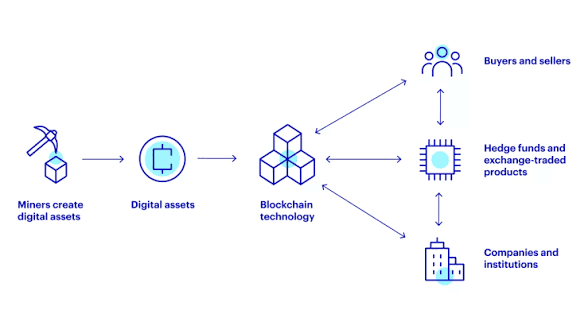
Simple Blockchain Privacy Process
Key technical advantages for traders:
- Non-custodial: You never hand control of funds to a third party.
- Immutable smart contracts: Once deployed, the code runs autonomously.
- Scalable privacy pools for different denominations.
For a global trader moving payments across jurisdictions, this level of blockchain privacy addresses real pain points: protecting against frontrunning in DeFi, shielding supplier relationships from competitors, and reducing exposure in politically sensitive corridors.
A Note on “Privacy Patience: It’s important to understand that privacy is not instantaneous. If you deposit 10 ETH and withdraw it to a new wallet five minutes later, timing analysis can easily link the two transactions. For maximum security, sophisticated operators leave a “waiting period” between deposit and withdrawal to ensure their transaction is sufficiently buried within the pool’s activity.
Green Gold, Grey Money: The Hidden Side of the Avocado Trade
The OFAC Sanctions: When Code Became a Target
On August 8, 2022, the U.S. Treasury’s Office of Foreign Assets Control (OFAC) took the unprecedented step of sanctioning Tornado Cash. They cited its use in laundering over $7 billion, including funds tied to North Korea’s Lazarus Group hacks (notably the $455+ million Ronin bridge exploit).

The OFAC Sanctions
This wasn’t just targeting a company or individuals—it effectively blacklisted the smart contracts themselves. U.S. persons were prohibited from interacting with them, and many centralized services began blocking associated addresses.
The move sent shockwaves through the crypto and trade communities. For the first time, open-source code was treated as sanctionable “property” under the International Emergency Economic Powers Act (IEEPA). Developers and users faced uncertainty, and it sparked a fierce debate: Can you sanction software that anyone can run independently?
In my experience negotiating deals in high-risk markets, I’ve seen how overbroad regulations can stifle legitimate commerce. Privacy tools aren’t inherently criminal; like encrypted shipping manifests or private banking channels, they serve dual purposes.
The Legal Battle: Code vs. Crime (2022–2026)
The sanctions triggered multiple lawsuits and criminal proceedings. Key developments:
- Fifth Circuit Ruling (November 2024): In Van Loon v. Department of the Treasury, the U.S. Court of Appeals for the Fifth Circuit ruled that OFAC exceeded its authority. Immutable smart contracts are not “property” of a foreign national under IEEPA, so they couldn’t be blocked in that manner.
- Sanctions Lifted (March 2025): OFAC delisted Tornado Cash, providing significant relief to users and marking a partial victory for the industry.
- Developer Cases: Proceedings against co-founders like Roman Storm highlighted tensions around developer liability for how others use open-source tools. A mixed verdict in one high-profile trial underscored the difficulty of proving intent in decentralized systems.
As of 2026, the landscape has evolved. The ruling draws important distinctions between neutral tools and bad actors. It reinforces that writing or deploying code isn’t automatically criminal, but facilitating known illicit activity crosses the line.
This matters deeply for international trade. Many B2B players explore crypto for faster settlements, lower fees, and access to new markets. Understanding these precedents helps you assess compliance risks before integrating blockchain rails.
Still, compliance requirements vary by jurisdiction, and staying informed on local laws remains mandatory.
Why Blockchain Privacy Matters for Global Trade in 2026
While public blockchains offer unparalleled transparency and auditability, they simultaneously introduce significant vulnerabilities into the realm of competitive global commerce:
Competitive Intelligence Protection: Every move made on-chain can potentially expose your sensitive trading strategies, specific volume patterns, or proprietary counterparty relationships to the public.
The “Glass House” Scenario: Consider a situation where you are sourcing raw materials from a new, high-efficiency supplier in Central Asia. Without an integrated privacy layer, a competitor could simply track your wallet’s outgoing payments to identify that supplier’s volume. This allows them to potentially outbid you or disrupt your supply chain by approaching your partners directly, turning your transparent wallet into an open book of your strategic advantages.
Enhanced Supply Chain Security: In regions characterized by high geopolitical tensions, exposing payment flows can inadvertently invite external interference or compromise logistics.
Mitigating Regulatory Overreach: Full, unrestricted transparency can sometimes conflict directly with stringent data protection laws or the requirements of commercial confidentiality.
Fraud and Frontrunning Protection: Within the sectors of DeFi treasury management and tokenized trade finance, robust privacy is essential to prevent exploitation by malicious actors.
Privacy-Preserving Compliance has emerged as the definitive best practice for the modern era. This approach strategically combines selective disclosure—utilizing Zero-Knowledge (ZK) proofs to prove compliance to regulators or counterparties—with strong default privacy. Legitimate global businesses do not require total anonymity; rather, they require controlled visibility.
For traders in the GCC, India, or broader MENA corridors we serve at Tendify, this balance is critical. Whether optimizing cross-border payments or exploring tokenized assets, tools that respect both privacy and DeFi regulations give you an edge.
Invisible Cargo: The Dark Logic of Empty Private Jets
Legitimate Use Cases vs. Illicit Risks: A Practical Framework
In the complex landscape of global trade and decentralized finance, it is a mistake to assume every privacy tool user is attempting to launder funds. Distinguishing between legitimate business needs and illicit red flags is essential for any modern entrepreneur. Here is a straightforward framework to evaluate these tools:
Legitimate Business Applications
For high-level operations, privacy is often a matter of security and strategic necessity:
Corporate Treasury Protection: Securing the movement of significant assets for high-net-worth individuals or corporate entities to prevent market manipulation or targeted attacks.
Operational Stealth in Sensitive Markets: Shielding employee payroll and vendor payments in volatile or politically sensitive regions to protect personnel and supply chain integrity.
Confidential Capital Management: Enabling private treasury management for DAOs or discreet venture allocations that require confidentiality before public disclosure.
Regulatory Alignment: Ensuring compliance with GDPR-style data privacy requirements during international deals, where exposing counterparty data on a public ledger could violate privacy laws.
Cybersecurity Defense: Reducing the visible attack surface for ransomware and sophisticated hacks by obscuring the total balance held in active trade wallets.
Red Flags for Illicit Activity
While privacy is a right, certain patterns should trigger immediate concern for compliance officers:
Sanctioned Interactions: Any direct or indirect interaction with wallet addresses known to be on international blacklists.
Inconsistent Transactional Patterns: Rapid, high-volume mixing activities that bear no logical relationship to the underlying trade volume or business cycle.
Absence of Transparency Trails: A lack of internal documentation, “Know Your Customer” (KYC) processes, or a refusal to maintain auditable records for regulatory review.
The smartest operators I know implement internal policies: Use privacy layers selectively, maintain auditable off-chain records, and partner with compliant infrastructure providers. This mirrors how traditional trade finance uses correspondent banking with proper AML checks.
The Future: Beyond Basic Mixers to Compliant Privacy Solutions
Tornado Cash served as a pivotal early chapter in the evolution of decentralized finance, proving a massive market demand for blockchain privacy while simultaneously highlighting the structural need for more sophisticated, resilient designs. As we look toward the 2027 horizon and the development of the “Trade Operating System” (Trade OS), we see a clear shift away from simple anonymity toward “Intelligent Privacy.”

Beyond Basic Mixers
The next generation of protocols is currently integrating features designed specifically for the enterprise level:
Optional Compliance Hooks: New systems utilize “viewing keys” or selective ZK disclosures, allowing businesses to maintain default privacy while granting specific access to auditors or tax authorities when required.
Built-in Sanctions Screening: To mitigate the risks that previously plagued older mixers, modern tools are incorporating automated screening layers to block known illicit actors at the protocol level.
Enterprise-Grade Auditability: Developers are prioritizing the needs of global regulators by ensuring that transactional data, while private from competitors, remains auditable within legal frameworks.
Hybrid Financial Models: We are seeing the rise of privacy solutions that work seamlessly with traditional finance (TradFi), bridging the gap between decentralized assets and legacy banking systems.
In the realm of global trade—especially within the GCC and MENA corridors—we are moving toward “intelligent ecosystems” where privacy and compliance are no longer mutually exclusive. This evolution is particularly critical for:
B2B Marketplaces: Protecting trade secrets and pricing strategies from public exposure.
Escrow Services: Ensuring that large-scale funds are held and released securely without exposing the financial health of the involved parties to the open market.
Tokenized Supply Chain Finance: Digitizing the global trade value chain while maintaining the confidentiality of supplier identities and sensitive logistics data.
Actionable Steps for Traders Integrating Privacy Tools
Moving from theory to execution requires a structured approach that balances operational agility with legal safety. As someone navigating the intersection of trade and tech, I recommend the following roadmap for integrating privacy protocols into your workflow:
Educate Your Team: Ensure your financial and legal departments understand the basics of Zero-Knowledge (ZK) technology and the shifting landscape of DeFi regulations. Knowing the difference between “anonymity” and “privacy” is crucial for corporate positioning.
Audit Your Tech Stack: Review every crypto payment gateway or provider you currently use. Assess their privacy features and, more importantly, their compliance posture regarding reporting and AML (Anti-Money Laundering) standards.
The “Tainted Coins” Reality Check: Even with the significant legal victories of 2026, the industry concept of “tainted” addresses remains a hurdle. Many centralized exchanges (CEXs) and traditional banking partners utilize aggressive chain-analysis tools that may flag any funds originating from a mixing protocol, regardless of the user’s intent or the transaction’s legality.
Secure Your Off-Ramps: Before moving significant trade volumes through privacy layers, verify that your off-ramp (the service where you convert crypto back to fiat) is compatible with these protocols. Always maintain robust, time-stamped documentation to prove the legitimate commercial source of your wealth should an audit occur.
Implement Internal Controls: Develop and document clear internal policies specifying when it is appropriate to use privacy tools—such as protecting supplier identities in sensitive markets—and when it is not.
Choose Compliant Partners: Prioritize platforms that offer “selective disclosure” or “viewing keys.” These allow you to maintain default privacy while providing verifiability to regulators or auditors upon request.
Stay Updated on Global Jurisdictions: Regulations move fast. What is permitted in the شورای همکاری خلیج فارس may differ from the EU یا U.S. frameworks. Constant monitoring of key trade corridors is a strategic necessity.
Test Small: Do not move your entire treasury at once. Pilot privacy-enhanced settlements in low-risk, small-scale scenarios to test how your banking partners and accounting software handle the data.
Bridging the Gap with Tendify
At Platform.Tendify.Net, we’ve engineered our ecosystem precisely for this high-stakes environment. While you manage the complexities of modern payment rails, we provide the infrastructure to handle the rest of the trade cycle:
Compliance & Intelligence: Utilize our real-time duty calculators and market intelligence to stay ahead of regional shifts.
Operational Efficiency: Our automated contract builders and HS Code finders ensure that your underlying trade documentation is as robust as your payment security.
Risk Mitigation: Use our compliance checklists to save hours of manual research and prevent the costly missteps that often plague international expansion.
By pairing modern privacy innovations with the battle-tested trade tools at تندیفای, you ensure your business remains both invisible to competitors and transparent to the partners that matter.
Conclusion: Privacy as a Strategic Business Asset
Tornado Cash didn’t create the tension between transparency and privacy—it exposed it. In 2026 and beyond, successful global traders won’t choose one over the other. They’ll master both.
The protocol sparked vital conversations about code, freedom, and responsibility. The court outcomes and delisting affirm that neutral tools have a place, provided users and platforms act responsibly.
As someone who’s closed hundreds of cross-border deals, I can tell you this: Protecting your information isn’t evasion—it’s smart risk management. The businesses that thrive will be those that leverage blockchain’s strengths while implementing robust, privacy-aware compliance frameworks.
Ready to strengthen your trade operations with practical, battle-tested tools? Head over to Platform.Tendify.Net today. Whether you need real-time calculators, document automation, or strategic market insights, our command center is built for traders like you who demand efficiency and compliance in equal measure. Don’t leave your next deal to chance—equip yourself with the operating system for global trade success.