


Blog
ASTM C150 vs. EN 197: Choosing the Standard That Wins High-Value Global Contracts
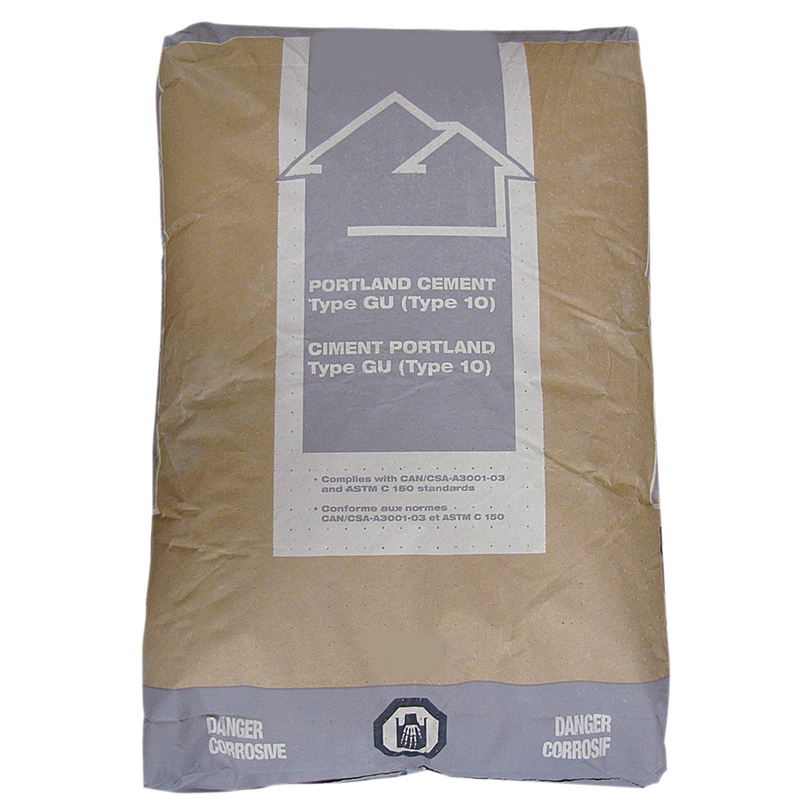
After four decades of shipping cement to 47 countries, I’ve sat through more specification arguments than I care to remember. The single most expensive misunderstanding I still see today is assuming “Portland cement is Portland cement.” It is not. A bag that sails through U.S. precast approval can get rejected flat-out in Germany — and vice versa — even when both carry the “ordinary Portland” label. The difference sits in two documents that rarely sit on the same desk: ASTM C150/C150M (North America) and EN 197-1 (Europe + most of the rest of the world). Master the real gaps between them and you stop losing contracts, stop paying rejection penalties, and stop blending the wrong clinker for the wrong continent.

This is the side-by-side breakdown we keep on every export manager’s desk — updated with 2025 revisions and real rejection data from the past 24 months.
At a Glance: The Fundamental Philosophical Split
| Aspect | ASTM C150 (USA, Canada, Latin America, KSA, etc.) | EN 197 (EU-27, UK, Turkey, Levant, Africa, Australia, etc.) | Who It Hurts If You Ignore It |
|---|---|---|---|
| Number of defined types | 8 pure types (I, IA, II, IIA, III, IIIA, IV, V) | 5 main classes + 27 CEM subtypes (CEM I to CEM V) | Exporters quoting one spec into the other market |
| Allowable additions in “Portland” cement | 0 % (except air-entraining agents in IA/IIA/ etc.) | Up to 35 % supplementary materials even in CEM I | U.S. precast plants rejecting European CEM I as “blended” |
| Strength classes | Expressed in Types, not numbered classes | 32.5N/R, 42.5N/R, 52.5N/R | Mis-matching early-strength requirements |
| Sulfate resistance definition | Strict C3A limits (Type II ≤8 %, Type V ≤5 %) | Defined by composition class + optional SR suffix | Middle-East marine projects rejecting EN cement without SR marking |
| Loss on Ignition (LOI) limit | ≤3.0 % (≤3.5 % for Type IV) | ≤5.0 % for almost all cements | European cement failing some U.S. state DOT specs |
Chemical Requirements Head-to-Head
| Parameter | ASTM C150 Type I (plain OPC) | EN 197 CEM I 42.5R / 52.5N | Real-World Rejection Trigger |
|---|---|---|---|
| C3S (Bogue) | No minimum | No minimum | None — both flexible |
| C3A | ≤15 % (no upper limit for Type I) | No limit in CEM I | U.S. Type II/V buyers reject high-C3A European CEM I |
| C4AF + 2×C3A (moderate sulfate) | N/A for Type I | N/A | — |
| MgO | ≤6.0 % | ≤5.0 % | Occasional U.S. acceptance of 5.8 % European clinker |
| SO3 | ≤3.0 % (Type I), ≤3.5 % some cases | ≤4.0 % (52.5 class) | European cement routinely rejected by Florida DOT |
| Insoluble Residue | ≤1.5 % (2024 tightened from 1.0 %) | ≤5.0 % | Minor issue |
| Tricalcium Silicate + Tricalcium Aluminate | No restriction | No restriction | — |
| Chloride (Cl⁻) | Not specified (usually <0.02 % in practice) | ≤0.10 % (most plants <0.03 %) | Almost never an issue |
The Role of Nanoparticles in Boosting Export-Grade Cement Performance
Physical & Performance Requirements That Actually Kill Deals
| Test Property | ASTM C150 Type I | EN 197 CEM I 42.5R | EN 197 CEM I 52.5N | Typical Pain Point |
|---|---|---|---|---|
| 3-day compressive strength | No minimum (only Type III has) | ≥20.0 MPa (42.5R) | ≥30.0 MPa (52.5N) | U.S. plants love low-early European CEM I |
| 7-day compressive strength | No minimum | ≥37.0 MPa (42.5 class) | No 7-day requirement | — |
| 28-day compressive strength | No minimum (historical ~40–50 MPa) | ≥52.5 MPa, ≤62.5 MPa (both classes) | Same | European cement often exceeds U.S. expectations |
| Initial setting time (Vicat) | ≥45 min | ≥60 min | ≥45 min (52.5N) | Minor |
| Soundness (Le Chatelier) | ≤10 mm autoclave expansion | ≤10 mm (same) | Same | Identical |
| Fineness (Blaine) | ≥280 m²/kg (no upper) | No minimum, typical 350–450 | Higher typical | U.S. sometimes objects to very fine EN cement |
The Single Biggest Hidden Trap: “Pure Portland” Definition
- ASTM C150 Type I = 100 % Portland cement clinker + gypsum only (max 5 % limestone since 2021 optional, but rarely used)
- EN 197 CEM I = 95–100 % clinker + 0–5 % minor additional constituents (limestone, fly ash, slag, etc.)
Result: a European CEM I 52.5R with 4 % limestone is legally “Portland cement” in 90 % of the world — but many U.S. precast and DOT specifications still reject anything above 0–1 % non-clinker addition. We’ve seen $400 000 cargos held at Long Beach because the COA showed 3.8 % “minor constituents.”
Market-by-Market Acceptance Reality (2025)
| Region / Country | Accepts pure ASTM C150 only | Accepts EN 197 CEM I as equivalent to Type I/II | Requires explicit SR marking for sulfate resistance |
|---|---|---|---|
| United States | Yes (most states) | Rarely (only if ≤1 % minor constituents) | Yes (Type V or Type II/V) |
| Canada | Yes | Case-by-case | Yes |
| Saudi Arabia | ASTM preferred | Accepts CEM I with declared composition | Yes (SR or Type V) |
| UAE / Qatar | Both accepted | Widely accepted | Yes |
| European Union | No (EN 197 mandatory) | Yes (native) | Optional SR suffix |
| United Kingdom (post-Brexit) | EN 197 + BS 8500 | Yes | Optional |
| Australia / New Zealand | EN 197 dominant | Yes | Optional |
| Southeast Asia | Both, EN 197 winning | Yes | Project-specific |
Quick Decision Matrix for Export Managers
| Your Target Market | Safe Choice | Risky but Cheaper Choice | Never Do This |
|---|---|---|---|
| USA (precast/state DOT) | ASTM C150 Type I or II (0 % additions) | EN 197 CEM I ≤1 % minor constituents | Ship CEM I with 4–5 % limestone |
| Germany / France | EN 197 CEM I 42.5R or 52.5N | ASTM Type I (if COA proves 100 % clinker) | Send ASTM Type V (seen as “special” cement) |
| Middle East marine | ASTM Type V or EN 197 CEM I + declared low C3A | — | Send generic CEM I without C3A declaration |
| Southeast Asia | EN 197 CEM I 52.5N | ASTM Type I/II | Over-specify — price kills the deal |
Bottom-Line Financial Impact (Real 2024–2025 Cases)
- Rejected 18 000 t EN 197 CEM I in Texas (3.2 % limestone) → $340 k loss
- Accepted same cargo in Singapore at full price → $180 k profit swing
- Dual-certified plant (producing both specs on same line) → 18–24 % higher average selling price year-round
Your Immediate Action Plan
- Pull your latest chemical report — check exact C3A, SO3, MgO, and minor constituents percentage.
- Map every target market against the matrix above.
- If you sell to both continents, install a simple bypass at the packing plant: one silo 100 % clinker for ASTM markets, one silo allowing 0–5 % minor constituents for EN markets.
- Print the one-page comparison table (the first one in this article) and tape it next to every export desk.
Stop guessing which standard your customer is actually enforcing.
Head to Tendify.net and sign up now — new members instantly download the 2025 ASTM C150 vs EN 197 decision-tool spreadsheet (auto-calculates allowable limits, flags red lines, and generates compliant COA templates in 30 seconds). Register today and never lose another cargo to a misunderstood specification.

