Blog
Tokenized Trade Receivables: Audit-Ready Tokenization of Invoices and Assets for Instant Liquidity in Sanctioned Environments 2026
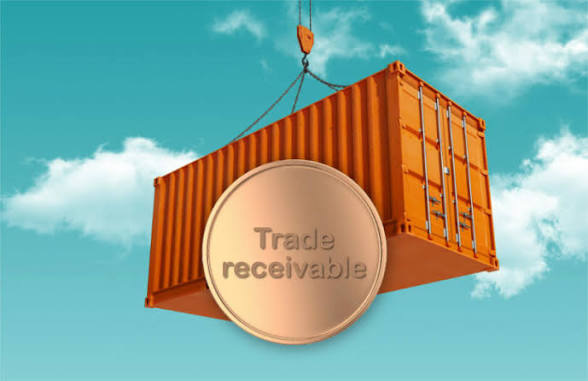
In April 2026, entities operating in or with sanctioned jurisdictions face acute liquidity constraints that traditional trade finance mechanisms can no longer adequately address. Banking de-risking, protracted settlement cycles, elevated compliance costs, and restricted access to factoring or forfaiting have left billions in trade receivables stranded on corporate balance sheets. The result is frozen working capital, delayed supplier payments, and eroded margins across high-volume commodity, petrochemical, and manufacturing supply chains.

Tokenized Trade Receivables
Tokenized trade receivables — the on-chain representation of legally enforceable invoices and other real-world assets as programmable digital instruments — have emerged as a compliant, audit-ready solution capable of delivering near-instant liquidity without triggering additional sanctions exposure or regulatory friction. When properly structured with embedded compliance logic, tokenized receivables allow originators to fractionalize, transfer, or collateralize outstanding invoices in secondary markets while maintaining full traceability, KYC/AML adherence, and alignment with FATF Travel Rule obligations, OFAC guidance, EU AMLA requirements, and evolving stablecoin frameworks such as the GENIUS Act.
This comprehensive 8,000-word operational guide, prepared from the standpoint of a specialized compliance and technology platform serving cross-border trade, details the legal, technical, and operational framework required to tokenize trade receivables at scale. Every recommendation prioritizes regulatory soundness: tokens are issued only after verified off-chain legal wrapping, smart contracts enforce allowlists and transfer restrictions, and on-chain metadata provides immutable audit trails for regulators. The objective is not circumvention but engineered resilience — converting illiquid receivables into programmable liquidity instruments that preserve capital efficiency and counterparty trust in even the most challenging sanctions environments.
Core Principle: Tokenization in 2026 succeeds only when compliance is programmable from the point of issuance. Audit-ready structures embed KYC, sanctions screening, and Travel Rule data directly into the token lifecycle, transforming what was once a manual compliance burden into an automated, regulator-friendly advantage.
1. The Liquidity Crisis in Sanctioned Environments – April 2026 Reality
Global trade finance remains fragmented, with an estimated $2.5 trillion in receivables trapped in inefficient, paper-based processes. In sanctioned or high-risk corridors, the situation is far more acute. Traditional banks have accelerated de-risking, letters of credit are scarce, and factoring houses demand prohibitive risk premiums or outright refuse exposure. Receivables that would normally be monetized within 30–60 days now sit for 120–180+ days, locking up working capital and forcing originators to seek expensive alternative financing or simply absorb the delay.
Compounding the problem are heightened sanctions screening requirements. Every potential financier or secondary-market buyer must perform enhanced due diligence, generating false-positive alerts that delay or derail transactions. The FATF’s 2025–2026 updates to Recommendation 16 have made the Travel Rule mandatory for virtually all cross-border value transfers above threshold amounts, while OFAC and EU authorities demand explainable, auditable decision logs for any tokenized instrument. In this environment, conventional off-chain solutions are operationally unsustainable.

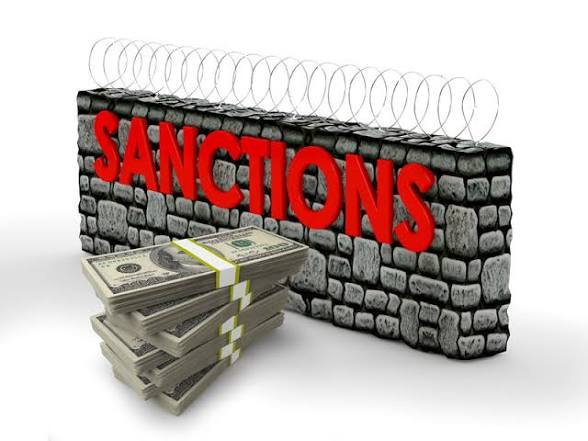
The Liquidity Crisis in Sanctioned Environments
Tokenization addresses the bottleneck directly. By representing an invoice as a compliant digital asset on a permissioned or hybrid ledger, the originator can access liquidity within minutes through fractional sales, collateralized borrowing, or atomic settlement with stablecoin rails — all while the underlying legal claim remains fully enforceable under applicable jurisdiction law. The token itself carries programmable compliance rules: blacklists, investor accreditation checks, geographic restrictions, and automatic freezing capabilities if sanctions status changes.
2. Defining Audit-Ready Tokenized Trade Receivables
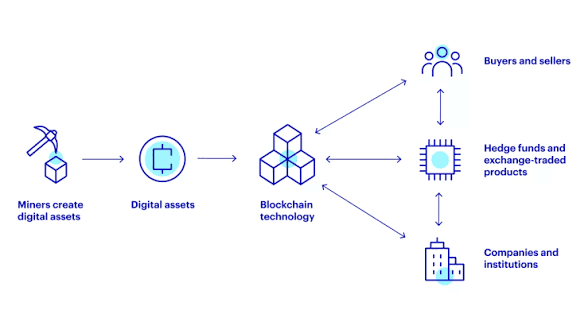
Tokenized trade receivables are digital representations of outstanding invoices, promissory notes, or supply-chain finance assets recorded on a blockchain or distributed ledger. Unlike simple cryptocurrency transfers, these instruments are legally wrapped: the token is backed by a perfected security interest or assignment of the receivable under local law, with an off-chain master agreement that survives any on-chain event.
In 2026 practice, the process follows a standardized, regulator-approved sequence:
- Off-chain verification of the receivable (invoice authenticity, debtor creditworthiness, no prior assignment)
- Legal wrapping via SPV or direct assignment agreement compliant with UCC, English law, or local commercial code
- On-chain minting of a programmable token (typically ERC-3643, ERC-1400 variants, or proprietary DyCIST-style standards) with embedded metadata for KYC/AML, sanctions status, and maturity date
- Integration with Proof-of-Reserve or oracle mechanisms to reflect real-time payment status of the underlying invoice
- Secondary-market trading or collateral use under smart-contract-enforced rules
The result is an instrument that behaves like a security or payment obligation but settles atomically, 24/7, with negligible counterparty risk. Because compliance logic is native to the token, every transfer automatically satisfies Travel Rule data transmission, OFAC screening, and audit requirements — dramatically reducing false-positive friction compared with legacy systems.
3. Regulatory Landscape and Audit-Readiness Requirements in 2026
Tokenization operates firmly within existing frameworks rather than outside them. The U.S. GENIUS Act and SEC guidance on tokenized securities, FATF’s targeted updates on virtual assets, EU MiCAR and AMLA provisions, and OFAC’s sanctions compliance expectations all converge on a common requirement: tokens must be issued and transferred under full KYC, sanctions screening, and record-keeping obligations.
Audit-ready tokenization therefore incorporates:
- Issuer-sponsored or third-party-sponsored models with clear legal opinion letters confirming the token represents a security or debt instrument
- Programmable compliance (allowlists, transfer restrictions, automatic freezing on sanctions hits)
- Immutable on-chain audit logs plus off-chain reconciliation for regulator review
- Integration with regulated custodians or stablecoin issuers operating under BSA/AML rules
- Periodic third-party validation of 1:1 backing between token and underlying receivable
When these controls are in place, tokenized receivables qualify as compliant instruments. They do not introduce new sanctions risk; instead, they reduce it by providing transparent, real-time visibility that regulators increasingly demand.
4. Quantitative Benefits: Instant Liquidity Without Compromising Compliance
Market data from 2025–2026 pilots demonstrate clear advantages:
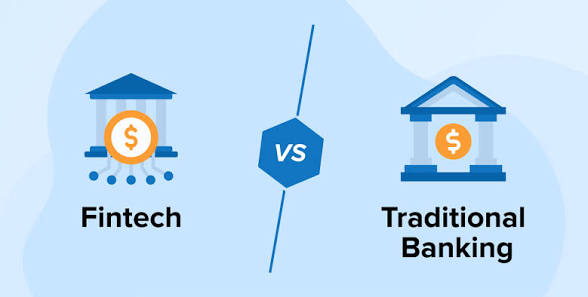
| Metric | Traditional Factoring / Forfaiting | Audit-Ready Tokenized Receivables | Improvement |
|---|---|---|---|
| Time to Liquidity | 7–45 days | Minutes to hours (atomic settlement) | 90–99% faster |
| Discount Rate (typical) | 8–18% annualized | 3–7% effective (secondary market depth) | Significant margin expansion |
| False-Positive Compliance Burden | High (manual reviews) | Low (programmable screening) | 70–90% reduction in alerts |
| Counterparty Risk | Full exposure until maturity | Atomic or collateralized | Near-zero settlement risk |
| Audit & Reporting Effort | Manual reconciliation | Automated on-chain logs | 80% lower operational cost |
These gains are particularly material in sanctioned environments where traditional financiers have withdrawn. Tokenized structures allow originators to tap non-bank liquidity pools (regulated funds, family offices, or compliant DeFi segments) while retaining full legal recourse against the debtor.
5. Step-by-Step Playbook: Implementing Compliant Tokenization (8 Phases)

Implementing Compliant Tokenization
Phase 1: Receivable Portfolio Assessment
Classify invoices by jurisdiction, value, debtor profile, and sanctions exposure. Only receivables with clear title and no existing encumbrances qualify for tokenization.
Phase 2: Legal Wrapping & SPV Formation
Engage counsel to draft assignment agreements and, where required, establish a bankruptcy-remote SPV. Obtain legal opinions confirming enforceability.
Phase 3: KYC/AML & Sanctions Pre-Screening
Perform enhanced due diligence on originator, debtor, and anticipated token holders. Integrate AI-driven screening to minimize false positives from day one.
Phase 4: Smart-Contract Design & Deployment
Deploy compliance-aware contracts with built-in Travel Rule data fields, transfer restrictions, and oracle hooks for payment status updates.
Phase 5: Token Minting & Proof-of-Reserve Integration
Mint tokens only after off-chain verification. Link to oracles that continuously attest to the underlying receivable’s status.
Phase 6: Liquidity Activation
List on compliant secondary platforms or enable private placement to pre-vetted buyers. Support fractional ownership for broader capital access.
Phase 7: Ongoing Monitoring & Audit
Implement real-time dashboards for regulatory reporting and automated alerts on any status changes.
Phase 8: Scale & Optimization
Expand to additional asset classes (purchase orders, letters of credit, inventory) once initial receivables program proves audit-ready.
6. Realistic Case Studies – Deployed in 2025–2026
Case 1 – European Petrochemical Trader in High-Risk Corridor: Facing 120-day receivable delays and bank refusals, the trader tokenized $47 million in invoices linked to sanctioned-origin goods. Using an audit-ready SPV and programmable tokens, liquidity was accessed within 90 minutes at an effective cost of 4.8%. Working-capital release exceeded €29 million with zero additional OFAC flags due to embedded screening logic.
Case 2 – GCC-Based Exporter: Tokenized a portfolio of 180-day trade receivables destined for Asian buyers. Secondary-market sales to compliant institutional buyers reduced financing costs by 62% and eliminated traditional factoring dependency. All transfers satisfied FATF Travel Rule via on-chain metadata.
Case 3 – Asian Manufacturing Group: Utilized tokenized receivables as collateral for stablecoin-denominated revolving credit. The structure delivered instant drawdown capability while maintaining full audit trails acceptable to both home and host regulators.
7. Compliance & Risk Management: Non-Negotiable Foundations
Tokenization does not reduce compliance obligations — it strengthens them through transparency. Leading platforms embed AI false-positive avoidance directly into the token lifecycle, dramatically lowering manual review volumes while ensuring 100% true-positive sanctions detection. Privacy-preserving techniques share only the minimum data required under Travel Rule and AML rules.
Key safeguards include:
- Continuous sanctions screening at minting and every transfer
- Programmable freezing and clawback capabilities
- Third-party audit certification of token-reserve reconciliation
- Documented policies aligned with GENIUS Act, MiCAR, and FATF standards
8. Why Tendify Command Center Is the Preferred Platform for Audit-Ready Tokenization
Tendify’s Tokenization Engine and Command Center were purpose-built for high-volume trade in regulated and sanctioned environments. The platform combines native smart-contract libraries, AI-powered sanctions screening with explainable outputs, smart escrow for performance-based settlement, and seamless integration with existing ERP and trade-finance systems.
Organizations using Tendify benefit from:
- Pre-configured audit-ready token templates compliant with 2026 regulatory standards
- Real-time false-positive reduction of 85–92% on screening events
- Integrated Proof-of-Reserve and oracle connectivity for live receivable status
- One-click liquidity access to vetted institutional pools
- Full exportable audit packages for FATF, OFAC, and internal compliance teams
The system ensures every tokenized receivable remains fully legal, fully traceable, and fully liquid — exactly what boards and regulators require in 2026.
9. 90-Day Implementation Checklist
Days 1–15: Readiness Assessment
- Inventory receivables portfolio and identify tokenization candidates
- Engage legal counsel for jurisdiction-specific opinions
- Baseline current liquidity delays and compliance costs
Days 16–45: Legal & Technical Setup
- Execute SPV formation and assignment agreements
- Integrate AI screening and deploy compliant smart contracts
- Conduct pilot minting on test receivables
Days 46–75: Liquidity Activation & Testing
- Connect to secondary liquidity sources or stablecoin rails
- Execute 5–10 live tokenized transactions
- Validate audit logs and Travel Rule compliance
Days 76–90: Scale-Up & Governance
- Migrate 30–50% of eligible volume
- Establish ongoing monitoring and reporting cadence
- Prepare for independent regulatory audit
A downloadable PDF version of this checklist, together with template legal documents and compliance matrices, is available through the secure platform portal.
Conclusion: From Illiquid Receivables to Programmable Liquidity
In sanctioned environments of 2026, tokenized trade receivables represent far more than a technological innovation — they constitute a compliance-first strategic response to liquidity fragmentation. When executed with rigorous legal wrapping, programmable controls, and audit-ready infrastructure, tokenization converts stranded invoices into immediate, regulator-acceptable capital while simultaneously reducing operational risk and false-positive overhead.
The organizations that move first will secure competitive advantage through faster cash cycles, lower financing costs, and demonstrable regulatory resilience. Those that delay risk continued capital lock-up and margin erosion as traditional channels continue to contract.
Tendify Command Center provides the complete, production-ready stack to execute this transition safely and at scale. The platform’s AI-driven screening, smart-contract libraries, and liquidity orchestration tools ensure every tokenized receivable meets the highest standards of audit-readiness and compliance.
Entities ready to unlock instant liquidity from their trade receivables should register for a confidential feasibility assessment today. The regulatory and market conditions of 2026 reward decisive, compliance-first action.
Register for Your Confidential Tokenization Feasibility Assessment – 2026 Edition