Blog
The RCEP Agreement: The World’s Largest Trade Bloc
Its Strategic Impact on ASEAN Relations with China and Australia
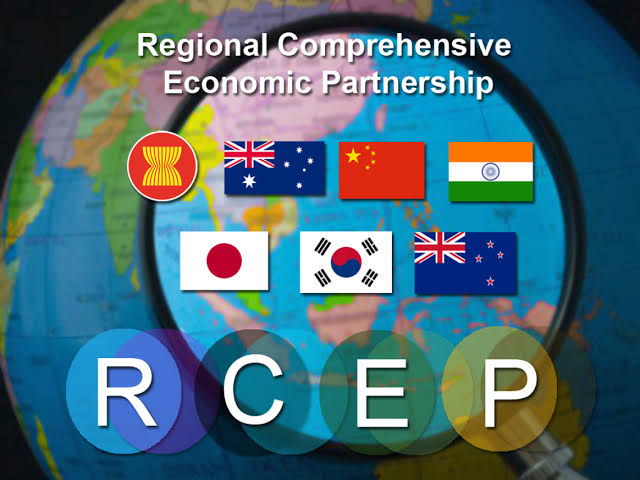
The Regional Comprehensive Economic Partnership (RCEP) is the largest free trade agreement in history by population, GDP coverage, and trade volume. Signed in 2020 and entering into force in phases from 2022, RCEP brings together the ten ASEAN member states with five key dialogue partners: China, Japan, South Korea, Australia, and New Zealand. This mega-regional agreement creates a unified economic space encompassing nearly one-third of the global economy and over 2.2 billion people.
The RCEP Agreement: The World’s Largest Trade Bloc
This comprehensive guide provides business leaders, trade compliance professionals, and strategic planners with a clear, audit-ready understanding of the RCEP Agreement. It examines the agreement’s structure, tariff liberalization schedules, rules of origin, impact on ASEAN-China and ASEAN-Australia economic relations, and practical strategies for businesses seeking to capitalize on the new opportunities while maintaining full regulatory compliance.
Strategic Insight: RCEP is more than a tariff-reduction agreement. It is a platform for deeper economic integration that reshapes supply chains, investment flows, and trade architecture across the Asia-Pacific. Companies that master its rules and leverage its preferences will gain significant advantages in one of the world’s most dynamic economic regions.
The Structure and Scope of the RCEP Agreement
RCEP is a modern, comprehensive free trade agreement covering trade in goods, services, investment, intellectual property, e-commerce, competition, and government procurement. Unlike many traditional FTAs, RCEP adopts a “living agreement” approach, allowing for future upgrades and expansions as economic conditions evolve.
The Structure and Scope of the RCEP Agreement
The agreement builds upon existing ASEAN+1 FTAs while introducing higher levels of ambition in several areas. It creates a single set of rules for the entire bloc, reducing the complexity of operating under multiple overlapping agreements. This “ASEAN centrality” principle ensures that the ten ASEAN countries remain at the core of the partnership.
For businesses, RCEP offers simplified rules, cumulative rules of origin, and improved market access. However, realizing these benefits requires careful attention to compliance requirements and origin documentation. A broader overview of ASEAN trade frameworks is available in our guide on Comprehensive Guide to Trading with ASEAN in 2026: Opportunities, Regulations, and Market Entry Strategies.
Tariff Liberalization and Market Access Under RCEP
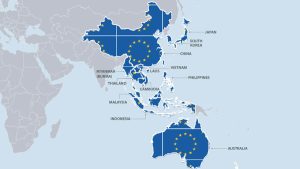
RCEP commits its members to substantial tariff reductions and eventual elimination on a high percentage of tariff lines. While the exact schedules vary by country pair, the agreement generally aims for 90%+ liberalization over time. ASEAN members offer each other and the five partner countries improved access compared to previous arrangements.
Market Access Under RCEP
China, as the largest economy in the bloc, grants significant concessions to ASEAN exporters, while ASEAN countries in turn provide enhanced access to their growing consumer and industrial markets. Australia and New Zealand benefit from streamlined access to both ASEAN and the Northeast Asian economies within the agreement.
The tariff phase-out schedules are staggered, with immediate cuts upon entry into force and gradual reductions over 10–20 years for sensitive products. This progressive approach gives industries time to adjust while providing early benefits for less sensitive goods. For companies engaged in regional manufacturing, understanding these schedules is essential for optimizing production location and sourcing decisions. Related supply chain strategies in Asia are examined in Vietnam: The New Factory of the World – Why Tech Giants Are Moving Production from China to Vietnam.
Rules of Origin: The Technical Heart of RCEP
RCEP’s rules of origin are among the most business-friendly in any major trade agreement. The agreement allows for full cumulation, meaning materials originating in any RCEP member country can be counted toward origin qualification. This flexibility is particularly valuable for complex regional supply chains.
Key features include:
- Regional Value Content (RVC) of 40% in most cases
- Change in Tariff Classification (CTC) as an alternative or complementary criterion
- Product-specific rules for sensitive sectors
- Simplified certification procedures, including self-certification by approved exporters
These liberal rules of origin make it easier for companies to qualify goods for preferential treatment compared to many older FTAs. Proper documentation and record-keeping remain essential for audit readiness and to defend against customs challenges. For practical compliance guidance on rules of origin in ASEAN, see our detailed analysis in What is the ATIGA Agreement? How Tariffs Are Being Eliminated Across ASEAN – A Complete Business and Compliance Guide.
RCEP vs ATIGA vs CPTPP – Quick Comparison (2026)
| Feature | RCEP | ATIGA | CPTPP |
|---|---|---|---|
| Number of Members | 15 (ASEAN + China, Japan, Korea, Australia, New Zealand) | 10 (ASEAN countries only) | 11 (includes Singapore, Vietnam, Australia, etc.) |
| Tariff Elimination | Over 90% over time (staggered schedule) | Nearly 99% for ASEAN-6 | Very high (close to 100%) |
| Rules of Origin | 40% RVC or CTC + Full Cumulation | 40% RVC or CTC | Often 45–55% RVC, more stringent |
| Self-Certification | Yes (for Approved Exporters) | Limited (mainly Form D) | Yes |
| Cumulation | Full Cumulation across all members | Limited cumulation | Limited |
| Best Suited For | Broad Asian supply chain integration | Pure intra-ASEAN trade | High-standard premium markets |
| Ease for Non-Member Countries (e.g. Iran/GCC) | Moderate (via ASEAN hub strategy) | Low | Moderate |
This comparison helps businesses decide which agreement best fits their regional strategy.
The Strategic Impact on ASEAN-China Economic Relations
RCEP significantly deepens economic ties between ASEAN and China. For ASEAN exporters, the agreement provides improved and more predictable access to the world’s second-largest economy. For Chinese manufacturers, RCEP facilitates access to ASEAN’s growing consumer markets and serves as a platform for regional production networks.
The agreement helps stabilize supply chains that were disrupted during recent global events and provides a framework for long-term investment cooperation. Many Chinese companies are using RCEP preferences to optimize their ASEAN footprint, particularly in Vietnam, Indonesia, Malaysia, and Thailand. This deepening integration creates both opportunities and competitive pressures for businesses across the region.
The Impact on ASEAN-Australia Trade and Investment
For Australia, RCEP represents a major upgrade in trade relations with ASEAN and Northeast Asia. The agreement improves market access for Australian agricultural products, resources, education services, and professional services while providing Australian businesses with better protection for investments in the region.
Australian exporters benefit from reduced tariffs on key commodities such as beef, dairy, wine, and energy products. At the same time, Australian companies are increasing investment in ASEAN manufacturing and services, using RCEP as a platform for regional expansion. The agreement strengthens Australia’s economic engagement with Asia while complementing existing bilateral FTAs.
Compliance and Implementation Challenges
While RCEP offers substantial benefits, realizing them requires careful compliance management. Key challenges include:
- Understanding and correctly applying the complex rules of origin
- Maintaining adequate records for origin verification
- Coordinating compliance across multiple jurisdictions with different implementation timelines
- Integrating RCEP preferences into existing ERP and trade compliance systems
Successful companies invest in origin management systems, staff training, and regular third-party audits. They also maintain close relationships with customs authorities and trade associations to stay updated on implementation developments. For broader compliance strategies in Asian trade, refer to ESG Compliance Guide for Asian Exporters: How Chinese and Indian Companies Can Meet Western Environmental Standards.
Strategic Recommendations for Businesses
Companies seeking to maximize the benefits of RCEP should consider the following actions:
- Conduct a thorough RCEP opportunity assessment for their product portfolio
- Review and optimize supply chain configurations to maximize regional value content
- Implement robust origin certification and record-keeping systems
- Engage with local chambers of commerce and industry associations for implementation support
- Monitor ongoing negotiations and potential future expansions of the agreement
Practical Playbook: 7-Step RCEP Implementation Guide
To turn RCEP opportunities into measurable advantages, companies should follow this actionable 7-step playbook:
1. Portfolio Opportunity Assessment
Map your current and planned product lines against RCEP tariff schedules and identify high-impact HS codes with significant duty savings.
2. Supply Chain Reconfiguration
Analyze and redesign sourcing and production footprints to maximize Regional Value Content (RVC) using full cumulation across all 15 RCEP members.
3. Rules of Origin Compliance System
Implement automated tools for calculating 40% RVC or Change in Tariff Classification (CTC) and integrate them with your ERP system.
4. Documentation & Record-Keeping
Establish a centralized digital repository that retains origin documentation for at least three years to ensure audit readiness.
5. Self-Certification Readiness
If eligible, apply for Approved Exporter status to benefit from self-certification and faster customs clearance.
6. Training & Internal Controls
Train trade compliance, procurement, and finance teams on RCEP specifics and set up quarterly internal audits.
7. Monitoring & Adaptation
Track future upgrades to the “living agreement” and adjust strategies as new members or sectors are added.
Companies that complete this playbook typically achieve 8–15% landed cost reduction on qualifying intra-RCEP trade within the first 12–18 months.
How Middle East & GCC Businesses Can Benefit from RCEP
Although Middle East and GCC countries are not direct RCEP members, the agreement creates indirect but powerful opportunities:
– Use ASEAN as a Strategic Hub: Route goods through Vietnam, Indonesia, or Malaysia to access RCEP preferences and reach China, Japan, and South Korea with lower effective duties.
– Friendshoring & Diversification: GCC manufacturers and Iranian exporters can establish joint production or packaging facilities in RCEP countries to qualify for preferential treatment.
– Non-Dollar Settlement Synergies: Combine RCEP trade flows with emerging local-currency mechanisms (RMB, AED, or rupee settlements) to reduce FX and sanctions-related risks.
-Compliance Advantage: Companies already experienced with single-window platforms and audit-ready documentation will find it easier to integrate RCEP origin requirements.
Businesses that treat RCEP as part of a broader “China+1 + ASEAN Hub” strategy can significantly diversify their export markets while maintaining robust compliance posture.
Conclusion: RCEP as a Foundational Platform for Asian Economic Integration
The Regional Comprehensive Economic Partnership represents a landmark achievement in Asian economic cooperation. By creating the world’s largest trade bloc, RCEP provides a stable framework for tariff reduction, investment protection, and supply chain integration across 15 diverse economies.
For businesses, RCEP is both an opportunity and a call to action. Those that master its rules, adapt their supply chains, and invest in compliance infrastructure will be best positioned to thrive in the evolving Asian economic landscape. The agreement strengthens ASEAN’s central role in regional architecture and deepens economic ties with its major partners, particularly China and Australia.
As implementation continues and the agreement evolves, companies that approach RCEP with strategic foresight and disciplined compliance will gain lasting competitive advantages in one of the most important economic regions of the 21st century.
Platforms designed for regulated regional trade provide essential tools for managing RCEP compliance efficiently while supporting scalable business growth. Organizations seeking to strengthen their RCEP engagement are encouraged to adopt integrated, audit-ready solutions that combine commercial agility with full regulatory alignment.