
Blog
Cross Stuffing: The Hidden Strategy to Navigate Trade Barriers and Lower Freight Costs
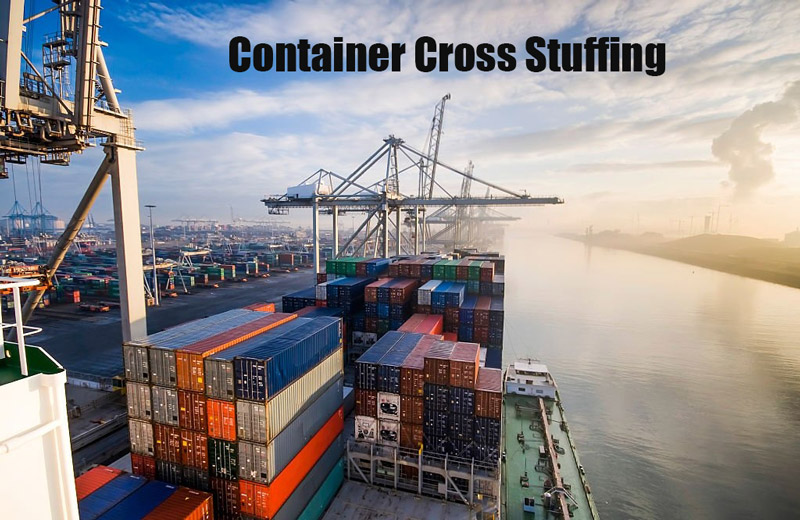
I’ve spent over two decades moving goods across volatile routes, from bulk commodities out of the Gulf to high-value machinery heading into emerging markets. One lesson that hits harder every year: the container that leaves your supplier’s yard isn’t always the one that arrives at your buyer’s door. Sometimes, it shouldn’t be.
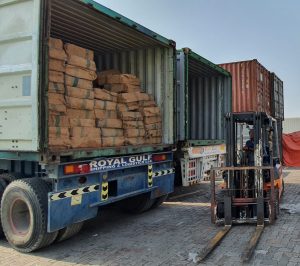
Cross Stuffing
Cross stuffing — the process of unloading cargo from one container and reloading it into another at an intermediate port or facility — has become a strategic necessity rather than an occasional workaround. In 2026, with ongoing route disruptions, carrier consolidations, and tightening compliance requirements, understanding when, why, and how to execute cross stuffing can save you thousands per shipment while protecting your margins and your relationships.
Whether you’re dealing with restricted origins, optimizing container utilization, or managing multi-carrier legs, this guide breaks down the operational reality, costs, risks, and smart execution steps. No fluff — just the actionable insights I wish I’d had earlier in my trading career.
What Is Cross Stuffing in Shipping?
Cross stuffing (also called transloading or re-stuffing) is the physical transfer of cargo from one shipping container to another during its journey. The goods are unstuffed from the original container and then stuffed into a new one, usually at a major hub port or free zone facility.
This is not the same as standard loading at origin. Here, the container is deliberately opened midway through the transit.
Common scenarios where cross stuffing makes sense:
- Switching between shipping lines or vessel services when no single carrier offers a direct or cost-effective route.
- Consolidating multiple LCL shipments into a full container load (FCL) for better rates.
- Changing container types — for example, moving from a standard dry van to a reefer, open-top, or specialized flat-rack.
- Addressing damaged containers or regulatory requirements at intermediate points.
- Hiding or changing the country of origin details for commercial or compliance reasons (often paired with a Switch Bill of Lading).
Technical Focus: Container Compatibility and Equipment Constraints Not all cross stuffing operations are equal. In my experience, the technical mismatch between “Container A” and “Container B” is where most delays happen. You must account for:
Payload Capacity: Ensure the new container can legally and physically handle the weight of the cargo, especially when moving goods from a region with higher road weight limits to one with stricter regulations.
Lashing and Securing Points: Different container brands or ages have varying internal D-ring configurations. If your cargo requires specific bracing, verify the equipment at the hub beforehand.
Flexitank and ISO Tank Transfers: For liquid bulk, cross stuffing isn’t just “moving boxes”—it requires specialized pump systems and certified cleaning certificates to avoid contamination.
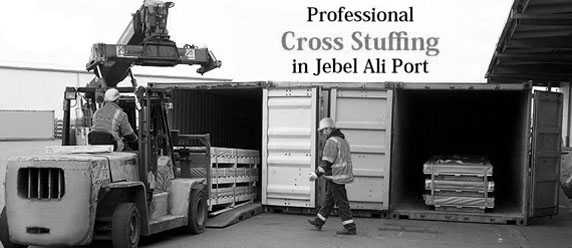
Cross Stuffing in Jebel Ali
In practice, this often happens at powerful logistics hubs like Jebel Ali (Dubai), Port of Sohar (Oman), Salalah, or Singapore. These locations have the infrastructure, bonded warehousing, and experienced labor to handle the operation efficiently.
Cross Stuffing vs. Transshipment: Clearing Up the Confusion
Traders frequently mix these two up, but the difference is operationally significant and affects your costs, risks, and documentation.
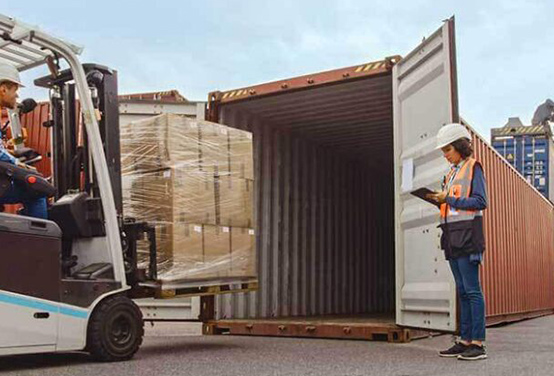
Cross Stuffing vs. Transshipment
Here’s a clear comparison:
| Aspect | Cross Stuffing | Transshipment |
|---|---|---|
| What happens to the cargo | Goods are removed from Container A and loaded into Container B | Cargo stays in the same container; the entire container is transferred between vessels |
| Container change | Yes — always involves unstuffing and re-stuffing | No — container remains sealed |
| Typical location | Container freight station, warehouse, or dedicated terminal area in a port/free zone | Vessel-to-vessel transfer at a transshipment hub |
| Documentation impact | Often requires new or switched Bill of Lading; higher documentation effort | Usually continues under the same or through B/L |
| Risk level to cargo | Higher (physical handling increases chance of damage or pilferage) | Lower (minimal handling) |
| Best for | Carrier/route changes, consolidation, container type swaps, origin concealment | Simple route optimization without opening the box |
| Cost driver | Labor, storage, documentation, potential customs intervention | Mainly terminal handling charges and extra sea days |
Why Experienced Traders Use Cross Stuffing in 2026
The shipping landscape has become more fragmented. Carrier alliances shift, direct services disappear on secondary routes, and geopolitical or sanctions-related restrictions force creative routing.
Key benefits I’ve seen in real deals:
- Access to better rates and services — A carrier might offer an excellent rate to Jebel Ali but nothing competitive onward. Cross stuffing lets you switch to a local or regional specialist for the final leg.
- Improved container utilization — Combine several supplier shipments into one efficient FCL, reducing per-unit freight costs significantly.
- Regulatory and commercial flexibility — Switch the Bill of Lading (Switch BL) to protect your supplier’s identity or adjust the declared shipper/consignee. This is common in triangular trade or when dealing with sensitive markets.
- Handling restrictions — Some ports or buyers have rules on container age, type, or cleanliness. Cross stuffing solves this without scrapping the entire shipment.
- Risk distribution — In multi-leg journeys, you can inspect and re-secure cargo midway, catching issues before they become expensive claims at destination.
One operation that stands out from my experience: A bulk chemical shipment originally booked on a liner service that suddenly blanked the sailing. By routing through a major hub for cross stuffing and switching carriers, we avoided a three-week delay and actually reduced the total freight cost by 12%.
The Step-by-Step Cross Stuffing Process at a Major Hub
Here’s what actually happens on the ground — the sequence I always verify with my freight forwarder:
- Arrival and Planning — The incoming container is discharged and moved to the designated CFS (Container Freight Station) or bonded warehouse area. You (or your agent) coordinate the exact timing with the outgoing carrier.
- Customs and Inspection Coordination — Depending on the hub and cargo type, customs may require examination. This is where you arrange for third-party inspection (SGS, Bureau Veritas, or similar) to document the condition of the goods before and after transfer.
- Unstuffing (De-stuffing) — Labor teams open the original container, remove the cargo carefully, and stage it in the warehouse. For palletized or breakbulk cargo, this is relatively straightforward. For loose or sensitive items, extra care (and cost) applies.
- Inspection and Quality Check — Critical step. Count, photograph, and inspect for damage. Any discrepancies are documented here to assign responsibility correctly.
- Stuffing into New Container — Goods are loaded into the new container according to the outbound requirements — proper weight distribution, securing, labeling, and sealing. Ventilation or temperature controls are set if needed.
- Documentation Update — New container number is recorded. If using a Switch BL, the original B/L is surrendered and a new one is issued with updated shipper, consignee, or notify party details.
- Sealing and Release — The new container is sealed, customs cleared for the next leg if required, and released to the outbound carrier.
The Step-by-Step Cross Stuffing
The Digital Handover: Maintaining Visibility During the Swap In 2026, the biggest risk isn’t just physical damage; it’s the “data blackout.” When you change containers, you change your tracking number. To maintain a professional supply chain:
IoT Device Migration: If you use GPS or humidity trackers (like Tive or Roambee), you must instruct the warehouse team to physically move the device from the old box to the new one and update the device ID in your tracking portal.
Digital Twin Integration: Ensure your platform (like Tendify) reflects the “Event: Cross Stuffing” so that the consignee doesn’t panic when the original container number shows as “Returned to Empty Depot” while the cargo is still in transit.
The entire process can take 1–3 days in an efficient hub like Jebel Ali, assuming no major customs holds. Poor planning turns it into a week-long headache with storage charges piling up.
Money Laundering via Click Fraud and Ad-Tech Platforms
Real Costs of Cross Stuffing in 2026
Be direct with yourself: this isn’t free. Budget realistically or the “savings” evaporate.
Typical cost breakdown (approximate, per 40ft container at a GCC hub):
- Labor for unstuffing & stuffing: $400 – $900
- Terminal handling and movement charges: $200 – $500
- Temporary storage/warehouse fees (per day): $50 – $150
- Documentation and Switch BL fees: $150 – $400
- Inspection and survey costs: $300 – $800 (highly recommended)
- Potential customs processing: Variable, sometimes zero in free zones
- Container cleaning or repair if needed: $100 – $600
Total added cost: Often $1,200 – $3,500 per container, depending on cargo complexity and urgency. For high-value or fragile goods, add insurance loading.
The math works when the alternative is a much higher ocean freight rate, long delays, or outright inability to move the cargo. For consolidation of multiple suppliers, the savings on freight can easily outweigh these fees.
Always get firm quotes from your forwarder that break down every line item. In my operations, I insist on a “all-in” cross stuffing package before approving the routing.
Hidden Driver: The Empty Container Repositioning (Repo) Factor
One cost many traders overlook is the “Container Drop-off Fee.” When you unstuff Cargo from Line A, you must return their empty box to their designated depot. If that depot is far from the cross stuffing facility, you will be hit with trucking surcharges. Conversely, cross stuffing is a powerful tool to avoid Demurrage and Detention (D&D). If a carrier’s free time is running out, stripping the cargo into a neutral warehouse or a different carrier’s box can stop the “penalty clock” from ticking, saving you hundreds of dollars a day.
Risks and How to Mitigate Them
Cross stuffing introduces physical handling, so risks are real:
- Cargo Damage or Shortage — Vibration, dropping, or improper re-securing can cause issues. Mitigation: Use experienced labor teams, proper dunnage, and independent surveyor attendance at both unstuffing and stuffing.
- Delays — Misalignment between incoming and outgoing vessels, or customs holds. Mitigation: Build buffer time (at least 5–7 days) and choose hubs with frequent sailings.
- Insurance Gaps — Standard marine cargo policies may not automatically cover the transfer process. Mitigation: Explicitly declare the cross stuffing operation to your insurer and ensure the policy covers “warehouse-to-warehouse” including intermediate handling. Specify the value at the hub point.
- Compliance and Sanctions Exposure — Switching B/Ls can raise red flags if not handled transparently. Mitigation: Work only with reputable forwarders who understand your trade lanes and maintain proper audit trails.
- Temperature-Sensitive or Fragile Cargo — Higher risk for reefer breakdowns or breakage. Mitigation: Limit cross stuffing for such goods or use specialized facilities with climate-controlled areas.
For sensitive commodities like foodstuffs, chemicals, or machinery, I always recommend a pre- and post-stuffing survey report. It has saved me from disputed claims more than once.
Legal and Documentation Essentials
The Bill of Lading is king here. When cross stuffing involves a carrier or route change, you will likely need:
- Surrender of the original Master B/L
- Issuance of a new B/L (Switch BL) reflecting the updated details
- Updated manifest and packing list with new container numbers
- Evidence of the transfer (survey reports, photos, tally sheets)
Ensure your sales contract and letter of credit (if any) allow for these operations. Some LCs are very restrictive on transshipment and additional handling — amend them early if needed.
In free zones like Jebel Ali, the process is smoother because goods can often move under bonded status without full customs intervention until the final destination.
When Cross Stuffing Is Not the Right Move
Be honest about when to avoid it:
- Extremely time-sensitive shipments
- High-risk fragile or perishable cargo without specialized facilities
- When the cost savings don’t justify the added handling risk
- Routes where direct or simple transshipment options exist at competitive rates
Sometimes the cheapest or fastest path is paying a premium for a direct service or a different origin port.
How Tendify Helps You Navigate Complex Logistics Like Cross Stuffing
In today’s environment, having the right partners and tools separates profitable traders from those constantly fighting delays and surprises. That’s exactly why I recommend checking the full suite of resources available at Platform.Tendify.Net.
Whether you need to model end-to-end costs, generate precise documentation, or explore optimized routing options, the platform brings together practical calculators, compliance checklists, and market intelligence in one command center. Many traders use it to simulate scenarios involving intermediate handling, compare total landed costs across different routings, and connect with reliable freight partners who understand cross stuffing operations in key GCC hubs.
It removes the guesswork from decisions that used to require multiple phone calls and spreadsheets. If you’re serious about scaling your trade operations with fewer headaches, spend a few minutes exploring what’s there — it’s built for exactly these kinds of real-world challenges.
FAQ: Cross Stuffing Questions Traders Ask Most
Is cross stuffing legal? Yes, when executed properly through licensed facilities and with correct documentation. It is a standard logistics practice, though transparency with all parties (including insurers and banks) is essential.
How much extra time does it add? Typically 2–5 days at the hub, plus any vessel connection waiting time. Good planning keeps it predictable.
Can I do cross stuffing for sanctioned or restricted origin goods? This is highly sensitive. Consult legal and compliance experts. Improper use of Switch BL in such cases can create serious issues.
Does cross stuffing affect the country of origin for customs duties? Generally no — substantial transformation rules still apply. Simple repacking or container change does not alter origin. Always verify with destination customs authorities.
Is it better to use a 3PL or handle it myself? For most traders, a competent freight forwarder or 3PL with established hub operations is far safer and more cost-effective.
How to Completely Avoid Demurrage in UAE & Iraq Ports (2026 Guide)
Final Thoughts: Make Cross Stuffing a Strategic Tool, Not a Last Resort
After years of moving containers across challenging routes, I’ve learned that the best traders don’t fight the system — they design their supply chain to use its flexibility. Cross stuffing, when planned thoughtfully, gives you that flexibility.
It’s not about cutting every possible corner. It’s about understanding the full picture: costs, risks, timing, and documentation. Do it right, and you protect your margins while delivering reliability to your buyers. Do it poorly, and you turn a manageable shipment into an expensive lesson.
Start by reviewing your current routes with your forwarder. Ask specifically about cross stuffing options at major hubs and request all-in cost comparisons. Build the buffer time and inspection steps into your standard operating procedures.
The shipping world in 2026 rewards those who combine deep route knowledge with practical tools and strong partners. Master operations like cross stuffing, and you’ll move goods more confidently — and profitably — no matter how the lanes shift.
If you’re ready to strengthen your logistics playbook and access a full set of trade optimization tools designed for operators like us, head over to Platform.Tendify.Net and explore the command center. Many of the calculators and document builders there directly support complex multi-leg shipments and help you model these exact scenarios before committing.
The difference between good and great in global trade often comes down to mastering the details others overlook. Cross stuffing is one of those powerful details.
What’s one routing challenge you’re facing right now where this might apply? The right preparation turns complexity into competitive advantage.
Ready to take control of your next shipment? Join Tendify and start building more resilient, profitable trade operations today.

