Blog
Money Laundering via Click Fraud and Ad-Tech Platforms

Understanding the Technique and Implementing Audit-Ready Detection Strategies for AML/CFT Compliance
In the digital advertising ecosystem, the intersection of high-volume programmatic advertising, sophisticated artificial intelligence, and global payment rails has created new challenges for anti-money laundering and countering the financing of terrorism (AML/CFT) professionals. One reported technique that has drawn regulatory attention involves the exploitation of advertising technology (Ad-Tech) infrastructure to disguise the movement of funds. This method leverages the legitimate infrastructure of online advertising platforms to create the appearance of genuine commercial activity while potentially facilitating the layering or integration of illicit proceeds.

Money Laundering via Click Fraud
This comprehensive operational guide examines the mechanics of ad-tech click fraud as a reported money laundering typology. It focuses exclusively on compliance-oriented detection, risk assessment, and mitigation strategies that allow financial institutions, payment processors, virtual asset service providers, and trade finance platforms to identify suspicious patterns while maintaining full adherence to FATF standards, Travel Rule obligations, OFAC and EU sanctions guidance, and applicable local AML regulations. Every recommendation prioritizes regulatory soundness, explainable decision-making, and the protection of legitimate advertising commerce.
Programmatic advertising represents a multi-hundred-billion-dollar industry characterized by automated buying and selling of ad impressions and clicks across millions of websites and apps. The speed, scale, and algorithmic nature of these transactions make manual oversight impractical, placing heavy reliance on AI-driven fraud detection systems. However, the same automation that powers efficient ad delivery can, in certain reported scenarios, be leveraged to generate artificial revenue streams that obscure the true source of funds.
Compliance-First Principle: Effective risk management of ad-tech related activity requires programmable monitoring that distinguishes legitimate high-volume advertising from patterns indicative of layering. Audit-ready frameworks embed sanctions screening, source-of-funds verification, and false-positive reduction directly into payment and transaction workflows.
Mechanics of Ad-Tech Click Fraud as a Reported Layering Technique
The technique typically involves the establishment of multiple entities that interact within the Ad-Tech ecosystem. In reported cases, actors create shell advertising companies or agencies that appear to purchase large volumes of clicks or impressions. These purchases are directed toward websites or apps controlled by affiliated entities that generate artificial (bot-driven) traffic.

Mechanics of Ad-Tech Click Fraud
The operational sequence generally follows these steps:
- Creation of one or more shell companies registered as digital advertising agencies or media buyers.
- Establishment of publisher websites or mobile applications that appear to host content but primarily serve to receive artificial traffic.
- Routing substantial funds through advertising platforms as “campaign budgets” for clicks, impressions, or conversions.
- Generation of bot-simulated user interactions that trigger payments from the buyer entity to the publisher entity.
- Recording of the received funds in the publisher entity’s accounts as legitimate advertising revenue.
- Subsequent movement or integration of the now “cleaned” funds through further financial channels.
From an accounting perspective, the buyer entity records the expenditure as a legitimate business expense (advertising costs), while the publisher entity records the receipt as operational revenue. The net effect is the appearance of genuine commercial activity supported by high click-through rates and engagement metrics. Because the traffic is algorithmically generated to mimic human behavior, many platform-level fraud detection systems initially classify the activity as valid.
Modern Ad-Tech platforms rely on sophisticated machine learning models to evaluate click quality, user engagement signals, and behavioral patterns. However, advanced bot networks can replicate device fingerprints, mouse movements, and session durations with sufficient fidelity to bypass basic detection thresholds. This creates a documented challenge for both platform operators and downstream financial institutions processing the associated payments.
Why Detection Remains Challenging for Compliance Teams
Several structural features of the Ad-Tech ecosystem complicate detection:
- High transaction velocity: Millions of micro-payments occur daily across fragmented supply and demand-side platforms.
- Layered intermediaries: Demand-side platforms, supply-side platforms, ad exchanges, and data management platforms create multiple hops in the payment flow.
- Algorithmic opacity: Platform AI models continuously evolve, making static rule-based monitoring insufficient.
- Global jurisdictional fragmentation: Entities may be registered in multiple countries, complicating unified source-of-funds verification.
- Legitimate high-volume use cases: Many genuine advertisers and publishers operate at scale, generating similar volume patterns.
The result is elevated false-positive rates when compliance teams apply traditional monitoring rules. Legitimate performance marketing campaigns can appear superficially similar to reported laundering patterns, while sophisticated schemes can blend into normal advertising noise. This dynamic places significant pressure on AML/CFT teams to develop contextual, multi-dimensional risk scoring capabilities.
Regulatory Expectations and Red-Flag Indicators
Regulators expect financial institutions and payment processors to apply a risk-based approach to advertising-related payment flows. Key obligations include enhanced due diligence on entities engaged in high-volume digital advertising, verification of source of funds for large campaign budgets, and ongoing monitoring for patterns inconsistent with declared business activity.
Common red-flag indicators that may warrant additional scrutiny include:
- Shell or recently established entities with minimal operational history suddenly processing large advertising budgets.
- Disproportionate click volumes relative to the apparent size or sector of the publisher website.
- Rapid cycling of funds between buyer and publisher entities under common beneficial ownership or control.
- Campaigns showing unusually high click-through rates or engagement metrics inconsistent with industry benchmarks.
- Payments routed through multiple jurisdictions with limited transparency regarding ultimate beneficiaries.
- Addresses or accounts that interact exclusively with Ad-Tech platforms rather than diversified commercial counterparties.
When these indicators are present, institutions must implement layered controls while preserving the ability to support legitimate digital commerce.
Comparative Risk Matrix: Legitimate Advertising vs. Reported Laundering Patterns
| Aspect | Legitimate High-Volume Advertising | Reported Click-Fraud Patterns | Compliance Implication |
|---|---|---|---|
| Entity Longevity | Established businesses with verifiable history | Recently incorporated shell entities | Requires enhanced onboarding due diligence |
| Traffic Source Diversity | Multiple organic and paid channels | Concentrated synthetic traffic | AI behavioral analysis required |
| Payment Flow Pattern | Diversified counterparties | Circular flows between related entities | Graph-based relationship monitoring |
| Engagement Metrics | Aligned with industry benchmarks | Statistically anomalous CTR or session depth | Contextual anomaly detection |
| Source-of-Funds Documentation | Clear commercial justification | Limited or inconsistent documentation | Mandatory verification triggers |
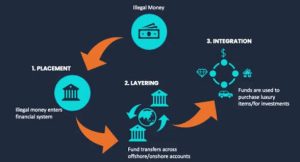
Legitimate Advertising vs. Reported Laundering Patterns
Step-by-Step Playbook: Implementing Audit-Ready Ad-Tech Monitoring
Phase 1: Risk Assessment and Entity Mapping
Conduct a comprehensive inventory of all customers and counterparties engaged in digital advertising payments. Map beneficial ownership relationships across buyer and publisher entities.
Phase 2: Unified Transaction Data Ingestion
Integrate payment rails with Ad-Tech metadata feeds to create a single view of campaign budgets, click volumes, and settlement flows.
Phase 3: Behavioral and Graph Analytics
Deploy graph neural networks to identify circular payment patterns and entity clusters indicative of self-dealing.
Phase 4: AI-Driven Anomaly Detection
Utilize machine learning models trained on industry benchmarks to flag statistically anomalous click metrics and engagement patterns.
Phase 5: Source-of-Funds and Sanctions Screening
Embed continuous screening at the point of large campaign funding or settlement, with enhanced due diligence triggers for high-risk patterns.
Phase 6: False-Positive Reduction Layer
Apply contextual scoring that incorporates declared business purpose, historical performance, and third-party verification data to clear legitimate activity automatically.
Phase 7: Audit-Ready Logging and Reporting
Generate immutable records with full reasoning chains for every escalated or cleared transaction.
Phase 8: Continuous Model Training and Third-Party Validation
Incorporate analyst feedback loops and schedule regular independent audits of monitoring effectiveness.
AI-Powered Strategies for False-Positive Avoidance in Ad-Tech Flows
Advanced compliance platforms reduce manual review burdens by combining multi-dimensional analytics with explainable AI. When a potential anomaly is detected, the system evaluates:
- Historical campaign performance relative to industry peers.
- Entity relationship graphs for signs of circular flows.
- Behavioral signals across devices and sessions.
- Alignment with declared business models and source-of-funds documentation.
This contextual approach allows institutions to maintain high detection rates while clearing the vast majority of legitimate programmatic advertising automatically, thereby preserving operational efficiency and customer experience.
Realistic Compliance Scenarios and Outcomes
Financial institutions and payment processors that have implemented integrated Ad-Tech monitoring report measurable improvements. One large payment gateway reduced manual reviews of advertising-related transactions by 74% while identifying previously undetected circular flow patterns. Another trade finance platform integrated behavioral analytics into its onboarding workflow and successfully satisfied regulator inquiries with complete, explainable audit trails for high-volume digital advertising clients.
These outcomes demonstrate that reported ad-tech laundering risks can be managed effectively when compliance infrastructure incorporates unified data views, AI-driven anomaly detection, and audit-ready documentation processes.
Why a Purpose-Built Compliance Platform Is Essential
Platforms designed for high-volume trade and regulated finance environments provide native capabilities for Ad-Tech risk monitoring, including real-time graph analytics, smart escrow for campaign settlements, and explainable AI decision engines. Such systems embed compliance logic directly into payment flows, ensuring that advertising-related transactions are screened, documented, and reported in a manner that satisfies the most stringent regulatory expectations while supporting legitimate digital commerce.
Key capabilities include automated Travel Rule data handling for cross-border ad payments, privacy-preserving techniques for sharing minimum required information, and seamless integration with existing AML/CFT workflows. These tools transform ad-tech complexity from a compliance vulnerability into a monitorable, manageable component of the overall risk program.
90-Day Implementation Checklist for Audit-Ready Ad-Tech Monitoring
Days 1–15: Foundation
- Conduct comprehensive inventory of Ad-Tech engaged customers and counterparties
- Map current monitoring capabilities and identify coverage gaps
- Assemble cross-functional team including compliance, technology, and legal specialists
Days 16–45: Technology Integration
- Deploy unified transaction ingestion and graph analytics engine
- Configure AI behavioral models for click-fraud pattern detection
- Integrate sanctions screening and source-of-funds verification at campaign funding points
Days 46–75: Testing and Tuning
- Run parallel monitoring on live traffic in shadow mode
- Refine false-positive thresholds using historical data and industry benchmarks
- Validate audit log completeness with sample regulator scenarios
Days 76–90: Full Deployment and Governance
- Transition to production monitoring with automated alerts and escalation protocols
- Establish weekly compliance review cadence for high-volume Ad-Tech flows
- Schedule first independent audit of monitoring controls
A downloadable PDF version of this checklist, together with template policies and integration guides, is available through the secure platform portal.
Conclusion: Transforming Ad-Tech Risk into Compliance Resilience
Ad-tech click fraud represents a sophisticated reported layering technique that exploits the scale and automation of digital advertising. Institutions that treat these flows as a core risk vector — and invest in unified, AI-enhanced monitoring — position themselves to meet regulatory expectations while continuing to support legitimate programmatic commerce.
The most effective programs combine technical visibility, contextual analytics, and continuous human oversight. They reduce false-positive burdens, accelerate legitimate transactions, and generate the clear, explainable records that regulators require.
For organizations processing high-volume payments or trade finance, a dedicated compliance platform that natively supports Ad-Tech monitoring provides the operational backbone needed to manage these risks confidently. Such systems enable teams to focus resources on genuine threats rather than overwhelming alert volumes.
Entities seeking to strengthen their Ad-Tech compliance capabilities are encouraged to evaluate integrated solutions that align with the frameworks outlined in this guide. Proactive implementation ensures regulatory resilience and sustained operational efficiency in an increasingly digital advertising landscape.