


Blog
ECO Market 2026: Your Gateway to Central Asia Trade
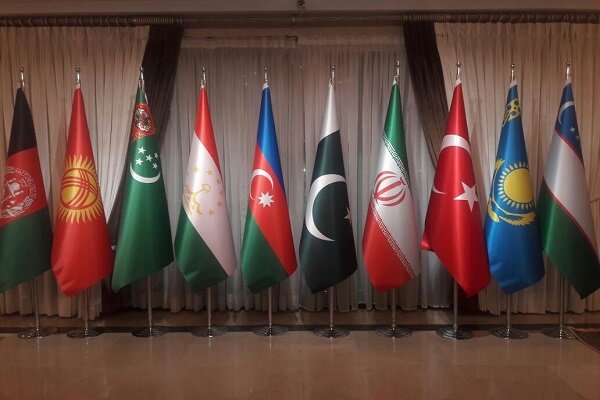
I’ve spent the last two decades building export businesses across some of the world’s most challenging corridors. From shipping bitumen out of the Gulf to navigating complex compliance in emerging markets, one truth has become crystal clear: the biggest untapped opportunities often sit in regions that most traders overlook. The Economic Cooperation Organization (ECO) is one of those hidden gems—a market of over 500 million people spanning strategic geography from Europe’s doorstep to Central Asia’s resource riches.
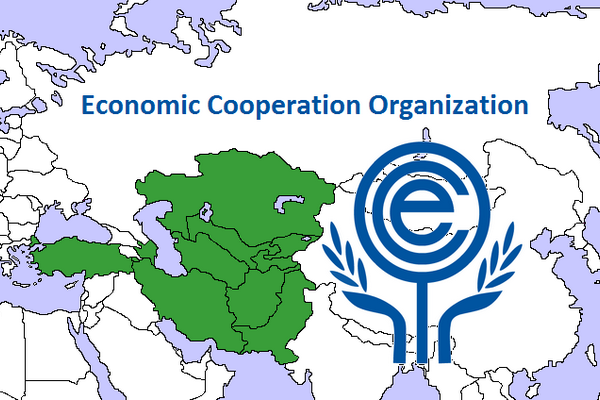
Economic Cooperation Organization
If you’re an exporter, importer, or trader looking for diversification beyond the usual GCC-China routes, ECO deserves your serious attention right now. In this in-depth guide, I’ll walk you through exactly why and how to enter these markets profitably in 2026, drawing from real-world lessons I’ve learned the hard way.
What Is the ECO and Why It Matters for Global Traders Today
The ECO isn’t just another regional talking shop. It’s a practical platform connecting Iran, Turkey, Pakistan, Afghanistan, Azerbaijan, Kazakhstan, Kyrgyzstan, Tajikistan, Turkmenistan, and Uzbekistan. With a combined population exceeding 500 million and vast natural resources, it functions as an extended home market for smart traders.
Its roots trace back to the Regional Cooperation for Development (RCD) in 1964 between Iran, Pakistan, and Turkey. Revived in 1985 as ECO, it expanded dramatically in 1992 with the addition of Central Asian republics after the Soviet Union’s dissolution. Today, its secretariat sits in Tehran, positioning Iran as a natural bridge.
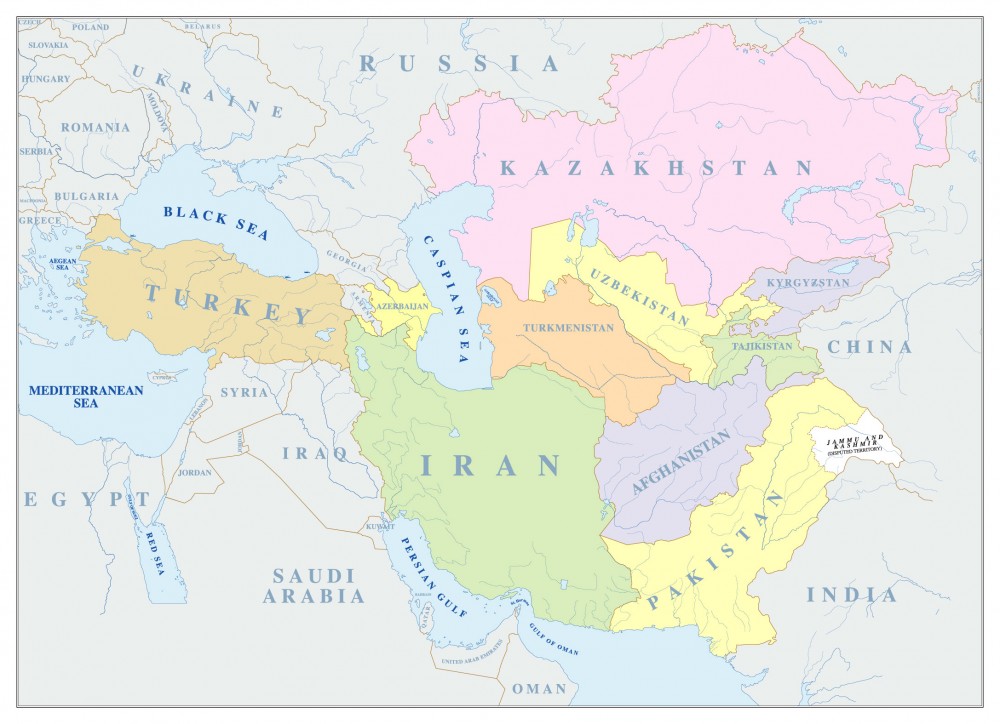
ECO Countries
The geopolitical edge: ECO links South Asia, Central Asia, and Europe. It offers landlocked Central Asian countries access to warm-water ports via Iran and Pakistan while giving Turkish and Pakistani manufacturers massive consumer bases hungry for quality goods. In an era of supply chain diversification, this connectivity is pure gold.
From my experience, traders who treat ECO as a single integrated market rather than 10 separate countries consistently outperform those who dip in sporadically.
Anatomy of ECO Members: Complementary Strengths You Can Exploit
Each member brings unique advantages that create natural trade flows:
- Founding Core (Iran, Turkey, Pakistan): Turkey provides manufacturing muscle and European market access. Iran offers strategic location and resource depth. Pakistan serves as a gateway to South Asia with growing industrial capacity.
- Central Asian Powerhouses (Kazakhstan, Uzbekistan): Rich in minerals, energy, and agricultural potential. Kazakhstan stands out for oil, uranium, and metals; Uzbekistan for gold, cotton, and growing manufacturing.
- Emerging Connectors (Azerbaijan, Turkmenistan, etc.): Energy exporters with improving infrastructure and demand for industrial equipment and consumer goods.
Anatomy of ECO Members
These economies are highly complementary. Central Asia needs machinery, construction materials, and consumer products. Turkey and Iran can supply them while importing raw materials and energy. Pakistan bridges agricultural and textile opportunities.
Real insight: After years of trading, I’ve seen how pairing Iranian or Turkish expertise with Kazakh resources creates margins that traditional East-West routes can’t match—especially when you optimize logistics through shared corridors.
Spotlight on Central Asian Resources:
Specifically, the Uzbekistan-Kazakhstan axis is transforming from a raw material hub into a strategic partner for high-tech industries. We are seeing a surge in demand for specialized extraction and laboratory equipment. For instance, Uzbekistan’s Rhenium and Gold sectors, and Kazakhstan’s Uranium and Copper mines, require precision measurement tools—pH/conductivity meters, high-purity electrodes, and multi-parameter sensors—that Turkish and Iranian suppliers are uniquely positioned to provide. If you are in the industrial hardware niche, these two markets are your 2026 priority.
Deep Dive into ECOTA: The Trade Agreement That Actually Delivers Value
The Economic Cooperation Organization Trade Agreement (ECOTA), signed in 2003 in Islamabad, is your key to preferential access. It aims to reduce tariffs progressively and eliminate non-tariff barriers among members.
The Economic Cooperation Organization Trade Agreement (ECOTA)
How preferential tariffs work in practice:
- Eligible goods from member countries enjoy reduced or zero duties.
- Implementation varies by country, but momentum is building toward broader free trade elements, especially among core members.
- Sensitive lists exist, but many industrial goods, minerals, and agricultural products qualify for concessions.
Rules of Origin (ROO): This is where many traders stumble. Goods must meet specific criteria—wholly obtained or substantially transformed within ECO countries—to claim preferences. Proper documentation and understanding local value-added requirements are non-negotiable. Tools like Tendify’s HS Code Finder become invaluable here for accurate classification.
The Technical Edge:
Don’t let the paperwork intimidate you. The “Substantial Transformation” rule usually requires a change in Tariff Heading (CTH) or a specific value-added percentage (often 40%). To simplify this, we’ve integrated an ECOTA Tariff Predictor into Tendify. By inputting your HS Code, you can instantly see the delta between the Standard MFN rate and the ECOTA preferential rate, allowing you to price your quotes more competitively than non-regional traders.
Non-tariff barriers: These remain the bigger challenge—customs procedures, standards harmonization, and logistics. Successful traders invest in compliance systems and local partners who know the nuances.
From experience, getting ECOTA certification right can slash your landed costs by 10-30% on qualifying shipments. It’s not automatic, but the ROI on proper setup is massive.
Vital Transit Corridors: The Lifelines for Efficient ECO Trade
Infrastructure is the game-changer. Several corridors are maturing in 2026, slashing times and costs:
- ITI Corridor (Islamabad-Tehran-Istanbul): Rail and road links that dramatically cut transit between South Asia and Europe.
- INSTC (International North-South Transport Corridor): Connects India and Central Asia via Iranian ports like Chabahar and Bandar Abbas. It can reduce delivery times by up to 40% and costs significantly compared to Suez routes.
- KTI (Kazakhstan-Turkmenistan-Iran): Key rail link for Central Asian exports heading south.
Practical comparison table (based on typical bulk/container shipments):
| Corridor | Typical Time Saving | Cost Advantage | Best For |
|---|---|---|---|
| ITI | 10-15 days vs sea | 20-30% | Pakistan-Turkey-Iran flows |
| INSTC | Up to 40% faster | 30-40% | India/Central Asia-Iran |
| Traditional Sea | Baseline | Higher | High-volume non-urgent |
Pro tip: Always cross-check current tariffs and procedures using tools on Platform.Tendify.Net. Our duty calculators and compliance checkers help you model exact landed costs before committing cargo.
Overcoming the “Border Bottleneck:
While the corridors offer speed, “soft infrastructure” (customs delays) remains a reality. Successful ECO trading in 2026 relies on real-time visibility. Using IoT-enabled Cargo Tracking and digital pre-declaration tools can reduce your dwell time at borders like Dogubayazit (Turkey-Iran) or Taftan (Pakistan-Iran) by up to 30%. On the Tendify platform, our logistics module now provides predictive delay alerts for these specific ECO checkpoints.
High-Potential Product Categories for ECO Markets in 2026
Focus here for quickest wins:
Minerals and Resources: Central Asian countries are rich in copper, gold, uranium, and rare elements. Demand for processing equipment and technology from Turkey/Iran is strong. Graphite and strategic materials offer growing plays.
Agricultural and Food Products: Dried fruits, nuts, cotton, and processed foods flow well. Quality standards are rising, creating space for premium exporters.
Industrial Goods and Machinery: Construction equipment, tools, and intermediate goods find ready buyers in developing members. Turkish and Iranian manufacturers dominate here.
Consumer and FMCG: Growing middle classes in Uzbekistan, Kazakhstan, and others seek quality imports.
Construction Materials: With infrastructure booms, cement, steel, and related products (familiar from many GCC projects) translate well.
Actionable strategy: Start with products where you already have expertise or suppliers. Use Tendify’s trade explorer tools to validate demand and pricing.
Digital Transformation and B2B Platforms in ECO Trade
Traditional barriers like information asymmetry and payment risks are crumbling thanks to digital tools. B2B marketplaces bridge gaps, offer transparent tender access, and facilitate safer transactions.
Platforms that integrate HS classification, document builders, and logistics optimization give you an edge. At Tendify, we’ve built exactly these capabilities because I’ve lived the pain of manual processes for years.
Payment and finance innovations: Local currency settlements, escrow options, and digital instruments reduce dollar dependency and sanction-related friction.
Real Challenges and How to Overcome Them
No market is perfect. Expect:
- Political and security variables in certain routes.
- Infrastructure gaps in remote areas.
- Regulatory differences and bureaucracy.
Solutions that work:
- Build local partnerships—reliable agents are worth their weight in gold.
- Document everything meticulously (our ProTrade Contract and checklist tools help).
- Use technology for visibility—cargo tracking and predictive analytics.
- Start small, scale with data.
Diversification across multiple ECO corridors mitigates single-point risks.
Why 2026 Is Your Moment to Enter ECO Markets
Intra-ECO trade is growing, infrastructure is advancing, and global shifts favor regional blocs. Traders who act now position themselves ahead of the curve as corridors mature and preferences deepen.
The “why” is simple: complementary markets, preferential access, shorter routes, and massive combined demand. The “how” comes down to preparation, tools, and execution.
Ready to Capture Your Share of ECO Trade?
Don’t leave millions on the table by treating these markets as afterthoughts. Head over to Platform.Tendify.Net right now. Explore our full suite of trade engines—from AI Market Pulse and Sanctions Pro to duty calculators, HS Code tools, contract builders, and logistics optimizers. Many core tools are completely free to start.
Sign up today, run your first opportunity analysis, and see exactly where your next profitable shipment fits. The platform was built by traders for traders—people like you who understand that in global trade, knowledge and speed win.
The window for early movers in ECO is open. Will you walk through it?

