Blog
Singapore: The Global Financial Hub

How to Use Singapore as an International Contract Management and Treasury Center
Singapore has established itself as one of the world’s premier international financial and business hubs. Its combination of political stability, world-class infrastructure, transparent legal system, efficient regulatory environment, and strategic geographic location makes it an ideal base for multinational corporations to manage international contracts, treasury operations, regional headquarters functions, and high-value trade activities. This comprehensive guide provides executives, legal counsel, compliance officers, and treasury professionals with a clear, audit-ready framework for leveraging Singapore as a central node in global operations while maintaining full regulatory compliance.
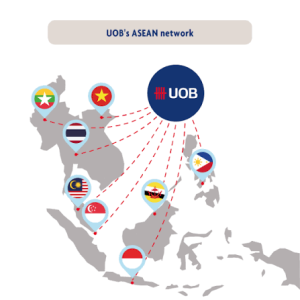
Singapore as an International Contract Management and Treasury Center
This strategic analysis examines Singapore’s unique advantages, the legal and regulatory infrastructure that supports its role as a contract management and treasury center, practical structuring options, compliance considerations, and step-by-step implementation guidance. All recommendations are designed to be fully consistent with international standards, including FATF recommendations, Travel Rule obligations, sanctions compliance programs, and best practices in corporate governance and risk management.

Singapore’s unique advantages
Strategic Insight: Singapore is not merely a tax-efficient jurisdiction — it is a sophisticated ecosystem that combines legal certainty, financial depth, talent availability, and digital infrastructure. Companies that structure their international operations with Singapore at the center gain significant advantages in risk management, operational efficiency, and regulatory credibility.
Why Singapore Has Become the Preferred International Contract and Treasury Hub
Singapore’s rise as a global financial and business hub is the result of deliberate long-term policy, consistent rule of law, and continuous investment in infrastructure and human capital.

Singapore Has Become the Preferred International Contract
Several structural advantages make it particularly attractive for international contract management and treasury functions:
- Political and Economic Stability: Singapore consistently ranks among the most stable and least corrupt countries in the world, providing a predictable environment for long-term planning and high-value transactions.
- Strong Legal System: Based on English common law, Singapore offers clear, enforceable contract law, efficient dispute resolution mechanisms (including the Singapore International Arbitration Centre), and high judicial independence.
- World-Class Financial Infrastructure: Deep capital markets, sophisticated banking sector, robust payment systems, and extensive network of double taxation agreements.
- Strategic Location: Excellent connectivity to major Asian markets, Europe, and the Middle East through one of the world’s busiest ports and Changi Airport.
- Talent Pool: Highly educated, multilingual workforce with deep expertise in finance, law, compliance, and technology.
These factors have led many multinational corporations to establish Singapore entities as holding companies, regional headquarters, treasury centers, and contract management vehicles for Asia-Pacific and global operations. For businesses navigating complex geopolitical risks, Singapore offers a neutral, highly credible jurisdiction for structuring international agreements. Related strategies for managing geopolitical uncertainty in contracts are explored in Snapback Risk in the Iran-US-Israel Ceasefire: A Strategic Contract Management Guide for CEOs and Investors.
Legal and Regulatory Framework Supporting Singapore as a Contract Hub
Singapore’s legal system is widely regarded as one of the most business-friendly in Asia. Key features that support its role as an international contract management center include:
- Strong protection of contractual rights and enforcement of foreign judgments under reciprocal arrangements.
- Clear rules governing choice of law and jurisdiction clauses.
- Efficient court system with specialized commercial courts (Singapore International Commercial Court).
- Robust anti-money laundering and counter-terrorism financing regime aligned with FATF standards.
- Comprehensive data protection framework (PDPA) that balances privacy with legitimate business needs.
The Monetary Authority of Singapore (MAS) maintains a sophisticated yet pragmatic regulatory approach to financial activities, including treasury operations, trade finance, and digital asset services. Companies establishing treasury centers in Singapore benefit from clear licensing pathways and access to a wide range of financial instruments while operating within a transparent supervisory environment.
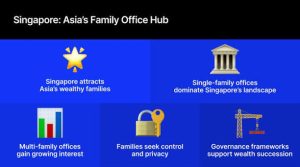
Legal and Regulatory Framework Supporting Singapore as a Contract Hub
For international traders and manufacturers using Singapore as a coordination hub, integration with digital trade platforms and Single-Window systems enhances efficiency. Further detail on digital trade mechanisms is available in Post-Traditional Sanctions Financial Mechanisms: Strategic Integration with CBDCs and Single-Window Platforms for Compliant Regional Settlements.
Structuring Options: Singapore as a Contract Management and Treasury Center
Multinational corporations typically use Singapore through several common structures:
1. Singapore Holding Company
A Singapore-incorporated holding company can serve as the central vehicle for owning regional subsidiaries, managing intellectual property, and coordinating international contracts. Benefits include access to Singapore’s extensive network of double taxation agreements and participation exemption regime for qualifying dividends.
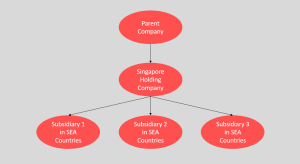
Singapore Holding Company
2. Regional Treasury Center
Many corporations establish a Singapore treasury center to centralize cash management, foreign exchange risk hedging, and inter-company financing. MAS offers attractive regulatory treatment for approved treasury activities, including concessional tax rates on qualifying income.
3. Contract Management Vehicle
Singapore entities are frequently used to centralize the negotiation, execution, and administration of international commercial contracts. This structure provides legal certainty, standardized documentation, and centralized compliance oversight.
4. Asia-Pacific Headquarters
Many companies designate their Singapore entity as the regional headquarters for operational coordination, talent management, and strategic decision-making across Southeast Asia and beyond.
When structuring these entities, companies should ensure full compliance with economic substance requirements, transfer pricing rules, and beneficial ownership disclosure obligations. For guidance on compliant nearshoring and friendshoring strategies that complement Singapore-based structures, see Friendshoring 2.0: Compliant Nearshoring Strategies for Manufacturers Targeting GCC and Emerging Markets.
Practical Benefits of Using Singapore for International Contract Management
Using Singapore as a central contract management hub delivers multiple operational and risk-management advantages:
- Legal Certainty: English common law provides predictable interpretation and enforcement of contracts.
- Neutrality: Singapore is widely perceived as a neutral jurisdiction, facilitating smoother negotiations with counterparties from different legal traditions.
- Tax Efficiency: Participation exemption, withholding tax concessions, and extensive treaty network reduce overall tax leakage.
- Banking and Financial Access: Deep relationships with global banks and sophisticated trade finance products.
- Talent and Expertise: Access to highly qualified legal, compliance, and treasury professionals.
These benefits are particularly valuable for companies engaged in high-value, long-term international projects or those operating across multiple jurisdictions with varying regulatory requirements. For additional perspectives on managing geopolitical risk in contract drafting, refer to Snapback Risk in the Iran-US-Israel Ceasefire: A Strategic Contract Management Guide for CEOs and Investors.
Compliance and Risk Management Best Practices
Establishing and operating a Singapore-based contract management or treasury center requires disciplined compliance practices, including:
- Robust economic substance documentation to satisfy international standards.
- Transfer pricing policies aligned with OECD guidelines.
- Continuous sanctions screening and beneficial ownership transparency.
- Implementation of group-wide anti-bribery and corruption controls.
- Regular independent audits of treasury and contract management activities.
Companies should also maintain clear segregation of functions between the Singapore entity and operating subsidiaries to avoid unintended tax or regulatory consequences. For insight into green logistics and sustainable supply-chain practices that can be coordinated from Singapore, see The Green Logistics Revolution on the New Silk Road: China’s Strategies for Decarbonizing Trade Routes and Smart Ports.
Step-by-Step Implementation Guide for Establishing a Singapore Contract & Treasury Hub
Phase 1: Strategic Planning (Weeks 1–4)
Define objectives, map existing group structures, conduct feasibility study, and engage specialist legal and tax advisors.
Phase 2: Entity Formation and Licensing (Weeks 5–12)
Incorporate the Singapore company, apply for necessary licenses (if treasury activities are involved), and establish banking relationships.
Phase 3: Operational Setup and Integration (Weeks 13–20)
Develop internal policies, implement treasury management systems, integrate with group ERP, and establish compliance monitoring frameworks.
Phase 4: Contract Migration and Testing (Weeks 21–26)
Migrate existing contracts where appropriate, test new processes, and conduct internal training.
Phase 5: Full Operation and Continuous Improvement (Week 27 onward)
Commence full operations, schedule regular audits, and continuously optimize processes based on performance data and regulatory developments.
90-Day Singapore Hub Setup Checklist
Days 1–15: Planning
- Define strategic objectives and scope of Singapore entity
- Assemble cross-functional project team
- Engage external legal, tax, and compliance advisors
Days 16–45: Formation
- Incorporate Singapore company and open corporate bank accounts
- Apply for relevant licenses and approvals
- Develop group-wide policies and procedures
Days 46–75: Integration
- Implement treasury and contract management systems
- Integrate with group compliance and reporting platforms
- Train relevant teams on new processes
Days 76–90: Go-Live and Review
- Migrate initial contracts and treasury functions
- Conduct first internal compliance review
- Prepare documentation for future audits
Conclusion: Singapore as a Strategic Enabler for Global Operations
Singapore has earned its position as one of the world’s leading international financial and business hubs through consistent policy excellence, legal certainty, and openness to global commerce. For multinational corporations seeking a reliable base for international contract management, treasury operations, and regional coordination, Singapore offers an unmatched combination of stability, sophistication, and connectivity.
Companies that establish well-structured, fully compliant Singapore entities gain significant advantages in risk management, operational efficiency, talent access, and regulatory credibility. By approaching Singapore with disciplined governance, transparent documentation, and long-term commitment, organizations can transform the city-state from a simple administrative base into a genuine strategic enabler for global growth.
The continued development of Singapore’s financial and legal ecosystem will create even greater opportunities for businesses prepared to engage responsibly and strategically. Platforms purpose-built for regulated international trade and treasury management provide the operational infrastructure necessary to maximize these advantages while maintaining the highest standards of compliance and governance.
Entities seeking to strengthen their Singapore-based operations are encouraged to evaluate integrated solutions that combine commercial agility with full regulatory alignment and audit readiness.