


المدونة
BRICS+ Local Currency Trade: Save 3–5% on Every Deal in 2026
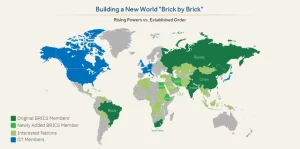
Middle East exporters—from the UAE, Saudi Arabia, Iran, Qatar, Oman, and beyond—face a pivotal opportunity in 2026. BRICS+ (now including Brazil, Russia, India, China, South Africa, Egypt, Ethiopia, Iran, UAE, and Saudi Arabia) is accelerating the shift away from USD-dominated trade toward local currency settlements. This reduces costs, speeds up payments, lowers FX risks, and builds resilience against sanctions or dollar volatility.
For Gulf and Iranian exporters of petrochemicals, bitumen, construction materials, FMCG, machinery, and re-exports, trading in INR, CNY (RMB), RUB, BRL, or ZAR (with AED/SAR as bridges) is no longer experimental—it is a competitive edge.
BRICS Local Currency Trade
Why Local Currencies Matter Now for ME Exporters
- Cost Savings: Bypass 1–5% in USD conversion, correspondent bank fees, and SWIFT charges.
- Sanctions Resilience: Critical for Iranian exporters; useful for all amid geopolitical risks.
- Faster Settlements: Direct or near-direct local rails cut delays from days to hours.
- Market Access: BRICS+ partners (especially India and China) actively encourage it through Vostro accounts, swaps, and emerging platforms.
- Balanced Trade: Use surpluses from exports to fund imports (e.g., Indian machinery against Gulf energy products).
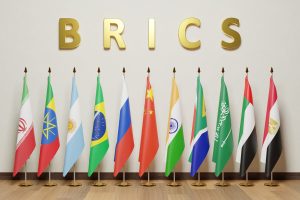
BRICS+ for ME Exporters
Real-world momentum:
- Russia-China trade: ~99% in RUB/CNY.
- Iran-Russia: Over 80% in rial/rouble.
- UAE-India: Formal rupee-dirham mechanism via Special Rupee Vostro Accounts (SRVA).
- China-Saudi: Currency swap agreements and growing RMB use in energy.
Emerging infrastructure includes BRICS Pay / BRICS Bridge concepts, CBDC interoperability (building on mBridge pilots), and bilateral systems like China’s CIPS or Russia’s SPFS.
Practical Step-by-Step Guide for Middle East Exporters
BRICS+ Local Currency Trade
1. Identify High-Potential BRICS+ Markets and Products
Use market intelligence tools to map demand:
- India: Bitumen, petrochemicals, construction materials, food.
- China: Energy products, minerals, re-exports via UAE hubs.
- Russia: Machinery, consumer goods, food/agro (via Iran or UAE corridors).
- Brazil/South Africa/Egypt: Niche opportunities in FMCG or industrial goods.
Action: Leverage platforms like Tendify’s AI Market Pulse for sentiment, World Trade Explorer for flows, and Arbitrage Hunter for price gaps. Check exhibitions (UAE, KSA, Turkey, Qatar calendars) for direct buyer meetings.
2. Set Up Banking and Payment Infrastructure
- Vostro/Nostro Accounts: For India trade, open or use Special Rupee Vostro Accounts (SRVA). UAE/Saudi banks can hold INR balances in Indian partner banks for seamless settlement. Recent RBI simplifications (2025) make this easier without prior approval in many cases.
- Currency Swaps: Saudi and UAE banks have access to yuan swaps with China. Explore similar lines for RUB or INR.
- Local Rails:
- China → CIPS (Cross-Border Interbank Payment System).
- Russia → SPFS or direct correspondent links.
- Emerging → BRICS Pay prototypes or CBDC bridges for multi-currency PvP (payment-vs-payment) settlements.
- Practical Tip: Start with correspondent banks in Dubai or Riyadh experienced in BRICS trade. Use escrow services for initial deals to build trust.
Halal Logistics Certification: The 2026 Bridge to GCC Success for Chinese Food Exporters
3. Structure Contracts and Invoicing
- Invoice in Local or Matched Currencies: Invoice Indian buyers in INR (or AED as bridge), Chinese in CNY, Russian in RUB.
- Key Clauses (use Tendify’s ProTrade Contract builder):
- Currency of payment and exchange rate reference (e.g., official central bank rates).
- Payment terms: Advance, LC alternative (escrow), or open account with bank guarantee.
- Force majeure and sanctions carve-outs.
- Incoterms: CFR or CPT for bulk to align with local logistics.
- المستندات: Generate proforma invoices, export checklists, and HS Code classifications via Tendify tools.
4. Execute Payments and Manage FX Risk
- Settlement Options:
- Direct local currency transfer via Vostro or CIPS.
- Use surpluses: Sell in INR → use proceeds to buy Indian goods or convert strategically.
- Digital/escrow platforms for smaller deals.
- Hedging: Forward contracts, options, or natural hedges (import from the same partner).
- Tools: Tendify’s Advanced Loan/Financial Calculator and Trade Cost Analyzer to model net margins in local currencies.
5. Handle Logistics and Compliance
- الشحن: Optimize with 3D Container Tool (20/40ft). Use SeaConnect AI for maritime intelligence and GCC port demurrage/detention strategies.
- Customs: India Duty Calculator, GCC VAT, World Tariffs, and HS Finder. For Saudi: SABER and FASAH mastery.
- الامتثال: Run Sanctions Pro checks. Document everything for audits (Tendify Export Checklist Generator).
- Re-Export Hubs: UAE (Jebel Ali/Duqm) or KSA free zones excel for routing to BRICS+ with minimal duties.
2026 Bitumen Landed Cost Formula India: Stop Losing Margin to IGST
Real-World Case Studies for ME Exporters
- UAE-India Petrochemicals/Bitumen: Exporters use rupee-dirham settlements. Payment in INR credited to Vostro → immediate usability or conversion at competitive rates. Savings: 2–4% vs traditional USD route.
- Iran-Russia/China Trade: 80%+ local currency (rial/rouble or rial/yuan). Bypasses sanctions; uses banking channels or barter-like balancing for surplus rupees/yuan.
- Saudi/ GCC to China: Energy and construction exports increasingly explore RMB via swaps. Vision 2030 diversification benefits from RMB-denominated contracts.
- Re-Export Plays: UAE traders route goods to BRICS+ partners, settling portions in local currencies to capture arbitrage.
The BRICS+
التحديات وكيفية التغلب عليها
- Liquidity/Acceptance: INR or RUB surpluses can accumulate. Solution: Balanced trade, AED as neutral bridge, or invest surpluses (e.g., Indian G-Secs).
- Volatility: Use hedging and short settlement cycles.
- Regulatory/Compliance: Partner with experienced banks and use tools like Sanctions Pro.
- Initial Resistance: Start small, offer discounts for local currency deals, and demonstrate via escrow.
How Tendify Supports This Shift
The Tendify Global Trade OS is built for exactly this environment:
- Research & Intelligence: AI Pulse, Trade Explorer, Arbitrage Hunter.
- Finance & Compliance: Duty/VAT calculators, Sanctions Pro, Contract Builder, Escrow guidance.
- Operations: HS Finder, Incoterms Advisor, 3D Container Optimizer, SeaConnect.
- Market Access: 2026 exhibition calendars (UAE, KSA, Qatar, etc.), Free CRM, MetaExpo.
- AI Advisor: Ask directly in the platform chat for tailored strategies.
India Polymer Import Clearance 2026: Stop Demurrage Before It Starts
Final Recommendations for 2026 Success
- Pilot 1–2 deals in local currencies this quarter (start with India or China).
- Build banking relationships in key hubs (Dubai, Mumbai, Shanghai, Moscow).
- Integrate Tendify tools into your workflow for speed and compliance.
- Monitor BRICS 2026 developments under India’s presidency—expect advances in payment interoperability.
BRICS Plus
Local currency trade with BRICS+ is not just de-dollarization—it is smarter, cheaper, and more resilient exporting for Middle East businesses. Exporters who adapt early will capture higher margins and stronger partnerships in the emerging multipolar order.
Start today: Explore the tools in your Tendify Command Center and test a rupee or yuan settlement on your next deal.
For personalized strategy, use the Tendify AI advisor or reach out via the platform.
This guide draws on current bilateral mechanisms, central bank initiatives, and practical trade practices as of early 2026.

