المدونة
The 2026 Guide to Undervalued Commercial Real Estate in Iran

In the wake of the 2026 conflict, Iran’s commercial real estate market presents one of the most compelling distressed asset plays in the emerging world. Sophisticated capital allocators who understand how to acquire high-quality commercial properties — office towers, industrial parks, retail complexes, logistics hubs, and mixed-use developments — at 30–60% below pre-war valuations can secure long-term capital preservation and outsized yields while helping rebuild critical economic infrastructure.
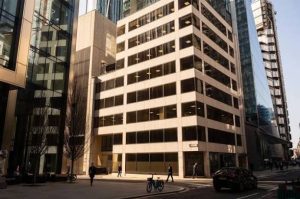
Commercial Real Estate in Iran
This is not retail speculation. It is strategic engineering of distressed asset portfolios where large-scale capital finds safety, liquidity, and asymmetric upside. Over the next eight years, reconstruction demand, returning diaspora investment, regional trade normalization, and free-zone incentives will drive repricing. Those who move with discipline and the right operational infrastructure will capture the premium.
The Post-Conflict Landscape: Why Commercial Real Estate in Iran Is the Ultimate Distressed Opportunity in 2026
The brief but intense 2026 conflict caused targeted damage to infrastructure and temporary capital flight, creating forced sellers among over-leveraged developers, sanctioned entities, and businesses needing immediate liquidity. At the same time, underlying fundamentals remain exceptionally strong: a population of nearly 90 million with significant urban concentration in Tehran, Mashhad, Isfahan, Shiraz, and Tabriz; chronic undersupply of modern Grade-A commercial space; and Iran’s strategic position as the missing link in the International North-South Transport Corridor (INSTC).
Real estate has long served as a primary store of value and inflation hedge in Iran. Post-conflict, this role intensifies. Domestic and regional capital is rotating aggressively into tangible assets. Foreign investors with access to structured vehicles and local partnerships can acquire trophy commercial assets at discounts that compress payback periods dramatically.

Iran Real Estates Market
Key drivers creating the distressed window:
- Distressed sellers needing rapid liquidity after war-related disruptions
- Temporary decline in foreign buyer competition during early stabilization
- Banking sector caution leading to fire-sale financing opportunities
- Government incentives for reconstruction projects in free zones and priority sectors
- Anticipated partial sanctions relief unlocking larger ticket international capital
“Distressed does not mean damaged. It means mispriced relative to long-term intrinsic value and cash-flow potential.”
Understanding Distressed Commercial Assets in the Iranian Context
In 2026 Iran, distressed commercial real estate spans several categories:
1. Office and Mixed-Use Towers in Major Cities
Tehran’s central business districts and emerging hubs in northern and western zones contain partially completed or occupied towers with motivated sellers. Many were financed pre-war at optimistic valuations. Post-conflict debt service pressure creates acquisition opportunities at 40–55% discounts to replacement cost.
2. Industrial and Logistics Parks Near Ports and Corridors
Assets near Bandar Abbas, Chabahar, Bushehr, and the INSTC rail routes are particularly attractive. War-related supply chain rerouting highlighted Iran’s logistical importance. Modern warehouses and light industrial facilities with expansion potential trade at deep discounts despite strong long-term demand from regional trade recovery.
3. Retail and Hospitality Complexes
Shopping malls, hotel portfolios, and serviced apartment buildings in tourist and business corridors suffered temporary occupancy drops. Quality assets with good locations and partial foreign management are available from developers seeking to de-leverage.
4. Free-Zone Commercial Properties
Kish, Qeshm, Chabahar, and Anzali free zones offer 100% foreign ownership, multi-year tax holidays, and simplified repatriation. These zones are ideal for large-ticket acquisitions where capital preservation and operational flexibility are priorities.
Strategic Advantages of Acquiring Iranian Commercial Real Estate in 2026
Why sophisticated capital views this as a once-in-a-decade engineering opportunity:
- Capital Preservation Through Tangible Assets: In an environment of currency volatility and banking uncertainty, ownership of income-producing commercial property provides a hard asset anchor.
- High Yield Potential: Cap rates on quality distressed assets currently range 12–18% in local currency terms, far above global developed market averages.
- Repricing Upside: As stability returns and international trade normalizes, valuations are expected to recover 60–120% within 5–7 years.
- Inflation Hedge + Rental Growth: Commercial rents in prime locations have historically outpaced inflation.
- Portfolio Diversification: Exposure to energy-linked recovery, Eurasian trade corridors, and domestic consumption growth.
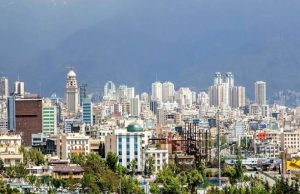
Iranian Commercial Real Estate
Step-by-Step Framework for Engineering Distressed Asset Acquisitions in Iran 2026
Phase 1: Opportunity Identification and Screening (Weeks 1–4)
Focus on off-market deals through trusted local networks, bankruptcy proceedings, and bank-owned asset portfolios. Prioritize properties with clear title, partial occupancy, and expansion potential.
Phase 2: Rigorous Due Diligence (Weeks 5–10)
Legal title verification, structural and environmental assessments, tenant lease audits, and cash-flow stress testing under multiple sanctions and recovery scenarios. Use independent local counsel and international advisors.
Phase 3: Structuring the Transaction
Utilize free-zone entities for foreign ownership where possible. Layer performance-based smart escrow mechanisms to protect capital during transfer. Structure payments linked to verifiable milestones.
Phase 4: Post-Acquisition Value Creation
Implement professional management, tenant repositioning, capital expenditure for modernization, and digital leasing platforms to accelerate income stabilization and exit readiness.
Risk Management in Iranian Commercial Real Estate Acquisitions
Successful players treat risk as an engineering variable rather than an unknown:
- Political and sanctions risk → mitigated through diversified entry vehicles and phased capital deployment
- Currency and repatriation risk → addressed via trade-linked structures and commodity-backed hedging
- Operational risk → reduced through professional third-party management and performance escrow
- Legal title risk → eliminated via exhaustive due diligence and local partnership structures
How Tendify.net Serves as Your Strategic Operating System for Large-Scale Iranian Real Estate Plays
Platform.Tendify.Net — The Command Center for Distressed Asset Engineering in Iran
For investors deploying significant capital into Iranian commercial real estate, execution speed, documentation accuracy, and cross-border compliance are non-negotiable.
Platform.Tendify.Net is purpose-built as the operating system that removes the friction layers that traditionally slow or kill large distressed acquisitions.
Key capabilities include:
- Advanced trade cost and landed-value calculators tailored for Iran-GCC-Central Asia corridors
- Export Documentation Checklist Generator and flexible proforma/contract builders that maintain full auditability
- HS Code Finder, duty modeling, and Incoterms Advisor for logistics-linked real estate plays
- Smart Escrow infrastructure that secures performance across borders without premature capital movement
- Real-time market pulse and compliance tools that help identify and de-risk distressed opportunities
Whether structuring acquisition financing through trade-based settlement, modeling renovation cash flows, or managing tenant supply chains, the platform compresses months of coordination into days of actionable intelligence.
The most successful distressed asset acquirers in 2026 treat documentation, cost modeling, and performance security as competitive advantages. Tendify.net delivers exactly that infrastructure — turning theoretical opportunity into controlled, executable portfolios.
Case Studies and Execution Blueprints (Hypothetical yet Representative)
Consider a mid-sized logistics park near Chabahar: acquired at 45% discount to replacement cost, stabilized within 14 months through targeted capex and new regional tenants, now generating mid-teens USD-equivalent yields with strong appreciation trajectory as INSTC volumes recover.
Or a Tehran office tower purchased from a distressed developer: repositioned with modern amenities and international-grade management, attracting multinational tenants returning post-stabilization, delivering both current income and capital gain on exit.
Looking Forward: The 2026–2032 Repricing Cycle
The window for deep-discount distressed acquisitions will not remain open indefinitely. As diplomatic progress continues, domestic confidence returns, and regional trade corridors reactivate, valuations will normalize rapidly. Capital deployed intelligently in 2026–2027 stands to benefit from the full repricing arc.
Iran’s commercial real estate is not merely an inflation hedge or safe-haven play. It is a strategic asset class that combines capital preservation, income generation, and participation in one of the most important Eurasian reconstruction stories of the decade.
We at Tendify have engineered tools that simplify the most complex equations of cross-border acquisition, regulatory navigation, and operational integration. Our calculators, document engines, and smart escrow infrastructure turn high-conviction distressed opportunities into disciplined, scalable portfolios.
If you are actively evaluating or structuring large-scale commercial real estate acquisitions in Iran — whether standalone assets, portfolios, or development platforms — the complete suite of modeling, compliance, and performance tools awaits inside your dashboard at Platform.Tendify.Net.
Register today. Run your first scenario. Engineer your entry with the precision that large capital demands.
The distressed window is here. The operating system to capture it is ready.
Related Reading on Tendify.net
- Rebuilding Iran After the 2026 Conflict: The Global Investment Playbook
- The Hidden Arbitrage of Risk: How Trade-Based Settlement Exploits Regulatory Blind Spots in 2026
- Cross-Border Logistics for B2B Trade in the Gulf Region
- Regional Logistics Integration and Trade Opportunities Across the GCC