المدونة
Trading with ASEAN : Opportunities, Regulations, and Market Entry Strategies
The Association of Southeast Asian Nations (ASEAN) has emerged as one of the most dynamic and promising economic blocs in the global economy. Comprising ten member states with a combined population exceeding 680 million and a collective GDP approaching $4 trillion, ASEAN represents a significant opportunity for international businesses seeking growth, diversification, and access to emerging consumer markets. This comprehensive guide provides executives, compliance officers, and trade professionals with a clear, audit-ready roadmap for engaging with ASEAN markets while maintaining full regulatory compliance and operational resilience.
Trading with ASEAN
From understanding the bloc’s structure and economic potential to navigating regulatory frameworks, single-window systems, and sustainable supply-chain strategies, this document equips organizations with practical knowledge for successful market entry and long-term partnership development. All recommendations are designed to align with international trade law, FATF standards, Travel Rule obligations, and applicable sanctions compliance programs.
ASEAN
Strategic Insight: ASEAN is not a single market but a diverse ecosystem of opportunities. Success depends on combining deep local understanding with robust, audit-ready compliance frameworks and technology-enabled supply-chain visibility.
1. Understanding ASEAN: Structure, Members, and Economic Significance
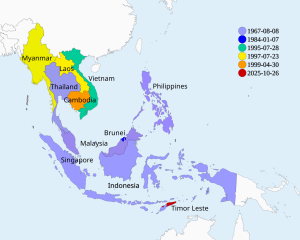
Founded in 1967, ASEAN today includes Brunei Darussalam, Cambodia, Indonesia, Laos, Malaysia, Myanmar, the Philippines, Singapore, Thailand, and Vietnam. The bloc operates on the principles of consensus, non-interference, and mutual respect for sovereignty while pursuing deeper economic integration through the ASEAN Economic Community (AEC).
The AEC aims to create a single market and production base characterized by free flow of goods, services, investment, and skilled labor. With a young, tech-savvy population and rapidly expanding middle class, ASEAN offers substantial consumer demand across sectors such as electronics, automotive, agriculture, healthcare, renewable energy, and digital services. The region’s strategic location between major shipping lanes further enhances its importance as a global logistics and manufacturing hub.
ASEAN: Structure, Members, and Economic Significance
For businesses considering regional entry, ASEAN presents both unified frameworks and significant country-specific variations. Successful engagement requires balancing bloc-wide initiatives with localized compliance and operational strategies. For related guidance on compliant nearshoring and friendshoring in high-growth markets, see our analysis in Friendshoring 2.0: Compliant Nearshoring Strategies for Manufacturers Targeting GCC and Emerging Markets.
2. Economic Potential and Key Growth Drivers
ASEAN’s economic momentum is driven by several structural factors: demographic dividend, rising urbanization, digital transformation, and increasing intra-regional trade. The region has consistently posted GDP growth rates above the global average, supported by strong manufacturing, services, and agriculture sectors.
Key opportunity sectors include:
- Electronics and semiconductor supply chains
- Automotive and electric vehicle components
- Renewable energy and green technology
- Healthcare, pharmaceuticals, and medical devices
- Digital economy and fintech services
- Agricultural technology and food processing
The ASEAN Comprehensive Investment Agreement (ACIA) and various free trade agreements with major economies provide enhanced market access and investment protections. For international traders and investors, these frameworks create predictable pathways for market entry while requiring adherence to local content rules, environmental standards, and labor regulations.
Businesses seeking resilient supply-chain options in Asia should also consider ASEAN as a strategic complement to existing routes. Practical strategies for route diversification are detailed in Compliant Trade Route Reengineering: Audit-Ready Alternatives to the Strait of Hormuz Crisis.
3. Regulatory Framework and Compliance Considerations
ASEAN operates through a combination of regional agreements and national regulations. Key frameworks include the ASEAN Trade in Goods Agreement (ATIGA), the ASEAN Single Window (ASW), and country-specific investment laws. While progress toward harmonization continues, businesses must navigate varying tariff schedules, customs procedures, and licensing requirements across member states.
Single-Window platforms in Singapore, Malaysia, Thailand, Indonesia, and Vietnam significantly reduce administrative burdens by allowing traders to submit documents once for multiple agencies. Integration with these platforms enhances efficiency and provides verifiable digital audit trails that support compliance with the Travel Rule and sanctions screening obligations.
For companies engaged in high-volume regional trade, understanding local content requirements, rules of origin, and environmental standards is essential. Compliance teams should maintain up-to-date mapping of regulatory changes and implement robust due diligence processes for all ASEAN counterparties. Additional guidance on digital trade platforms and payment mechanisms is available in Post-Traditional Sanctions Financial Mechanisms: Strategic Integration with CBDCs and Single-Window Platforms for Compliant Regional Settlements.
4. Market Entry Strategies for International Businesses
Successful entry into ASEAN requires a tailored, multi-layered approach. Recommended strategies include:
- Establishing a regional hub in Singapore or Malaysia for coordination and compliance management
- Forming joint ventures or strategic partnerships with local entities to navigate regulatory nuances
- Leveraging free trade zones and special economic zones for tax and logistical advantages
- Adopting digital tools for supply-chain visibility and automated compliance reporting
Technical contractors and equipment suppliers can find substantial opportunities in infrastructure, energy, and manufacturing modernization projects. For detailed strategies on participating in regional reconstruction and development, refer to Rebuilding Energy Infrastructure: Strategic Opportunities for Technical Contractors in Post-Ceasefire Reconstruction.
5. Risk Management and Audit-Ready Compliance Frameworks
Operating in ASEAN requires proactive risk management. Key areas include sanctions screening, anti-bribery and corruption controls, data protection compliance, and supply-chain due diligence. Organizations should implement the following safeguards:
- Continuous sanctions and adverse media screening for all counterparties
- Documented due diligence processes with clear escalation protocols
- Performance-based contracting and escrow mechanisms for high-value transactions
- Integration of Single-Window data into internal compliance dashboards
These measures not only satisfy regulatory expectations but also strengthen operational resilience and counterparty trust. For guidance on managing geopolitical and snapback risks in contract drafting, see Snapback Risk in the Iran-US-Israel Ceasefire: A Strategic Contract Management Guide for CEOs and Investors.
90-Day Market Entry Checklist for ASEAN

90-Day Market Entry Checklist for ASEAN
Days 1–15: Strategic Assessment
- Define target ASEAN markets and priority sectors
- Conduct regulatory and compliance gap analysis
- Assemble cross-functional market entry team
Days 16–45: Infrastructure and Partnership Building
- Identify local partners and establish compliant structures
- Integrate with relevant Single-Window platforms
- Develop audit-ready due diligence and screening protocols
Days 46–75: Pilot and Validation
- Execute controlled pilot transactions or projects
- Validate end-to-end compliance and operational workflows
- Refine risk management frameworks based on live data
Days 76–90: Scale and Governance
- Expand operations to target volume levels
- Establish ongoing monitoring and quarterly compliance reviews
- Prepare for independent audit and certification processes
Conclusion: ASEAN as a Strategic Growth Platform
The Association of Southeast Asian Nations offers substantial long-term opportunities for international businesses willing to engage with disciplined, compliance-first strategies. By combining deep market understanding with robust regulatory adherence, audit-ready processes, and technology-enabled visibility, organizations can successfully navigate ASEAN’s diverse landscape while contributing to the region’s sustainable economic development.

ASEAN as a Strategic Growth Platform
The green logistics revolution, digital trade platforms, and harmonization efforts underway across the bloc create a favorable environment for companies that prioritize transparency, resilience, and long-term partnership building. Those who invest in proper structures, local expertise, and integrated compliance systems today will be best positioned to thrive in ASEAN’s dynamic markets.
Platforms purpose-built for regulated international trade provide the operational infrastructure necessary to execute these strategies efficiently and compliantly. Entities seeking to strengthen their ASEAN engagement are encouraged to evaluate integrated solutions that combine commercial agility with full regulatory alignment.