


المدونة
UAE Quits OPEC: Why May 1 is a Turning Point for Global Oil Markets
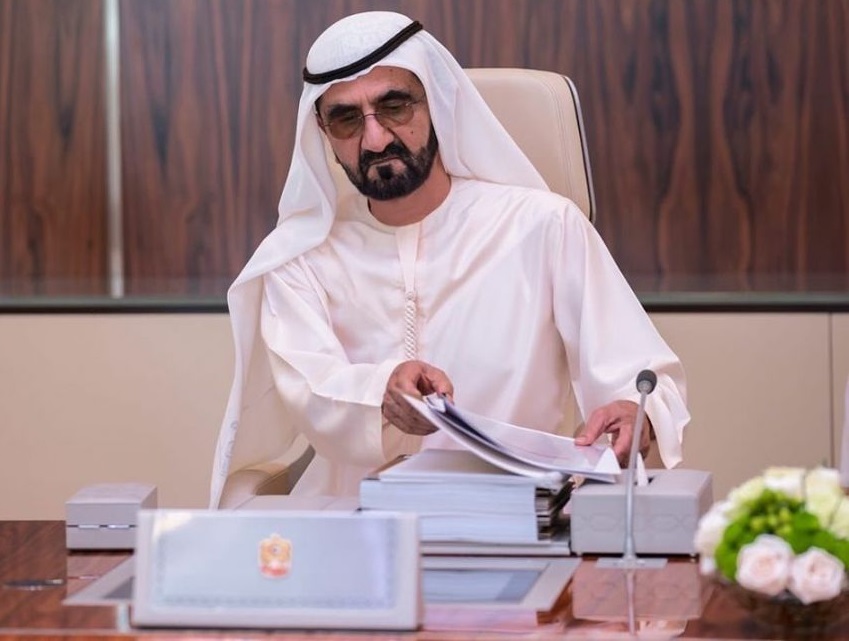
I’ve spent over two decades navigating the highs and lows of international trade, from bulk commodity deals in volatile markets to structuring complex cross-border logistics. Few events hit as hard as a major OPEC member walking away from the table. On April 28, 2026, the United Arab Emirates announced it would leave both OPEC and the broader OPEC+ alliance effective May 1. After nearly 60 years of membership since 1967, this move marks a seismic shift in how the world’s oil markets are managed.
UAE VS OPEC
For traders, exporters, importers, and anyone moving energy-related goods or dependent on stable feedstock prices, this isn’t abstract geopolitics. It directly affects quotas, pricing volatility, logistics costs, contract terms, and long-term sourcing strategies. In this comprehensive guide, I break down exactly why the UAE made this decision, the immediate and longer-term consequences, and—most importantly—how smart operators can adapt and even capitalize on the new reality.
Why the UAE Is Leaving OPEC Now: The Real Drivers Behind the Decision
The official line points to a “strategic shift in energy policy and long-term economic priorities.” But the deeper story has been building for years.
UAE VS OPEC
Quota Frustrations and Spare Capacity
The UAE, primarily through ADNOC, has invested heavily to expand its maximum sustainable crude production capacity toward 5 million barrels per day by 2027 (with current capacity already near 4.85 million bpd). Yet OPEC+ production agreements repeatedly capped output well below that level—often holding the UAE to around 3 million bpd or less in recent periods. This left significant spare capacity idle while the country continued pouring billions into upstream development. Abu Dhabi viewed the restrictions as increasingly misaligned with its technical capabilities and investment returns.
Diverging Interests with Saudi Arabia
Tensions between Riyadh and Abu Dhabi over production levels, market management philosophy, and broader regional priorities have simmered for some time. The UAE has pushed for greater flexibility to respond to actual market demand, while the de facto leadership of OPEC+ often favored tighter coordination. Recent geopolitical stresses, including disruptions tied to the Iran conflict, only amplified these differences. The UAE now prioritizes responding independently to global demand signals rather than adhering to collective ceilings that constrain its growth potential.
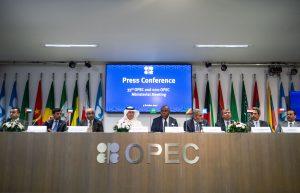
Saudi Arabia and UAE in OPEC
Economic Diversification and Post-Peak Oil Preparation
The UAE is not abandoning oil; it is maximizing returns from it while accelerating diversification. Revenue from higher potential output will help fund massive projects—everything from AI infrastructure and data centers to The Line and renewable energy initiatives. In an era where peak oil demand discussions continue, Abu Dhabi wants to extract maximum value now to finance its post-hydrocarbon future. Leaving the cartel gives it full control over production volumes and pricing strategies aligned with national goals.
This isn’t a sudden rupture but the logical outcome of years of mismatched incentives. The timing, amid ongoing energy market volatility from regional conflicts, underscores the UAE’s determination to chart its own course.
Immediate Market Impact: Volatility, Prices, and Supply Dynamics
Markets hate uncertainty, and this announcement delivers plenty.
In the short term, expect downward pressure on oil prices. An independent UAE ramping up production could add meaningful supply to an already nervous market recovering from disruptions. Traders watching Brent and WTI should prepare for increased swings as the market tests how much additional crude the UAE will actually bring online and how quickly.
For OPEC itself, losing the UAE is a significant blow. Previous exits (Qatar, Angola) were smaller; the UAE brings both volume and geopolitical weight. Questions will arise about the cartel’s cohesion and its ability to manage global supply effectively going forward. Will other members with spare capacity or diverging interests follow suit? The “domino effect” risk is now part of every analyst’s scenario planning.
Logistics and physical traders will feel this in freight rates, insurance premiums, and scheduling. Ports, tankers, and storage operators in the Gulf may see shifts in volumes and routes as production patterns evolve.
Who Wins and Who Loses?
As the UAE unshackles its production from OPEC quotas, the ripple effects will create clear divides in the global trade ecosystem:
- Winners:
Asian Refineries: Especially in China and India, who may benefit from a surge in competitive “non-aligned” Emirati crude.
Downstream Manufacturers: Producers of plastics and polymers who rely on stable, affordable chemical feedstocks.
Spot-Market Traders: Increased volatility often means higher margins for those with the agility to move fast.
Losers:
High-Cost Producers: US Shale and North Sea operators may face margin pressure if the UAE triggers a price floor test.
OPEC+ Cohesion: The cartel loses its most technologically advanced member, weakening its collective bargaining power.
Maritime Impact: The Tanker & Logistics Factor
The UAE’s move isn’t just about what comes out of the ground; it’s about what moves across the water. By aiming for 5 million bpd, we anticipate a significant increase in VLCC (Very Large Crude Carrier) and Suezmax demand departing from Jebel Ali and Fujairah.
Logistics Alert: Independent production means the UAE can now synchronize its export volumes with its own port infrastructure expansions. For freight forwarders and vessel operators, this translates to more dynamic scheduling but also potential congestion at key loading terminals. Monitoring real-time vessel AIS data and port turnaround times will be critical to avoiding costly demurrage in this new, high-volume era.
Long-Term Implications for Global Energy and Trade
For Producers and Exporters
- Greater Flexibility for the UAE: ADNOC and UAE traders can now align output more closely with demand, potentially stabilizing certain bilateral deals but introducing new competitive dynamics.
- Pricing Power Shifts: Less coordinated output could lead to more competitive, market-driven pricing in some segments, benefiting buyers but pressuring margins for those locked into legacy structures.
- Contract Renegotiation Opportunities: Existing long-term agreements, offtake deals, and hedging strategies may need review. Force majeure, pricing formulas, and volume commitments tied to OPEC+ frameworks deserve fresh scrutiny.
For Importers and Downstream Buyers
Countries and companies reliant on stable Gulf crude supplies will monitor UAE export policies closely. The potential for increased availability could ease some supply concerns, but heightened volatility demands robust risk management.
The Petrochemical Advantage:
Beyond crude, an independent UAE means a more aggressive push into downstream chemicals. Expect ADNOC to leverage its “quota-free” status to provide cheaper, more consistent feedstock for its Borouge and Ruwais complexes. For global buyers of polymers and industrial chemicals, the UAE is about to become a much more formidable—and potentially cheaper—competitor to traditional hubs.
Geopolitical Realignment
This move subtly alters power balances within the Gulf and beyond. It highlights a broader trend: national interests increasingly trump collective cartel discipline in a fragmenting global order. Energy security strategies worldwide—from Asia to Europe—will incorporate this new variable.
The AI and Diversification Angle
Here’s where it gets particularly interesting for forward-thinking operators. The UAE is channeling energy revenues into becoming a global hub for artificial intelligence, data centers, and advanced industries. These sectors are energy-intensive. Oil (and gas) will increasingly power not just transportation and petrochemicals but also the digital economy. An independent production policy could help the UAE ensure reliable, affordable energy for its own ambitious tech ambitions while positioning itself as a more agile supplier in a changing demand landscape.
Some observers even speculate this independence could open doors for innovative payment mechanisms or currency flexibility in future deals—though the petrodollar system remains deeply entrenched for now.
Comparison: UAE Within OPEC vs. Independent Strategy
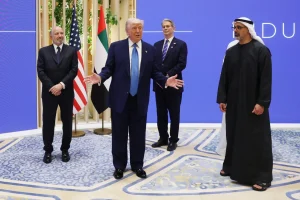
UAE Within OPEC
To make this concrete, consider the key differences:
Production Ceiling
- Inside OPEC+: Constrained by negotiated quotas, often below technical capacity.
- Independent: Based on market demand, technical limits, and investment returns—potentially approaching the full 5 million bpd target faster.
Pricing Approach
- Inside: Coordinated with broader cartel strategy, influenced heavily by Saudi leadership.
- Independent: More competitive and responsive to real-time global signals.
Strategic Independence
- Inside: Compromises required for collective decisions.
- Independent: Full alignment with Abu Dhabi’s national economic vision, including diversification funding and AI/energy infrastructure.
Risk Profile
- Inside: Shared cartel risks but also shared discipline.
- Independent: Higher short-term volatility exposure, but greater upside from optimized output and agility.
This table isn’t theoretical—it reflects the practical trade-offs you’ll face when structuring deals, hedging exposure, or planning procurement in the months ahead.
How Traders and Businesses Should Respond: Actionable Strategies
Don’t treat this as headline noise. Here’s what experienced operators are doing right now:
- Review and Stress-Test Contracts Audit existing offtake agreements, pricing clauses, volume commitments, and any references to OPEC+ benchmarks. Identify triggers for renegotiation or adjustment. Build in more flexible escalation mechanisms for future deals.
- Enhance Risk Management Volatility will likely rise. Strengthen hedging programs, diversify supplier portfolios where possible, and maintain tighter monitoring of Gulf export flows. Tools for real-time market intelligence become even more valuable.
- Reassess Logistics and Supply Chain Resilience Changes in production volumes can ripple into tanker availability, port congestion, and storage needs. Model scenarios for increased UAE exports and adjust routing, insurance, and inventory buffers accordingly.
- Explore New Opportunities An agile UAE may open doors for larger spot or short-term deals, alternative payment structures, or partnerships that leverage its expanding downstream and petrochemical capabilities. Watch for shifts in refined product flows as well.
- Monitor Broader Energy Transition Signals The UAE’s move reinforces that oil isn’t disappearing—it’s evolving. Position your business to serve both traditional demand and the growing energy needs of data centers, AI, and heavy industry.
Navigating Uncertainty with the Right Tools
In environments like this, information asymmetry kills margins. Successful traders rely on platforms that deliver real-time visibility, secure transaction options, and integrated utilities to cut through complexity.
That’s exactly why I recommend checking Platform.Tendify.net. Whether you’re sourcing petrochemicals, optimizing container loads, calculating duties and costs, generating compliant documents, or tracking market sentiment through AI-driven insights, having a centralized command center for global trade operations gives you a decisive edge. From HS code classification و tariff calculators to contract builders and logistics optimizers, these tools help turn market shocks into manageable variables instead of costly surprises. Serious operators are already using the platform to stress-test scenarios and lock in advantages while others wait for clarity.
The Shadow Factor: Regional Conflict and the Timing of the “Divorce”
One cannot analyze the UAE’s exit from OPEC in a vacuum. The timing—amidst the escalating friction involving Iran, Israel, and the United States—is a calculated move in a high-stakes geopolitical game.
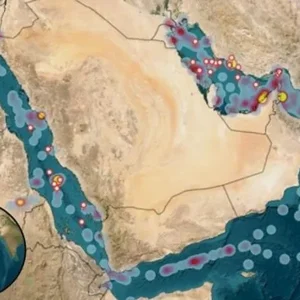
Regional Conflict and the Timing of the “Divorce”
Hedging Against Regional Instability With the specter of a broader conflict looming over the Persian Gulf, particularly regarding the security of the Strait of Hormuz, the UAE is positioning itself for maximum operational flexibility. Being tied to OPEC quotas during a potential regional war is a strategic liability. By going independent, Abu Dhabi ensures it can rapidly adjust production and pricing if Iranian supplies are disrupted or if maritime corridors face prolonged blockades.
Strategic Realignment with the West? While the UAE maintains a complex balancing act, exiting a Saudi-led and Russia-influenced OPEC+ alliance signals a desire for more direct, bilateral energy security pacts. In the event of a full-scale U.S.-Iran confrontation, the UAE wants to be seen as the “stable, independent alternative”—a reliable supplier that can fill the gap without waiting for a consensus from a divided cartel.
Energy as a Security Shield For the UAE, oil is no longer just a commodity; it’s a diplomatic tool. By controlling its taps independently, Abu Dhabi gains a seat at the table in Washington and Brussels that isn’t filtered through the lens of Riyadh. In a region where “energy security” is synonymous with “national survival,” this exit is the UAE’s way of building a sovereign firewall against the volatility of the Iran-Israel-U.S. triangle.
The Road Ahead: An “Emirati Wildcard” in Oil Markets?
Will OPEC+ weaken further without the UAE’s participation? Can the group maintain credible influence over prices and supply in a world of rising non-OPEC production, energy transition pressures, and geopolitical fragmentation? Or will we see a more competitive, multi-polar oil market where agile players like an independent UAE set new benchmarks?
My experience tells me the answer lies somewhere in between. Cartels rarely dissolve overnight, but their grip loosens when members calculate that unilateral action better serves national interests. The UAE has made that calculation.
For those of us in the trenches of global trade—moving goods, managing risk, and building resilient supply chains—the lesson is clear: adaptability beats prediction. Understand the “why” behind major shifts like this UAE exit, model the impacts on your specific flows, and equip yourself with the operational infrastructure to act decisively.
The oil market just got more dynamic. The traders who thrive will be those who treat this not as disruption to fear, but as a new set of variables to master.
Ready to strengthen your trade operations against this evolving landscape? Head over to Platform.Tendify.net today. Explore the full suite of AI engines, calculators, document builders, and market intelligence tools designed specifically for professionals like you who refuse to leave outcomes to chance. Registering takes minutes and gives you immediate access to utilities that can save time, reduce risk, and uncover opportunities others will miss.
The game is changing. Make sure your systems and strategies are ready.


