المدونة
Regional Tension: Why Digital Trade Corridors and Resilient B2B Infrastructure Are the Only Assets That Endure in 2026

A sober strategic analysis for B2B traders and international operators navigating great-power competition in West Asia.
As someone who has spent over two decades structuring cross-border deals across the Middle East, I have learned one immutable truth: when great powers play grand strategy, physical infrastructure, supply chains, and financial rails become collateral. What survives — and often thrives — are digital layers, alternative corridors, and platforms that operate beyond the reach of direct military or political disruption.

Regional Tension
The 2026 Iran-related tensions have once again spotlighted competing theories of US grand strategy in the region. From realist offshore balancing to more critical interpretations of “constructive chaos,” these frameworks help explain why controlled tension persists even as reconstruction conversations begin. For practical business operators, however, the real question is not which theory is correct, but how to position your operations so that volatility becomes a tailwind rather than a headwind.
1. Offshore Balancing: Maintaining a “Balance of Terror” in the Gulf
Prominent realist scholars such as John Mearsheimer have long advocated for an “offshore balancing” approach to US foreign policy. In this view, America’s primary interest in the Middle East is not to install a permanent hegemon or to democratize the region, but to prevent any single local power from achieving dominance that could threaten global energy flows or US freedom of navigation.
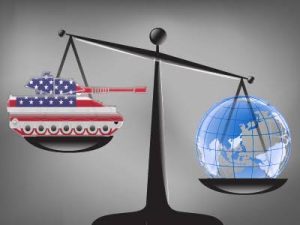
Offshore Balancing
According to this school, the ideal scenario is a managed rivalry between Iran and the Gulf Arab states (particularly Saudi Arabia and the UAE). As long as neither side can decisively prevail, both remain dependent on external security guarantees — primarily from the United States. This dynamic keeps regional actors focused inward and ensures that Washington retains leverage without maintaining a massive onshore military footprint.
Historical precedents cited by offshore balancing proponents include the US tilt toward Iraq during the Iran-Iraq War and the earlier “twin pillars” policy of supporting both Iran under the Shah and Saudi Arabia. The argument is straightforward: direct, large-scale US intervention (as seen in Iraq 2003 or the prolonged Afghan engagement) creates power vacuums, breeds resentment, and ultimately weakens American strategic position.
In 2026, this lens helps explain why de-escalation rhetoric coexists with continued arms sales, intelligence sharing, and selective sanctions. The goal is equilibrium through managed friction — not outright victory for any side.
2. Constructive Chaos: Reshaping the Regional Map for Long-Term Realignment
More critical voices, including those influenced by Noam Chomsky and analysts focused on Eurasian power dynamics, interpret US policy through the prism of “constructive chaos” or managed destabilization. In this reading, periodic disruption of existing power structures serves a larger purpose: preventing the consolidation of independent regional blocs that could challenge dollar dominance or accelerate de-dollarization trends.
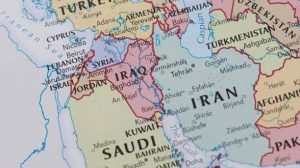
Reshaping the Regional Map
The logic is that if Iran is eventually to be reintegrated into global markets, it is preferable for that reintegration to occur after rival centers of capital accumulation (such as Vision 2030 projects in Saudi Arabia or diversified UAE portfolios) have been stressed or partially disrupted. This creates space for capital to flow toward new configurations more aligned with Western financial architecture or under revised rules of engagement.
While mainstream policy circles rarely articulate this view openly, patterns of selective engagement, proxy support, and targeted pressure suggest that controlled disorder can serve as a tool for periodic regional rebalancing.
3. The “Cleanse Before Integration” Hypothesis
Geopolitical analysis platforms have occasionally explored a related idea: that meaningful integration of a major player like Iran into the global economy requires a prior “reset” of the regional order. In this framing, the extraordinary wealth accumulation and strategic autonomy achieved by Gulf states in the 2010s and early 2020s (through sovereign funds, NEOM-scale projects, and deepening ties with China) created centers of power that could complicate future US-led frameworks.
“Cleanse Before Integration” Hypothesis
A period of heightened tension and selective disruption could level the playing field, making subsequent reconstruction and reintegration occur on terms more favorable to established Western capital and technology flows.
This is not a claim of deliberate engineering of conflict on a grand scale, but rather an observation that windows of reintegration often follow periods of stress that weaken alternative power centers.
4. The Energy Economics Lens: Sustaining Price Floors for Strategic Industries
Analysts focused on global energy markets point to a simpler, more mechanical driver: sustained moderate-to-high oil prices support the profitability of US shale production and broader Western energy investments. A sudden, complete peace that floods markets with unrestricted Iranian and Saudi output could depress prices, threatening the economic viability of higher-cost producers.
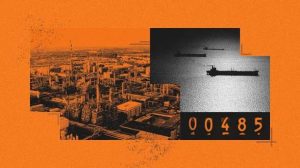
The Energy Economics Lens: Sustaining Price Floors for Strategic Industries
Tensions that keep a portion of supply offline or under risk premium help maintain a price floor without triggering a global recession. This dynamic benefits energy exporters who can still produce while creating headroom for non-OPEC supply growth.
However, the same analysts caution that uncontrolled escalation risks damaging critical infrastructure (such as Gulf export terminals or processing facilities), which would harm everyone — including the United States as a major consumer and investor.
Why These Theories Remain “Unofficial” Discourse
Official US policy statements continue to emphasize stability, counterterrorism, and rules-based order. Several structural reasons explain the gap between academic or critical analysis and public doctrine:
- Uncontrollable escalation risk: A full-scale war that destroys Gulf infrastructure would spike oil prices to levels that trigger global recession, hitting US consumers and allies hard.
- Strategic alliances and financial interdependence: Gulf states remain major purchasers of US weapons systems and holders of US debt instruments. Their stability underpins parts of the broader financial ecosystem.
- Domestic and coalition politics: Public narratives must align with alliance commitments and moral framing that resonates with domestic audiences and international partners.
The result is a policy environment characterized by calibrated pressure rather than binary outcomes — enough friction to shape incentives, but not so much as to break the system entirely.
The Business Takeaway: Digital Infrastructure and Alternative Corridors as the True Constants
For B2B operators, traders, manufacturers, and logistics providers, the deeper lesson transcends which geopolitical theory best explains events. In an era defined by great-power competition and managed regional tension, the assets that retain and grow value are those least dependent on fragile physical chokepoints or single-jurisdiction political stability.
Digital trade platforms, AI-powered compliance and cost-modeling tools, distributed logistics networks, and neutral performance-guarantee mechanisms (smart escrow) become the resilient backbone of commerce. They allow value to continue flowing even when traditional banking rails slow, ports face disruption, or physical routes require rerouting.
Alternative corridors — whether enhanced INSTC routes, overland linkages, or multimodal combinations — gain premium importance precisely because they offer optionality when primary sea lanes or political relationships experience stress.
Why Resilient B2B Platforms Matter More Than Ever in 2026
Platform.Tendify.Net — Built for Commerce That Endures Geopolitical Cycles
In environments shaped by offshore balancing, constructive friction, or energy-driven price management, businesses need infrastructure that operates independently of any single government’s goodwill or any one physical route’s availability.
Platform.Tendify.Net was designed as exactly that infrastructure — a global trade operating system that compresses complexity in documentation, cost modeling, compliance, and secure performance into a single, resilient command center.
Practical capabilities that matter in volatile times include:
- Real-time landed-cost calculators and tariff optimizers that adapt instantly to changing regimes
- Export Documentation Checklist Generator and flexible invoicing tools that maintain auditability across jurisdictions
- HS Code intelligence, duty modeling, and Incoterms advisory that reduce clearance friction
- Smart escrow mechanisms that secure performance without forcing premature movement through vulnerable banking channels
- AI market pulse tools that help identify emerging corridors and risk signals early
- Multimodal logistics planning that supports rapid rerouting when primary paths face pressure
Whether you are moving goods along Iran-GCC corridors, scaling reconstruction-related trade, or building diversified supply chains across West Asia, these tools allow you to maintain momentum when traditional systems slow or fragment.
The theories of great-power strategy will continue to evolve. Tensions will ebb and flow. But the operators who invest in digital resilience, alternative routing intelligence, and neutral performance infrastructure will be the ones whose businesses not only survive but compound through every cycle.
In the final analysis, geopolitics may determine the tempo of regional affairs, but resilient B2B platforms determine who keeps trading profitably regardless of the tempo.
We at Tendify have engineered the tools that simplify the most complex equations of cross-border commerce in uncertain times. Our calculators, document engines, and secure infrastructure turn volatility into manageable variables.
If you are operating in or around West Asia and want infrastructure that endures beyond today’s headlines, the full suite of modeling, compliance, and performance tools is ready inside your dashboard at Platform.Tendify.Net.
Register today. Build the corridors that outlast the cycles.
Related Strategic Resources on Tendify.net
- Rebuilding Iran After the 2026 Conflict: The Global Investment Playbook
- Cross-Border Logistics for B2B Trade in the Gulf Region: The Complete Strategic Guide
- Regional Logistics Integration and Trade Opportunities Across the GCC
- 2026 Trade Corridors: New Logistics Routes Redefining Middle East Export