المدونة
Myanmar and Laos: Untouched Markets – Risks and Rewards of Early Market Entry

Myanmar and Laos represent two of the least penetrated yet potentially rewarding frontier markets in Southeast Asia. With combined populations exceeding 80 million and rich natural resources, both countries offer substantial long-term potential for companies willing to accept elevated risk in exchange for first-mover advantages. However, these markets also present unique political, regulatory, infrastructural, and compliance challenges that demand sophisticated risk assessment and audit-ready operational frameworks.

Myanmar and Laos Market
This comprehensive strategic guide provides business leaders, investors, and compliance professionals with an objective, balanced analysis of the opportunities and risks associated with early entry into Myanmar and Laos. The focus is strictly on practical, regulator-neutral strategies for market assessment, structured entry, risk mitigation, and sustainable operations. All recommendations are designed to align with international best practices in due diligence, sanctions compliance, anti-corruption controls, and responsible business conduct.

Myanmar and Laos: Untouched Markets
Strategic Insight: Early entry into frontier markets such as Myanmar and Laos can deliver significant competitive advantages, but only when executed with disciplined risk management, transparent governance, and long-term commitment. Success depends on balancing opportunity with rigorous compliance and operational resilience.
Understanding the Frontier Market Context
Frontier markets are characterized by high growth potential coupled with elevated political, economic, and operational risks. Myanmar and Laos fit this profile: both possess young populations, abundant natural resources, and strategic geographic locations, yet they face challenges including infrastructure gaps, regulatory unpredictability, and complex political dynamics.
Myanmar, with its strategic position between South and Southeast Asia, offers access to a large domestic market and potential as a regional connectivity hub. Laos, landlocked but centrally located within mainland Southeast Asia, serves as a natural transit corridor between China, Vietnam, Thailand, and Cambodia. Both countries have expressed ambitions to accelerate economic development through foreign investment and regional integration initiatives.
For companies evaluating high-growth ASEAN opportunities, Myanmar and Laos represent the next frontier after more established markets such as Vietnam and Indonesia. A broader overview of ASEAN market dynamics is available in our guide on Comprehensive Guide to Trading with ASEAN in 2026: Opportunities, Regulations, and Market Entry Strategies.
Economic Potential and Sector Opportunities
Both countries offer attractive opportunities across several key sectors:
Myanmar
Myanmar’s economy has significant potential in agriculture, garments, tourism, energy, and telecommunications. The country possesses substantial arable land, rich mineral deposits, and offshore hydrocarbon resources. Growing urbanization and a young population create rising demand for consumer goods, financial services, and infrastructure development.
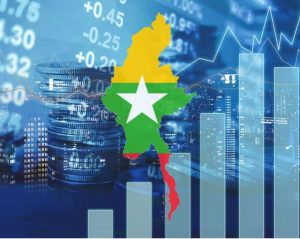
Myanmar’s economy
Laos
Laos is rich in hydropower potential, minerals, and forestry resources. The government has prioritized infrastructure development, particularly hydropower projects, transportation corridors, and special economic zones. Agriculture, tourism, and light manufacturing also present opportunities for foreign investment.

Laos economy
For businesses considering manufacturing or supply-chain relocation, both countries offer relatively low labor costs and access to regional trade agreements. Strategic considerations for supply-chain diversification in Asia are discussed in Vietnam: The New Factory of the World – Why Tech Giants Are Moving Production from China to Vietnam.
Risks and Challenges of Early Market Entry
Early entry into Myanmar and Laos carries distinct risks that must be carefully managed:
- Political and Regulatory Uncertainty: Changes in policy, licensing requirements, and enforcement can occur with limited notice.
- Infrastructure Limitations: Road, port, and power infrastructure remain underdeveloped in many areas, increasing logistics costs and project timelines.
- Compliance and Sanctions Considerations: Certain sectors and entities may be subject to international sanctions or enhanced due diligence requirements.
- Corruption and Governance Risks: Transparency International rankings indicate elevated corruption perception in both countries, requiring robust anti-bribery controls.
- Human Rights and ESG Risks: Operations must be structured to respect international standards on labor, environmental protection, and community engagement.
Successful companies mitigate these risks through thorough due diligence, phased investment approaches, strong local partnerships, and independent third-party monitoring. Contractual strategies for managing geopolitical uncertainty are explored in Snapback Risk in the Iran-US-Israel Ceasefire: A Strategic Contract Management Guide for CEOs and Investors.
Practical Market Entry Frameworks
Businesses considering early entry into Myanmar and Laos should follow a structured, risk-aware approach:
Phase 1: Comprehensive Due Diligence (Months 1–3)
Conduct political risk assessment, regulatory mapping, sector analysis, and on-ground feasibility studies. Engage specialist local counsel and independent risk consultants.
Phase 2: Structured Entry Planning (Months 4–6)
Define clear investment objectives, develop phased entry plans, and establish robust compliance and governance structures from the outset.
Phase 3: Partnership and Pilot Implementation (Months 7–18)
Form compliant joint ventures or agency relationships and execute controlled pilot projects to test operational assumptions and compliance effectiveness.
Phase 4: Scaling and Continuous Monitoring (Year 2 onward)
Expand operations based on pilot learnings while maintaining rigorous ongoing risk monitoring and third-party audits.
For companies seeking diversified regional manufacturing options as part of a broader Asia strategy, complementary approaches in neighboring markets are examined in Indonesia: The Sleeping Giant – A Comprehensive Analysis of the 200-Million Consumer Market Opportunities for Consumer Goods.
Compliance and Responsible Business Conduct
Early entry into frontier markets demands exemplary compliance standards. Recommended practices include:
- Enhanced due diligence on all local partners, agents, and counterparties
- Implementation of group-wide anti-bribery and corruption policies
- Robust human rights and environmental impact assessments
- Transparent reporting and third-party verification mechanisms
- Clear contractual safeguards and exit provisions
Companies that embed these standards from day one not only reduce legal and reputational risk but also build stronger relationships with local stakeholders and international financiers.
Conclusion: Calculated Opportunity in Frontier Markets
Myanmar and Laos represent classic frontier market opportunities — high potential rewards balanced against elevated risks. For companies with the expertise, patience, and disciplined risk-management capabilities to operate in such environments, early entry can deliver significant long-term competitive advantages, including access to untapped consumer bases, natural resources, and strategic geographic positioning within Southeast Asia.
Success in these markets is not guaranteed by ambition alone. It requires thorough preparation, realistic risk assessment, strong local partnerships, and unwavering commitment to transparent, responsible business practices. Organizations that approach Myanmar and Laos with audit-ready compliance frameworks, phased investment strategies, and long-term vision are best positioned to capture the substantial rewards these untouched markets can offer.
The continued development of both countries will depend on policy stability, infrastructure investment, and constructive international engagement. Businesses that contribute responsibly to this development — while protecting their own interests through sound governance — can play a positive role in the economic progress of these frontier economies.
Platforms purpose-built for regulated frontier market operations provide the operational infrastructure necessary to execute these strategies efficiently and compliantly. Entities considering early entry into Myanmar and Laos are encouraged to evaluate integrated solutions that combine commercial opportunity with rigorous risk management and regulatory alignment.