


المدونة
Air Cargo Pallets Guide: Optimize GCC Freight Costs & Speed
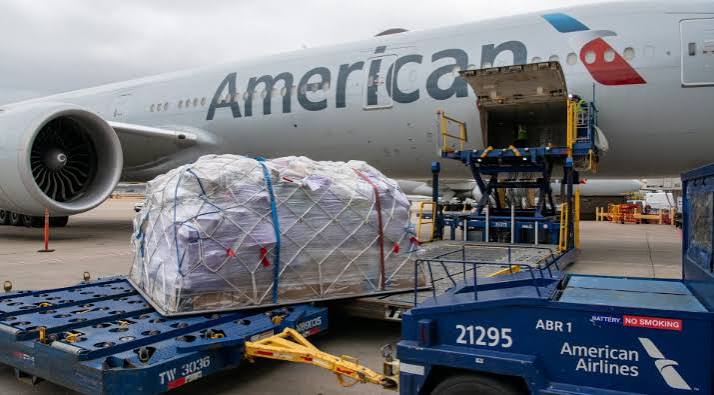
In the high-stakes world of cross-border logistics, a single mismatched pallet can delay shipments by days, inflate costs by thousands, and expose valuable cargo to unnecessary risk. For B2B traders moving goods through busy GCC hubs like Jebel Ali, King Abdulaziz, or Hamad International, mastering air cargo pallets—formally known as Unit Load Devices (ULDs)—delivers faster turnaround, lower handling fees, and smoother customs clearance.

Air Cargo Pallets
This operational playbook breaks down the most relevant pallet types, their aircraft compatibility, selection criteria, loading techniques, and cost-saving strategies tailored to MENA and GCC supply chains. Whether shipping electronics, perishables, machinery components, or construction materials, the right palletization approach directly impacts your margins and delivery reliability.
IMEC vs INSTC: The Battle of Eurasian Trade Corridors
Why Air Cargo Pallets Matter More Than Ever in 2026 GCC Trade
Air freight volumes in the region continue to grow as businesses prioritize speed for time-sensitive or high-value items. Pallets and ULDs standardize loading, protect against damage during multiple handlings, maximize aircraft capacity, and streamline airport operations. Poor pallet choices lead to rejected loads, overweight penalties, or contour violations that ground cargo.
Key operational advantages include:
- Faster ground handling: Pre-built ULDs reduce aircraft turnaround time.
- Better space utilization: Contoured designs fit aircraft holds precisely.
- Enhanced security and compliance: Nets, straps, and certified builds meet IATA and local authority standards.
- Cost control: Optimized weight and volume lower fuel surcharges and storage fees.
In practice, traders using standardized PMC or PAG pallets in UAE-Saudi corridors often report 15-25% faster clearance compared to loose or non-compliant loads.
Core Types of Air Cargo Pallets and ULDs
Air cargo pallets fall into two broad categories: flat pallets (with nets) and enclosed containers. Pallets suit oversized or heavy items; containers protect sensitive or perishable goods.
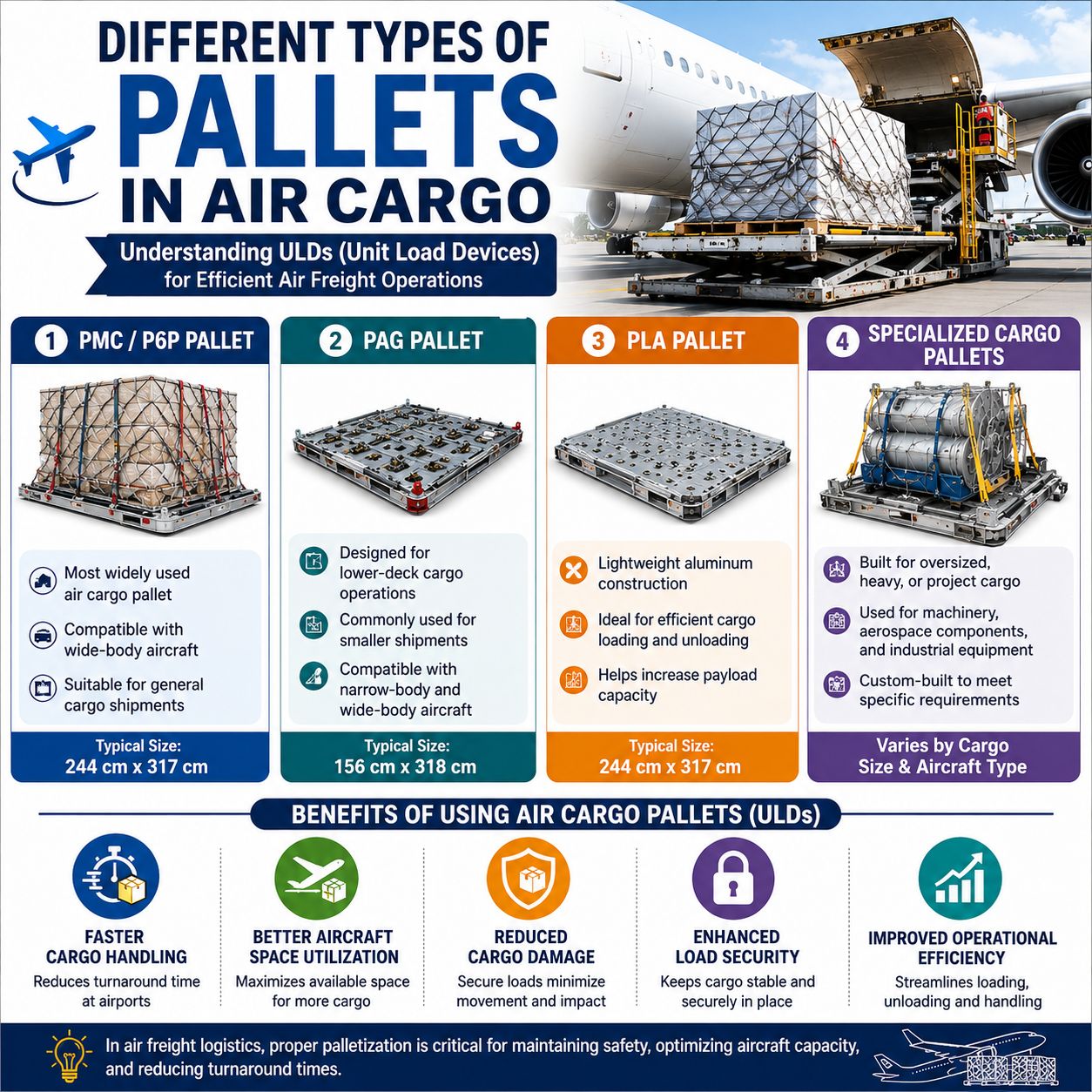
Air Cargo Pallets Guide
PMC / P6P Pallet (Most Common Workhorse)
- Base dimensions: 318 cm x 244 cm (125″ x 96″).
- Typical max height: 160-163 cm on passenger lower decks; up to 243 cm on freighters.
- Max gross weight: Often 5,000-6,800 kg depending on aircraft and position.
- Best for: General cargo on wide-body aircraft (B777, B747, A330).
- Why it dominates GCC routes: Fits lower decks of passenger flights efficiently while supporting heavy industrial or bulk shipments.
PAG Pallet
- Base: 317 cm x 224 cm (approx. 125″ x 88″).
- Lighter and slightly narrower than PMC.
- Ideal for: Lower-deck operations on passenger aircraft where space is tighter.
- Common use: Mixed general cargo or when weight distribution favors smaller footprints.
Strategic Capacity: Passenger Belly vs. Main-Deck Freighter
Leading regional carriers like Emirates SkyCargo and Qatar Airways Cargo utilize extensive passenger networks for cargo transit. However, B2B traders must distinguish between Passenger Belly (Lower Deck) و Main-Deck Freighter constraints before pre-booking space. Passenger holds enforce strict height limitations—typically capped at a maximum of 160–163 cm. Conversely, dedicated Freighters allow main-deck clearance up to 243 cm (and up to 300 cm for specialized nose-loading). Miscalculating these structural contour limits can lead to immediate cargo bumping, split shipments, or forced re-building fees at the terminal.
PLA Pallet
- Lightweight aluminum construction.
- Suited for main deck or specific passenger configurations.
- Advantages: Easier manual handling and reduced tare weight, which helps control fuel costs on longer hauls.
Specialized and Oversized Pallets
- PGA/PAJ for main-deck freighters (larger footprints, higher weight limits up to 11,340 kg).
- Heavy-duty or contoured options for machinery, aerospace parts, or project cargo.
- Thermal or refrigerated variants for perishables and pharmaceuticals.
Containers (e.g., LD3 / AKE)
- Enclosed units for lower decks.
- Provide superior protection from elements and tampering.
- Useful for high-value electronics or temperature-sensitive goods in GCC trade lanes.
Comparison Table: Key Pallet Types for GCC Operations
| Pallet Type | Base Size (cm) | Typical Height Limit | Max Gross Weight (kg) | Primary Aircraft Use | Best Cargo Examples |
|---|---|---|---|---|---|
| PMC/P6P | 318 x 244 | 160-243 | 5,000-6,800 | Wide-body lower/main | Machinery, general B2B |
| PAG | 317 x 224 | 160 | ~4,600 | Passenger lower deck | Mixed lighter loads |
| PLA | 318 x 244 | 163 | متفاوتة | Main deck passenger | Efficient general cargo |
| PGA/PAJ | Larger variants | Higher | Up to 11,340 | Freighters | Oversized/project cargo |
The Tarmac Melting Hazard: Managing GCC Summer Extremes
During peak summer months in the MENA region, airport tarmac temperatures across UAE, Saudi Arabia, and Qatar frequently exceed 50°C (122°F). Open ULD configurations like standard PMC or PAG pallets expose cargo to direct solar radiation during loading and cross-docking bottlenecks. For temperature-sensitive B2B cargo such as pharmaceuticals, high-end electronics, and specialized chemical components, implementing Thermal Blankets (ULD covers) or upgrading to active Refrigerated ULDs (e.g., RAP / RMP containers) is vital to preserve cold-chain integrity and prevent catastrophic product degradation.
Selecting the Right Pallet: Practical Decision Framework
- Assess Cargo Characteristics
- Dimensions and weight per piece.
- Fragility, value, or temperature requirements.
- Stackability and compatibility with standard secondary packaging (e.g., 48×40 inch pallets fit efficiently on PMC/PAG).
- Route and Aircraft Analysis
- Passenger vs. dedicated freighter.
- Lower deck vs. main deck constraints in regional hubs.
- Transit points—ensure compatibility across carriers.
- Regulatory and Compliance Factors
- IATA ULD regulations and local customs (e.g., SABER in Saudi, UAE valuation rules).
Critical Regulatory Update: KSA Customs & SABER Compliance
Saudi Arabia Zakat, Tax and Customs Authority (ZATCA) enforces strict mandatory palletization rules for all containerized and airfreight imports capable of being palletized. Non-compliant, loose cargo configurations face immediate customs delays, rejection at commercial airports/ports, or heavy financial penalties. For smooth cross-border execution into the Kingdom, standard ULD palletization aligned with SABER certifications is a strict legal requirement, not an operational recommendation.
- ISPM-15 for any wood components.
Biosecurity & ISPM-15: Strict Air Hub Audits in Dubai & Riyadh
A frequent and costly mistake in GCC airfreight is neglecting phytosanitary regulations for secondary packaging. Customs authorities at major hubs like Dubai (DXB) and Riyadh (RUH) enforce zero-tolerance policies regarding ISPM-15 compliance. Utilizing non-treated, un stamped wooden dunnage or support blocks beneath aluminum ULD pallets can trigger immediate quarantine, resulting in the rejection of the entire shipment. To mitigate this operational risk, forward-thinking B2B traders utilize fully certified plastic or aluminum pallets for air-lane operations, completely bypassing wooden component bottlenecks.
- Sustainability preferences—lighter aluminum or recyclable options reduce carbon footprint.
- Cost-Benefit Calculation
- Tare weight impacts fuel and charges.
- Build-up time and labor at origin.
- Potential demurrage or detention if ULDs are delayed.
Step-by-Step Selection Process
- Map cargo volume against ULD internal usable space.
- Consult forwarder or platform tools for real-time aircraft compatibility.
- Test a small shipment if scaling up new routes.
- Factor in return logistics—empty ULD repositioning costs.
Air Freight Documentation Flow: Mastering Digital Customs
Optimal Palletization and Loading Best Practices
Effective palletization turns potential bottlenecks into competitive advantages:
- توزيع الوزن: Keep center of gravity low and balanced. Heavy items at base.
- Securing Cargo: Use approved nets, straps, and corner protectors. Avoid over-tightening that damages goods.
- Stacking Rules: Interlock boxes, fill voids, and respect height contours to prevent aircraft loading rejection.
- Labeling and Documentation: Clear markings, HS codes, and handling instructions. Digital manifests speed processing.
- التصور ثلاثي الأبعاد: Tools like container optimization software help preview loads.
For GCC traders, aligning with port and airport requirements (e.g., mandatory palletization trends) avoids fines and rejections.
Common Pitfalls to Avoid
- Exceeding contour limits.
- Improper netting leading to shifting in flight.
- Using non-certified or damaged ULDs.
- Ignoring weather protection for desert-to-port transits.
Cost Optimization and Risk Management in Air Pallet Shipping
Air freight remains premium-priced, so every kilogram and centimeter counts. Strategies include:
- Consolidating shipments to fill ULDs efficiently.
- Negotiating with forwarders for dedicated ULD slots.
- Tracking ULD status to minimize demurrage.
- Combining air with sea for hybrid cost models on non-urgent legs.
Cost Strategy: Maximizing the ULD “Pivot Weight” Threshold
To truly optimize margins on GCC air routes, B2B traders must master the mechanics of Pivot Weight. Air carriers charge a flat minimum rate for a standard ULD (such as a PMC pallet) up to a specific weight threshold—the “Pivot.” If your actual cargo weight falls below this threshold, you still pay the full flat rate, drastically inflating your per-kilogram cost. Advanced supply chains carefully balance high-density and low-density commodities within the same build-up layout. The goal is to maximize volume and bring the total gross weight as close to the Pivot limit as possible, effectively unlocking “free” freight capacity for the remaining space.
Risk mitigation involves insurance tailored to air transit, real-time monitoring, and contingency planning for geopolitical or capacity disruptions common in regional corridors.
Future Trends: Sustainability, Technology, and 2026 Outlook
Lightweight composites, smart ULDs with sensors, and automated build stations are gaining traction. Airlines expand freighter fleets in the GCC, increasing main-deck pallet opportunities. ESG pressures favor lower-emission configurations and better space utilization.
Traders who integrate these tools early position themselves ahead in competitive MENA markets.
Implementing Pallet Strategies in Your Operations
Start by auditing current shipments: What percentage uses standard PMC/PAG? Where do delays occur? Partner with experienced freight forwarders and leverage digital platforms for visibility.
Internal Checklist:
- Cargo specs documented.
- ULD type pre-approved by carrier.
- Build team trained on IATA standards.
- Backup options for peak seasons.
- Post-shipment review for continuous improvement.
For comprehensive support in streamlining documentation, cost calculations, and logistics matching, explore integrated trade tools available on the ecosystem.
Conclusion: Turn Pallets into Profit Drivers
Mastering air cargo pallets is not a technical detail—it is a strategic lever for reliability, cost control, and growth in global B2B trade. By choosing the right ULD, following proven loading protocols, and staying aligned with 2026 regional requirements, exporters and importers in the GCC and beyond reduce risks while accelerating delivery.
Operational excellence at this level separates thriving traders from those stuck with avoidable expenses. Evaluate your next shipment against these standards, optimize your pallet strategy, and watch efficiency gains compound across your supply chain.
Ready to facilitate, secure, and accelerate your cross-border processes? Register at https://tendify.net/my-account/ to access practical tools designed for real-world trade execution.

