


Blog
IMEC vs INSTC: The Battle of Eurasian Trade Corridors
In an era of fragmented supply chains and heightened geopolitical risks, businesses operating across MENA and global markets face a pivotal question: How can traders secure faster, more resilient pathways for goods moving from South Asia to European destinations while navigating volatile maritime chokepoints? The India-Middle East-Europe Economic Corridor (IMEC) stands out as one of the most ambitious answers, promising to cut transit times by up to 40% compared to traditional Suez routes and unlock billions in new trade value for GCC-based operators.
This multimodal network—spanning rail, ports, energy infrastructure, and digital connectivity—positions Gulf hubs as central nodes in a reconfigured Eurasian trade architecture. For B2B players in the region, understanding its mechanics, opportunities, and persistent challenges is no longer optional; it is essential for competitive positioning in 2026 and beyond.
GCC Seasonal Trade: High-Margin Summer B2B Opportunities
Why IMEC Matters for GCC and Cross-Border Traders
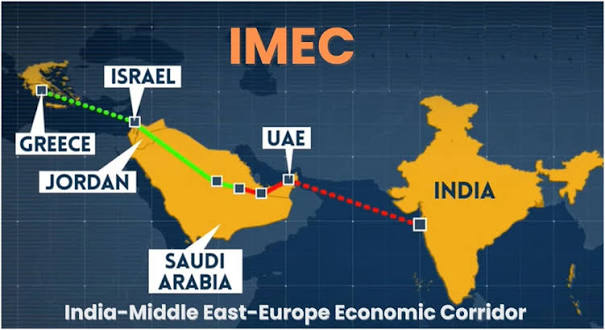
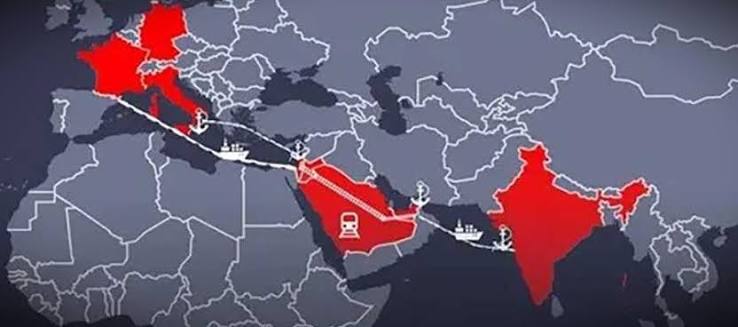
Traditional sea routes through key straits remain vulnerable to disruptions, driving up insurance premiums and delaying just-in-time deliveries. IMEC offers an integrated eastern leg (India to Gulf ports) and northern leg (Gulf through Levant corridors toward Mediterranean ports and onward to Europe). Rail links, upgraded seaports, electricity grids, and high-speed data cables form the backbone, enabling not just container movement but also green energy flows and digital services.

IMEC vs INSTC
Practical benefits observed in regional analyses:
- Time and Cost Savings: Potential reduction in shipping duration by weeks for certain cargo categories, translating to lower inventory holding costs and improved cash flow for exporters.
- Diversification: Reduces reliance on single maritime arteries, critical amid Red Sea volatility and broader supply chain stresses.
- GCC Hub Elevation: Ports and logistics zones in the UAE and Saudi Arabia gain enhanced roles as transshipment and value-add centers, supporting Vision 2030-style diversification.
🌱 The Decarbonization Advantage: IMEC and Europe’s CBAM
As the European Union enters definitive operational phases of its strict Carbon Border Adjustment Mechanism (CBAM), the evaluation of trade corridors undergoes a fundamental shift. For contemporary B2B operators, corridor selection is no longer driven solely by transit speed and freight rates; it is directly tied to carbon accounting and tax mitigation.
IMEC and Europe’s CBAM
The Green Logistics Leverage:
- Mitigating Scope 3 Emissions: Rail freight generates significantly less carbon dioxide per ton-kilometer compared to standard maritime container vessels. Transitioning long land segments to the GCC rail grid offers heavy industrial exporters an immediate reduction in their Scope 3 supply chain footprint.
- Future-Proofing Infrastructure: Beyond container transport, IMEC’s blueprint integrates clean energy pipelines and green hydrogen infrastructure. This dual-purpose setup positions the corridor as a zero-emission energy conduit directly into the European market.
Strategic Compliance Advisory:
For GCC-based manufacturers exporting steel, aluminum, cement, and fertilizers to Europe, IMEC serves as a vital tool for tariff optimization. Utilizing a lower-carbon multimodal network allows businesses to bypass heavy border tax penalties imposed by the EU. Incorporating these carbon-efficient routing options into your logistics model is essential for maintaining price competitiveness in European destinations.
In operational terms, this means GCC importers and exporters can explore hybrid multimodal strategies—sea to Gulf, rail across key land segments, then sea or rail to Europe—potentially streamlining end-to-end costs for commodities, machinery, and consumer goods.
Core Components and Operational Blueprint
IMEC is not a single rail line but a layered ecosystem. Key elements include:
- Eastern Corridor: Maritime and port connectivity from Indian ports to major Gulf facilities, emphasizing efficient customs and logistics handoffs.
- Northern Corridor: Land-based links through GCC territories, Jordan, and potential extensions, integrating with Mediterranean ports for final European delivery.
- Supporting Infrastructure: Energy pipelines (including green hydrogen potential), fiber-optic cables for data, and harmonized digital trade documentation to minimize paperwork delays.
⚡ The Digital Backbone: Data Sovereignty and Fintech Harmonization
While physical infrastructure like rails and ports dominates the headlines, IMEC’s undersea and overland high-speed fiber-optic cables represent its most immediate operational layer. For advanced B2B platforms and high-frequency commodity traders, this digital conduit is the literal foundation for algorithmic trading, real-time escrow, and automated cross-border settlements. However, exploiting this speed requires navigating severe cross-border data sovereignty laws.
- NDMO vs. GDPR Alignment: Commercial data traveling from South Asia through the Gulf to Europe must simultaneously satisfy Saudi Arabia’s strict National Data Management Office (NDMO) localization mandates and the European Union’s rigid GDPR frameworks. Any compliance mismatch risks legally blocking digital trade flows at national borders.
- Infrastructure Protectionism: Managing sensitive financial transactions, bill of lading data, and customs e-preclearances requires clear, multilateral legal frameworks. Traders cannot leverage sub-millisecond network advantages if legal uncertainties freeze cross-border cloud storage and data synchronization.
For modern cross-border traders, systemic resilience requires utilizing compliant digital ecosystems that understand regional regulatory nuances. Forward-looking operators must integrate with fintech platforms and digital supply chain tools that feature built-in compliance mechanisms for both GCC data sovereignty rules and Western standards. Seamless data alignment is the prerequisite for unlocking accelerated customs clearance and secure, localized escrow systems.
For traders, execution involves mapping specific HS codes and cargo types to corridor segments. Bulk commodities benefit from rail stability, while higher-value goods leverage speed advantages.
Step-by-Step Integration Guide for Businesses:
- Assess Cargo Profile: Determine volume, perishability, and regulatory needs. Use tools like HS code classifiers and cost calculators to model scenarios.
- Partner Mapping: Identify GCC forwarders with established Gulf-India and Gulf-Europe links. Focus on operators experienced in multimodal transshipment.
- Compliance Preparation: Align with evolving customs protocols across participating jurisdictions. Pre-clearance via digital platforms accelerates flows.
- Risk Layering: Incorporate geopolitical monitoring into contracts, using flexible Incoterms and contingency routing options.
- Pilot Testing: Start with smaller shipments on eastern leg segments to validate timelines and costs before scaling.
Geopolitical Dynamics Shaping the Corridor
IMEC’s progress reflects broader realignments in MENA trade architecture. Announced amid G20 momentum in 2023, it gained traction as a strategic counterbalance to other large-scale connectivity initiatives, fostering economic ties among key players including India, GCC states, the US, and European partners.
⚡ The Ukrainian Catalyst & Russia’s Northern Pivot
Macro-logistics corridors rarely adapt due to economic theory alone; they are accelerated by geopolitical friction. A defining blind spot in standard corridor modeling is underestimating how the Russia-Ukraine conflict fundamentally altered the transit matrix of the Middle East by forcing a major global superpower to re-route its entire trade infrastructure southward.
The Structural Shift:
- Pre-Conflict Inactivity: Historically, Moscow showed minimal interest in investing heavily in southern transport corridors, as its established Baltic and European maritime routes were highly cost-effective.
- The Sanctions Inflection: Comprehensive Western sanctions abruptly severed Russia’s access to European corridors. This created an immediate, existential dependence on Iranian transit topology to maintain trade access to India, Asia, and the Global South.
Logistics Risk Modeling:
For GCC and global B2B operators, this underscores that the viability of corridors like IMEC cannot be evaluated in a vacuum. The speed and urgency with which Russia expands alternative north-south Eurasian arteries directly correlates with Western sanctions enforcement. A sudden geopolitical catalyst can transform a theoretical secondary route into a heavily backed, operational trade channel overnight.
Key Stakeholder Interests:
- Gulf Perspectives: Saudi Arabia and the UAE view participation as integral to logistics leadership and economic transformation goals. Investments in domestic rail, ports, and green infrastructure continue regardless of full corridor activation.
- Broader Regional Context: Discussions around alternatives, such as northward extensions or rerouting explorations through additional Levant pathways, highlight adaptability in response to political preconditions and stability requirements. Public sentiment and demands for inclusive regional frameworks remain influential factors in GCC decision-making.
- External Influences: US and European engagement emphasizes supply chain resilience and diversified partnerships. Momentum has fluctuated with regional events, but bilateral advancements (e.g., India-Gulf agreements) sustain underlying progress.
Security considerations loom large. Stable maritime access and land route predictability are prerequisites for private investment. Disruptions in adjacent areas underscore the value of diversified, land-augmented pathways that can bypass certain chokepoints.
The Battle of Corridors: IMEC vs. INSTC
The Battle of Corridors
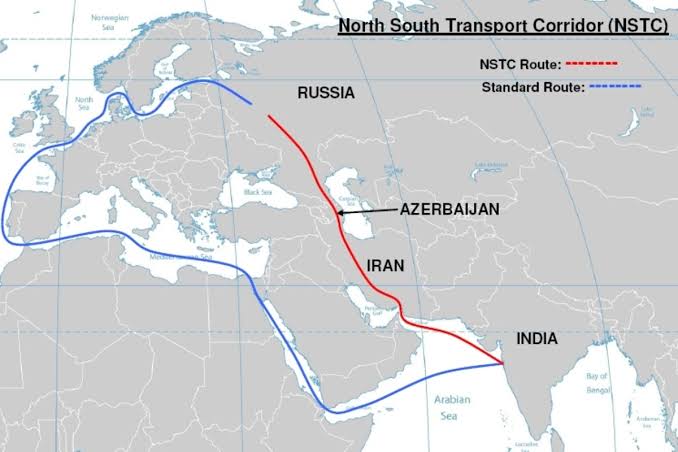
To fully grasp the shifting trade architecture of the MENA region, IMEC cannot be analyzed in isolation. It operates in direct strategic friction with the International North-South Transport Corridor (INSTC)—a 7,200-kilometer multimodal network backed heavily by Russia and Iran to connect Mumbai to Saint Petersburg, offering an alternative Eurasian commercial axis.
Accelerated by Western sanctions post-2022, Russia has pivoted its massive trade flows southward. Moscow’s €1.3 billion financing of Iran’s missing Rasht-Astara rail link aims to unlock seamless land transit. Simultaneously, India maintains a dual-track hedging strategy, formalizing a 10-year operational lease of Iran’s oceanic Chabahar Port to secure direct access to Central Asia, presenting a viable structural counterweight to the southern IMEC route.
The Compliance Dilemma for Global Traders:
For global B2B operators, the choice between these corridors is dictated by compliance and risk capacity rather than mere geographic proximity. While the INSTC offers a highly direct route, its heavy exposure to secondary U.S. and European sanctions creates significant barriers for tier-one maritime lines, international banks, and global insurers. Consequently, Western-backed corporate supply chains lean toward IMEC’s institutional framework, while sanction-insulated regional trade flows increasingly solidify along the northern INSTC artery.
⚠️ Maritime Chokepoints: The Strait of Hormuz Vulnerability
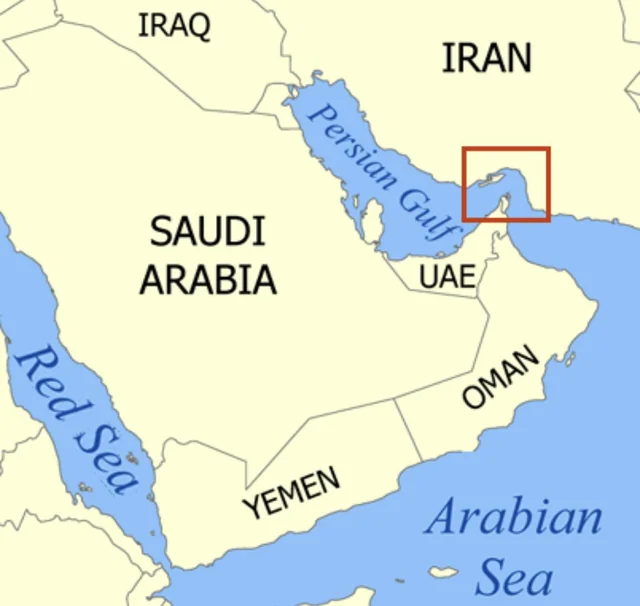
While regional reporting frequently highlights “Red Sea volatility” as a primary logistics bottleneck, standard corridor models often ignore the critical maritime anchor of IMEC’s eastern leg. The initial transit segment from Indian ports to the UAE must pass directly through or adjacent to the Strait of Hormuz, placing the corridor’s entry point within a volatile geopolitical zone.
The Strait of Hormuz Vulnerability
The Military Leverage & Escalation Risks:
- The Strait of Hormuz Exposure: As the primary artery for global energy and Gulf-bound container freight, any potential military escalation involving Iran, regional state actors, or Western naval coalitions risks freezing IMEC’s maritime leg before cargo can reach regional rail networks.
- Asymmetric Disruption: Drone and missile proliferation across regional chokepoints demonstrates that complete overland insulation is a misconception. A localized conflict can abruptly spike war-risk insurance premiums, causing multinational carriers to re-route freight regardless of infrastructure availability.
Strategic Contingency Advisory:
For global B2B operators, this reliance on key chokepoints reinforces the necessity of **flexible routing layers**. True resilience requires maintaining secondary forwarding capabilities that bypass the inner Gulf when threat levels rise. Infrastructure development reduces transshipment steps, but naval security and stable territorial waters remain the ultimate baseline for reliable commercial transit.
🎯 The China Factor: IMEC as a Direct Counter to the BRI
While official Western policy frames IMEC through the lens of “supply chain resilience” and “commercial efficiency,” the corridor’s architectural design cannot be separated from global hegemony. At its core, IMEC serves as Washington’s primary geoeconomic instrument to push back against China’s deepening economic and technological footprint in the Gulf.
The Geopolitical Pivot:
- Countering the BRI: IMEC is a direct, structured alternative to China’s multi-trillion-dollar Belt and Road Initiative (BRI), which has already integrated several Middle Eastern hubs into Beijing’s trade orbit.
- Beyond Cargo Containers: The inclusion of digital fiber-optic cables and green hydrogen networks is a strategic move to secure critical infrastructure, ensuring Western-aligned standards override Chinese hardware (e.g., Huawei 5G networks) in the GCC link.
B2B Supply Chain Advisory:
Traders must realize that financing and regulatory momentum for IMEC are driven by Washington’s urgency to retain strategic influence. For GCC-based operators, this power play requires careful positioning: while taking advantage of IMEC’s infrastructure, businesses must maintain agile operational ties with Chinese supply chains, balancing relations in a deeply polarized, multipolar trade landscape.
🌐 The Shadow Competitor: Iraq’s $17B Development Road Project
While global supply chain literature focuses heavily on the binary competition between IMEC and Russia’s INSTC, a major continental bypass is actively taking shape in the heart of the Levant. The Iraq Development Road represents a critical third variable that alters the logistics calculus for GCC-based exporters and multi-national forwarders.
The Practical Blueprint:
- The Direct Continental Bridge: Stretching 1,200 kilometers via a high-speed rail and highway network, this corridor links the Grand Faw Port in southern Iraq directly to the Turkish border, plugging into the European railway matrix.
- Bypassing Maritime Friction: Unlike IMEC, which relies on complex multimodal handoffs in Mediterranean ports, the Development Road provides uninterrupted land continuity. It completely bypasses the unstable waters of the Eastern Mediterranean and the Israel-Palestine diplomatic gridlock.
GCC Cross-Border Integration:
This project is not an isolated Iraqi initiative; it features heavy financial and logistical backing from the **UAE and Qatar**, who view it as a fast-track corridor for Gulf-to-Europe overland trade. For B2B traders, this serves as a viable, alternative infrastructure layer. It reduces dependence on single corridor frameworks and ensures the GCC remains the foundational transshipment nexus for all West Asian trade.
Challenges and Realistic Implementation Outlook for 2026
Despite strategic appeal, IMEC faces structural hurdles typical of large-scale multinational projects:
- Political and Security Variables: Normalization discussions and pathways for broader regional consensus influence timelines. Alternatives bypassing specific segments are actively evaluated.
🏛️ The Diplomatic Bottleneck: Riyadh’s Hard Preconditions
Standard industrial updates often oversimplify IMEC’s challenges as purely financial or regulatory. In operational reality, the completion of the corridor’s critical rail segment hinges entirely on a non-negotiable sovereign mandate: Saudi Arabia’s absolute diplomatic linkage of normalization to an irreversible pathway toward a sovereign Palestinian state.
The Geopolitical Impasse & Hedging:
- The Levantine Gridlock: The final overland link designed to connect Saudi Arabia’s rail infrastructure to the Israeli Port of Haifa is politically frozen. Riyadh cannot bypass regional public sentiment and Islamic alignment to activate a multi-billion dollar transit line through Israeli territory without structural political concessions.
- The Turkish Rerouting Alternative: To mitigate this prolonged Levant deadlock, Saudi Arabia has actively explored strategic alternatives. This includes examining northward rail corridors linking Jordan and potentially Syria directly into Turkey, effectively creating an alternative overland bridge to Europe that completely bypasses Israeli ports.
GCC Logistical Takeaway:
For B2B planners, this dual-track diplomacy demonstrates why Saudi Arabia and the UAE are expanding their domestic rail and maritime infrastructure as modular networks. These systems are designed to deliver near-term domestic value, ensuring that even if the complete IMEC alignment remains stalled by political gridlocks, the infrastructure can seamlessly pivot to alternative transnational transit routes.
- Funding and Execution: Billions in infrastructure commitments require coordinated public-private models. Phased domestic upgrades in Gulf ports provide near-term value even if full connectivity lags.
- Economic Viability: Multimodal handoffs introduce costs; success depends on sufficient cargo volumes and competitive pricing versus established sea routes.
⚙️ The Technical Friction: Rail Gauge Incompatibility
Standard multimodal logistics models frequently oversimplify land transit as a seamless conveyor belt. In engineering reality, IMEC and its competing corridors face a significant operational barrier: rail gauge incompatibility. This structural discrepancy introduces mandatory physical bottlenecks that directly impact end-to-end transit times and cross-border pricing.
The Structural Discrepancy:
- Broad Gauge vs. Standard Gauge: India’s domestic rail network operates almost exclusively on Broad Gauge (1676 mm), whereas the GCC network (Saudi Arabia, UAE) and European connections utilize the international Standard Gauge (1435 mm).
- The Transshipment Penalty: Because train cars cannot physically transition across these networks, cargo requires continuous bogie exchange (replacing the wheel assemblies) or full container transshipment via heavy gantry cranes at pivotal hinterland nodes. This mechanical handoff adds hours of friction to the supply chain.
Operational Risk Modeling:
For GCC importers and B2B planners, this gauge variance transforms a pure geographic corridor into a series of **intermodal friction points**. While IMEC’s main land link across the Arabian Peninsula is standardized, the backend connections into South or Central Asia are not. When modeling time-sensitive shipments, operators must account for these transshipment windows, as rail congestion at gauge-changing stations can cause unpredictable supply chain delays.
- Regulatory Harmonization: Aligning standards across jurisdictions demands ongoing diplomatic and technical work.
Current assessments (as of mid-2026) indicate the project remains in a developmental phase with continued bilateral momentum but no comprehensive launch. Gulf investments in related infrastructure keep options open.
🛑 Operational Realities: The Indo-Pakistan Border Deadlock
On a standard physical map, a direct overland route running from India through Pakistan and Iran to Europe appears far more geographically concise than IMEC. However, evaluating corridors purely by distance ignores the operational reality of the Indo-Pakistan border deadlock and its associated security premiums.
The Geopolitical Impasse:
- The Border Wall: Long-standing adversarial relations between New Delhi and Islamabad have rendered their shared border virtually impenetrable for bulk commercial transit, forcing India to completely bypass Pakistan via maritime linkages.
- The Insurability Crisis: The contiguous overland segments stretching across Pakistan’s Balochistan province and Iran’s Sistan-Baluchestan region are affected by structural, persistent security challenges. For tier-one global underwriters, this persistent volatility makes cargo and infrastructure effectively uninsurable for international B2B freight.
Logistics Insurance Takeaway:
This baseline friction explains why global supply chains willingly absorb the higher costs of multimodal handoffs (switching between ships and rail lines via IMEC). In contemporary trade, predictability and political trust always override geographic proximity. Until border segments are politically normalized and militarily stabilized, geographic shortcuts remain unviable for global cargo routing.
💡 Geopolitical Counterbalance: The Missing Iranian Angle
While the current IMEC framework targets a southern maritime-to-rail alignment, a critical geopolitical variable is omitted: Iran’s proactive strategy to bypass international isolation through the International North-South Transport Corridor (INSTC). To ensure a comprehensive risk assessment for global supply chains, operators must evaluate how this competing network influences regional transit dynamics.
Omitted Strategic Factors:
- The INSTC Route: A 7,200-km multimodal transit network connecting Mumbai to Moscow via Iranian ports, acting as a direct competitor to IMEC.
- Chabahar Port Expansion: India’s 10-year operational lease of Iran’s Chabahar Port, maintaining New Delhi’s dual-track hedging strategy between competing corridors.
- Russia-Iran Rail Integration: The €1.3 billion Russian loan financing the missing Rasht-Astara rail link, structurally cementing an alternative Eurasian trade axis.
B2B Strategic Implications:
Relying solely on abstract mentions of “heavy sanction exposures” or “contested land segments” understates the structural reality. For long-term logistical modeling, global shippers must recognize that regional transit is a game of corridor competition. The pace of IMEC’s implementation will be directly pressured by the operational maturity of the northern INSTC alternatives.
Strategic Recommendations for GCC B2B Operators
To capitalize on evolving connectivity:
- Diversify Logistics Portfolios: Maintain capabilities across multiple corridors and multimodal options. Monitor developments via industry platforms and regional trade bodies.
- Leverage Digital Tools: Utilize tariff calculators, container optimizers, and compliance generators to model IMEC-integrated scenarios accurately.
- Build Ecosystem Partnerships: Engage with free zones, exhibition calendars in UAE, Saudi Arabia, and neighboring markets to test demand and forge buyer networks.
- Focus on Value-Add Services: Position operations around sustainability (ESG tracking), digital documentation, and risk mitigation—areas where IMEC-aligned infrastructure provides advantages.
- Scenario Planning: Prepare for accelerated progress (if political windows open) or sustained phased implementation by investing in adaptable warehousing and forwarding capabilities in key GCC nodes.
Data from similar initiatives shows that early adopters who integrate corridor awareness into sourcing and contracting gain measurable edges in speed-to-market and margin protection.
Future Outlook: From Vision to Operational Reality
IMEC exemplifies the shift toward resilient, multi-nodal trade systems in a multipolar economy. For GCC businesses, it reinforces the region’s role as a pivotal bridge rather than a peripheral player. While full realization depends on sustained stability and cooperation, incremental advancements in ports, rail, and digital layers deliver tangible benefits today.
Businesses that treat connectivity as a core strategic pillar—rather than a reactive cost—will be best positioned to thrive. This includes proactive use of available trade utilities, from duty calculators to contract builders, to de-risk and optimize flows.
In practice, the most successful operators combine deep regional knowledge with agile global tooling. Platform.Tendify.net supports this by streamlining access to relevant calculators, compliance aids, and networking opportunities within the GCC-MENA ecosystem.
The coming years will test which corridors capture meaningful volume. For forward-looking traders, proactive alignment with IMEC’s evolving framework offers a pathway to enhanced efficiency, market access, and long-term resilience in cross-border commerce.
Ready to strengthen your position in these shifting trade dynamics? Register at https://tendify.net/my-account/ to access practical tools and insights designed for efficient, secure global operations.

