


المدونة
Mexico Nearshoring Suppliers: Scaling North American Supply Chains
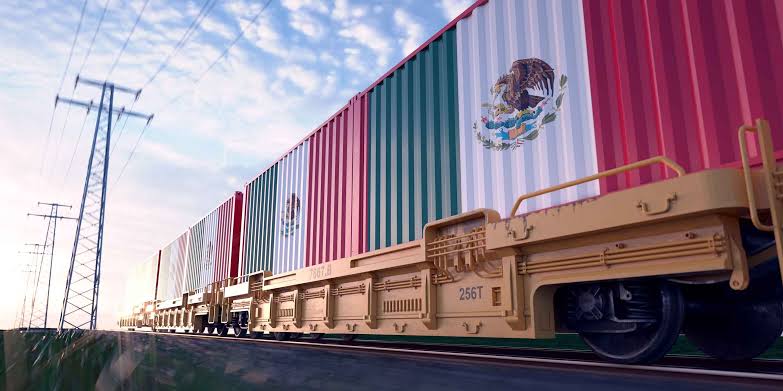
A mid-sized auto-parts manufacturer in Nuevo León recently faced a familiar calculation. A major U.S. OEM needed additional capacity for EV components within 18 months. Shipping from Asia still carried 30-plus days of ocean transit plus tariff exposure. The Mexican supplier already sat inside the USMCA zone, could deliver by truck in under a week, and operated in the same time zone. The deal closed. Similar conversations are now repeating across Monterrey, Querétaro, Ciudad Juárez, and the Bajío corridor.
Nearshoring is no longer a forecast. In the first quarter of 2026 alone, Mexico recorded a record $23.6 billion in foreign direct investment, a 10.4 percent year-over-year increase. Full-year 2025 FDI reached approximately $40.9 billion. Manufacturing exports to the United States climbed to roughly $535–545 billion. Kearney’s 2026 FDI Confidence Index moved Mexico up six places to 19th globally. These numbers reflect a structural shift: companies are redesigning North American supply chains around proximity, tariff predictability, and operational resilience.
Mexico Nearshoring
For Mexican suppliers, the opportunity is not simply absorbing foreign factories. It is the chance to internationalize their own operations—moving from domestic or regional contracts into multi-year, multi-country value chains that stretch across the United States, Canada, and beyond.
Why the Shift Accelerated in 2025–2026
Three forces converged.
First, tariff differentials under the USMCA create a measurable cost advantage. Qualifying Mexican-origin goods enter the United States at zero or near-zero duty for most categories. Competing Asian origins face layered tariffs that can reach 35 points or higher on consumer and intermediate goods. Utilization rates of USMCA preferences jumped from roughly 45 percent to nearly 89 percent in a single year as companies raced to qualify production.
Second, logistics mathematics changed. Ocean freight from Asia remains exposed to schedule volatility and longer transit times (18–35 days typical). Truck crossings from northern Mexico routinely clear in three to seven days. Same-time-zone collaboration reduces the friction that used to favor distant low-cost locations.
Third, resilience has become a board-level metric. After successive disruptions, procurement teams now weight geographic concentration risk more heavily than pure unit cost. Mexico’s existing industrial clusters—automotive in Nuevo León, Chihuahua, and Guanajuato; electronics and medical devices along the border; emerging data-center and server assembly capacity—offer ready infrastructure and skilled labor pools that many other nearshore candidates still lack.
The result is visible on the ground. Industrial absorption in Monterrey, Ciudad Juárez, and Querétaro has run well above pre-pandemic norms. Vacancy rates in primary hubs remain tight. New capacity is coming online, yet demand continues to outpace supply in established corridors.
The Supplier Opportunity: From Contract Manufacturer to Integrated Partner
Mexican companies that treat nearshoring as passive demand growth will capture only a fraction of the value. Those that actively internationalize their supply chains—upgrading capabilities, formalizing processes, and expanding their own supplier networks—can move upstream in the value chain.

Nearshoring to Mexico
Operational assessments across northern and central industrial zones show a consistent pattern. The suppliers winning multi-year contracts share several traits:
- Documented quality systems that satisfy Tier-1 and OEM audits (IATF 16949 for automotive, ISO 13485 for medical devices, relevant electronics standards).
- Traceability systems capable of demonstrating regional value content for USMCA qualification.
- Working capital and logistics arrangements that support just-in-sequence or vendor-managed inventory models preferred by North American buyers.
- Secondary supplier development programs that reduce dependence on Asian intermediate inputs where rules of origin risk tightening.
The July 2026 USMCA review adds urgency. While full termination remains unlikely, tighter rules of origin—particularly around Chinese-content thresholds—could reclassify certain goods. Suppliers who already map their bill-of-materials for regional content and maintain alternative sourcing options will negotiate from strength.
Practical Steps Mexican Suppliers Are Taking to Internationalize
1. Map and upgrade the bill of materials for regional content
Start with a full tier-mapping exercise. Identify every input that currently originates outside North America. Calculate the regional value content under current USMCA rules. Prioritize localization of high-value or high-risk components. In automotive and electronics, this often means developing local machining, stamping, or PCB assembly capacity rather than relying solely on imported sub-assemblies.
2. Professionalize logistics and inventory buffers
Logistics costs in Mexico still run 12–18 percent of product value against roughly 7.8 percent in the United States. That gap is both a constraint and an opportunity. Leading suppliers are consolidating freight, using shared warehousing near border crossings, and adopting digital visibility tools that give buyers real-time ETA data. Some are co-locating finished-goods inventory inside U.S. free-trade zones or bonded facilities to further compress lead times.
Cross-border processes benefit from standardized documentation and pre-clearance practices. Tools that generate accurate commercial invoices, packing lists, and certificates of origin reduce the risk of holds at Laredo, El Paso, or Otay Mesa.
3. Build formal compliance and audit readiness
Nearshoring buyers conduct deeper due diligence than many traditional export customers. Expect requests for financial statements, capacity utilization data, environmental and labor certifications, and cybersecurity posture. Suppliers who maintain a living “buyer readiness package” close deals faster and at better terms.
4. Expand downstream services
Pure component supply is becoming table stakes. Higher-margin relationships often include sub-assembly, kitting, sequential delivery, or light aftermarket support. Mexican firms that invest in these capabilities capture more of the total landed cost and become harder to displace.
5. Develop multi-market optionality
While the United States remains the dominant destination, Canadian and selected Latin American buyers are increasing regional sourcing. Diversifying the customer base reduces concentration risk and improves negotiating leverage with any single OEM.
Sector-Specific Dynamics
Automotive and EV components
Still the largest nearshoring cluster. Mexico produces more than four million vehicles annually and sits inside deeply integrated North American production networks. Battery, electric-drive, and electronics content is rising rapidly. Suppliers who can demonstrate both traditional powertrain expertise and EV-adjacent capabilities are winning the newest contracts.
Electronics, servers, and data-center hardware
Server and data-processing machine exports have grown dramatically, in some categories displacing vehicles as the top U.S. import line. Assembly, testing, and packaging capacity in northern Mexico is expanding. Component localization remains incomplete, creating openings for local PCB, connector, and thermal-management suppliers.
Medical devices and pharmaceuticals
Regulatory pathways under USMCA and FDA recognition create attractive margins. Clean-room capacity and validated processes command premiums. Recent investment announcements exceed $1 billion in related manufacturing.
Industrial equipment and machinery
Less headline-grabbing but steadily growing as U.S. manufacturers seek shorter, more controllable supply lines for capital goods.
Global Trade Architecture
Beyond Mexico: Balancing Nearshoring Hubs with Strategic Re-export Centers
Modern supply chain resilience relies on a dual-pillar strategy. While production capacity moves closer to end markets like North America through nearshoring, global trade simultaneously depends on mega-logistics hubs for component sourcing, raw material aggregation, and re-export efficiency.
1. Nearshoring Production Hubs (e.g., Mexico)
Optimized for direct assembly, short transit lead times, same-time-zone collaboration, and tariff preferences (USMCA) for single primary consumer markets.
2. Transit & Re-export Hubs (e.g., GCC Region)
Essential for intercontinental trade, energy/petrochemical inputs, warehousing, and seamless cross-border distribution connecting Asia, Europe, and Africa.
💡 Strategic Context: Forward-thinking procurement teams do not choose between these models—they orchestrate both. To explore market data, supplier networks, and trade route intelligence across Middle Eastern and global transit corridors, navigate our dedicated explore our directory of [Verified Global Suppliers] on Tendify.
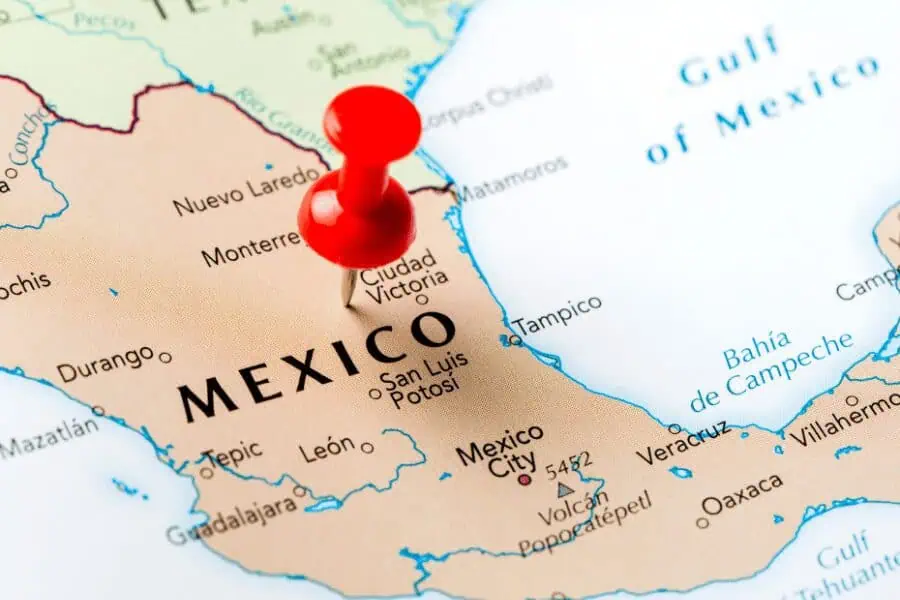
Balancing Nearshoring Hubs with Strategic Re-export Centers
Infrastructure and Operational Realities That Still Matter
Energy availability ranks as the most frequently cited operational constraint in northeastern industrial parks. Water stress in certain regions and an aging truck fleet add friction. Port and border infrastructure has improved, yet peak-period congestion remains a planning factor.
Security considerations vary by corridor. Northern industrial zones generally offer stronger conditions than some southern or central routes. Insurance, route planning, and carrier selection must reflect current conditions rather than historical averages.
These frictions do not erase the structural advantages. They simply reward suppliers and logistics partners who plan for them explicitly rather than assuming seamless execution.
⚠️
The Unseen Bottleneck: Digital Readiness & Language Barriers
Beyond power grids and water access, mid-sized Mexican suppliers face a quieter operational hurdle: the digital language gap. While Tier-1 conglomerates operate with fully bilingual teams, hundreds of high-capability Tier-2 and Tier-3 manufacturers across Monterrey, Querétaro, and Guadalajara lack English-first digital footprints, structured online catalogs, or standardized RFQ interfaces.
North American procurement officers often struggle to discover or evaluate these capable local facilities through standard web searches, leading to friction during early-stage vendor selection.
💡 How Tendify Bridges the Gap: Modern B2B ecosystems act as dynamic translators. By providing Mexican suppliers with pre-structured, English-standardized digital profiles and verified trade credentials, Platform.Tendify.net removes communication latency—allowing suppliers to showcase their true technical capabilities to international buyers without the high cost of establishing dedicated overseas marketing offices.
Digital Tools and Marketplace Dynamics
International buyers increasingly expect digital visibility—real-time production status, quality data, and shipment tracking. Mexican suppliers that integrate basic ERP or MES systems with customer portals close more business. Document automation (commercial invoices, certificates of origin, packing lists) reduces both cost and error rates.
Platforms that connect verified suppliers with qualified international buyers can accelerate market access, particularly for mid-sized firms that lack large sales teams. In practice, a structured digital presence complements traditional relationship selling rather than replacing it. One practical resource for exploring cross-border trade tools and documentation support is available at Platform.Tendify.Net; used selectively, it can shorten the path from inquiry to qualified opportunity.
Internal process discipline still determines long-term success. For related guidance on structuring trade documentation and cost modeling, see practical resources such as those covering Incoterms selection و End-to-End International Trade Solutions.
Bridging the Digital Gap: How Tendify Accelerates Nearshoring Connections
B2B Infrastructure
While physical supply chains shift toward North America, digital discovery remains a key bottleneck for mid-sized Mexican suppliers. Navigating international buyer scrutiny requires more than just capacity—it requires trust, verified compliance, and seamless cross-border communication. تينديفاي دوت نت directly addresses these friction points through a structured B2B marketplace architecture:
Built-in validation for USMCA documentation, IATF/ISO certifications, and operational audits, giving U.S. procurement teams immediate confidence.
Eliminates the cost of building expensive overseas sales operations by presenting capability matrices directly in English to North American buyers.
Standardized Request for Quote (RFQ) workflows and trade document creation tools that prevent cross-border miscommunication and delay.
Ready to position your manufacturing business within North America’s fastest-growing supply corridors?
Building Resilience Beyond the Current Cycle
Nearshoring momentum will not remain linear. Currency movements, energy pricing, and the outcome of the USMCA review will influence margins. Suppliers who treat the present window as a permanent structural change rather than a temporary boom are investing in three areas:
- Capability depth (process control, automation where justified, talent development).
- Network diversification (multiple customers, multiple corridors, selective secondary markets).
- Financial buffers that allow them to absorb temporary volume swings without compromising quality or delivery.
Experiences across the northern industrial corridor show that companies that combined early capacity investments with rigorous USMCA compliance work have converted initial contracts into multi-year frameworks with sequential expansion clauses. Those that waited for perfect conditions or relied solely on low labor costs have found themselves capacity-constrained or disqualified on origin rules.
الأسئلة الشائعة (FAQ)
Key insights on Mexican nearshoring, USMCA compliance, and B2B supply chain integration.
1. Why are North American buyers shifting procurement to Mexican suppliers?
The shift is driven by duty-free benefits under the USMCA, significantly shorter transit lead times (3–7 days via truck vs. 30+ days by ocean from Asia), same-time-zone operational collaboration, and the need to mitigate geopolitical supply chain risks.
2. What certifications do Mexican suppliers need to qualify for U.S. nearshoring contracts?
Depending on the industry, buyers typically require documented quality management systems such as IATF 16949 (Automotive), ISO 13485 (Medical Devices), or general ISO 9001 standards, alongside audited USMCA certificates of origin demonstrating regional value content.
3. How does the USMCA agreement impact tariff rates for Mexican exports?
Goods that meet USMCA Rules of Origin criteria enter the U.S. and Canada at zero or reduced tariff rates. In contrast, non-qualifying goods or inputs imported from secondary Asian markets may face layered tariffs exceeding 35%.
4. What are the primary manufacturing hubs in Mexico for nearshoring?
Key industrial corridors include Monterrey (Nuevo León) for automotive and heavy manufacturing, Ciudad Juárez & Tijuana for electronics and medical devices, and Querétaro & the Bajío corridor for aerospace, data centers, and specialized industrial equipment.
5. How can mid-sized Mexican manufacturers increase their visibility to foreign buyers?
Mid-sized suppliers can bridge the digital gap by digitizing their product catalogs in English, standardizing RFQ workflows, and registering on verified B2B trade networks like Platform.Tendify.net to showcase audit readiness and capabilities directly to international procurement teams.
Looking Ahead
Mexico’s manufacturing base is already deeply embedded in North American production. The current nearshoring phase is less about whether production will locate in Mexico and more about which Mexican suppliers will capture the higher-value segments of those chains. The difference lies in deliberate internationalization: treating the U.S. and Canadian markets as core rather than opportunistic, upgrading systems to meet the most demanding buyer standards, and managing logistics and compliance as competitive weapons rather than afterthoughts.
For suppliers ready to move from regional player to integrated North American partner, the operational playbook is clear. Map content rigorously. Professionalize logistics. Document everything. Expand downstream capability. Maintain optionality. The companies executing these steps are already converting record FDI announcements into durable commercial relationships.
The same disciplined approach that has allowed Mexican industry to absorb successive waves of foreign investment can now be applied outward—turning proximity into sustained competitive advantage across global supply networks.

