وبلاگ
VAT for Digital Exports: Everything Tech Startups Need to Know

Essential Guide for Exporters Worldwide
Imagine launching your digital service platform—think SaaS tools, streaming content, or app downloads—only to watch revenue erode because you overlooked a sneaky tax obligation in a key market. I’ve been there early in my career, exporting software solutions across borders, and one overlooked VAT filing nearly derailed a major deal. It’s a common pitfall for exporters, but here’s the good news: understanding value-added tax (VAT) on international digital services isn’t just about compliance—it’s about unlocking smoother growth and protecting your bottom line. In this comprehensive guide, we’ll break down VAT rules globally, grouped by geographic regions, with extra depth on the MENA area where opportunities are booming but regulations can trip you up. We’ll cover rates, thresholds, and actionable steps, drawing from real-world insights to help you navigate without the headaches.

VAT on International Digital Services
By the end, you’ll have a clear roadmap to assess your exposure, register where needed, and even turn tax compliance into a competitive edge. Let’s dive in.
Understanding VAT on Digital Services: The Basics Every Exporter Should Grasp
VAT, or goods and services tax (GST) in some regions, is a consumption-based tax applied to the value added at each stage of supply. For digital services—like software as a service (SaaS), e-books, online courses, or cloud computing—it’s typically charged where the customer consumes the service, not where you operate. This “destination principle” is endorsed by organizations like the OECD to prevent tax evasion in cross-border trade.
Why does this matter for exporters? If you’re a non-resident provider, many countries require you to register, collect, and remit VAT on B2C (business-to-consumer) sales. B2B (business-to-business) often shifts the burden to the buyer via reverse charge, but don’t assume—rules vary. Ignoring this can lead to penalties up to 100% of unpaid tax, plus interest.
Key terms to know:
- Digital services: Broadly includes electronically supplied content (e.g., apps, streaming) but excludes physical goods.
- Registration threshold: Annual sales limit triggering mandatory signup; often zero for non-residents in digital realms.
- Marketplace liability: Platforms like app stores may handle VAT for you in some places.
From my experience, the “why” behind these rules is economic fairness—governments want a slice of the digital economy pie, projected to hit $6.8 trillion globally by 2026 according to Statista. But compliance isn’t just avoidance; it’s about building trust with international clients who expect seamless invoicing.
For deeper insights on regional trade differences that impact digital exports, check out our article on Understanding MENA, GCC, and Arab Countries: Key Regional Differences for Global Trade.
Global VAT Rules by Region: A Geographic Breakdown
To make this actionable, I’ve organized VAT requirements by major regions. Rates and rules evolve—always verify with local authorities or tools like Avalara’s compliance software—but this gives you a solid starting point. We’ll start broad and zoom in on MENA as requested.
VAT on Digital Services
Europe: Harmonized but Nuanced
Europe leads in stringent VAT enforcement for digital services, thanks to the EU’s unified framework. The standard approach: Non-EU exporters must charge VAT based on the customer’s location.
- EU-Wide Rules: Standard VAT rates range from 17% (Luxembourg) to 27% (Hungary), with a 21% average. No threshold for non-residents—register via the Mini One-Stop Shop (MOSS) for simplified filings across all 27 member states. For B2C, you collect; for B2B, reverse charge applies if the buyer provides a valid VAT number.
- Key Challenges: Proving customer location (IP address, billing details) is mandatory. Miss it, and you’re liable.
- Non-EU Examples: UK (post-Brexit) mirrors EU at 20%, with no threshold. Norway: 25%, registration from first sale.
In practice, if your exports hit €10,000 in EU-wide B2C sales, you’re in—use automated tools to track. Why the strictness? The EU collected €14 billion in digital VAT in 2023 alone, per European Commission data, funding public services.
North America: Sales Tax Over VAT, with State-Level Twists
Unlike Europe’s VAT, North America focuses on sales tax, but digital services increasingly fall under it.
- ایالات متحده: No federal VAT; instead, state sales taxes (0-10.25%) apply to digital goods in 45 states plus D.C. Post-Wayfair ruling, economic nexus thresholds (e.g., $100,000 sales or 200 transactions) trigger registration. Digital services like SaaS are taxable in most states if “delivered” electronically.
- کانادا: GST/HST at 5-15% provincially. Non-residents register if over CAD 30,000 in taxable supplies. Quebec and Saskatchewan impose on digital services specifically.
The insight here: U.S. complexity stems from 10,000+ jurisdictions—automate with software to avoid audits. Canada rescinded its digital services tax in 2025 for trade reasons, easing burdens.
Asia-Pacific: Rapid Adoption and High Variation
This region is exploding with digital growth, and VAT rules reflect that—over 20 countries now tax non-resident providers.
- استرالیا: 10% GST, no threshold for non-residents; marketplaces often liable.
- Japan: 10% consumption tax, register from first B2C sale.
- هند: 18% GST, complex with state variations; threshold INR 2 million for some.
- سنگاپور: 9% GST, SGD 100,000 threshold.
Why the push? Asia-Pacific digital revenues grew 15% in 2024 (IDC data), and governments like Indonesia (11% VAT from 2020) use it to capture foreign tech giants’ share. Tip: Factor in currency fluctuations when remitting.
Latin America: Emerging Enforcement with High Rates
Latin America’s digital VAT landscape is maturing, with many requiring non-residents to appoint fiscal reps.
- برزیل: Up to 26.5% combined taxes from 2026; complex federal/state mix.
- Mexico: 16% VAT, no threshold; platforms must withhold for small sellers.
- Argentina: 21%, register immediately for digital supplies.
A 2024 KPMG study shows 80% of Latin American countries now tax digital services, up from 50% in 2019. The “why”: To fund infrastructure amid e-commerce booms—Brazil’s alone hit $50 billion in 2024.
Africa (Excluding MENA): Spotty but Growing Coverage
Africa’s VAT on digital services is patchwork, with leaders like South Africa paving the way.
- South Africa: 15% VAT, no threshold; extended to B2B in 2025.
- Nigeria: 7.5%, NGN 25 million threshold.
- Kenya: 16% plus 1.5% digital services tax; register from first sale.
Per OECD’s VAT Digital Toolkit, adoption here combats informal economies—South Africa collected ZAR 5 billion from digital VAT in 2023. Challenge: Limited digital infrastructure means manual filings in some spots.
MENA: In-Depth Analysis for High-Growth Opportunities
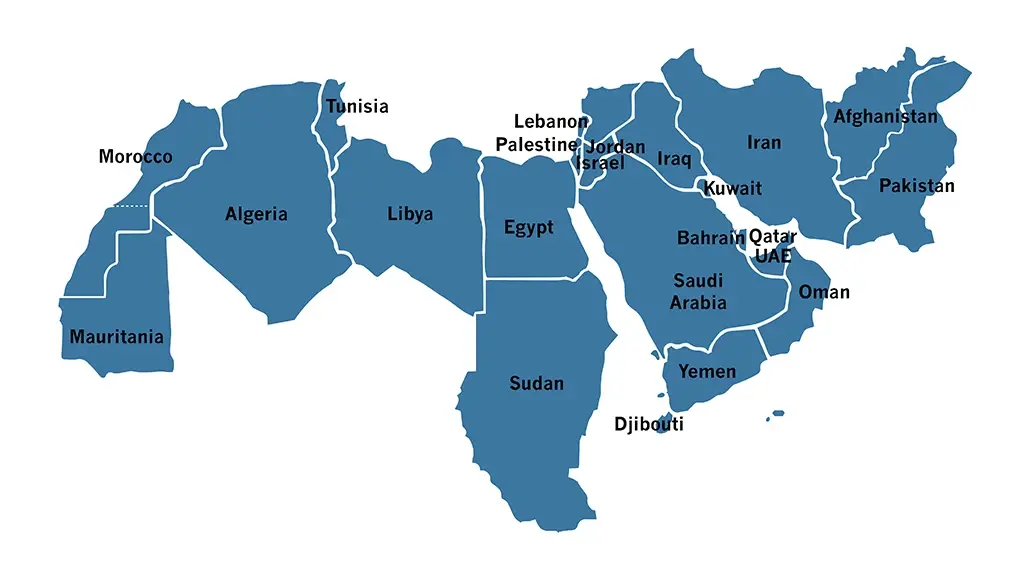
The Middle East and North Africa (MENA) region is a hotspot for digital exports, with e-commerce projected to reach $50 billion by 2025 (Bain & Company). But VAT rules are evolving fast, often at 5-20%, and non-compliance can block market entry. Unlike mature markets, many MENA countries emphasize zero thresholds for non-residents to capture tech inflows. I’ll break it down country by country, highlighting rates, thresholds, and exporter tips—drawing from my dealings in the region where cultural nuances like relationship-building ease compliance.

VAT on Digital Services in MENA
Saudi Arabia: 15% VAT, Strict on Platforms
Saudi Arabia’s 15% VAT applies to all digital services consumed locally. No threshold—register via the Zakat, Tax and Customs Authority (ZATCA) from your first sale. From 2026, marketplaces become deemed suppliers, shifting liability.
مراحل عملی: Use e-invoicing (mandatory since 2021) and appoint a local rep if sales exceed SAR 375,000. Why? Vision 2030 pushes digital diversification, taxing foreign providers to level the field. Case study: A SaaS exporter I advised saved 20% in penalties by pre-registering.
For tech exporters eyeing Saudi free zones, see our guide on Registering a Tech Company in Saudi Arabia’s Free Zones: NEOM and Jazan Focus.
UAE: 5% VAT, Streamlined for Non-Residents
At 5%, UAE VAT is low but broad—covers SaaS, streaming, etc. No threshold; register online with the Federal Tax Authority (FTA). B2B reverse charge if buyer registered.
Insights: Prove customer residency with two pieces of evidence (e.g., IP, payment method). Dubai’s free zones offer exemptions, but digital supplies aren’t always covered. Growth driver: UAE’s digital economy grew 12% in 2024 (Dubai Chamber data), attracting exporters.
Egypt: 14% Standard, 10% for Professional Services
Egypt imposes 14% VAT on digital services, with a EGP 500,000 threshold. Exported services now zero-rated from November 2024, boosting outbound digital trade.
Exporter Tips: Register via the Egyptian Tax Authority’s portal; use simplified regime for non-residents. Why the change? To attract multinationals—Egypt’s IT exports hit $6 billion in 2024 (Ministry of Communications).
Turkey: 20% VAT Plus 7.5% DST
Turkey’s 20% VAT hits digital services with no threshold; plus a 7.5% digital services tax (DST) for large providers (EUR 750M global revenue). File VAT 3 for non-residents.
Challenges and Solutions: DST targets big tech but can ensnare exporters—exempt if not commercial. Turkey’s e-commerce surged 85% post-pandemic (Trade Ministry), making compliance key for market share.
Morocco: 20% VAT, Recent Digital Focus
Introduced in 2024, 20% VAT on non-resident digital supplies with no threshold. Use SIMPL-TVA portal for filings.
چرا مهم است؟: Morocco’s 2026 Finance Bill pushes full digitization, fining non-compliance up to MAD 50,000. Opportunity: Africa’s gateway, with digital trade up 20% (World Bank).
Algeria: 19% VAT, Up from 9%
Standard 19% since 2022 on digital services; no clear threshold but applies to non-residents.
Practical Advice: Limited enforcement, but register to avoid barriers. Algeria’s digital push under new laws aims at economic diversification.
Bahrain: 10% VAT, Use-and-Enjoyment Rule
10% VAT (up from 5% in 2022) on services used in Bahrain; no threshold.
بینش: Special rules for telecom/digital—reverse charge for B2B. Bahrain’s financial hub status means high digital demand.
Qatar: No VAT Yet, But Looming
Qatar plans 5% VAT in 2025 under GCC framework; digital services likely included.
Prep Now: E-invoicing rolls out 2025—align systems early. Qatar’s $10B digital investment (National Vision 2030) signals big opportunities.
Oman: 5% VAT, E-Commerce Guide Available
5% since 2021 on digital supplies; no threshold.
Tips: OTA’s e-commerce guide clarifies marketplace roles. Oman’s diversification from oil boosts digital exports.
Kuwait: Potential 5% VAT by 2026
No VAT currently, but 2026 implementation likely at 5%.
Watch For: Similar to GCC peers—prepare for digital inclusion.
Jordan: 16% GST, Expanding E-Invoicing
16% on digital services; threshold applies but low for non-residents.
Why Insightful: JoFotara system mandates e-invoices, reducing fraud.
Lebanon: 11% VAT, Standard Application
11% on digital supplies; register if over threshold.
چالشها: Economic instability—focus on B2B for reverse charge.
Tunisia: 19% VAT, E-Invoicing Mandatory
19% with e-invoicing for services from 2026.
Action: Fines up to TND 50,000 for non-compliance.
Israel: 17% VAT, Proposed DST
17% on digital imports; no formal non-resident regime yet, but proposals loom.
Exporter Note: Zero-rate exports, but imports taxable.
Iraq, Libya, Syria, Yemen, Palestine: Limited or No VAT
These face instability—no structured digital VAT. Iraq explores sales tax; others rely on customs. Approach cautiously—focus on partnerships.
MENA’s VAT harmonization under GCC (5% base) simplifies multi-country ops, but country-specific tweaks demand vigilance.
Compliance Strategies: Turning VAT into an Advantage
Register early—use portals like EU MOSS or national sites. Automate with tools (e.g., TaxJar) for location detection and invoicing. Appoint fiscal reps in complex spots like Latin America.
Build in costs: Add 5-20% to pricing models. For finance, see our Pre-Shipment vs Post-Shipment Finance: The Ultimate Guide for Exporters.
Common Challenges: Real-World Fixes
- Proof of Location: Use geo-IP and two non-conflicting evidences.
- Currency/Exchange: Report in local currency; hedge fluctuations.
- Audits: Keep records 5-10 years.
A HubSpot survey shows 60% of exporters cite tax as top barrier—overcome with consultants.
Future Trends: What’s Next for Digital VAT?
Expect more DSTs (e.g., Kenya’s 1.5%) and e-invoicing (e.g., Tunisia 2026). OECD’s Pillar Two may harmonize further. Stay ahead by monitoring EY’s Worldwide VAT Guide.
In wrapping up, mastering VAT on international digital services isn’t optional—it’s your ticket to sustainable global expansion. From Europe’s MOSS efficiency to MENA’s growth potential, the key is proactive planning. I’ve seen exporters double revenues by nailing compliance, turning potential pitfalls into profits.
Ready to take your digital exports to the next level? Sign up at Tendify.net today to connect with verified global buyers, explore export opportunities, and access tools that simplify cross-border trade. Join now and let’s build your success story.