وبلاگ
Stablecoins in Real B2B: The Practical Guide to Settlement Without Traditional Banks
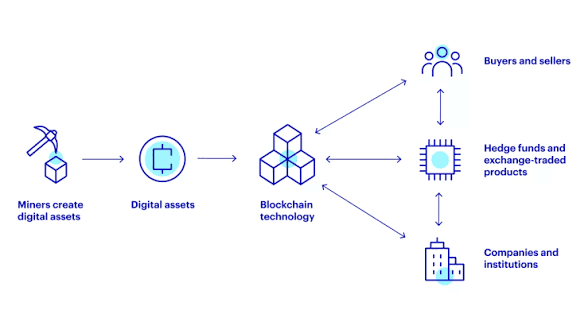
A complete operational playbook for B2B traders, manufacturers, and logistics operators who want faster, cheaper, and more resilient settlement — without relying on traditional banking rails.
In 2026, the B2B world is undergoing a quiet but profound shift. While headlines focus on retail crypto volatility, serious cross-border traders have moved billions of dollars in stablecoin-denominated settlements for real goods — containers of petrochemicals, steel coils, pharmaceuticals, and bulk commodities. They do this not for speculation, but for speed, cost efficiency, and operational resilience in an environment where correspondent banking relationships continue to shrink and compliance costs keep rising.
Stablecoins

This is not theoretical. It is the daily reality for operators who have integrated stablecoins into their core trade settlement stack. The result? Settlement times drop from 7–14 days to under 48 hours, transaction costs fall by 60–85%, and capital remains productive instead of sitting idle in correspondent accounts.
This guide is written for practitioners — not retail speculators. It explains exactly how stablecoins are used today in legitimate B2B trade, the infrastructure required to make them work at scale, the compliance frameworks that keep everything above board, and how Tendify turns stablecoin settlement from a promising idea into a production-ready operating system.
Why Traditional Banking Settlement Is Breaking Down for B2B Traders in 2026
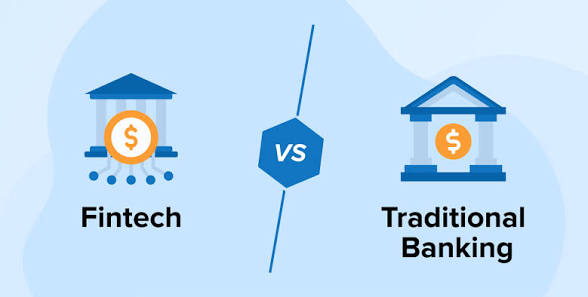
Traditional cross-border payments still rely on correspondent banking, SWIFT messaging, and multiple layers of compliance checks. For many corridors — especially those involving emerging or reconstruction markets — the process is slow, expensive, and increasingly unreliable.
Traditional Banking
Key pain points include:
- Correspondent bank de-risking that removes direct rails for certain countries
- High intermediary fees (often 3–7% per transaction)
- Multi-day or multi-week settlement cycles that tie up working capital
- Regulatory friction and documentation requests that delay or block legitimate trade
- Currency conversion losses and FX volatility exposure
In this environment, stablecoins — particularly USDC and USDT issued on efficient blockchains — have become the practical alternative for B2B operators who need to move value quickly while maintaining full commercial documentation and auditability.
What “Stablecoin in Real B2B” Actually Looks Like
Stablecoins in B2B are not about speculation or retail transfers. They are used as a digital settlement rail that mirrors the economics of a commercial invoice.
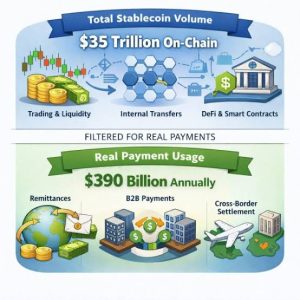
Stablecoin in Real B2B
A typical flow works like this:
- Buyer and seller agree on a commercial contract (goods, quantity, price, Incoterms).
- The buyer transfers stablecoins to a smart-escrow wallet controlled by a neutral platform (or a trusted third-party custodian).
- The seller ships the goods and provides proof of shipment and delivery (bill of lading, inspection reports, etc.).
- Upon verified delivery, the stablecoins are released to the seller.
The entire process is documented with standard trade paperwork, creating a complete audit trail that satisfies banks, regulators, and tax authorities. The stablecoin simply replaces the wire transfer — nothing more, nothing less.
Step-by-Step: Implementing Stablecoin Settlement in Your B2B Operations
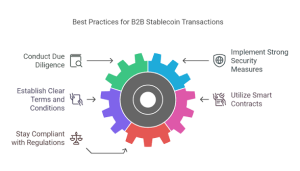
Implementing Stablecoin Settlement in Your B2B Operations
Step 1: Choose the Right Stablecoin and Chain
For B2B, USDC (Circle) and USDT (Tether) on Ethereum, Polygon, or Tron remain the most liquid and institutionally accepted. USDC offers stronger regulatory transparency; USDT offers broader liquidity in certain corridors.
Step 2: Set Up Operational Wallets and Custody
Use institutional-grade custody solutions or integrated platforms that support multi-signature approvals and automated compliance checks. Never use personal wallets for operational volumes.
Step 3: Integrate Smart Escrow or Performance-Based Release Mechanisms
This is where the magic happens. A neutral escrow holds the stablecoins until predefined commercial milestones are met and verified on-chain or off-chain.
Step 4: Align Documentation with Stablecoin Flows
Every shipment must be supported by full commercial documentation (invoice, packing list, bill of lading, certificates of origin). The stablecoin transfer is simply the settlement layer.
Real-World B2B Use Cases That Work Today
Operators are already using stablecoins for:
- Petrochemical and bulk commodity trades between GCC and South Asia
- Pharmaceutical and medical supply chains requiring speed and traceability
- Reconstruction-related industrial equipment and machinery shipments
- Food and agri-commodity flows where traditional banking rails are slow or expensive
In every case, the stablecoin settlement is fully backed by physical trade documentation, creating a legitimate commercial transaction that satisfies all regulatory requirements.
Compliance, Regulation, and Risk Management in Stablecoin B2B
Legitimate B2B stablecoin use requires robust compliance. Key elements include:
- Full KYC/AML on all counterparties
- Complete trade documentation and audit trails
- Travel Rule compliance where applicable
- Clear separation between stablecoin settlement and any financing layer
When done correctly, stablecoin settlement is often more transparent than traditional wires because every transfer is publicly verifiable on-chain while the commercial context remains in standard trade documents.
How Tendify Turns Stablecoin Settlement into Production-Ready Infrastructure
Platform.Tendify.Net — The Operating System That Makes Stablecoin B2B Settlement Real
Tendify does not ask traders to become crypto experts. It provides the integrated infrastructure that makes stablecoin settlement as straightforward as sending a wire — but faster, cheaper, and more resilient.
Inside the Command Center you will find:
- Smart escrow that holds stablecoins until verified delivery milestones are met
- Real-time cost calculators that model stablecoin + trade economics together
- Automated export documentation generators that align perfectly with stablecoin flows
- HS Code, duty, and tariff tools that keep every transaction fully compliant
- AI market pulse that flags corridor-specific stablecoin liquidity and regulatory signals
- Multimodal logistics planning that ties physical shipment to digital settlement
The result is a complete operating system where stablecoin settlement is just one seamless layer inside a fully documented, commercially legitimate trade flow.
Traders using Tendify can initiate a stablecoin-secured transaction in minutes, track every step on a unified dashboard, and release funds automatically upon confirmed delivery — all while maintaining complete commercial documentation for banks, auditors, and regulators.
Risk Management Framework for Stablecoin B2B
Successful operators follow a disciplined framework:
- Counterparty vetting and performance history review
- Use of smart escrow with multi-signature release conditions
- Insurance on physical cargo and stablecoin custody
- Regular reconciliation between on-chain records and off-chain trade documents
- Diversification across stablecoin issuers and blockchain rails
The Future of Stablecoin B2B Settlement: 2026 and Beyond
As more central banks explore CBDCs and more institutions adopt stablecoins for treasury management, the B2B use case will only accelerate. The winners will be those who integrate stablecoins not as a standalone tool but as one efficient layer inside a complete trade operating system.
Tendify is built precisely for this future — combining stablecoin settlement rails with the documentation, compliance, logistics, and performance tools that serious B2B operators require.
We at Tendify have engineered the tools that simplify the most complex equations of modern B2B trade. Our smart escrow, cost calculators, and documentation engines turn stablecoin settlement from a promising concept into a daily operational reality.
If you are a B2B trader, manufacturer, or logistics provider ready to move beyond the limitations of traditional banking, the complete stablecoin-enabled operating system is ready inside your dashboard at Platform.Tendify.Net.
The future of B2B settlement is already here. The infrastructure to make it work at scale is waiting for you.
Related Strategic Resources on Tendify.net
- The Hidden Arbitrage of Risk: How Trade-Based Settlement Exploits Regulatory Blind Spots in 2026
- Cross-Border Logistics for B2B Trade in the Gulf Region
- Regional Logistics Integration and Trade Opportunities Across the GCC
- Rebuilding Iran After the 2026 Conflict: The Global Investment Playbook