وبلاگ
Beyond Diplomacy: How the Pakistan Talks Could Reshape Energy Corridors and Regional Trade Architecture

While global attention has largely focused on the political dimensions of recent negotiations held in Pakistan, the deeper economic implications — particularly regarding energy corridors, transit infrastructure, and alternative trade mechanisms — deserve careful examination. The talks have the potential to influence not only bilateral relations but also the architecture of energy flows and payment systems across South and Southwest Asia. This analysis explores the economic undercurrents of these discussions with a focus on energy security, transit economics, and the possibility of new non-dollar settlement frameworks.
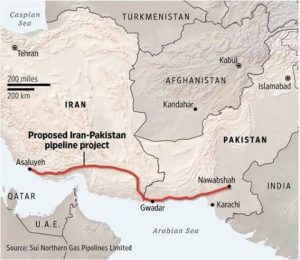
Iran-Pakistan Gas Pipeline (IP)
For businesses engaged in regional trade, energy, and logistics, understanding these dynamics is essential for long-term planning and risk management. The following sections provide an objective assessment of three critical economic dimensions that often receive less public attention than the diplomatic narrative.
Core Economic Perspective: Negotiations in Pakistan may serve as a quiet catalyst for practical economic arrangements — from energy corridor revival to enhanced transit connectivity and innovative payment mechanisms — that could materially affect regional trade costs and supply chain stability.
1. The Revival of the Iran-Pakistan Gas Pipeline (IP) Under New Geopolitical Conditions
The long-stalled Iran-Pakistan gas pipeline project remains one of the most significant unfinished pieces of regional energy infrastructure. Pakistan faces substantial contractual penalties if the project is not advanced, while Iran seeks reliable export markets for its abundant gas reserves. Any meaningful progress on this corridor would have far-reaching implications for energy security in South Asia.
A functional IP pipeline could significantly alter the regional gas supply map, providing Pakistan with a more stable and potentially cost-effective energy source while offering Iran a diversified export route less dependent on traditional LNG markets. From a trade compliance perspective, such infrastructure would require robust due diligence, transparent contracting, and careful sanctions screening — areas where specialized platforms play an important role.
The economic significance extends beyond bilateral gas trade. A revived pipeline could serve as the foundation for broader energy cooperation, including potential swaps, transit arrangements, and even the development of regional gas trading hubs. For companies involved in energy trading and infrastructure, monitoring developments around this corridor is strategically important. Related compliance considerations for energy route optimization are discussed in Compliant Trade Route Reengineering: Audit-Ready Alternatives to the Strait of Hormuz Crisis.
2. Gwadar vs. Chabahar or Gwadar and Chabahar? The Emerging Connectivity Question
International discourse often frames Gwadar (Pakistan) and Chabahar (Iran) as competing ports. However, recent discussions suggest a more nuanced possibility: enhanced connectivity and functional complementarity between the two ports rather than pure rivalry.
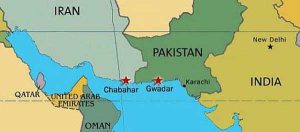
Gwadar vs. Chabahar
If stability improves along the shared border regions, particularly in Balochistan, both ports could benefit from increased regional trade volumes. Improved security directly influences marine insurance premiums and overall transit costs — a critical economic factor that is frequently overlooked in purely political analyses. Lower perceived risk translates into reduced insurance costs, which in turn lowers the landed cost of goods moving through these corridors.
Such connectivity could enable more efficient multimodal routes connecting Central Asia, South Asia, and the Middle East. For logistics operators and traders, this scenario opens new possibilities for diversified routing strategies that enhance resilience and cost efficiency. Practical approaches to route diversification in high-risk corridors are examined in greater detail in Search Hormuz The Strait of Hormuz Toll Scheme: Economic Implications and Compliance Considerations for Global Trade and Energy Security.
3. The Rise of Non-Dollar Trade Mechanisms and Local Currency Settlement
Both Iran and Pakistan face significant dollar liquidity constraints. Against this backdrop, discussions around barter trade, local currency settlement mechanisms (Rial-Rupee), and alternative clearing arrangements have gained renewed relevance.

Non-Dollar Trade Mechanisms
A strengthened bilateral payment system using local currencies could reduce dependence on the US dollar and associated sanctions risks. While such mechanisms require careful design to ensure transparency and compliance with international standards, they represent an important experiment in building more resilient regional trade architecture. Successful implementation could serve as a model for other countries facing similar constraints.
For businesses engaged in regional trade, the emergence of practical non-dollar settlement options could lower transaction costs and reduce settlement risks. The evolution of such mechanisms is closely linked to broader trends in digital trade finance and alternative payment rails. Further insight into post-traditional sanctions financial mechanisms is available in Post-Traditional Sanctions Financial Mechanisms: Strategic Integration with CBDCs and Single-Window Platforms for Compliant Regional Settlements.
4. The Critical Role of Stability in Balochistan for Trade Economics
Stability in Balochistan province — which spans the Iran-Pakistan border — has direct and measurable economic consequences. Improved security conditions along key transit routes can lead to lower war-risk and cargo insurance premiums, faster transit times, and greater investor confidence in infrastructure projects.
Insurance costs are particularly sensitive to perceived security risks. Even modest improvements in stability can translate into meaningful reductions in the cost of moving goods through the region. For exporters, importers, and logistics providers, this factor often has a greater impact on final delivered costs than headline political developments.
From a compliance perspective, enhanced stability also facilitates better due diligence, more reliable supply chain visibility, and reduced risk of disruption. Companies operating in or through the region should incorporate security-related risk indicators into their ongoing compliance monitoring frameworks.
Conclusion: Economic Architecture Beyond Political Headlines
While the political dimensions of recent negotiations in Pakistan naturally attract attention, the potential economic outcomes — particularly regarding energy corridors, port connectivity, and innovative payment mechanisms — may ultimately prove more consequential for regional trade and development.
For businesses and investors, the key takeaway is the importance of monitoring both political signals and practical economic arrangements. Progress on energy infrastructure, improved transit security, and the development of alternative settlement systems could materially alter cost structures and opportunity landscapes across South Asia.
Companies that maintain agile, compliance-focused strategies will be best positioned to navigate this evolving environment. Whether through revived energy corridors, enhanced port connectivity, or innovative non-dollar mechanisms, the underlying economic currents of these negotiations deserve close and continuous attention from serious market participants.
Platforms designed for regulated regional trade and compliance provide essential tools for monitoring developments and maintaining operational resilience. Entities seeking to strengthen their understanding of these economic dynamics are encouraged to adopt forward-looking, audit-ready approaches to risk management and opportunity assessment.