


وبلاگ
BlackBerry’s $147 Stock Peak to Pennies: The Real Reasons Touchscreens & Apps Killed a Giant
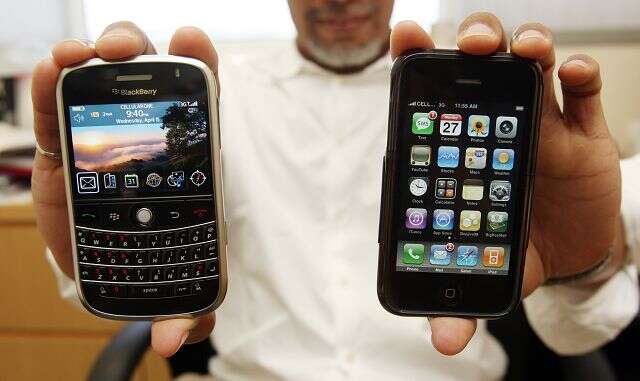
I’ve been in the trenches of building and scaling businesses for over 20 years, watching tech waves crash over industries that thought they were untouchable. Few stories sting quite like BlackBerry’s. A company that basically invented the modern smartphone for professionals – secure email on the go, that addictive physical keyboard, the “CrackBerry” addiction among executives. At its peak, it owned over 50% of the U.S. smartphone market and billions in value. Then, in what felt like a blink, it vanished from consumer pockets, pivoting to software because hardware was dead.
BlackBerry
The surface story is simple: Apple launched the iPhone in 2007 with a full touchscreen, followed by Android’s open ecosystem and explosion of apps. BlackBerry dismissed it all – too consumer-focused, too playful, not serious enough for business users. But dig deeper, and it’s a masterclass in what kills even the strongest players: refusing to evolve when consumer behavior shifts, clinging to old strengths while new ones emerge, and executing poorly when finally trying to catch up.
In wholesale, export, and global B2B trade – the space I operate in daily – the parallels are everywhere. Buyers now demand instant digital catalogs, real-time pricing, seamless online negotiations, and mobile-friendly platforms. Stick to fax, email chains, and in-person meetings too long, and you lose deals to platforms that make trading effortless. Let’s unpack exactly what went wrong at BlackBerry, the hard data, the missed turns, and – most importantly – the practical moves any business can make today to avoid becoming tomorrow’s case study.
The Glory Days: When BlackBerry Defined “Smart” Phone
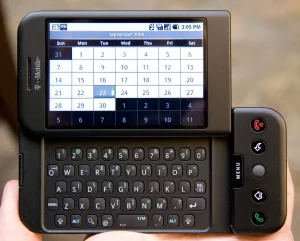
BlackBerry (originally Research In Motion) started in the late 1990s with pagers and push email – revolutionary at the time. By the early 2000s, devices like the BlackBerry 850 and 957 delivered real-time email securely over wireless networks. No waiting for sync; messages arrived instantly.
When BlackBerry Defined “Smart” Phone
Key strengths that built an empire:
- Physical QWERTY keyboard – Typing was fast and accurate; business users loved it.
- BlackBerry Enterprise Server (BES) – Unmatched security and push email for corporations.
- BBM (BlackBerry Messenger) – Encrypted, instant messaging that felt private and reliable.
- Enterprise dominance – Governments, Fortune 500s, even presidents relied on it.
At peak around 2009, BlackBerry held roughly 20% global smartphone share and over 50% in the U.S., with 85 million subscribers worldwide. Revenue soared, stock hit highs equivalent to massive valuation. It wasn’t just a phone; it was a productivity tool.
But the iPhone arrived in 2007, and everything changed.
The iPhone Wake-Up Call – And BlackBerry’s Dismissal
Apple’s first iPhone wasn’t perfect – slow 2G, no 3G initially, limited apps. But it introduced:
- Full multi-touch screen for intuitive navigation.
- A real web browser (not crippled mobile versions).
- iTunes integration for music and media.
- App Store vision (launched 2008).
The iPhone Wake-Up Call – And BlackBerry’s Dismissal
BlackBerry leadership saw it as a toy for consumers – fun, but not for serious work. They believed physical keyboards would always win for typing emails, and enterprise security would protect their moat. Internal focus stayed on incremental improvements to push email and security, not reimagining the device for a broader audience.
Meanwhile, consumer preferences shifted fast:
- Younger users wanted touch, media, apps.
- Broadband and 3G made mobile internet viable.
- Apps became the new battleground – games, social, productivity tools.
By 2008-2009, iPhone and early Android devices gained traction. BlackBerry’s response? The BlackBerry Storm in late 2008 – their first full touchscreen.
It flopped spectacularly.
The Execution Failures: Storm, PlayBook, and Beyond
The Storm promised touchscreen competition but delivered bugs, slow performance, a “clickable” screen that felt gimmicky, and an OS not optimized for touch. Reviews were brutal; sales started strong but cratered.
Later attempts:
- BlackBerry Bold series – Hybrid keyboard + small touch, but still lagged in screen size and fluidity.
- PlayBook tablet (2010) – Launched without native email/calendar at first; poor app support.
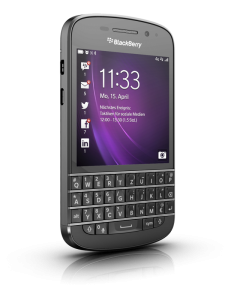
- BlackBerry 10 OS (2013) – Modern, gesture-based, but arrived years late with weak app ecosystem.
- App World – BlackBerry’s store never attracted developers like Apple’s App Store or Google Play.
App gap became fatal. iOS and Android offered tens of thousands of apps early; BlackBerry had hundreds. Developers flocked where users were. Without apps, devices felt limited.
Market share timeline tells the brutal truth:
- 2009 — ~20% global, over 50% U.S.
- 2011 — Dropping fast; stock tanks ~80% in one year.
- 2013 — Under 5% globally; massive writedowns.
- 2016 — Stops making phones; pivots to software (cybersecurity, IoT).
- Today — Market share near 0% in consumer smartphones.
From billions in peak value to near-irrelevance in hardware.
Root Causes: Why BlackBerry Couldn’t Adapt
Several intertwined failures:
- Underestimating Disruption Dismissed touchscreen as fad; believed keyboard loyalty was permanent. Consumers voted otherwise.
- Enterprise-Only Focus Prioritized corporate security over consumer appeal. Missed mass-market growth where Android exploded.
- Closed Ecosystem Insisted on proprietary OS and first-party apps. No vibrant third-party developer community.
- Poor Timing and Execution Storm rushed and buggy. BB10 too late. PlayBook half-baked.
- Cultural Inertia Success bred complacency. Leadership didn’t force bold pivots soon enough.
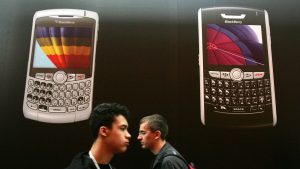
Why BlackBerry Couldn’t Adapt
Contrast with Apple (ecosystem + user experience) and Android (open, customizable, cheap hardware partners). BlackBerry tried to defend old ground instead of claiming new.
Actionable Lessons: Stay Ahead of Shifts in Your Industry
I’ve used these hard truths to pivot businesses before they hurt. Here’s what works:
- Monitor Consumer (and Buyer) Behavior Weekly Track complaints, trends, competitor moves. In trade: Are buyers demanding mobile apps for RFQs? Digital docs? Act before it’s mainstream.
- Build Small, Protected Innovation Teams Separate from core ops. Test touchscreen-like shifts (e.g., AI matching, blockchain verification) without core interference.
- Cannibalize Proactively Launch features that might hurt current revenue but capture future. BlackBerry could have built a consumer app ecosystem early.
- Embrace Open Ecosystems Partner with developers, integrate third-party tools. In B2B: Open APIs for integrations beat closed systems.
- Prioritize User Experience Over Legacy Features Keyboard was great – until touch + apps won. Focus on what buyers want now: speed, convenience, mobile access.
For platforms like Tendify, this means constant evolution – mobile-optimized storefronts, instant chat, verified digital transactions. Ignoring how global buyers shop today risks the same slow decline.
For more on these patterns, see our deep dives: The Real Reasons for Nokia’s Failure: A Giant That Overlooked Innovation و Kodak’s $31 Billion Mistake: The Brutal Truth About Missing Digital Transformation. Or check Breaking Down Data Silos: Create a Single Source of Truth for Risk & Compliance for staying agile with data.
The Bottom Line: Adapt or Become History
In 2026, disruption hits faster than ever. AI tools, real-time global matching, sustainable supply chain tracking – these shift buyer expectations overnight. Businesses that listen, test, and pivot win. Those defending yesterday’s model end up like BlackBerry: a shadow of their former self.
If you’re in wholesale, export, or international sourcing, don’t wait for your “iPhone moment.” Tendify gives you the digital edge now: verified suppliers worldwide, buyer RFQs posted free, secure online deals, mobile access to everything.
Sign up today – it takes minutes, costs nothing to start as a buyer, and puts your business in front of global opportunities instantly. Build the adaptable, future-ready trading operation that thrives no matter what comes next.
Register on Tendify now and make sure changing buyer behaviors work for you, not against you. Your competitors are already going digital – get ahead before it’s too late.

