


وبلاگ
China-Kazakhstan Rail Traffic Surges 26%: What It Means for B2B Shippers
China-Kazakhstan Rail
For B2B traders, freight forwarders, and supply chain managers operating across GCC countries and broader MENA regions, this development offers tangible alternatives to congested maritime routes and geopolitically sensitive northern paths. Faster transit, improved multimodal options, and infrastructure upgrades translate into lower inventory costs, better cash flow, and stronger supply chain resilience.
20 Documents Used in Export & Import
The Data Behind the Surge: Alashankou-Dostyk and Beyond
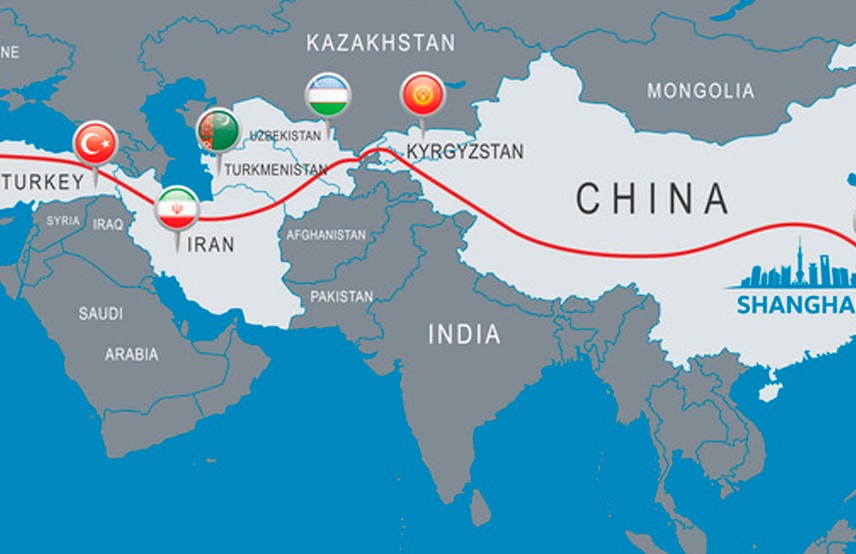
The China-Kazakhstan rail corridor, anchored by key crossings like Alashankou-Dostyk and Khorgos-Altynkol, forms the eastern gateway of the Middle Corridor (also known as the Trans-Caspian International Transport Route).
Recent figures highlight accelerating momentum:
- Volume Growth: Rail freight between Kazakhstan and China grew by approximately 9.3% in early 2026, with transit volumes from China rising 27%.
- Container Focus: The sharper rise in block trains (26.6% vs. 14.6% in tonnage) reflects a shift toward higher-value, time-sensitive cargo that benefits from containerization.
- Infrastructure Impact: Upgrades such as double-tracking on the Dostyk-Moyinty segment have already boosted throughput, with further projects targeting capacity increases to 48 million tons annually.
| Metric (Jan-May 2026) | Volume/Count | YoY Change | Implication for Traders |
|---|---|---|---|
| Total Freight (Alashankou-Dostyk) | 781,600 tons | +14.6% | Steady bulk growth supports commodities |
| Container Block Trains | 2,054 | +26.6% | Faster, securer movement for manufactured goods |
| Transit TEU Potential (Corridor) | Scaling toward 42,000+ annually | Significant | Multimodal efficiency for GCC/MENA rerouting |
Kazakhstan’s Pivotal Role as a Central Asia Transit Hub
Kazakhstan handles the majority of overland transit between Western China and Europe, accounting for over 80% of Central Asian rail freight activity. Its position — bridging China to the Caspian Sea, then onward to Azerbaijan, Georgia, Turkey, and Europe — makes it indispensable.

China–Kazakhstan rail corridor
The Middle Corridor spans roughly 4,250 km of rail plus Caspian sea segments, offering a shorter alternative to traditional northern routes in certain scenarios. Transit times typically range from 14–20 days door-to-door for optimized services, compared to 35–45 days by sea on some Asia-Europe legs.
Key Advantages in Practice:
- Resilience: Diversifies away from single-point vulnerabilities in maritime chokepoints.
- Predictability: Fixed-schedule block trains and digital tracking reduce uncertainty.
- Capacity Expansion: Ongoing investments in third border crossings and bypass lines address bottlenecks.
For GCC-based importers and exporters, this creates new sourcing and distribution pathways. Goods originating from China can reach regional hubs faster, enabling just-in-time inventory strategies for construction materials, machinery, consumer electronics, and FMCG.
🌐
The Physical Link: How Central Asian Rail Reaches the GCC
While the China-Kazakhstan surge proves overland efficiency, a critical question remains for Middle Eastern supply chains: How does cargo transition from the Eurasian steppes to Gulf ports like Jebel Ali or Dammam? The connection relies on two primary sub-corridors that bypass traditional maritime chokepoints:
Route 1
The KTI Rail Corridor (Kazakhstan–Turkmenistan–Iran)
A direct, fully overland railway operating from western Kazakhstan through Turkmenistan straight to Iran’s major Persian Gulf gateways (Bandar Abbas یا Bandar Imam Khomeini). From these southern hubs, cargo is loaded onto efficient regional feeder ships, reaching major GCC distribution centers in days.
Route 2
The Trans-Caspian Multimodal Route
Cargo travels via rail to Kazakhstan’s Aktau Port, crosses the Caspian Sea via container vessels to Azerbaijan (Baku) or northern Iranian ports (Anzali/Amirabad), and seamlessly connects to southern rail and road networks targeting the Gulf.
💡 Strategic Takeaway:
For a logistics manager in Riyadh or Dubai, these routes mean that “overland rail” isn’t a distant landlocked concept—it is a functional, multi-modal network designed to deliver Chinese components directly to your desert fulfillment centers without ocean container delays.
Opportunities for B2B Shippers and Freight Forwarders in 2026
The surge opens practical advantages that forward-thinking traders are already leveraging.
1. Transit Time Optimization Rail’s speed advantage directly impacts working capital. Reducing ocean transit by 15–25 days lowers holding costs and enables quicker response to market demand. Traders targeting GCC construction booms or seasonal imports benefit most.
💰 The “Value for Money” Factor: Calculating Landed Costs in 2026
A common misconception in B2B logistics is that rail is strictly more expensive than ocean freight. While rail per-container costs can be higher under stable market conditions, the 2026 landscape tells a different story.
Due to persistent disruptions in key maritime channels—most notably the ongoing volatility in Red Sea shipping routes—Ocean Freight rates have become unpredictable. When calculating Total Landed Cost, traders must account for more than just the base ocean rate. Today, the economic advantage shifts in favor of rail when factoring in:
- Time-Value of Freight: Reducing transit by 20+ days unlocks working capital and allows for a faster “cash-to-cash” cycle.
- Demurrage & Detention Mitigation: By bypassing congested global ports, you significantly reduce the risk of massive “hidden” fees linked to terminal delays.
- Insurance Premiums: Stability on the Middle Corridor is currently helping to stabilize insurance costs compared to the risk-heavy maritime routes.
2. Multimodal Integration Combine rail with sea at Caspian ports (e.g., Aktau) or road feeders for last-mile delivery. This hybrid approach balances cost and speed. For example, rail to a Caspian port, short sea crossing, then onward trucking or rail into GCC markets.
3. Supply Chain Diversification Businesses reliant on traditional sea lanes gain optionality. This is especially relevant amid ongoing global disruptions. High-value or perishable-adjacent cargo (electronics, auto parts, specialized machinery) sees the greatest gains from container block trains.
4. Cost and Risk Management While not always the cheapest per ton for bulk commodities, the corridor’s reliability reduces hidden costs like demurrage, detention, and insurance premiums tied to longer voyages. Real-time visibility tools further minimize risks.
Cross-Border Commerce: Mastering the Hybrid Human + AI Operating System
Practical Steps to Engage the Corridor:
- Map your current routes and calculate total landed costs including time value.
- Partner with forwarders experienced in block train bookings and gauge-change handling at borders.
- Use digital platforms for HS code classification, tariff estimation, and ETA modeling.
- Pilot smaller shipments of high-margin goods to test service levels.
- Integrate compliance checks for cross-border documentation early.
Challenges and How to Navigate Them
No corridor is frictionless. Gauge differences at borders require transshipment, and capacity at key nodes can still cause occasional delays. Customs harmonization and digital documentation remain works in progress, though initiatives like eTIR are advancing.
Mitigation Strategies:
- Work with established logistics providers who maintain pre-cleared processes.
- Leverage AI-powered tracking and predictive analytics for proactive adjustments.
- Build buffer times into contracts while monitoring infrastructure upgrades.
- Focus on containerized cargo where possible to streamline handling.
Infrastructure momentum — including new lines and port enhancements — is addressing these bottlenecks at pace.
Broader Implications for GCC and MENA Trade Networks
The China-Kazakhstan rail surge aligns with regional ambitions in the GCC for diversified supply chains and infrastructure leadership. Faster connectivity supports Vision 2030-style projects in Saudi Arabia, UAE re-export strategies, and reconstruction efforts elsewhere in MENA by improving access to Chinese capital goods and intermediates.
Traders can position themselves by:
- Sourcing specialized inputs more competitively.
- Offering shorter lead times to regional buyers.
- Exploring re-export opportunities through established hubs like Jebel Ali or new logistics clusters.
Future Outlook: Scaling the Middle Corridor
Projections indicate continued expansion. Capacity enhancements aim for substantial increases by the end of the decade, with multimodal volumes potentially tripling in core segments under optimized scenarios. Digitalization, policy coordination among corridor nations, and private sector participation will determine how quickly it matures into a primary artery.
For B2B operators, the message is clear: the window for early adoption is now. Those who integrate this corridor into their networks will gain advantages in speed, resilience, and cost predictability.
As trade volumes along the China-Kazakhstan rail links accelerate, smart operators are turning to integrated digital tools for route optimization, cost calculation, and compliance. Platforms like Platform.Tendify.Net support these workflows by connecting traders with verified logistics partners and real-time market insights.
Related Reading:
- Streamlining Cross-Border Logistics for Efficient B2B Trade in the Gulf Region
- GCC Ports 2026: Master Customs Valuation and Dodge Crushing Penalties
- IMEC vs INSTC: The Battle of Eurasian Trade Corridors
The Middle Corridor is no longer an emerging concept — it is delivering measurable results in 2026. By understanding its dynamics, leveraging multimodal capabilities, and adopting enabling technologies, cross-border businesses can capture new efficiencies and strengthen their position in global value chains.
Ready to secure faster, more resilient trade routes for your operations? Register today at https://tendify.net/my-account/ to access tools, networks, and expertise that turn corridor opportunities into competitive advantage. Your next shipment could move not just goods, but your entire supply chain forward.

