


وبلاگ
Iran-Israel-US War & Russia Energy Crisis: A B2B Trade Guide

The convergence of escalating military conflicts across the Middle East and targeted strikes on Eastern European energy infrastructure has plunged global supply chains into a high-friction environment. For B2B traders operating across GCC, Asian, and European markets, these disruptions directly translate into soaring freight rates, extended transit times, and volatile input costs that threaten contract margins. This strategic guide breaks down the operational realities of the dual energy-and-maritime crisis and delivers actionable frameworks to de-risk your cross-border trade operations.
Escalating military conflict between Iran, Israel, and the United States in the Middle East, combined with sustained Ukrainian drone and missile strikes on Russian oil refineries, has pushed global energy flows and trade corridors into an unprecedented dual crisis. For B2B traders operating across GCC markets, Europe, and Asia, these disruptions translate into surging insurance premiums, choked waterways, extended transit times, and volatile commodity prices that squeeze margins and delay contracts.
💥
Dual Escalation: Eastern Europe & The Gulf
Simultaneously, Ukrainian precision strikes on major Russian refineries and fuel hubs have crippled Moscow’s downstream processing capacity, sharply reducing Russian diesel and naphtha exports. Combined with the naval blockade conditions and missile threats in the Strait of Hormuz and Bab el-Mandeb driven by the Iran-Israel-US standoff, global energy supplies for Europe and China have tightened overnight, driving severe secondary effects on logistics costs and raw material availability.

Energy Crisis
Key Impacts on B2B Operations:
- Transit Delays and Inventory Pressure: Longer voyages disrupt just-in-time supply models common in construction, manufacturing, and FMCG sectors across the GCC.
- Cost Escalation: Higher freight, insurance, and fuel expenses compound with currency fluctuations and potential demurrage at congested alternative ports.
- Compliance and Risk Exposure: Shifting routes introduce new regulatory checkpoints, documentation requirements, and sanctions-related scrutiny.
- نوسانات بازار: Energy shortages ripple into petrochemicals, fertilizers, and downstream products, creating both shortages and arbitrage windows for agile traders.
These pressures demand more than short-term fixes. They require systematic adaptation across procurement, logistics, contracting, and market positioning.
!
Strategic Assessment: Quantifying Military Disruptions
Navigating current market instabilities requires translating military escalations—specifically armed conflict in the Persian Gulf/Red Sea و targeted infrastructure destruction in Eastern Europe—into quantifiable supply metrics. Commercial enterprises must evaluate the loss of Russian refining capacity and Middle Eastern maritime blockades as long-term structural shifts rather than temporary geopolitical headlines.
Market Intelligence
The China-Europe Energy Squeeze: Capitalizing on Regional Arbitrage
The simultaneous constriction of primary maritime choke points and refining hubs has created a structural supply imbalance across Eastern and Western economic poles. Rather than a uniform economic slowdown, this disruption has opened lucrative arbitrage windows for agile regional traders positioned between production centers and impacted destinations.
🏭
China: Industrial Feedstock Shortages
Heavy reliance on crude flows via Hormuz leaves Chinese manufacturing centers vulnerable to input shortages. As primary refining output dips, Chinese buyers are turning to GCC and regional traders for intermediate petrochemicals, energy-dense polymers, and compact raw materials that can bypass restricted maritime lanes through overland or short-sea distribution.
⚡
Europe: Energy Deficits & Infrastructure Surges
Concurrently hit by reduced fuel exports and soaring Suez/Bab el-Mandeb freight surcharges, European industrial consumers face spiking operational energy costs. Demand has aggressively shifted toward energy-efficiency hardware, alternative storage systems, backup power modules, and specialized fuel derivatives sourced through secure Middle Eastern re-export channels.
💡 Key Arbitrage Opportunities for Regional Traders:
- Feedstock Substitution: Pivot from low-margin crude supply to localized export of high-value chemical intermediates directly into Chinese procurement networks.
- Equipment Procurement: Fast-track the sourcing and warehousing of industrial energy-saving components and solar/battery storage systems for onward delivery to European buyers.
- Re-Export Premium: Utilize stable GCC free zone hubs to aggregate, repackage, and re-route energy-linked commodities with guaranteed transit schedules.
Strategic Shift 1: Activating Multimodal and Land-Based Corridors
When sea lanes face constraints, successful traders pivot quickly to integrated road, rail, and short-sea combinations. Several viable alternatives have gained traction in the GCC and MENA region.
Practical Implementation Steps:
- Map Feasible Corridors: Prioritize routes through established hubs in the UAE, Saudi Arabia, Oman, and Türkiye. For instance, leverage ports south of restricted zones for onward distribution via bonded land corridors or rail links.
- Partner with Digital Logistics Platforms: Use tools that aggregate real-time carrier capacity, customs status, and multimodal quotes. These platforms help identify available trucks, rail slots, or feeder vessels without locking into vulnerable ocean legs.
- Pilot Small Volumes: Test corridors with lower-value or time-sensitive shipments first. Track key metrics: total landed cost, transit reliability, and damage rates.
- Secure TIR and Customs Frameworks: Ensure operators hold valid international road transport certifications. Pre-clearance programs in key GCC ports can shave days off processing.
Regional Corridor Examples (2026 Context):
- UAE-Oman Green Corridors: Fast-track multimodal links bypassing sensitive straits through coordinated sea-land-air operations.
- Saudi and Iraqi Land Bridges: Road and emerging rail options connecting Red Sea ports to Gulf destinations.
- Broader North-South and East-West Links: Connections via Türkiye or Central Asia for rerouting from Europe or Asia.
Businesses that integrate these options report more predictable scheduling and lower exposure to single-point failures.
Need Verified Multimodal & Land Corridor Logistics?
Connect with active freight forwarders and land-bridge operators bypassing maritime chokepoints on Tendify.
🚛
Capacity Constraints: The Overland Truck & Warehousing Bottleneck
While land bridges (such as UAE-Oman or Saudi transit corridors) offer critical bypass routes during maritime blockades, B2B traders must account for severe physical volume limits. A single Ultra Large Container Vessel carries up to 20,000 TEUs—requiring roughly 10,000 heavy-duty trucks to replicate. Mass sea-to-land diversion inevitably triggers severe border congestion, driver shortages, and regional warehouse capacity squeezes overnight.
Operational Safeguards for Land Logistics:
- Secure Forward Freight Agreements (FFAs): Lock in dedicated fleet capacity and block-out trucking slots 30 to 60 days in advance with regional land transport operators rather than relying on spot markets.
- Pre-Clear Customs via TIR & AEO Programs: Utilize Authorized Economic Operator (AEO) status and TIR transit frameworks to fast-track border crossings and bypass multi-day border inspection queues.
- Position Buffer Inventory in Bonded Free Zones: Secure staging space in GCC interior bonded warehouses (e.g., JAFZA, KIZAD, or Riyadh Logistics Zone) to prevent port-side demurrage during peak congestion.
Strategic Shift 2: Optimizing Cargo Mix and Sourcing Geography
High-volume, low-margin bulk shipments suffer most under rerouting. Rebalance portfolios toward resilient categories.
Actionable Adjustments:
- Favor High-Value, Compact Goods: Electronics, specialized machinery, pharmaceuticals, and premium consumer products tolerate higher per-unit logistics costs.
- Diversify Suppliers: Reduce dependence on single-origin flows. Explore nearer or alternative producers in stable GCC-adjacent markets for raw materials and intermediates.
- Localize Where Feasible: For construction materials or food processing inputs, source from regional manufacturers to shorten chains and qualify for preferential tariffs.
- Stockpile Strategically: Use bonded warehouses in free zones for critical inputs, balancing carrying costs against disruption risks.
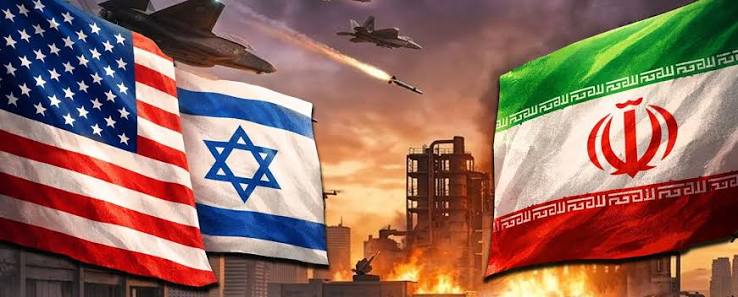
Iran-Israel-US War
Regular review of spend analysis and lead-time data helps maintain competitive pricing even when headline freight rates climb.
Strategic Shift 3: Strengthening Financial and Contractual Safeguards
Disruptions amplify payment, currency, and performance risks. Update internal playbooks accordingly.
Contract and Payment Best Practices:
- Incorporate Flexible Incoterms: Shift toward EXW or FCA where possible to transfer control earlier, or negotiate shared risk models.
- Force Majeure and Hardship Clauses: Explicitly address route closures, insurance spikes, and extended delays with predefined adjustment mechanisms.
- Escrow and Trade Finance Alternatives: Platforms offering secure, conditional release reduce reliance on traditional letters of credit that can freeze during uncertainty.
- Hedging and Insurance Review: Layer war-risk coverage with supply-chain interruption policies. Monitor currency pairs closely, especially for energy-linked transactions.
🛡️
The Hidden Expense: Navigating War Risk Surcharges & Reinsurance Bottlenecks
During maritime crises in high-risk zones like the Strait of Hormuz or the Bab el-Mandeb, transit delays are only part of the equation. B2B traders frequently face sudden 300% to 500% surges in War Risk Premiums, along with sudden cancellations of coverage by major international reinsurers.
Actionable Risk Mitigation Strategies:
- Engage Local GCC Underwriters: Partner with regional insurers who maintain higher risk tolerance and specialized capacity within Gulf waters compared to western syndicates.
- Structure Breach-of-Warranty Options: Negotiate advance coverage terms that allow vessels to pass through designated risk areas without triggering automatic policy voids.
- Pass-Through Insurance Clauses: Explicitly define in sales contracts how sudden war-risk premium adjustments are shared or allocated between buyer and seller.
💱
Financial Bottlenecks: Mitigating FX Volatility & Payment Freezes
Geopolitical shocks rarely remain confined to ocean routes; they immediately trigger severe banking scrutiny, compliance friction, and sharp FX fluctuations across major settlement currencies (USD, EUR, CNY). Traditional Letters of Credit (LCs) often stall as risk-averse corresponding banks freeze processing during active military escalation.
Resilience Mechanisms for B2B Liquidity:
- Anchor Contracts to Pegged Regional Currencies: Settle cross-border Middle Eastern trade in USD-pegged regional tender like AED (UAE Dirham) or SAR (Saudi Riyal) to eliminate currency slippage and bypass congested offshore banking hubs.
- Leverage Bilateral & Local Currency Swaps: Utilize non-SWIFT local payment rails and bilateral trade agreements (e.g., GCC-China Yuan mechanisms) for raw material and energy procurement.
- Adopt Digital Escrow Solutions: Replace rigid, delay-prone LCs with conditional digital escrow platforms that release capital progressively upon verified freight milestones or customs handovers.
Key Contract Elements to Prioritize
Strategic Shift 4: Leveraging Technology for Visibility and Compliance
Real-time data separates survivors from those caught off-guard.
- Deploy end-to-end tracking solutions that integrate AIS, IoT sensors, and predictive analytics for alternative routing.
- Use AI-driven compliance tools for HS classification, tariff updates, and sanctions screening across new corridors.
- Centralize documentation in digital formats to accelerate customs clearance at multiple borders.
These capabilities, often accessible through specialized B2B platforms, turn reactive firefighting into proactive orchestration. For example, market intelligence dashboards can flag emerging capacity in secondary ports before competitors react.
Capturing Opportunities Amid the Crisis
Constraints create niches:
- Energy Efficiency and Alternatives: Demand surges for renewables equipment, storage solutions, and efficiency upgrades in affected markets.
- Regional Re-Export Hubs: GCC free zones positioned as stable transshipment points gain volume from rerouted flows.
- Value-Added Services: Freight forwarding, warehousing optimization, and risk consulting become premium offerings.
- Sustainability Angle: Multimodal and shorter routes can support lower-emission claims, appealing to ESG-focused buyers.
Building Long-Term Resilience
Resilient trade organizations treat disruptions as recurring rather than exceptional. Key organizational steps include:
- Cross-Functional War Rooms: Regular scenario planning involving procurement, logistics, finance, and sales.
- Supplier Scorecards: Weight resilience metrics alongside price and quality.
- Network Diversification: Maintain relationships across multiple corridors and service providers.
- Continuous Learning: Post-incident reviews to refine processes and update playbooks.
Internal Checklist for Trade Teams:
- Updated risk register covering chokepoints and energy nodes.
- Alternative routing options documented and costed quarterly.
- Insurance and finance partners reviewed biannually.
- Digital tool stack audited for visibility gaps.
- Training on new compliance requirements for multimodal moves.
Turn Maritime Vulnerability into Strategic Advantage with Tendify
Adapting to global trade shocks requires instant access to verified partners, alternative supply lines, and real-time trade execution. تندیفای directly solves these corridor bottlenecks:
Source Resilient Suppliers: Connect with vetted GCC, Asian, and European manufacturers operating outside high-risk maritime zones.
Bypass Chokepoints: Discover verified multimodal logistics providers, land-bridge operators, and warehousing partners in stable free zones.
Secure B2B Matchmaking: Post your Buying Demands (RFQs) or list your inventory to capture urgent demand from impacted markets.
🔗 Ready to de-risk your supply chain? Create your free Tendify Business Account today and start trading through safer, smarter corridors.

