Blog
Machine Learning vs. Money Laundering: How AI Spots Suspicious Patterns Before They Explode

I’ve been steering global trade operations for over four decades, spotting patterns in data streams that others miss, turning potential risks into calculated wins. One close call years ago involved a client’s transaction history that looked clean on the surface but hid subtle irregularities—flagged only after manual dives that cost time and trust. That experience hammered home a truth: traditional rule-based systems catch the obvious, but sophisticated laundering slips through like water through fingers. Enter artificial intelligence and machine learning—the game-changers modern banks deploy to hunt anomalous behaviors in real-time.

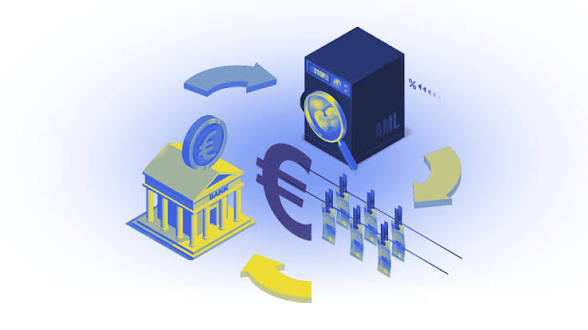
Using AI to fight money laundering
In 2026, with illicit flows topping trillions annually and false positives draining billions in compliance costs, AI-driven anomaly detection isn’t luxury; it’s survival. Banks now leverage advanced machine learning algorithms to sift petabytes of data, uncovering hidden money laundering patterns that evade human eyes or rigid rules. This guide dives deep: We’ll unpack why AI excels here, spotlight key algorithms for anomaly detection, share real-world impacts with data, and outline direct steps for integration. You’ll gain the insights to not just comply, but stay ahead—because in finance, spotting the unusual first defines success.
The Rising Tide of Money Laundering: Why Traditional Methods Fall Short
Money laundering evolves relentlessly, exploiting digital speeds and global connectivity. Criminals layer funds through micro-transactions, crypto bridges, or trade manipulations, creating patterns too nuanced for static thresholds.
The Limitations of Rule-Based Systems
Legacy AML relies on predefined rules—e.g., flag transfers over $10,000 or from high-risk jurisdictions. Effective once, but now:
- High False Positives: Up to 95% of alerts prove benign, overwhelming teams and costing $ billions yearly in reviews.
- Missed Sophisticated Schemes: Adaptive criminals tweak behaviors just enough to evade rules.
- Scalability Issues: Exploding transaction volumes (trillions daily) outpace manual tuning.
Data drives this home: Traditional systems detect only a fraction of risks, with global recovery rates under 1%. The “why” is clear—rules react; they don’t learn.
Enter AI: Adaptive, Insightful Detection
Artificial intelligence in money laundering detection shifts to proactive hunting. Machine learning models learn from vast datasets, identifying deviations from “normal” without explicit programming.
Key Advantages:
- Pattern Recognition at Scale: Processes millions of transactions instantly.
- Reduced False Positives: Up to 50-70% drops reported by adopters.
- Evolving Threat Response: Models retrain on new data, adapting to emerging typologies.
Banks like major globals have slashed review times by 40% via AI, freeing analysts for high-value investigations.
Core Machine Learning Approaches in AML Anomaly Detection
Modern banks blend supervised, unsupervised, and hybrid techniques for robust anomaly detection in AML.
Supervised Learning: Learning from Labeled History
Trained on known good/bad examples, these predict risks.
- Random Forests and Gradient Boosting: Ensemble trees vote on suspicions. Excel at handling imbalanced data—common in AML where fraud is rare.
- Neural Networks/Deep Learning: Layered models capture complex non-linear patterns, like subtle layering over months.

anti-money laundering (AML)
Why Effective: High accuracy on known schemes; explainable via feature importance.
Unsupervised Learning: Spotting the Unknown
No labels needed—ideal for novel threats.
Isolation Forests
- Isolates anomalies by random partitioning; outliers need fewer splits.
- Fast, scalable for high-dimensional data.
Autoencoders
- Neural nets reconstruct inputs; high reconstruction error flags anomalies.
- Variants like Variational Autoencoders add probabilistic depth.
Clustering Algorithms (e.g., DBSCAN, K-Means)
- Groups similar transactions; isolated points signal risks.
Insight: Unsupervised shines for “unknown unknowns”—new laundering methods rules miss.
Semi-Supervised and Advanced Hybrids
Combines limited labels with vast unlabeled data.
- One-Class SVM: Learns “normal” boundary; deviations flagged.
- Graph Neural Networks: Maps relationships, detecting mule networks or circular flows.
Real Impact: Studies show hybrids boost detection 2-4x while cutting alerts.
Comparison Table: Key Algorithms in Bank AML Systems
| Algorithm Type | Examples | Strengths | Best For | Typical False Positive Reduction |
|---|---|---|---|---|
| Supervised | Random Forest, XGBoost | High accuracy on known patterns | Transaction classification | 30-50% |
| Unsupervised | Isolation Forest, Autoencoders | Detects novel anomalies | Behavioral deviations | 50-70% |
| Clustering | DBSCAN, Gaussian Mixtures | Groups similar risks | Network/link analysis | 40-60% |
| Deep Learning | Neural Nets, GANs | Complex pattern capture | Large-scale, multi-source data | 60%+ |
| Hybrid/Graph | GNNs, Semi-Supervised | Relationship mapping | Mule/smurfing detection | 50-80% |
How Banks Implement AI for Anomaly Detection: Step-by-Step
Integration demands strategy, but payoffs are massive.
Phase 1: Data Foundation
- Aggregate transactions, customer profiles, external risks.
- Clean/enrich for quality—garbage in, garbage out.
Phase 2: Model Selection and Training
- Start unsupervised for baseline anomalies.
- Layer supervised on confirmed cases.
- Use explainable AI (XAI) for regulatory audits.
Phase 3: Real-Time Deployment
- Score transactions live; threshold alerts dynamically.
- Feedback loop: Investigator inputs retrain models.
Phase 4: Monitoring and Evolution
- Track metrics: Detection rate, false positives.
- Retrain quarterly on fresh threats.
Case Insight: A major bank reduced alerts 60% via autoencoders, uncovering hidden layering missed before.
Challenges and Mitigations in AI-Driven AML
AI isn’t flawless—address these head-on.
- Bias Risks: Skewed training data misses groups. Mitigate: Diverse datasets, fairness audits.
- Explainability: Black-box models hinder investigations. Solution: XAI tools like SHAP.
- Data Privacy: Compliance with GDPR-like regs. Use federated learning.
- Adversarial Attacks: Criminals poison models. Defend: Robust training, anomaly meta-detection.
The “why” overcome: Benefits far outweigh, with ethical AI building trust.
2026 Trends: The Future of AI in Money Laundering Detection
Advancements accelerate.
- Generative AI: Simulates threats for better training.
- Federated Learning: Collaborative models without data sharing.
- Integration with Blockchain: Real-time crypto monitoring.
- Predictive Analytics: Forecast risks pre-transaction.
Expect 3-5x detection lifts; regulators mandate AI adoption.
For related tactics, explore our guides on crypto money laundering myths and money laundering in real estate.
Empowering Your Compliance with AI Insights
AI’s role in identifying money laundering patterns transforms defense into offense—spotting anomalies rules can’t. From my frontline view, embracing these machine learning algorithms isn’t optional; it’s how winners protect assets and seize clean opportunities.
In high-stakes trade and finance, you need partners who get risks. Tendify.net delivers verified connections, real-time market intel, and tools spotting threats early.
Ready to leverage AI-level vigilance in your deals? Sign up on Tendify.net today—post offers, source leads, and build resilient networks. Your edge awaits.