Blog
LPG Infrastructure: Pakistan’s Strategic Shift to Refrigerated Storage
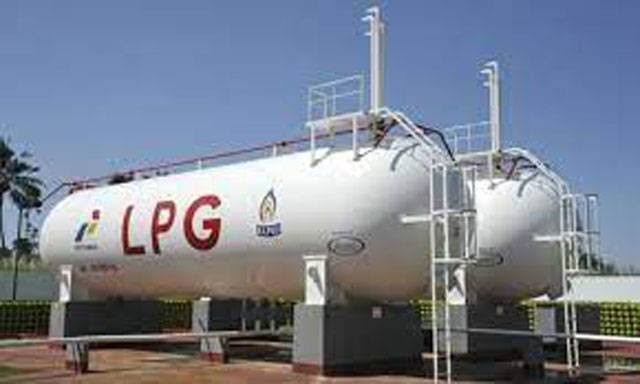
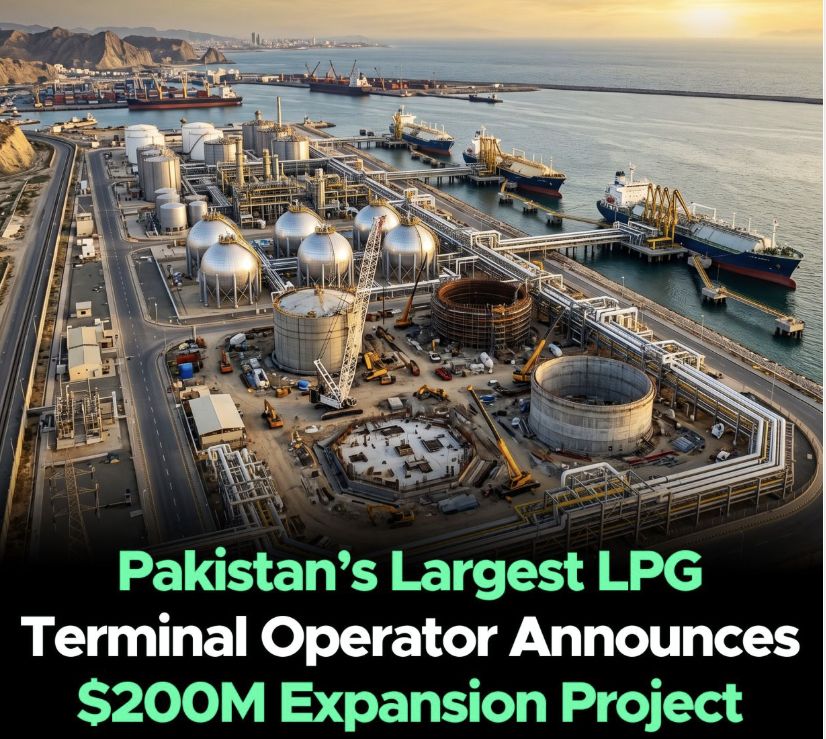
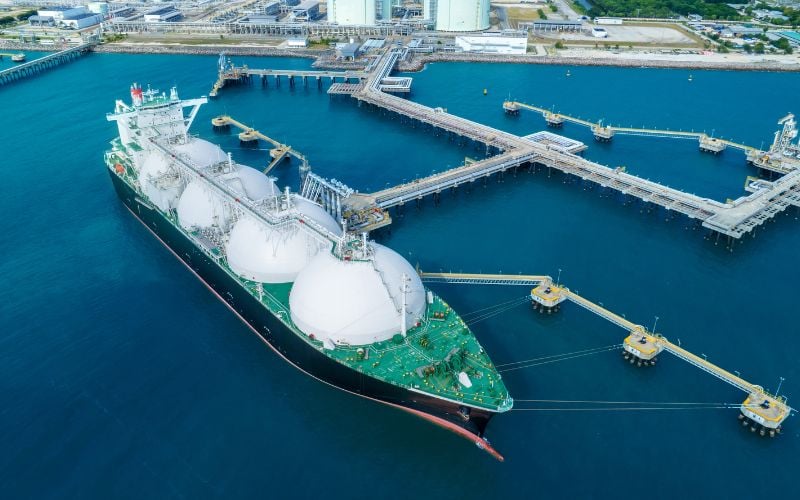
Pakistan’s energy landscape stands at a pivotal moment. With domestic gas production declining and import dependency rising, the announcement of major terminal expansions signals a strategic shift toward more efficient, large-scale fuel handling. Engro Vopak Terminal Limited (EVTL), operating Pakistan’s primary bulk liquid chemical and LPG facility at Port Qasim, plans investments exceeding $200 million. A key component is a feasibility study for a refrigerated LPG infrastructure project designed to boost storage capacity and strengthen supply reliability.
LPG Infrastructure
This development matters for cross-border traders, importers, freight forwarders, and investors active in South and West Asian energy corridors. Refrigerated terminals unlock economies of scale through Very Large Gas Carriers (VLGCs), reduce per-tonne logistics costs, and support steadier downstream distribution—critical advantages in volatile global energy markets.
The Future of Food Exports: Raw Wheat + Mobile Milling = Maximum ROI
Understanding Refrigerated LPG Storage vs. Pressurized Systems
LPG (primarily propane and butane) can be stored and transported in two primary ways:
- Pressurized storage: Maintains the gas in liquid form at ambient temperatures under high pressure (typically up to 8.5 bar). Common for smaller volumes, coastal distribution, and facilities using cylindrical or spherical pressure vessels. Simpler infrastructure but limited scalability.
- Refrigerated (atmospheric) storage: Cools LPG to around -42°C for propane (or lower for mixed cargoes), allowing storage at near-atmospheric pressure in large insulated tanks. This approach suits high-volume international trade.

Pakistan LPG Infrastructure
Why refrigerated wins for large-scale operations:
- Larger vessel compatibility: Enables direct discharge from VLGCs (70,000–85,000+ cbm capacity), slashing freight costs compared to multiple smaller pressurized or semi-refrigerated shipments.
- Cost efficiency: Lower pressure reduces tank wall thickness and material costs for very large volumes. Boil-off gas can be managed and often reliquefied or used as fuel.
- Safety and capacity: Modern refrigerated tanks offer significant economies of scale while meeting stringent international standards for handling in busy ports.
- Operational flexibility: Supports blending, longer storage without excessive pressure risks, and integration with pipeline or truck loading systems after regasification/warming.
For Pakistan, transitioning toward refrigerated capability at Port Qasim positions the country to handle bigger cargoes from major exporters in the Middle East and beyond, directly addressing chronic supply bottlenecks.
Pakistan’s Energy Context: Why This Project Matters Now
Pakistan faces persistent challenges: declining indigenous natural gas reserves, rising domestic and industrial demand for LPG as a cleaner, more accessible alternative to traditional fuels, and foreign exchange pressures from energy imports.
LPG serves households for cooking, transportation (converted vehicles), and small industries. Demand growth outpaces local refining and production, making efficient imports essential for price stability and availability.
A refrigerated terminal at Port Qasim—the country’s main hub for LNG and petroleum products—offers multiple advantages:
- Scale economies: One VLGC delivery equals several smaller vessels, cutting demurrage, port calls, and overall freight exposure.
- Supply reliability: Larger storage buffers seasonal spikes and global price volatility.
- Energy security: Diversifies import options and supports national goals for stable fuel supplies amid regional dynamics.
- Downstream multiplier effects: Better infrastructure encourages investment in bottling plants, distribution networks, and related industries.
Industry observers view EVTL’s move—following the renewal of its implementation agreement with Port Qasim Authority—as a vote of confidence in Pakistan’s long-term energy needs.
Geopolitical Risk Matrices & Trade Corridor Dynamics
Strategic Energy Security Analysis
Pakistan’s energy infrastructure operates at the volatile intersection of major trans-regional corridors. Expanding Port Qasim’s LPG handling capacity is heavily intertwined with shifting diplomatic ties, regional maritime security, and competing infrastructure networks across South and West Asia.
Supply Chain Risk
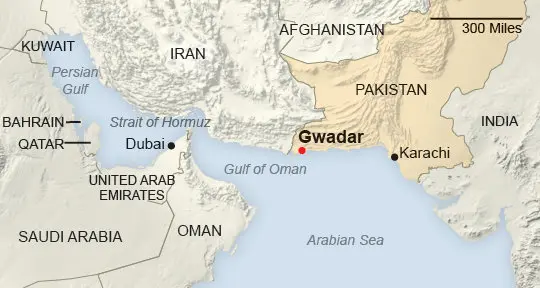
Over 90% of Pakistan’s imported LPG relies on close proximity to GCC supply hubs. Chokepoints like the Strait of Hormuz mean any maritime friction immediately triggers supply shocks, highlighting why large-scale refrigerated storage buffers at Port Qasim are national security assets, not just commercial hubs.
Strategic Variable
As China solidifies infrastructure nodes through CPEC, Port Qasim functions as a key maritime anchor. Commercial LPG flow benefits from upgraded back-alley rail and road logistics, but it also places Pakistan’s energy policy under the microscope of US-China trade competition and regional counter-alliances.
Geopolitical Shift
The long-term development of alternative trade routes bypassing Pakistan alters how GCC capital views infrastructure investments. Private-sector ventures like EVTL must prove superior cost-efficiency and rapid digital execution to remain competitive amid shifting West Asian alliances.
EVTL and the Port Qasim Advantage
EVTL, a joint venture between Pakistan’s Engro Corporation and Netherlands-based Royal Vopak, operates a state-of-the-art terminal for bulk liquids and LPG. The recent agreement renewal secures continued operations and paves the way for expansion.
Project highlights:
- Investment: Over $200 million across multiple initiatives.
- Core focus: Feasibility study for refrigerated LPG storage to expand capacity.
- Location synergy: Proximity to existing infrastructure at Port Qasim minimizes new build costs and leverages pipelines, roads, and utilities.
- Timeline: Feasibility study underway soon; positive outcome would advance to detailed engineering (FEED), financing, and EPC phases.
This expansion aligns with broader port development goals, enhancing Pakistan’s role as a regional energy gateway.
Operational and Commercial Implications for Traders
For B2B players in global trade, such infrastructure changes create tangible opportunities:
- Lower Landed Costs: VLGC economics can reduce freight by 20-40% on long-haul routes versus smaller vessels, depending on market conditions.
- Improved Contracting: Larger parcel sizes support term contracts with major suppliers, offering better pricing and hedging options.
- Risk Mitigation: Enhanced storage reduces exposure to short-term shortages and price spikes.
- Value-Added Services: Potential for blending, quality testing, and just-in-time distribution to inland markets.
- Financing Edge: Modern terminals often attract better project finance and insurance terms.
Practical checklist for engaging with such projects:
- Monitor feasibility outcomes and tender timelines.
- Assess compatibility of your cargo specs (propane/butane mix, purity) with new terminal capabilities.
- Evaluate Incoterms—DES or DEQ may become more attractive with larger vessel handling.
- Factor in regasification/warming costs and downstream logistics.
- Engage early with terminal operators for slot bookings and storage agreements.
The Industrial IoT & Automation Layer in Modern Terminals
Modern refrigerated LPG infrastructure operates far beyond heavy steel and cryogenic insulation; it relies on an interconnected digital nervous system. Transitioning to large-scale sub-zero storage demands precision automation to maintain optimal thermodynamics and streamline maritime logistics.
Web-based terminal management systems leverage cryogenic IoT sensors to stream real-time pressure and temperature dynamics directly to remote trader dashboards, eliminating information asymmetry.
Machine learning models analyze boil-off gas (BOG) rates, pump discharge speeds, and port traffic to forecast exact laytime windows, protecting B2B operators from crushing demurrage fees.
Cloud-native ERP integrations automatically match physical inventory from VLGC berths with downstream truck-loading slots, creating a seamless data flow from port to inland distributor.
The Digital & Financial Layer: Next-Gen Settlement Mechanisms
As capital intensity shifts with large-scale refrigerated expansions, conventional cross-border payment structures within the GCC, MENA, and ECO regions face friction. Managing high-value trades via Very Large Gas Carriers (VLGCs) requires a parallel evolution in financial technology to mitigate liquidity risks and counterparty delays.
Traders are increasingly navigating alternative trade-based settlement corridors, leveraging local currency pairings to bypass volatile foreign exchange pressures and clearing bottlenecks.
Blockchain-based smart contracts are redefining Letters of Credit (LCs). Automating escrow releases upon verified port telematics and IoT-triggered cargo discharge guarantees instantaneous execution.
Optimizing the Middle East – South Asia Logistics Pipeline
The effectiveness of Port Qasim’s refrigerated expansion hinges on seamless integration with the GCC’s primary energy export hubs. For B2B traders, understanding the flow from primary source to inland market is critical for cost-optimization and demurrage avoidance.
Oman & UAE: As dominant LPG exporters in the region, terminals in Sohar, Jebel Ali, and Fujairah serve as the immediate upstream partners. Refrigerated cargo flows from these points via VLGCs, creating a high-volume “Express Lane” to Karachi, provided terminal reception is synchronized with refinery output schedules.
Inland Distribution: The link between Port Qasim and Pakistan’s interior is the final-mile constraint. Success relies on integrated truck-loading racks at the terminal and dedicated logistics fleets that can handle high-frequency, smaller parcel deliveries to bottling plants near the Afghanistan and Indian borders.
“Effective trade now demands real-time data visibility—mapping the journey from the storage tanks of Jebel Ali to the local truck fleet dispatching from Karachi. Integrating these logistical nodes is the true frontier of competitive B2B energy trade.”
Broader Regional Trade Dynamics
Pakistan’s energy imports intersect with GCC supply hubs. Efficient terminals facilitate smoother flows from producers to high-demand markets. Similar refrigerated facilities elsewhere demonstrate how infrastructure upgrades drive trade volumes, attract foreign investment, and stabilize prices.
For traders navigating South Asia–Middle East corridors, this development strengthens multimodal options and supports diversified sourcing strategies. It also underscores the importance of digital tools for tracking tariffs, HS codes, duties, and compliance in energy trades.
Related reading:
- GCC Ports 2026: Master Customs Valuation and Dodge Crushing Penalties
- Streamlining Cross-Border Logistics for Efficient B2B Trade in the Gulf Region
- World Trade Explorer Tool
Challenges and Strategic Considerations
While promising, refrigerated terminals involve complexities:
- High upfront capital: Refrigeration plants, insulation, and safety systems demand significant investment.
- Technical expertise: Cryogenic handling requires specialized training and maintenance.
- Regulatory navigation: Environmental impact assessments, safety certifications, and customs frameworks must align.
- Market absorption: Success depends on sustained downstream demand growth.
Smart operators mitigate these through phased development, international partnerships (as seen with Royal Vopak), and data-driven feasibility studies.
For businesses, the lesson is clear: Infrastructure evolution rewards those who adapt sourcing, logistics, and risk management early.
How to Prepare Your Operations for Refrigerated LPG Trade
Refrigerated LPG Trade
Step-by-step readiness guide:
- Market Intelligence: Track Pakistan import trends, competitor terminal developments, and global LPG pricing correlations with crude.
- Supply Chain Audit: Map current routes and costs; model scenarios with larger VLGC parcels.
- Partner Network: Connect with established terminal operators, freight forwarders experienced in gas carriers, and local distributors.
- Digital Enablement: Use HS code finders, duty calculators, and contract generators to streamline documentation.
- Risk Management: Incorporate force majeure, quality, and demurrage clauses tailored to refrigerated handling.
- Sustainability Angle: Highlight lower-emission profiles of efficient LPG supply chains in ESG discussions.
ASTM vs. ISO: Which Wheat Standard Opens the Most Profitable Markets in 2026?
Comparative Overview :
| Aspect | Pressurized Storage | Refrigerated Storage |
|---|---|---|
| Typical Volume | Small to medium | Large-scale (tens of thousands cbm) |
| Vessel Compatibility | Smaller gas carriers | VLGCs |
| Capital Intensity | Lower per unit (small scale) | Higher initial, lower per tonne |
| Freight Efficiency | Higher for short routes | Superior for long-haul |
| Operational Complexity | Simpler | Requires refrigeration management |
Future Outlook for Pakistan Energy Infrastructure
EVTL’s initiative reflects a maturing approach to energy security through private-sector expertise and international best practices. As feasibility progresses, expect ripple effects: increased investor interest, potential ancillary infrastructure (pipelines, rail links), and enhanced regional connectivity.
For global B2B traders, this represents another node in an evolving energy trade web connecting producers, terminals, and end markets. Success hinges on agility, accurate market data, and robust platforms for execution.
In an era where efficient logistics separate profitable trades from marginal ones, projects like this refrigerated LPG expansion at Port Qasim offer a compelling case for proactive engagement.
To streamline your cross-border energy and commodity operations, secure compliance, and access integrated trade tools, register today at https://tendify.net/my-account/. Platform.Tendify.Net provides practical utilities that support faster, lower-risk execution in dynamic markets.